
Why Choose a Laboratory Full-Directional Planetary Ball Mill? Principles, Benefits, and Practical Tips
Facing Grinding Inconsistencies Caused by Material Settling and Wall Adhesion?
If you have ever worked with dense powders, high-viscosity slurries, or materials that tend to stick to the bottom of the grinding jar, you know how frustrating it can be when the final particle size distribution is not uniform. In many conventional planetary ball mills, the gravitational force works against the grinding action: heavy particles settle at the bottom, and fine powders adhere to the jar walls, especially during wet grinding. This leads to prolonged processing times, increased energy consumption, and compromised reproducibility.
The Laboratory Full-Directional Planetary Ball Mill was designed to solve exactly these problems. By adding a continuous 360° rotation of the entire grinding platform, this equipment redistributes the gravitational field and keeps the material constantly in motion. In this article, we will walk through how this unique mechanism works, what practical benefits it brings, and which factors you should consider when selecting such a mill for your laboratory.
What Makes the Full-Directional Planetary Ball Mill Different?
Beyond the Classic Planetary Motion
A standard planetary ball mill generates two movements: the main disk rotates (revolution), and each jar rotates in the opposite direction around its own axis (rotation). The combination of centrifugal and Coriolis forces drives the grinding balls to impact, shear, and compress the powder. However, the direction of gravity relative to the jar remains fixed during operation. Over time, especially with dense or sticky materials, the powder tends to accumulate on one side of the jar, reducing the effective contact between the grinding media and the sample.
The full-directional mill introduces a third motion: the entire grinding station (the disk and the jars together) rotates slowly around a horizontal axis. This means the jars are constantly tumbled end over end while they are already revolving and spinning. In practical terms, the jar's orientation changes continuously, so the powder never gets a chance to settle. The gravitational vector shifts every few seconds, forcing the material to fall back into the grinding path.
How the 360° Rotation Prevents Sedimentation
Imagine a typical wet grinding experiment with a high-density metal powder (e.g., tungsten carbide) in ethanol. Without full-directional rotation, the heavy particles quickly sink to the bottom of the jar. The top part of the jar may contain mostly liquid and fines, while the bottom becomes a dense cake. The grinding balls on top rebound against each other with little contact with the coarse particles, wasting energy and time.
With the full-directional design, the jar periodically turns upside down or sideways, so the settled layer is lifted and re-dispersed. Each time the jar changes its orientation, the gravitational force pulls the powder mass in a new direction, effectively stirring the whole batch. This cycle repeats continuously, maintaining a homogeneous mixture throughout the grinding session. The result is a narrower particle size distribution, shorter processing time, and much less wear on the grinding balls and jar wall.

Key Technical Benefits in the Laboratory
Improved Grinding Efficiency
Because the material stays well mixed, the grinding balls always encounter a fresh layer of powder. The impact and friction events happen more consistently, which can reduce the required grinding time by up to 30%–50% for certain materials, especially those with high density or strong cohesion. This is particularly valuable when preparing samples for X-ray diffraction (XRD), electron microscopy, or mechanical testing where a fine and uniform particle size is critical.
Reduced Wall Sticking and Cleaning Time
One of the most annoying aspects of laboratory ball milling is cleaning the jar after a run. Stuck powder can be difficult to remove, and leftover material may cross-contaminate the next sample. In a full-directional mill, the constant tumbling action minimizes adhesion because the powder is constantly peeled off the walls by the grinding media and the slurry flow. Users often report that the jar interior remains much cleaner, requiring only a simple rinse or wipe.
Better Suitability for Mechanical Alloying
Mechanical alloying requires repeated cold welding and fracturing of powder particles. For this process to work well, the powder must be continuously turned over so that fresh surfaces are exposed. The full-directional rotation accelerates this turnover, making it easier to achieve alloying in fewer hours. This has been observed in the preparation of oxide-dispersion-strengthened (ODS) alloys, intermetallics, and amorphous materials.
Enhanced Vacuum and Inert Gas Operation
Many air-sensitive materials (e.g., lithium battery cathode powders, active metals, sulfides) must be processed under vacuum or argon atmosphere. The full-directional mill can be equipped with vacuum-sealed grinding jars. Because the orientation of the jar changes, any small gas pockets that might form during rotation are dispersed, maintaining better pressure stability. This is an advantage over fixed-orientation mills where gas can become trapped in the headspace above the powder.
Practical Considerations for Equipment Selection
Grinding Jar Materials and Capacities
Like conventional planetary mills, full-directional mills accept jars made from stainless steel, zirconia, alumina, agate, nylon, and other materials. The jar volume typically ranges from 0.2 L to 5 L per jar, with common configurations of two or four jars. The choice depends on your sample quantity and the acceptable level of contamination. For example, when grinding ceramic powders, zirconia jars and balls are often preferred to avoid iron contamination.
Recommended Operating Parameters
While exact numbers depend on the specific model and material, many laboratory experiments with full-directional mills start with the following guidelines:
- Rotational speed (disk): 100–600 rpm (the full-directional rotation is usually a slower independent motor, e.g., 1–10 rpm for the entire station).
- Ball-to-powder weight ratio (BPR): 5:1 to 20:1, with 10:1 being a common starting point for hard materials.
- Grinding ball diameter: 5–20 mm; smaller balls (1–5 mm) can be used for fine grinding or dispersion.
- Grinding atmosphere: Air, vacuum, or inert gas (argon, nitrogen) depending on the material sensitivity.
These parameters are not fixed – you should always run a few trial batches to optimize for your specific powder. The full-directional design gives you more flexibility because the mixing is already superior, so you may find that a lower BPR or shorter time is enough.
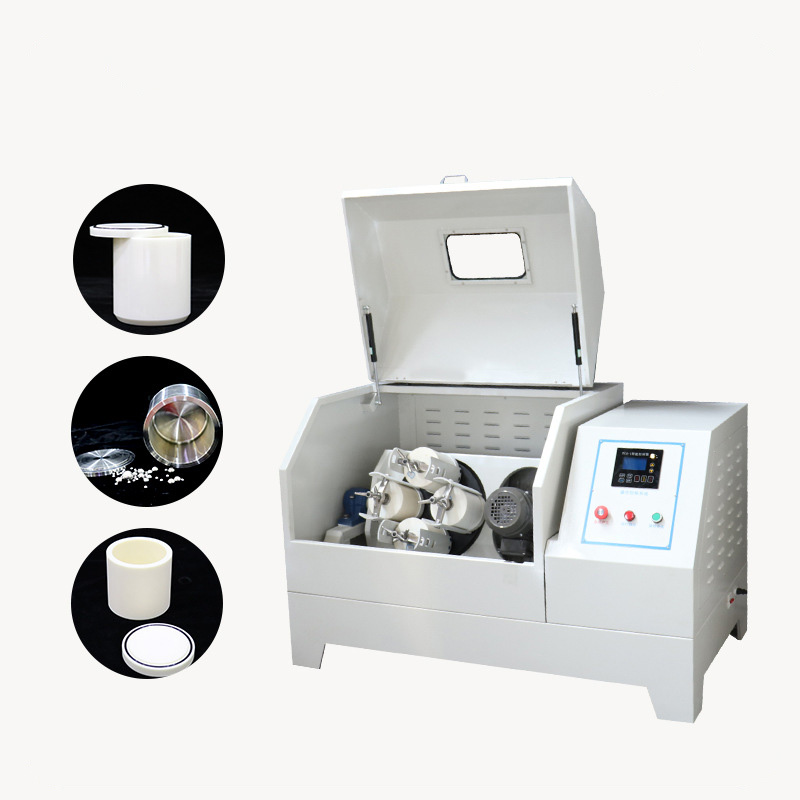
Materials That Benefit Most from Full-Directional Grinding
The full-directional mill is not a replacement for every planetary ball mill application, but it shines in the following scenarios:
- High-density powders: Metals like W, Mo, Fe, Ni, and their alloys.
- Sticky or cohesive powders: Fine oxides, talc, graphite, and certain pharmaceutical compounds.
- Wet grinding with high solids loading: Slurries with more than 50 wt% powder often settle rapidly without the tumbling motion.
- Homogeneous mixing of multiple components: For example, preparing precursors for solid-state battery electrolytes or ceramic composites.
- Mechanical alloying and nano-grinding: Where energy efficiency and uniform particle refinement are paramount.
How to Request a Technical Recommendation
Because the full-directional planetary ball mill is a specialized tool, it is helpful to prepare some basic information before consulting with a supplier. This ensures you receive a setup that matches your process.
When discussing your requirements with a manufacturer like TENCAN, be ready to provide:
- Type of powder material and its approximate density.
- Target particle size (D50, D90, or maximum acceptable size).
- Batch volume per run (in grams or milliliters).
- Whether you plan to grind dry or wet; if wet, the liquid medium.
- Preferred jar and ball material to control contamination.
- Any need for vacuum or inert gas protection.
- Available voltage and frequency at your facility (e.g., 220 V / 50 Hz).
With this information, the supplier can recommend the appropriate jar size, ball size, and initial operating parameters, as well as advise on accessories like vacuum valves or cooling systems if needed.
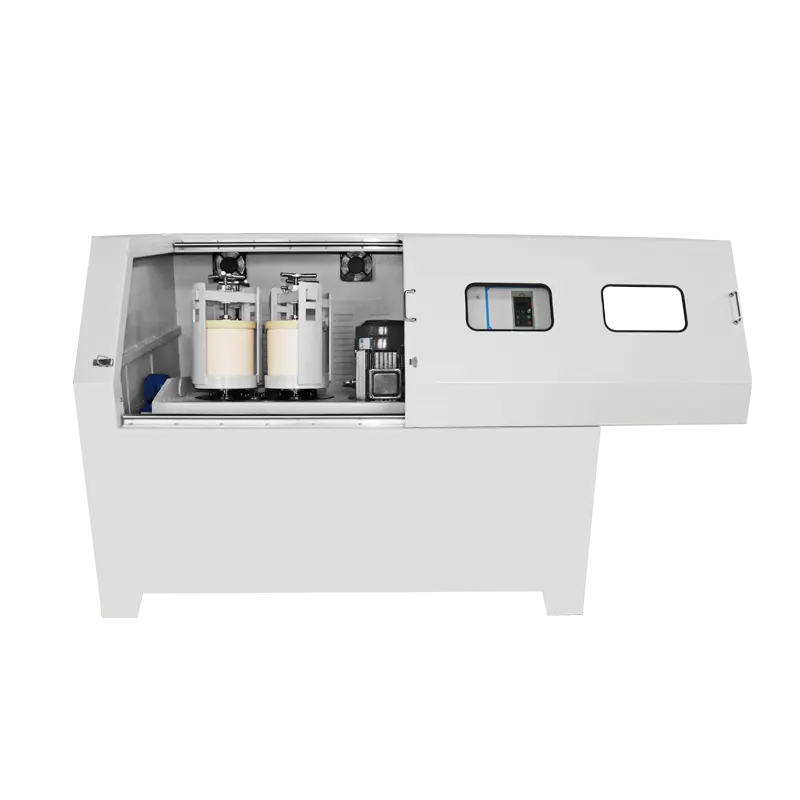
Comparing Full-Directional with Other Planetary Mill Designs
It can be useful to understand where the full-directional mill stands relative to other common laboratory planetary ball mill types:
| Feature | Standard Planetary Mill | Semi-Circular Model | Full-Directional Mill |
|---|---|---|---|
| Motions | Revolution + rotation | Revolution + rotation | Revolution + rotation + 360° tumbling |
| Prevents settling | Limited | Moderate (semi-circle shape helps) | Excellent |
| Wet grinding efficiency | Good, but prone to sediment layer | Better than standard | Best |
| Mechanical alloying | Possible | Good | Enhanced |
| Jar orientation | Fixed | Fixed (but tilted) | Continuously changing |
| Typical applications | Routine grinding, mixing | Materials with some tendency to settle | High-density, sticky materials; wet grinding; MA |
If you are working with everyday materials like limestone, cement clinker, or soft minerals, a standard or semi-circular model is often sufficient. But when reproducibility and handling of difficult powders become critical, upgrading to a full-directional design can save significant time and frustration.
Final Thoughts
The laboratory full-directional planetary ball mill is a refined tool that addresses real-world grinding challenges. Its ability to continuously rotate the entire grinding assembly eliminates the gravitational bias that causes uneven grinding in conventional mills. Whether you are developing new battery materials, synthesizing advanced ceramics, or performing mechanical alloying, this equipment can improve process consistency and reduce operator intervention.
Before making a purchase, evaluate your typical samples and failure modes. If you often see material caked on the bottom of the jar or have to repeat runs due to poor homogeneity, then the full-directional mill is likely a worthwhile investment. Talk to experienced suppliers, provide them with your material details, and ask for a recommendation – you may be surprised at how much easier your powder processing can become.