
Laboratory Full-Directional Planetary Ball Mill: 360° Rotation for Eliminating Powder Sedimentation
Why Standard Planetary Ball Mills Sometimes Fall Short
If you have ever worked with a conventional laboratory planetary ball mill, you may have noticed a common frustration: after a certain milling time, the powder tends to stick to the bottom or the walls of the grinding jar. This is especially true for materials with high density or strong adhesion, such as some metal powders, oxides, or ductile samples. The particles accumulate at the bottom of the jar, and the grinding balls cannot effectively impact them. As a result, the milling efficiency drops, the particle size distribution becomes uneven, and you may have to stop the machine frequently to scrape the material off.
This problem is caused by the way conventional planetary mills work. In a typical planetary ball mill, the grinding jars rotate around their own axes while the main disk rotates in the opposite direction. The centrifugal force presses the balls and the powder against the jar wall, but the material always stays at the lowest point of the jar due to gravity. Over time, the powder settles and becomes compacted, especially when the jar is horizontally oriented or when the rotation speed is not high enough to keep the material in suspension.
What Makes a Full-Directional Planetary Ball Mill Different
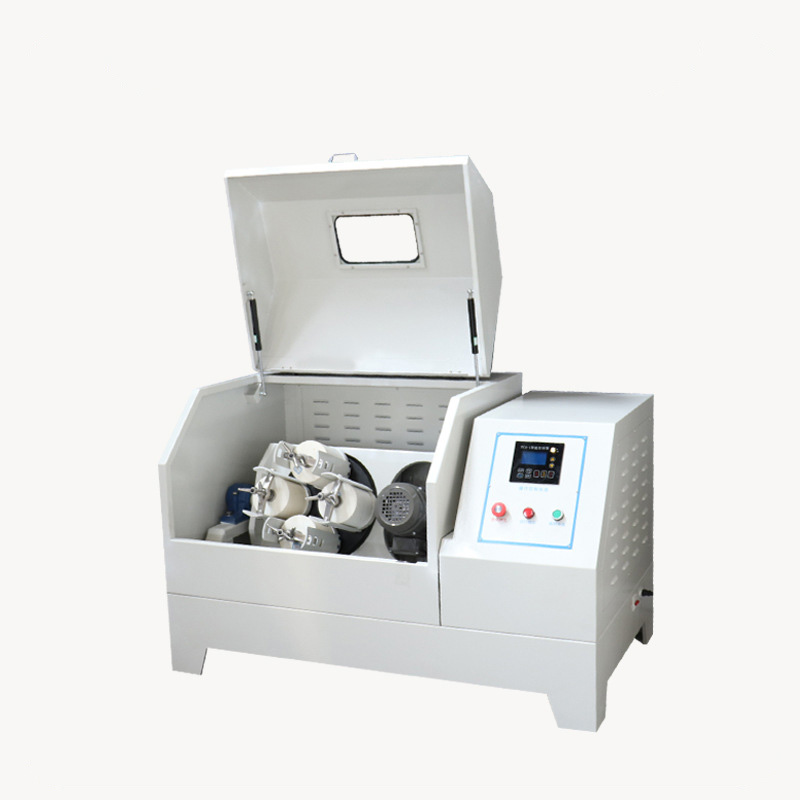
A laboratory full-directional planetary ball mill, also known as a 360-degree rotating planetary ball mill, solves this sedimentation issue by adding an extra rotary motion. The entire grinding platform — the main disk plus the jar holders — can rotate around a horizontal axis while the jars are spinning. This means the grinding jars are continuously tumbling in all directions, just like a three-dimensional mixer. The powder cannot settle because the direction of gravity relative to the jar is constantly changing.
In practice, the machine can be programmed to rotate the whole platform at a certain angle or even to make a complete 360-degree revolution. This full-directional motion ensures that the grinding balls and the powder remain in constant contact with each other, and the impact points are distributed evenly over the entire internal surface of the jar. The result is a more uniform grinding process, less powder sticking, and a higher yield of fine particles.
Working Principle in Detail
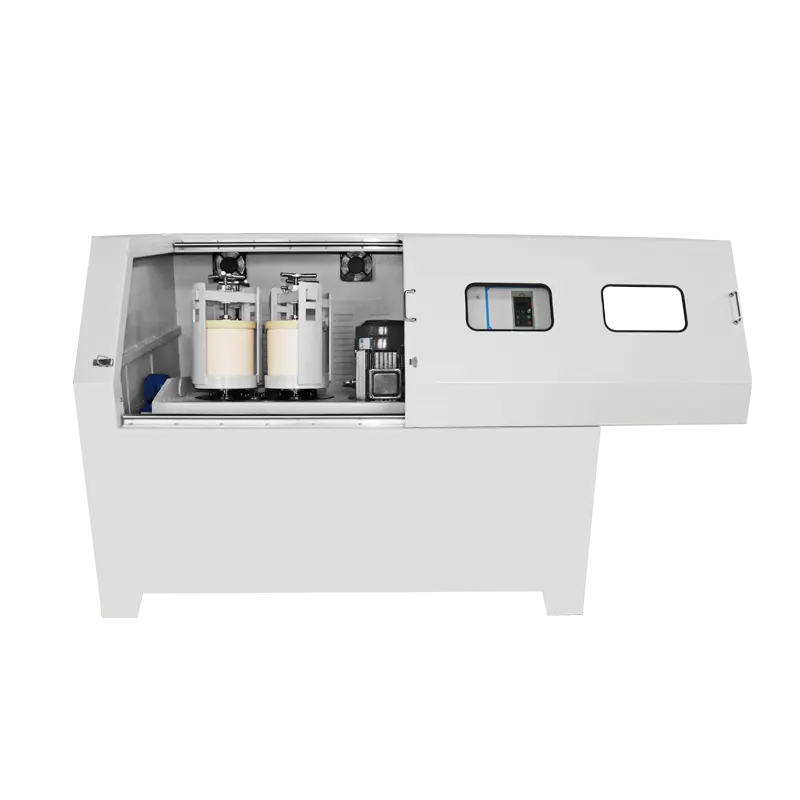
The machine consists of a base with a motor that drives a main disk. On this disk, there are usually four stationary mill holders (or in some designs, the holders can also tilt). Unlike a conventional planetary mill, the main disk is mounted on a rotating shaft that can tilt the entire assembly. The tilting mechanism is driven by a separate motor or a servo system, controlled by a microcomputer.
During operation, the main disk rotates at a speed that can be adjusted from about 50 rpm to 600 rpm, depending on the model. The jars rotate in the opposite direction at a speed ratio that is typically around 1:2 (jar speed to disk speed). Meanwhile, the tilting motion rotates the whole platform at a much slower speed, say 2 to 10 rpm, so that the jars are constantly changing their orientation. This combination of three motions — planetary revolution, self-rotation, and full-directional tilting — creates a complex force field that prevents the powder from settling.
For materials that are sensitive to heat or oxidation, the full-directional planetary ball mill can be equipped with vacuum or inert gas grinding jars. The tilting mechanism does not affect the sealing performance of the jars, which is an important consideration for air-sensitive materials. Many models also allow the user to set the tilting angle and the tilting speed independently, providing flexibility for different materials.
Key Advantages Over Conventional Planetary Ball Mills
The full-directional design offers several practical benefits that can make a significant difference in daily laboratory work:
- No Powder Sticking or Sedimentation – The continuous tilting action keeps the powder in motion, so it does not accumulate at the bottom. This is particularly valuable for sticky or ductile materials that tend to form a cake.
- Improved Grinding Efficiency – Because the balls are always in contact with fresh material, the energy transfer is more efficient. You may achieve the same fineness in a shorter time compared to a conventional mill.
- More Uniform Particle Size Distribution – The three-dimensional motion ensures that all particles are exposed to the same impact and friction. The final powder tends to have a narrower size distribution, which is critical for many advanced materials.
- Higher Yield of Ultra-Fine Powder – For nano-milling applications, the full-directional motion helps to break down agglomerates and prevents the formation of large clumps. This can lead to a higher proportion of particles in the submicron or nanometer range.
- Reduced Need for Manual Intervention – You can run the mill for longer periods without having to stop and scrape the jar walls. This saves time and reduces the risk of contamination from manual handling.
Typical Applications and Materials
This type of mill is widely used in research laboratories and pilot plants where the uniformity of the powder is critical. Some common applications include:
- Battery Materials – Grinding of cathode materials (e.g., LiFePO4, NMC), anode materials (graphite, silicon), and solid electrolytes. The full-directional motion helps to mix the components homogeneously and to avoid segregation of different densities.
- Ceramics and Refractories – Fine grinding of alumina, zirconia, silicon carbide, and other hard ceramics. The absence of sedimentation ensures that the binder phases are evenly distributed.
- Metal Powders – Mechanical alloying of ductile metals (e.g., aluminum, copper, titanium) where sticking is a common problem. The tilting action prevents the powder from forming a foil or a ball mass.
- Nanomaterials – Production of nano-sized particles by high-energy ball milling. The full-directional motion helps to achieve a smaller median particle size with less agglomeration.
- Pharmaceuticals and Chemicals – Grinding of organic compounds, pigments, and catalysts where temperature control and uniformity are important.
How to Select the Right Full-Directional Planetary Ball Mill
Choosing the correct model and configuration depends on your specific material and experimental requirements. Here are some factors to consider:
Capacity and Jar Size
Laboratory full-directional mills are available in various capacities, typically from 0.4 L to 10 L total volume (four jars of 0.1 L to 2.5 L each). The actual usable capacity is about half of the jar volume when using grinding balls, because the balls occupy about 30–50% of the jar, and the powder should fill the voids between the balls. For a 0.5 L jar, a typical batch size is around 50–150 g of powder, depending on the density. Choose a model that can handle your required sample quantity per batch.
Grinding Jar and Ball Materials
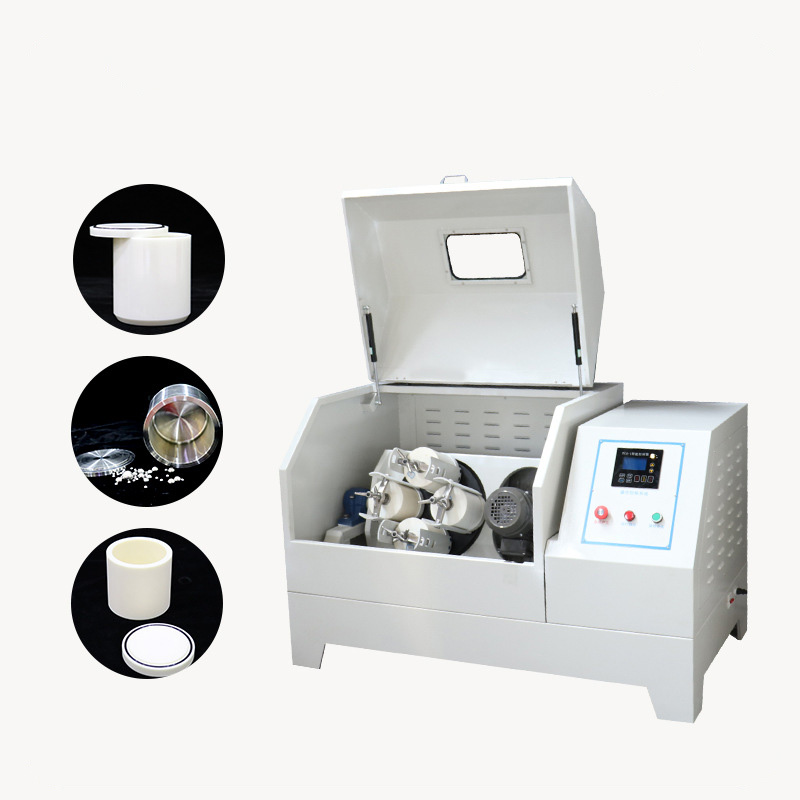
The jar material must be compatible with the sample to avoid contamination. Common options include stainless steel, agate, zirconia, alumina, tungsten carbide, and nylon. For full-directional models, the jar must be securely clamped to withstand the tilting motion. Most manufacturers offer lock-clamp systems that are designed for this purpose. The grinding balls should be made of the same material as the jar or a harder material. For example, for hard ceramic samples, use zirconia jars and balls to minimize wear.
Rotational Speed and Tilting Parameters
The maximum speed of the main disk is usually around 600 rpm, but the effective speed for grinding depends on the material. Softer materials may be milled at lower speeds (200–300 rpm), while harder materials need higher speeds. The tilting speed and angle can often be adjusted. A typical tilting angle range is 0° to 360° (continuous rotation) or 0° to 90° (oscillation). For most materials, a tilting speed of 3–5 rpm is sufficient to prevent sedimentation. If you are working with very fine powders that are prone to electrostatic aggregation, you may need a higher tilting speed.
Atmosphere Control
If your material is sensitive to oxygen or moisture, you need vacuum or inert gas grinding jars. The full-directional mill can be equipped with vacuum-sealed jars that maintain a vacuum level down to 10-3 Pa or can be filled with argon or nitrogen. Check the sealing design of the jar – some models use a double O-ring seal that can withstand the tilting motion without leaking.
Control and Programmability
Modern full-directional planetary ball mills come with microcomputer control and touch screen interfaces. You can set the forward and reverse rotation, the grinding time, the tilting mode (continuous or intermittent), and even create multi-step programs. For example, you can set the machine to run forward for 10 minutes, then tilt to a different angle, then reverse, etc. This is useful for materials that require a specific sequence of impact and mixing.
Practical Considerations for Daily Use
When you first set up a full-directional planetary ball mill, there are a few things to keep in mind:
- Balancing the Load – Always ensure that the jars are balanced in terms of weight. Unbalanced loads can cause excessive vibration, especially when the platform is tilting. Use the same amount of powder and balls in each jar, or use counterweights if you are using fewer than four jars.
- Ball-to-Powder Ratio – This ratio is critical for efficiency. A common starting point is 10:1 (weight of balls to weight of powder) for many materials, but it can vary from 5:1 to 20:1 depending on the hardness and the target particle size. For the full-directional mill, a slightly higher ratio may be beneficial because the tilting motion helps to maintain contact.
- Temperature Rise – High-energy milling generates heat. If your material is temperature-sensitive, use the intermittent grinding mode (e.g., 15 minutes of grinding followed by 10 minutes of cooling). The tilting motion can also help to dissipate heat because the jar walls are exposed to air from different angles.
- Cleaning – After each run, clean the jars and the grinding balls thoroughly to avoid cross-contamination. The full-directional motion may cause some powder to adhere to the lid or the sealing ring, so pay attention to those areas.
Summary: Is a Full-Directional Planetary Ball Mill Right for You?
If you have been struggling with powder sticking, uneven grinding, or low yields in a conventional planetary mill, a full-directional (360-degree rotating) model can be a worthwhile investment. It is particularly beneficial for materials that are adhesive, ductile, or prone to sedimentation. The added tilting mechanism does not significantly increase the complexity of operation — most models are still easy to use with intuitive controls. And because the machine can run for longer periods without manual intervention, it can improve your lab's productivity.
When selecting a supplier, look for a manufacturer that offers a range of jar sizes and materials, and that provides technical support for parameter optimization. A reliable supplier can help you determine the correct ball-to-powder ratio, speed settings, and jar material based on your specific sample. For more information on the full-directional planetary ball mill and its configurations, feel free to consult the product page or reach out to a technical representative.