
Silica Powder Dry Grinding: D90 of 7.21 µm in 30 Minutes
Test period: December 2025
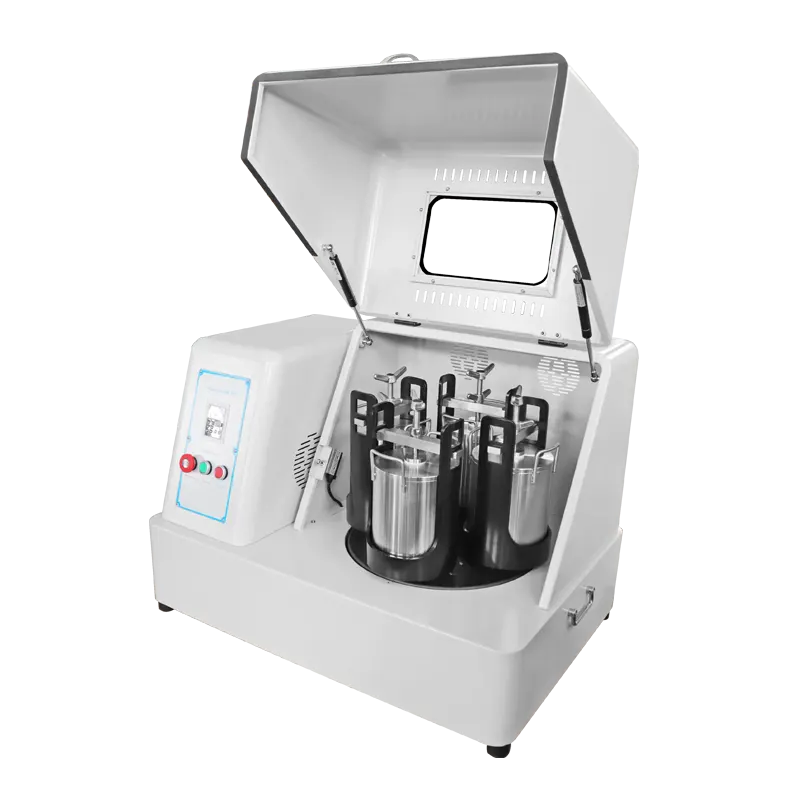
A small silica powder batch was dry-ground in a zirconia jar using a TENCAN XQM planetary ball mill. After 30 minutes, the measured distribution reached D50 = 3.37 µm and D90 = 7.21 µm, providing a practical starting point for an approximately 8 µm grinding objective.
Sample analysis and experimental objective
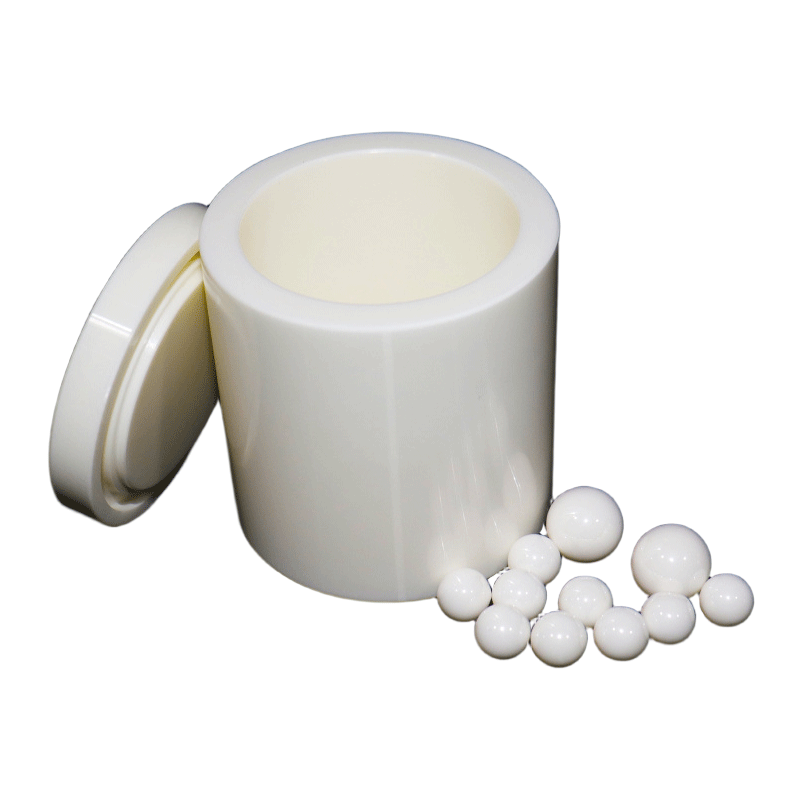
Silica is a brittle mineral powder, so impact and friction are reasonable mechanisms for size reduction. The central selection issue is balancing fine grinding with control of contact-material wear. A zirconia contact system avoids direct steel contact, although contamination must still be checked against the application. The trial objective was 8 µm; because a maximum-size criterion was not defined, the measured D90 should be retained as the actual result.
Equipment and test conditions
| Mill | TENCAN XQM-series planetary ball mill |
|---|---|
| Sample | 35 g silica powder |
| Jar | 500 mL zirconia |
| Media | Zirconia balls; standard configuration |
| Method | Dry grinding |
| Speed setting | 480 rpm |
| Run mode | 5 minutes running / 1 minute pause |
| Sampling point | 30 minutes |
Experimental observations and results
| Grinding time | D50 | D90 |
|---|---|---|
| 30 minutes | 3.37 µm | 7.21 µm |
The D90 value was below 8 µm at the sampling point. This supports the suitability of the configuration for fine silica preparation at this scale. It does not mean that every particle was smaller than 8 µm, and no initial distribution was measured for calculating a reduction ratio.
Why this equipment was selected
The TENCAN Vertical square planetary ball mill provides an XQM planetary platform for this type of small-batch powder work. The TENCAN zirconia planetary mill jar is a relevant accessory when limiting steel contact is part of the selection brief. The low sample mass makes jar loading and representative recovery important; a larger mill should not be chosen simply to increase nominal capacity.
Practical precautions
- Confirm the jar volume, holder compatibility and allowable fill before reproducing the trial.
- Keep feed moisture and the particle-size measurement dispersion method consistent between runs.
- Recover powder from the full jar contents rather than testing only an easily collected fine fraction.
- Control silica dust during charging and recovery using the laboratory’s established containment procedures.
Could another TENCAN machine be a better fit?
The present XQM arrangement already produced a useful result. For a future slurry process or larger wet batch, the TENCAN lab stirred ball mill is a candidate for a comparative test. That change would introduce a different grinding mechanism and liquid system; no shorter processing time or finer outcome is established by this dry trial.
Related TENCAN equipment
Explore the equipment and accessories for planning a comparable trial. Select the machine size and jar holders to match the stated working configuration.
Interpretation: These results describe the tested sample and conditions. Equipment alternatives and process improvements above are engineering recommendations for a further trial, not additional measured results. D50 and D90, where reported, describe the measured particle-size distribution; they do not establish an absolute maximum size or a sieve-pass percentage.