
Manganese–Iron Ore Preparation to a 50-Mesh Sieve Endpoint
Test period: September 2025
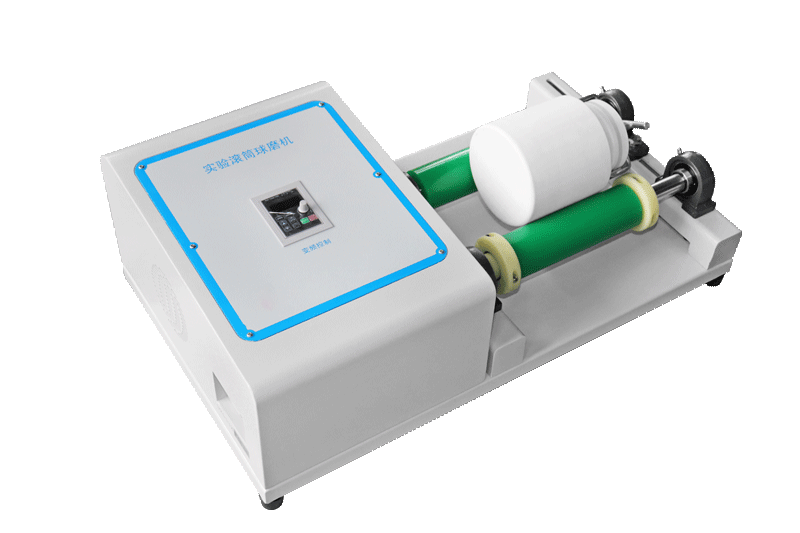
A manganese–iron ore sample was prepared by dry grinding on a TENCAN QM-5 laboratory roll ball mill. Following preliminary crushing, a 1,210 g charge fully passed a 50-mesh sieve after 12 hours.
Sample analysis and experimental objective
The feed was initially in large pieces, and the experimental objective was a 50-mesh product. Preliminary crushing is important for putting a coarse ore into a suitable range for jar milling. The measured endpoint in this experiment was sieve passage, not a laser particle-size distribution, chemical liberation result or assay-quality validation.
Equipment and test conditions
| Mill | TENCAN QM-5 laboratory roll ball mill |
|---|---|
| Feed preparation | Ore crushed before jar milling |
| Sample charge | 1,210 g |
| Jar | 1 L stainless steel roll-mill jar |
| Media | Steel balls; 20–25 mm group 50%, 15–12 mm group 50% as stated |
| Method | Dry grinding |
| Speed setting | 400 rpm; confirm roller and jar speed relationship on the actual machine |
| Duration | 12 hours |
Experimental observations and results
| Grinding time | Observed endpoint |
|---|---|
| 12 hours | Full sample passed a 50-mesh sieve |
The trial achieved the stated 50-mesh sieve endpoint for the tested ore charge. No median size, recovery percentage or mineral liberation data were measured. Because sieve standards can use different apertures, the mesh designation should be paired with the actual sieve specification when reproducing the test.
Why this equipment was selected
The TENCAN lab roll ball mill is the direct product match for the QM equipment family and includes the QM-5 configuration. Its rotating-jar action provides repeated media impact and friction over an extended run. Steel jars and balls may be practical for ore preparation when metallic wear is acceptable, but suitability must be checked if the powder will be used for trace-metal analysis.
Practical precautions
- Verify the complete jar, media and ore mass against the machine load limit; ore mass alone is not the full load.
- Maintain a consistent crushed-feed size so that later batches are comparable.
- Confirm roller contact, jar retention and the meaning of the displayed speed setting before running.
- Use representative full-batch sieving and account for material retained in the jar during recovery.
Could another TENCAN machine be a better fit?
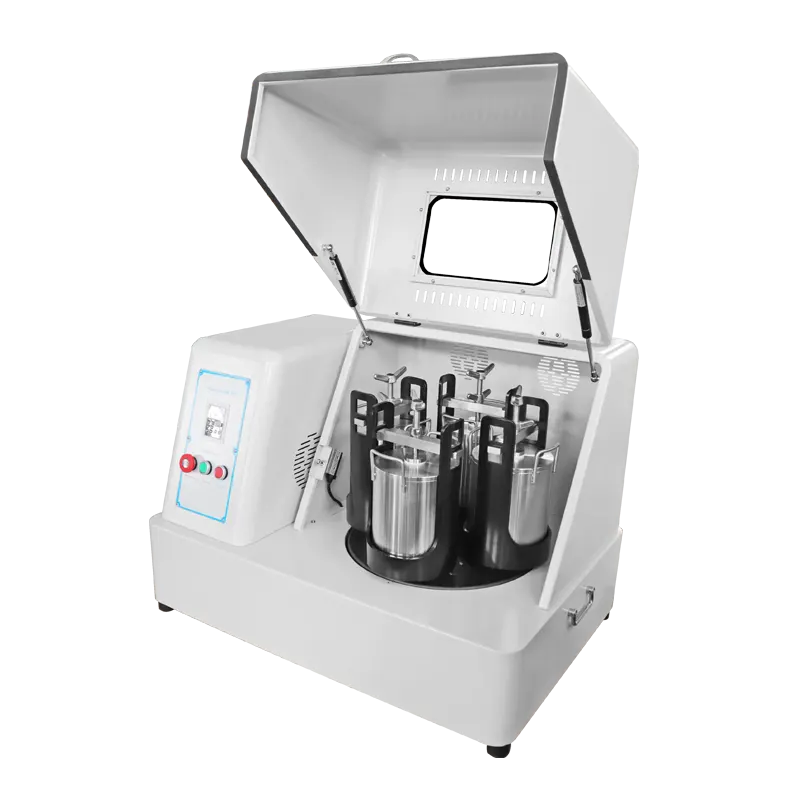
The TENCAN Vertical square planetary ball mill is a candidate if a future study prioritizes a shorter laboratory cycle or a finer product. Higher-intensity planetary action would require its own loading and time trials. The 12-hour QM-5 result demonstrates the present route; it does not establish a time saving, wear advantage or equivalent capacity for a planetary replacement.
Related TENCAN equipment
Explore the equipment and accessories for planning a comparable trial. Select the machine size and jar holders to match the stated working configuration.
Interpretation: These results describe the tested sample and conditions. Equipment alternatives and process improvements above are engineering recommendations for a further trial, not additional measured results. D50 and D90, where reported, describe the measured particle-size distribution; they do not establish an absolute maximum size or a sieve-pass percentage.