
Alumina and Silica Slurry Grinding with a JM-1 Stirred Ball Mill
Test period: December 2025
Two oxide slurries were tested separately in a TENCAN JM-1 stirred ball mill. After one hour at 550 rpm, the alumina slurry measured D50 = 2.89 µm and D90 = 4.88 µm, while the silica slurry measured D50 = 0.47 µm and D90 = 1.30 µm.
Sample analysis and experimental objective
These were slurry-processing experiments with a stated fineness objective below 10 µm. Fine media in a stirred chamber provide repeated contact throughout a mobile slurry, making viscosity and circulation within the chamber important selection factors. Alumina and silica must be treated as separate samples: the results do not establish that they had the same initial size, solids concentration or grindability.
Equipment and test conditions
| Mill | TENCAN JM-1 laboratory stirred ball mill |
|---|---|
| Chamber | 1 L stainless steel |
| Media | 3 mm zirconia balls |
| Alumina charge | 300 mL slurry |
| Silica charge | 500 g material processed wet |
| Speed setting | 550 rpm |
| Duration | 1 hour per sample |
| Observed operation | No overflow reported in either trial |
Experimental observations and results
| Sample | Time | D50 | D90 |
|---|---|---|---|
| Alumina slurry | 1 hour | 2.89 µm | 4.88 µm |
| Silica slurry | 1 hour | 0.47 µm | 1.30 µm |
Both measured D90 values were below 10 µm. The silica result also showed a submicron median. These are particle-size results for the tested slurries, not confirmation that all particles were below the target or that their chemical purity was unchanged.
Why this equipment was selected
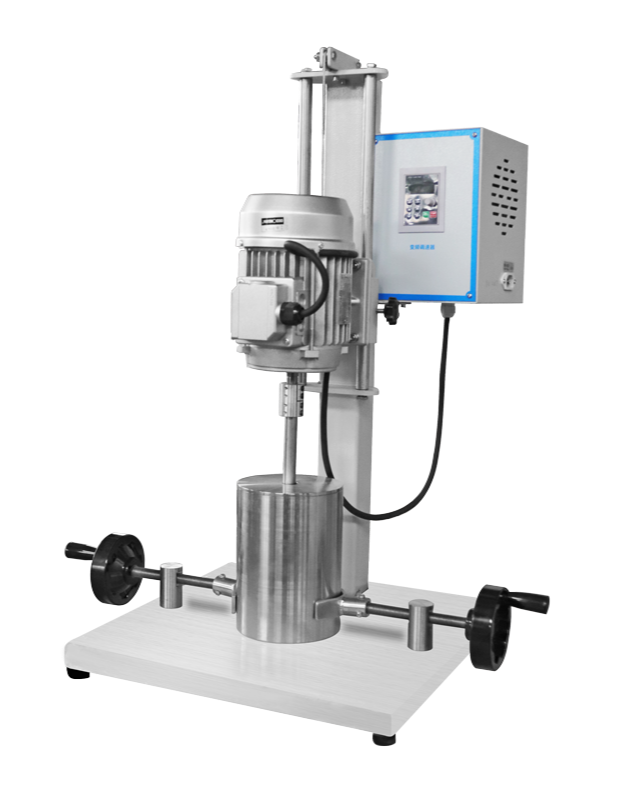
The TENCAN lab stirred ball mill is the direct equipment match for the JM-1 trials. Its stirred-media configuration is appropriate for evaluating existing slurries without first converting them into dry feed. Zirconia balls reduce direct steel-media contact, but the stainless steel chamber remains a possible contact source that must be considered.
Practical precautions
- Record slurry solids content, liquid identity and viscosity in any repeat trial; these were not quantified here.
- Keep sufficient working space in the chamber and confirm the load against the selected JM configuration.
- Use the same dispersion preparation and measurement method for every sample.
- Check chamber and media wear where oxide purity matters, and separate the two samples during cleaning and recovery.
Could another TENCAN machine be a better fit?
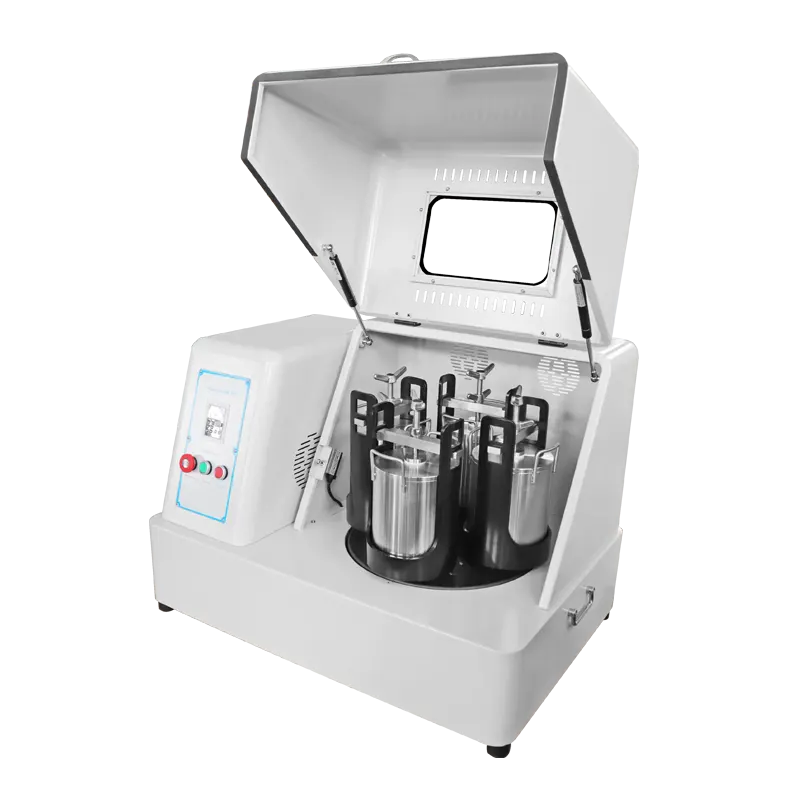
The JM-1 already delivered the required fine distribution at laboratory scale. The TENCAN Vertical square planetary ball mill could be compared for smaller sealed-jar batches or a different permitted contact system. A planetary configuration is a development option, not evidence that the measured JM-1 result could be improved or reproduced at the same speed setting.
Related TENCAN equipment
Explore the equipment and accessories for planning a comparable trial. Select the machine size and jar holders to match the stated working configuration.
Interpretation: These results describe the tested sample and conditions. Equipment alternatives and process improvements above are engineering recommendations for a further trial, not additional measured results. D50 and D90, where reported, describe the measured particle-size distribution; they do not establish an absolute maximum size or a sieve-pass percentage.