
Alumina and Magnesia Grinding to a 100-Mesh Sieve Endpoint
Test period: October 2025
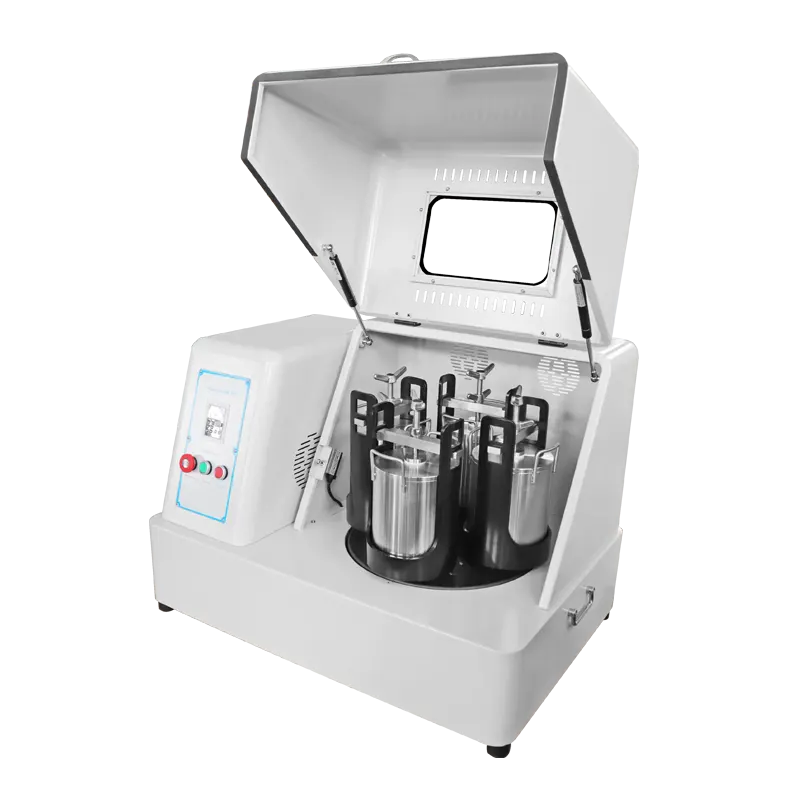
Separate alumina and magnesia samples were prepared using a TENCAN XQM planetary ball mill with a zirconia jar and zirconia balls. The alumina fully passed a 100-mesh sieve after 30 minutes; the magnesia fully passed the same stated mesh designation after one hour.
Sample analysis and experimental objective
Both materials were supplied as large pieces and were reduced before the planetary grinding stage. These are brittle oxide preparation tasks with a directly stated sieve endpoint. Alumina and magnesia have different material properties, so their grinding times should be treated as independent successful results rather than a controlled comparison of intrinsic grindability.
Equipment and test conditions
| Mill | TENCAN XQM-series planetary ball mill |
|---|---|
| Jar | 250 mL zirconia |
| Media | Zirconia balls; standard configuration |
| Alumina charge | 79 g |
| Magnesia charge | 87.5 g |
| Method | Dry grinding after preliminary size reduction |
| Speed setting | 480 rpm |
| Run mode | 5 minutes running / 1 minute pause |
Experimental observations and results
| Sample | Grinding time | Observed endpoint |
|---|---|---|
| Alumina | 30 minutes | Fully passed a 100-mesh sieve |
| Magnesia | 1 hour | Fully passed a 100-mesh sieve |
Both samples achieved the recorded 100-mesh sieve requirement. No D50 or D90 values were measured, and mesh designation alone should not be converted into a fabricated particle-size distribution. A repeat acceptance test should specify the sieve standard and aperture as well as its mesh designation.
Why this equipment was selected
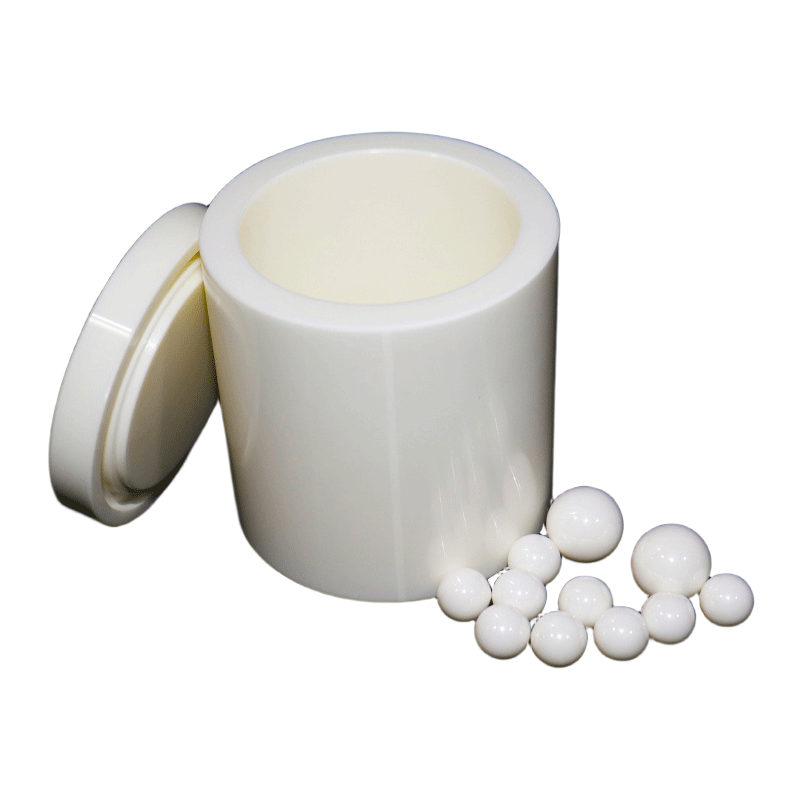
The TENCAN Vertical square planetary ball mill provides the planetary equipment family used for the oxide trials. The TENCAN zirconia planetary mill jar with zirconia balls creates a consistent jar-and-media material choice. It limits direct steel contact but does not establish zero wear or zero contamination, so the contact system should still be selected for the intended analysis or formulation.
Practical precautions
- Reduce large pieces to a feed size compatible with the jar before loading.
- Confirm jar integrity, holder fit and balanced loading before the run.
- Use a clean sieve and a defined sieving procedure so that the endpoint is comparable between batches.
- Keep alumina and magnesia recovery and cleaning separate to prevent cross-contamination.
Could another TENCAN machine be a better fit?
For repeated batches that need only the 100-mesh endpoint, the TENCAN lab roll ball mill is a reasonable candidate for a comparative test with the same prepared feed. The planetary trials already demonstrate the desired sieve result; no evidence here shows that another mill would be faster, consume less energy or give a better recovery yield.
Related TENCAN equipment
Explore the equipment and accessories for planning a comparable trial. Select the machine size and jar holders to match the stated working configuration.
Interpretation: These results describe the tested sample and conditions. Equipment alternatives and process improvements above are engineering recommendations for a further trial, not additional measured results. D50 and D90, where reported, describe the measured particle-size distribution; they do not establish an absolute maximum size or a sieve-pass percentage.