
Cellulose Powder Grinding: D90 of 3.03 µm in 30 Minutes
Test period: December 2025
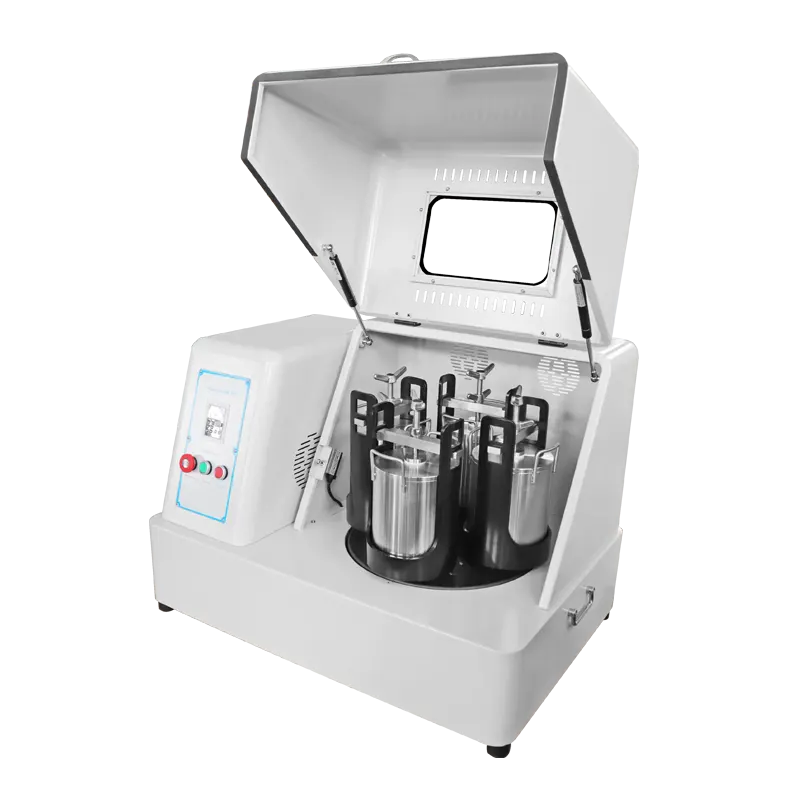
A 27 g cellulose powder sample was dry-ground using a TENCAN XQM planetary ball mill with a stainless steel jar and steel balls. A 30-minute sample measured D50 = 1.75 µm and D90 = 3.03 µm.
Sample analysis and experimental objective
The experiment started from cellulose powder with a target within 10 µm. Cellulose can have a fibrous structure and may respond to both impact and shear, so performance should be evaluated on the actual feed rather than inferred from the material name. The powder form and small charge are important context; these results should not be transferred directly to coarse pulp or long fibres.
Equipment and test conditions
| Mill | TENCAN XQM-series planetary ball mill |
|---|---|
| Sample | 27 g cellulose powder |
| Jar | 500 mL stainless steel |
| Media | Steel balls; standard configuration |
| Method | Dry grinding |
| Speed setting | 480 rpm |
| Run mode | 5 minutes running / 1 minute pause |
| Sampling point | 30 minutes |
Experimental observations and results
| Grinding time | D50 | D90 |
|---|---|---|
| 30 minutes | 1.75 µm | 3.03 µm |
The measured D90 was below the stated 10 µm objective, giving a useful fine-powder result for this sample. No maximum-particle-size test, temperature history, structural analysis or chemical assessment was recorded, so the result should remain a particle-size statement.
Why this equipment was selected
The TENCAN Vertical square planetary ball mill is a suitable product reference for the XQM planetary family used in this trial. A steel contact system can supply effective mechanical input, but its acceptability depends on the downstream tolerance for metallic wear. The successful 30-minute sampling point provides a more useful first repeat condition than automatically extending the run.
Practical precautions
- Keep the feed moisture condition consistent because moisture can change powder handling and dispersion.
- Monitor jar temperature and use the scheduled pauses; do not assume the pauses establish a specified sample temperature.
- Assess metallic wear if the powder is intended for contamination-sensitive research.
- Use dust control during charging and recovery, and keep particle-size sample preparation consistent.
Could another TENCAN machine be a better fit?
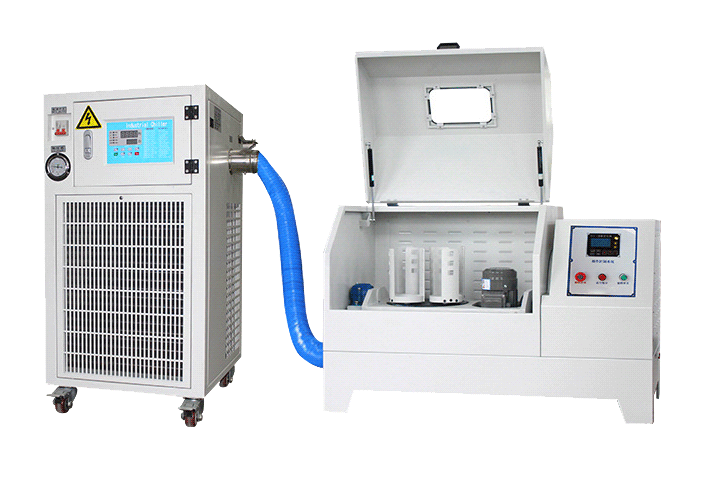
For a repeat process with an explicit temperature limit, the TENCAN Low temperature planetary grinding machine is a candidate for comparison. It was not used to generate the results above. Cooling should be evaluated against a measured temperature target and powder quality; no finer result or better preservation is established by this experiment.
Related TENCAN equipment
Explore the equipment and accessories for planning a comparable trial. Select the machine size and jar holders to match the stated working configuration.
Interpretation: These results describe the tested sample and conditions. Equipment alternatives and process improvements above are engineering recommendations for a further trial, not additional measured results. D50 and D90, where reported, describe the measured particle-size distribution; they do not establish an absolute maximum size or a sieve-pass percentage.