
Activated Carbon Grinding: Two Samples Below a 10 µm Median
Test period: October 2025
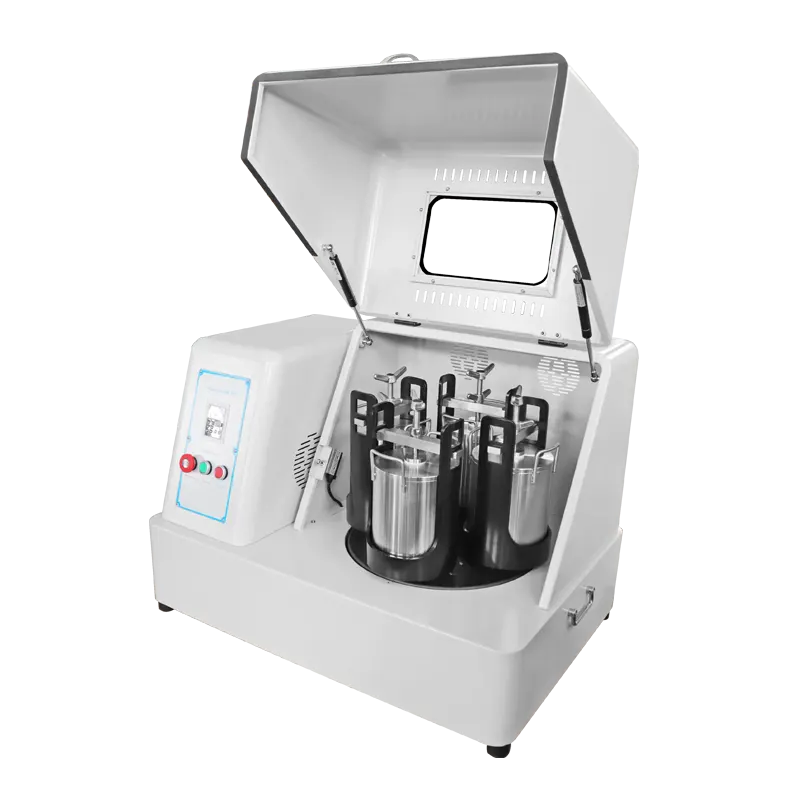
Two activated carbon samples were processed separately in a TENCAN XQM planetary ball mill. Both achieved a median particle size below the 10 µm objective, with one-hour D50 values of 3.65 µm and 3.40 µm.
Sample analysis and experimental objective
Activated carbon can vary in porosity, apparent density and mechanical response, making sample-specific grinding trials useful. Here, the objective was D50 = 10 µm. That is a median-size objective, so the numerical outcome should be assessed using D50 while retaining D90 to show the coarser part of each distribution. No adsorption or surface-area result was measured.
Equipment and test conditions
| Mill | TENCAN XQM-series planetary ball mill |
|---|---|
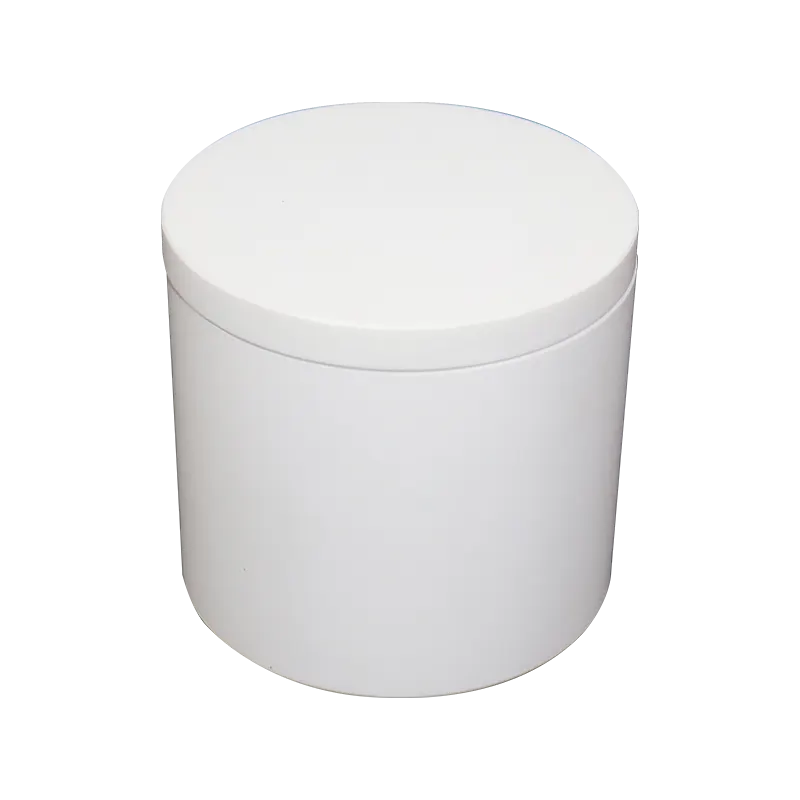
| Jar | 1.5 L corundum |
| Media | Zirconia balls; standard configuration |
| Sample charges | Sample A: 100 g; Sample B: 88 g |
| Method | Dry grinding |
| Speed setting | 450 rpm |
| Run mode | 5 minutes running / 1 minute pause |
| Final sampling point | 1 hour per sample |
Experimental observations and results
| Sample | Grinding time | D50 | D90 |
|---|---|---|---|
| A | 15 minutes | 7.50 µm | 14.03 µm |
| A | 1 hour | 3.65 µm | 5.84 µm |
| B | 15 minutes | 6.70 µm | 12.76 µm |
| B | 45 minutes | 3.89 µm | 6.61 µm |
| B | 1 hour | 3.40 µm | 5.45 µm |
Both samples were already below a 10 µm median at 15 minutes. Longer grinding further reduced the measured D50 and D90 under these conditions. The data support choosing a sampling endpoint according to the actual distribution needed; they do not show whether a longer run improved adsorption performance.
Why this equipment was selected
The TENCAN Vertical square planetary ball mill provides an XQM platform in configurations suitable for laboratory jar studies. A compatible TENCAN corundum planetary mill jar and zirconia media are relevant when avoiding direct steel contact is desirable. The 1.5 L jar requires the appropriate mill size and holders; nominal jar volume is not the same as useful powder capacity.
Practical precautions
- Control dust release during loading, sampling and recovery of the low-density carbon powder.
- Keep moisture condition and analytical dispersion consistent when comparing the two samples.
- Check contact-material wear when the carbon is intended for sensitive chemical applications.
- If adsorption performance matters, measure it after grinding instead of using particle size as a substitute.
Could another TENCAN machine be a better fit?
For a slurry-based development route, the TENCAN lab stirred ball mill could be evaluated, provided wetting and liquid compatibility are established. For the present median-size objective, the early XQM sampling points suggest that endpoint selection should be investigated before changing machines. Neither lower energy use nor a better end-use property has been demonstrated for an alternative.
Related TENCAN equipment
Explore the equipment and accessories for planning a comparable trial. Select the machine size and jar holders to match the stated working configuration.
Interpretation: These results describe the tested sample and conditions. Equipment alternatives and process improvements above are engineering recommendations for a further trial, not additional measured results. D50 and D90, where reported, describe the measured particle-size distribution; they do not establish an absolute maximum size or a sieve-pass percentage.