
Wet Grinding of Glass Fibres to a Micrometre-Scale Powder
Test period: November 2025
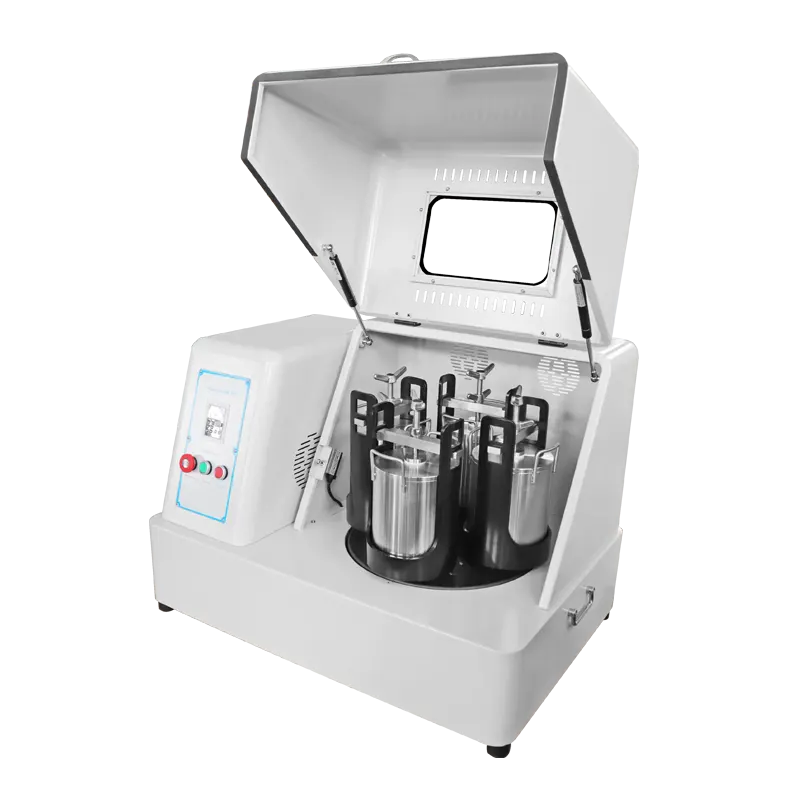
A glass fibre sample was wet-ground in alcohol using a TENCAN XQM planetary ball mill. After two hours, the measured particle-size distribution was D50 = 3.28 µm and D90 = 8.67 µm, demonstrating micrometre-scale sample preparation.
Sample analysis and experimental objective
The starting material consisted of elongated fibres, so the process had to address fibre fragmentation as well as powder refinement. The stated objective allowed micrometre-scale or nanoscale material. This trial supports the micrometre-scale route; it does not demonstrate a nanoscale product. For an elongated starting material, particle-size data should be considered alongside microscopy whenever residual fibre shape matters.
Equipment and test conditions
| Mill | TENCAN XQM-series planetary ball mill |
|---|---|
| Sample | 10 g glass fibres |
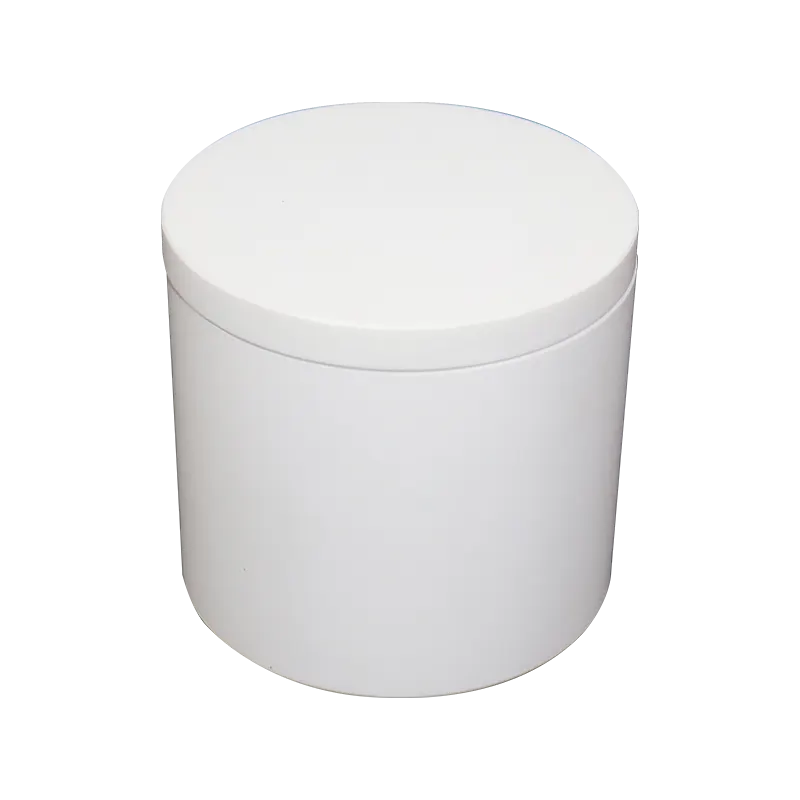
| Jar | 250 mL corundum |
| Media | Zirconia balls, 15–3 mm |
| Method | Wet grinding with alcohol; liquid quantity not specified |
| Speed setting | 480 rpm |
| Run mode | 5 minutes running / 1 minute pause |
| Sampling point | 2 hours |
Experimental observations and results
| Grinding time | D50 | D90 |
|---|---|---|
| 2 hours | 3.28 µm | 8.67 µm |
The measured distribution confirms a micrometre-scale outcome for the tested sample. It does not quantify fibre aspect ratio, complete elimination of long fragments or a nanoscale fraction. Those questions require their own characterization rather than an assumption based on the median size.
Why this equipment was selected
The TENCAN Vertical square planetary ball mill supplies planetary impact and friction in a small jar, while the TENCAN corundum planetary mill jar represents the ceramic jar family used for this experiment. The mixed ball sizes provide a practical way to investigate both initial fragmentation and subsequent fine grinding, without claiming that a specific ball distribution was optimized.
Practical precautions
- Use alcohol only in an approved jar and operating configuration with the required solvent and pressure precautions.
- Control temperature and allow the equipment to reach a suitable condition before opening or sampling.
- Contain fibres and dried fines during handling and recovery.
- Record solvent quantity, solids loading and microscopy results in a repeat study if morphology is part of acceptance.
Could another TENCAN machine be a better fit?
For a future pumpable slurry process, the TENCAN lab stirred ball mill could be compared after confirming that feed dimensions and liquid compatibility suit the chamber. It is an alternative process to test, not a demonstrated replacement for the two-hour XQM result. A nanoscale target would require additional trials and measurements.
Related TENCAN equipment
Explore the equipment and accessories for planning a comparable trial. Select the machine size and jar holders to match the stated working configuration.
Interpretation: These results describe the tested sample and conditions. Equipment alternatives and process improvements above are engineering recommendations for a further trial, not additional measured results. D50 and D90, where reported, describe the measured particle-size distribution; they do not establish an absolute maximum size or a sieve-pass percentage.