

Product features
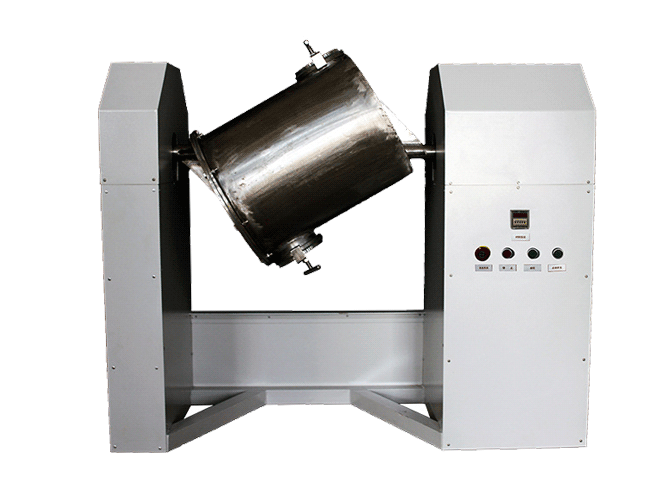
Inclined vessel motion
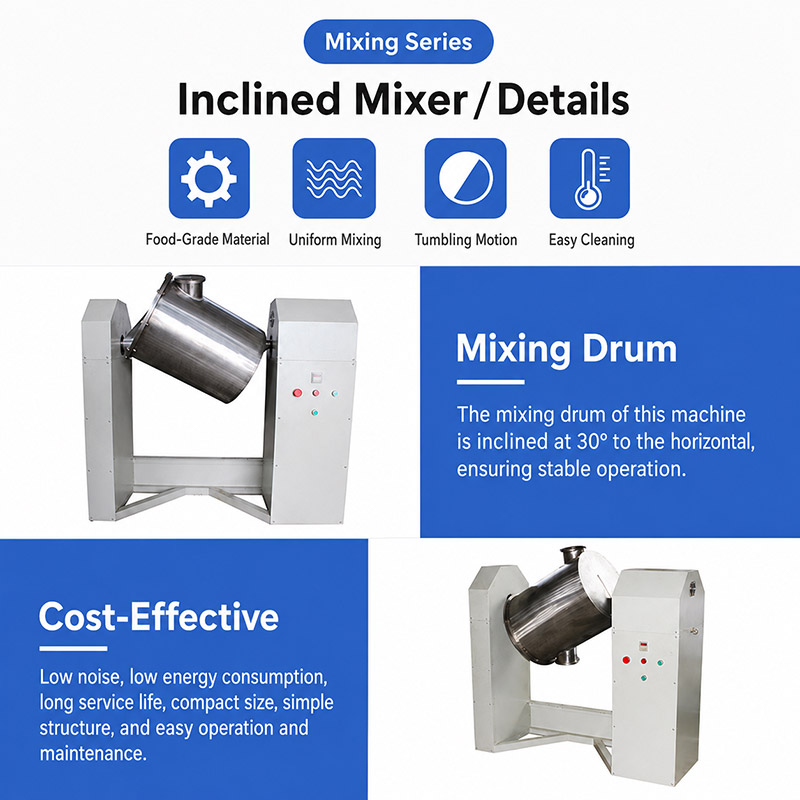
The drum axis is inclined so rotation produces changing material movement within the vessel during blending.
Selectable contact surfaces
Stainless steel and selected lining options are described for matching wear and contamination requirements.
Optional media-assisted work
Compatible balls may be used where appropriate for the formulation; confirm whether blending or additional grinding is required.
Working-volume choices
The XMX range lists different working volumes, allowing the batch charge to be matched to the vessel.
Applications
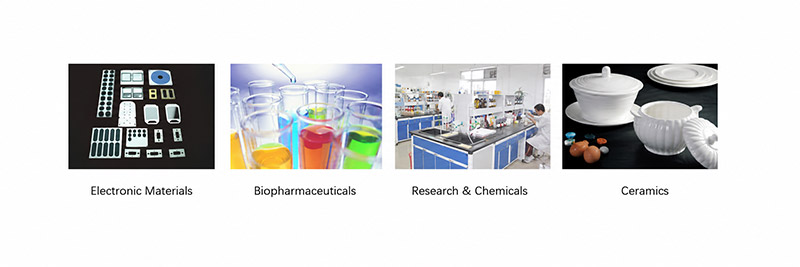
Electronic powder blends
Evaluate mixtures such as electronic-material powders with attention to composition uniformity and contact-material contamination.
Ceramic formulation trials
Blend compatible ceramic ingredients and compare multiple sampling locations before setting a production mixing time.
Chemical powder mixtures
Assess powder combinations with suitable flow properties, checking for segregation during loading and discharge.
Evaluating results
Composition uniformity
Analyze samples from different regions of the discharged batch to determine whether mixing meets the intended specification.
Segregation after handling
Check the blend again after discharge or transfer, particularly when particle size or density differs between ingredients.
Media effects
If balls are used, inspect particle-size change and wear separately from the assessment of mixing uniformity.
These are evaluation points for a sample trial, not measured results for a specific sample. Confirm performance under your actual operating conditions.
How it works
Load the batch
Add the ingredients within the selected working-volume allowance, leaving room for movement inside the drum.
Rotate the inclined vessel
The inclined drum lifts and redistributes the charge as it turns, bringing ingredients into repeated contact.
Sample the blend
Stop at a recorded interval and assess multiple subsamples before choosing the next mixing condition.
Construction and configuration
Inclined drum
The described vessel inclination changes the path of the charge relative to a horizontal rotating drum.
Lining options
The listed choices include stainless steel, corundum and polyurethane; confirm the exact contact surface for the application.
Model-specific drive
Speed and motor rating vary across the series, so settings should follow the selected model table.
More product images
Technical specifications
Compare the listed specifications and configurations. Scroll horizontally to view the complete table.
Specification table 1
| Nominal capacity | Working volume(L) | Total volume(L) | Charging factor | Mixing power (kW) | Speed(r/min) |
|---|---|---|---|---|---|
| XMX-5 | 2 | 5 | 0.4 | 0.37 | 50 |
| XMX-10 | 2 | 5 | 0.4 | 0.38 | 50 |
| XMX-20 | 8 | 20 | 0.4 | 0.75 | 33 |
| XMX-50 | 20 | 50 | 0.4 | 1.5 | 33 |
| XMX-100 | 40 | 100 | 0.4 | 1.5 | 23 |
| XMX-200 | 80 | 200 | 0.4 | 3 | 19 |
| XMX-300 | 120 | 300 | 0.4 | 4 | 14 |
| XMX-500 | 200 | 500 | 0.4 | 7.5 | 12 |
Confirm the selected model, power supply, contact materials and operating conditions before ordering. Performance depends on the material and process.