
What is a Multi Dimensional Mixer? A Versatile Mixing Equipment for Homogeneous Blending of Powders and Granules
What is a Multi Dimensional Mixer?
At its core, a multi dimensional mixer is a specialized mixing device designed to achieve uniform blending of dry powders, granules, and other particulate materials. Laboratories and industries use it to transform a mixture of multiple components from a segregated state into a homogeneous final product, ensuring consistent quality in downstream processes. Unlike conventional mixers that rely on simple rotation, this equipment combines multiple axes of motion to create a true three-dimensional mixing effect, which is particularly effective for materials with different particle sizes, densities, or shapes.
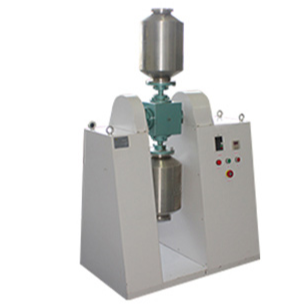
Core Functionality and Working Principle
The multi dimensional mixer works by simultaneously rotating the mixing container around two or three axes. The mixing vessel—typically a drum, a V-shaped chamber, or a Y-shaped container—is mounted on a gimbal-like mechanism that allows it to tumble, swing, and rotate in complex patterns. As the container moves, the materials inside are continuously lifted, cascaded, and sheared, breaking down agglomerates and redistributing particles across the entire volume. This results in a mixing action that is both gentle enough to preserve particle integrity and vigorous enough to achieve high homogeneity.
The key parameters that influence mixing quality include rotation speed, mixing time, the filling volume of the container, and the material properties of the components. The three-dimensional motion ensures that even small quantities of trace ingredients (as low as 1:10,000 ratio) are evenly distributed throughout the batch. Because the mixing chamber is sealed, the process is dust-free and suitable for hazardous or sensitive materials.
Key Components and Design Features
While the multi dimensional mixer does not have multiple subtypes in the traditional sense, its design can be customized to meet specific application needs. The main components include:
- Mixing Container: Available in various shapes (V-type, double-cone, Y-type, or cylindrical) and materials (stainless steel, polyethylene, or abrasion-resistant alloys). The container often features a dust-tight sealing system to prevent contamination.
- Drive Mechanism: A motor and gearbox system that provides controlled rotation around multiple axes. Some models use a single motor with a complex gearing arrangement, while others employ multiple motors for independent axis control.
- Control System: Digital timers, speed controllers, and programmable logic controllers (PLC) allow operators to set mixing cycles, record process data, and ensure repeatability. Touchscreen interfaces are common in modern units.
- Safety Features: Emergency stop buttons, interlock switches, and protective covers ensure safe operation, especially when handling reactive or flammable powders.
Key Performance Indicators and Selection Criteria
When selecting a multi dimensional mixer, users should evaluate the following critical parameters:
- Working Capacity: Typically ranges from 0.5 liters for laboratory units to 500 liters or more for pilot-scale and production models. The working volume is usually 50–70% of the total container volume (e.g., a 10-liter container can process 5–7 liters of material).
- Mixing Uniformity: Expressed as a coefficient of variation (CV) or standard deviation. High-quality mixers achieve CV below 5% even for low-dose ingredients.
- Rotational Speed Range: Adjustable from 5 to 50 rpm or more, depending on the model. Variable speed drives allow optimization for different materials.
- Material of Construction: Stainless steel (304 or 316L) is standard for hygiene and corrosion resistance; plastic-lined containers are used for reactive chemicals.
- Ease of Cleaning: Quick-release clamps, smooth interior surfaces, and removable seals reduce downtime between batches.
- Automation Level: Basic models have manual timers and speed knobs; advanced units feature recipe storage, remote monitoring, and data logging.
Application Areas and Selection Recommendations
Multi dimensional mixers are widely used in industries requiring high-precision blending of dry solids:
- Pharmaceuticals: Blending active pharmaceutical ingredients (APIs) with excipients for tablet or capsule production.
- Chemicals: Mixing catalysts, pigments, and additives into base powders.
- Food & Beverages: Combining flavors, spices, and nutrients with bulk flours or powders.
- Materials Science: Preparing homogeneous mixtures for battery materials, ceramics, and advanced composites.
- Research Laboratories: Small-scale formulation development, quality control, and sample preparation.
For laboratories and small-scale production, a compact tabletop multi dimensional mixer with a 1–10 liter capacity is sufficient. For pilot plants or manufacturing, floor-standing models with capacities up to 300 liters and automated controls are recommended. Always ensure that the materials of construction are compatible with the chemical properties of the powders being processed.
References
Multi dimensional mixer product page: https://www.labballmill.com/products/mixed-series/multi-dimensional-mixer.html