
3D Mixer: A Complete Guide to Three-Dimensional Powder Blending for Laboratory and Industrial Applications
Why Powder Blending Requires a Different Approach
If you have ever worked with dry powders in a laboratory or small-scale production environment, you know that achieving a truly homogeneous mixture is not as simple as it sounds. Powders with different particle sizes, densities, or flow characteristics tend to segregate during handling, transport, and even during mixing. Common tumbling blenders like V-type mixers or double cone mixers rely on rotational motion around a single axis, which can leave unmixed zones or cause layering, especially when the material properties vary significantly.
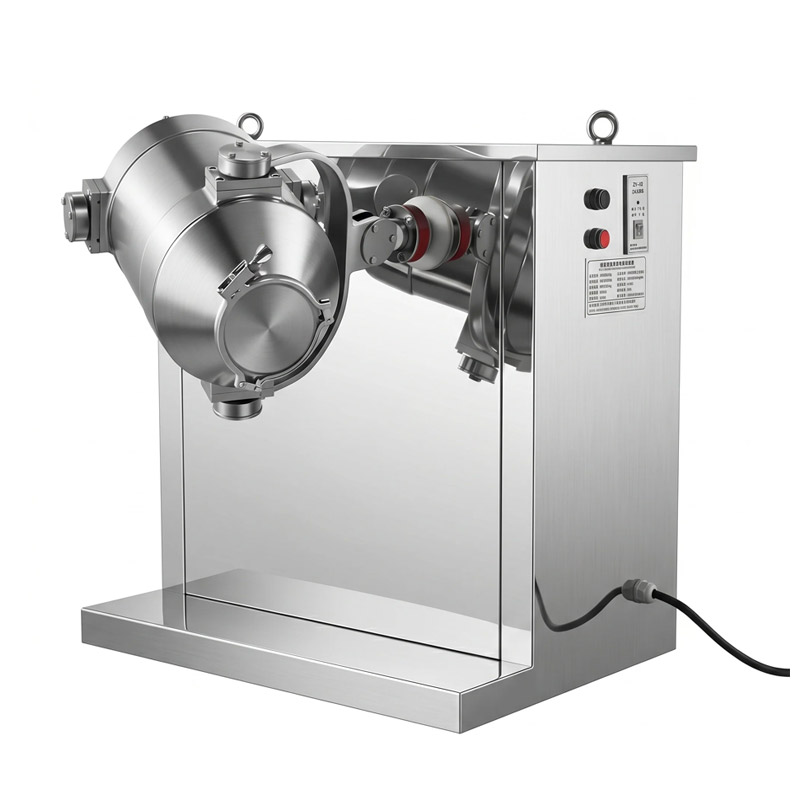
This is where a 3D mixer comes into play. Unlike traditional mixers that rotate around a fixed axis, a three-dimensional powder mixer moves the mixing container in multiple directions simultaneously. The result is a more thorough and gentle blending action that minimizes segregation and reduces mixing time. In this article, we will walk through how a 3D mixer works, what makes it different from other laboratory mixers, how to select the right model for your materials, and practical tips to get the best blending results.
What Is a 3D Mixer and How Does It Work?
The Principle of Multi-Directional Motion
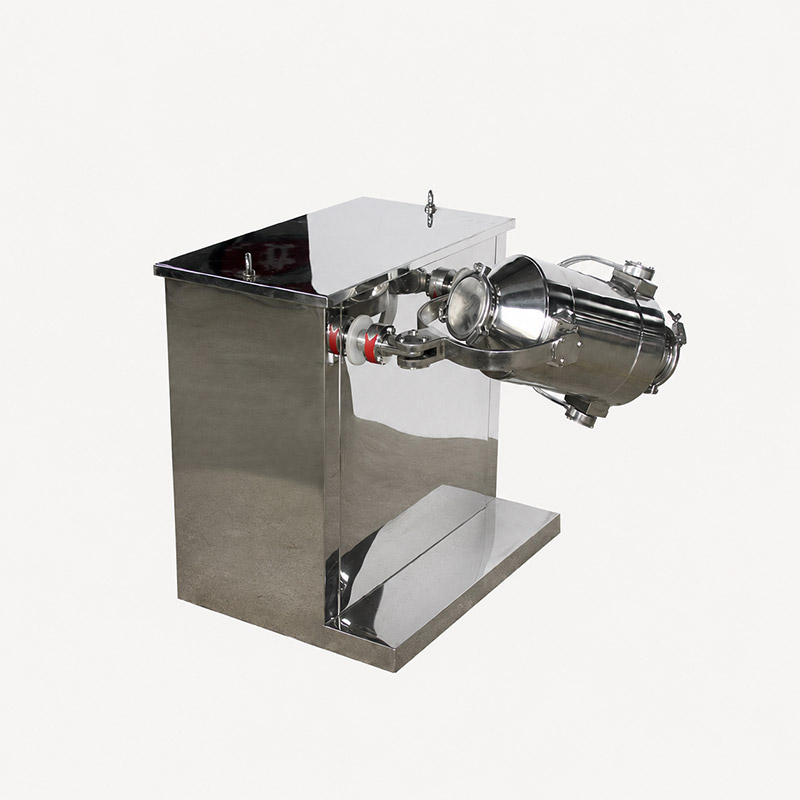
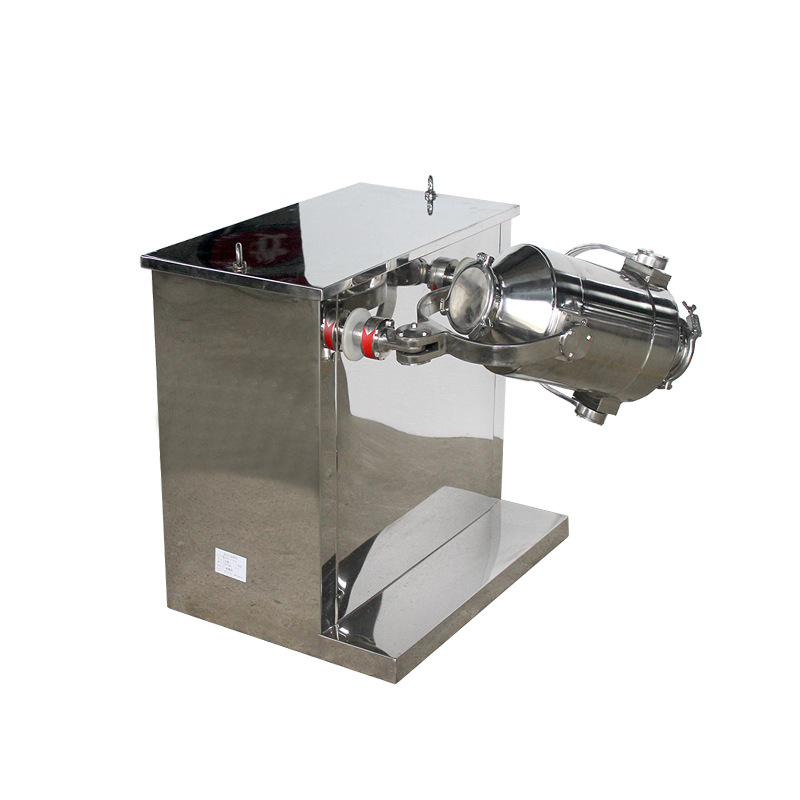
A 3D mixer (also called a three-dimensional powder mixer or multi-dimensional mixer) uses a unique motion mechanism. The mixing container is mounted on a frame that can rotate, swing, and translate simultaneously. Typically, the container is driven by a motor that controls two or more axes of movement. As the container moves in three dimensions, the powder inside is constantly lifted, turned, and folded onto itself. This creates a fluid-like motion where particles from different regions of the container are continually exchanged.
In contrast to a V-type mixer, which relies on gravity and a single rotational axis, the 3D mixer does not have a fixed center of rotation. The container's orientation changes continuously, so there are no dead zones where material can accumulate. This is especially important for powders that tend to stick or bridge.
Typical Motion Parameters
Although exact specifications vary by model, many laboratory 3D mixers operate at rotational speeds in the range of 5 to 80 rpm, with a tilt angle around 16 degrees. The speed and motion pattern are adjustable, allowing the operator to fine-tune the mixing intensity based on the material's sensitivity. For example, gentle mixing at lower speeds may be preferred for fragile agglomerates, while higher speeds can break up soft lumps and improve dispersion.
Key Advantages of a 3D Powder Mixer for Laboratory Use
Uniformity Without Damage
One of the biggest concerns when blending dry powders is maintaining particle integrity. Many high-shear mixers can break down fragile particles or cause unwanted attrition. The 3D mixer's gentle tumbling motion minimizes impact forces, making it suitable for materials that are sensitive to mechanical stress, such as pharmaceutical powders, catalysts, or battery electrode materials.
Elimination of Segregation
When blending powders with different densities or particle sizes, conventional mixers often allow heavier particles to migrate to the bottom or lighter particles to float. The multi-directional motion of a 3D mixer continuously reorients the powder bed, preventing gravity from creating a preferential path. This helps achieve a more homogeneous blend even when the components have significant differences in physical properties.
Flexible Batch Sizes
Laboratory 3D mixers are available in a range of container volumes, typically from a few hundred milliliters to several liters. This makes them ideal for R&D work where you need to test small batches before scaling up. The same machine can handle different container sizes, giving you flexibility without investing in multiple units.
Applications of 3D Mixers Across Industries
Pharmaceutical and Biomedical
In pharmaceutical formulation, achieving uniform content uniformity is critical for dosage accuracy. 3D mixers are used to blend active pharmaceutical ingredients (APIs) with excipients, especially when the API concentration is low. The gentle action prevents degradation of heat-sensitive or shear-sensitive compounds.
Battery Materials
In lithium-ion battery production, electrode materials such as NMC, LFP, and graphite need to be blended with conductive additives and binders. A 3D mixer can pre-blend dry powders before the addition of solvent, ensuring a consistent starting mixture for slurry preparation. This reduces variability in electrode coating and improves cell performance.
Ceramics and Advanced Materials
Ceramic powders, including alumina, zirconia, and silicon carbide, often require homogeneous mixing with sintering aids or colorants. The 3D mixer's ability to handle abrasive powders without excessive wear is a practical advantage, especially when using containers made of wear-resistant materials.
Chemical and Food Industries
In chemical processing, catalysts, pigments, and additives are blended to achieve consistent product quality. Food-grade powders, such as flavorings, spices, and nutritional supplements, also benefit from the gentle mixing action that preserves particle shape and size.
How to Select the Right 3D Mixer for Your Powder
Container Volume and Load Capacity
The first consideration is batch size. Laboratory 3D mixers typically have container volumes ranging from 0.5 L to 10 L. As a general rule, you should not fill the container more than 50–60% of its total volume to allow enough space for the powder to move freely. If your typical sample is 200 mL, a 500 mL container would be appropriate. The maximum load capacity (usually given in kilograms) depends on the material density. For example, a 5 L container may hold up to 2.5 kg of powder, but this varies with bulk density.
Material of Construction
The mixing container and internal surfaces should be compatible with your powder. Stainless steel is the most common choice for its corrosion resistance and ease of cleaning. For applications where metal contamination is a concern, you can request containers with a plastic lining or use containers made of polyurethane or other non-metallic materials. Always check whether the container is sealed to prevent dust leakage, especially when handling fine or toxic powders.
Speed Control and Programmability
Many laboratory 3D mixers offer variable speed control and a timer. Being able to adjust the speed from as low as 5 rpm to as high as 80 rpm gives you the flexibility to find the optimal mixing intensity for your material. Some models also include programmable cycles with forward/reverse rotation, which can further improve mixing uniformity. If you need to mix for extended periods, look for a model with a continuous operation mode and an automatic shut-off timer.
Safety Features
When mixing powders that are flammable, explosive, or dust-sensitive, you need to consider the safety of the equipment. Some 3D mixers can be equipped with explosion-proof motors or inert gas purging. If you are handling fine powders that may generate static electricity, ensure the equipment is properly grounded. Always follow the manufacturer's recommendations for safe operation.
Operational Tips for Best Blending Results
Optimize the Fill Level
As mentioned, filling the container to about 40–60% of its volume is a good starting point. If you overfill, the powder has less room to tumble, and mixing efficiency drops. If you underfill, the powder may not experience enough inter-particle motion. Experiment with a small batch to find the sweet spot for your specific material.
Consider Adding Mixing Aids
If your powder tends to agglomerate or has poor flow, you can add a few small ceramic or plastic balls (non-contaminating) to help break up lumps. This is similar to the principle used in a ball mill, but with much lower energy. The balls enhance the tumbling action without causing excessive wear.
Control the Mixing Time
Mixing time depends on the material properties and the desired homogeneity. For many powders, 5 to 15 minutes is sufficient to achieve a uniform blend. However, if the components have very different densities or particle sizes, longer times may be needed. It is advisable to take samples at different time intervals and analyze the uniformity (e.g., by measuring the concentration of a tracer) to determine the optimal time.
Cleaning Between Batches
To avoid cross-contamination, the mixing container should be thoroughly cleaned after each batch. Stainless steel containers can be washed with water or solvent, dried, and then wiped with a lint-free cloth. For powders that are sticky or hygroscopic, you may need to use a vacuum cleaner or compressed air to remove residues. Some 3D mixers allow quick-release containers, making the cleaning process faster.
Comparing 3D Mixers with Other Laboratory Mixers
3D Mixer vs. V-Type Mixer
A V-type mixer rotates around a single horizontal axis, creating a splitting and folding action. It is effective for free-flowing powders with similar particle sizes. However, it can be less effective for cohesive powders or materials with a wide density difference. The 3D mixer's multi-directional motion provides better mixing for challenging materials.
3D Mixer vs. Double Cone Mixer
A double cone mixer also rotates around a single axis but uses a conical shape to promote axial mixing. It is widely used in industrial production. For laboratory-scale work, the 3D mixer offers more flexibility because you can easily change the container and adjust the motion pattern.
3D Mixer vs. High-Speed Disperser
A high-speed disperser is designed for wet dispersion and de-agglomeration, not for dry powder blending. The 3D mixer is specifically for dry mixing and should not be used for liquids. If your process involves adding a liquid to a powder, you may need a high-speed dispersing homogenizer or a kneading machine.
What to Prepare Before Requesting a Quotation
When you are ready to purchase a 3D mixer, having the following information ready will help the supplier provide an accurate recommendation:
- Material name and composition – including any hazardous properties.
- Bulk density and particle size range of the powder.
- Batch volume or weight per batch.
- Desired mixing time and whether you need continuous or intermittent operation.
- Container material preference (stainless steel, plastic, etc.).
- Special requirements such as explosion-proof, vacuum, or inert gas atmosphere.
- Local voltage and frequency (e.g., 110V/60Hz or 220V/50Hz).
With this information, a technical engineer can help you select the appropriate model and optional accessories. At TENCAN, we offer a range of 3D mixers designed for laboratory and small-scale production, with customizable options to fit your specific application.
Final Thoughts
A 3D mixer is a valuable addition to any laboratory that deals with dry powder blending. Its multi-directional motion provides a level of homogeneity that is difficult to achieve with conventional single-axis mixers, while still being gentle enough for sensitive materials. Whether you are working on pharmaceutical formulations, battery materials, ceramics, or advanced composites, understanding how to select and operate a 3D powder mixer will save you time and improve the quality of your results.
If you are unsure which model suits your needs, do not hesitate to reach out to the TENCAN team with your material details. We can help you find the right configuration so that you can start blending with confidence.