
Trough Mixer: A Practical Guide for Powder and Granule Blending
Why Mixing Uniformity Matters in Powder Processing
In many powder processing operations, achieving a consistent and homogeneous blend is just as critical as particle size reduction. Whether you are preparing ceramic formulations, blending pharmaceutical excipients, mixing battery electrode materials, or combining metal powders for powder metallurgy, an uneven mixture can lead to inconsistent product quality, poor sintering behavior, or batch failures.
Among the various types of mixing equipment available, the trough mixer (also known as a trough blender or horizontal trough mixer) has earned a solid reputation for handling materials that are difficult to blend in rotating drum mixers. If your materials tend to stick, segregate, or require gentle yet thorough mixing, a trough mixer may be the practical solution you need.
What Is a Trough Mixer and How Does It Work?
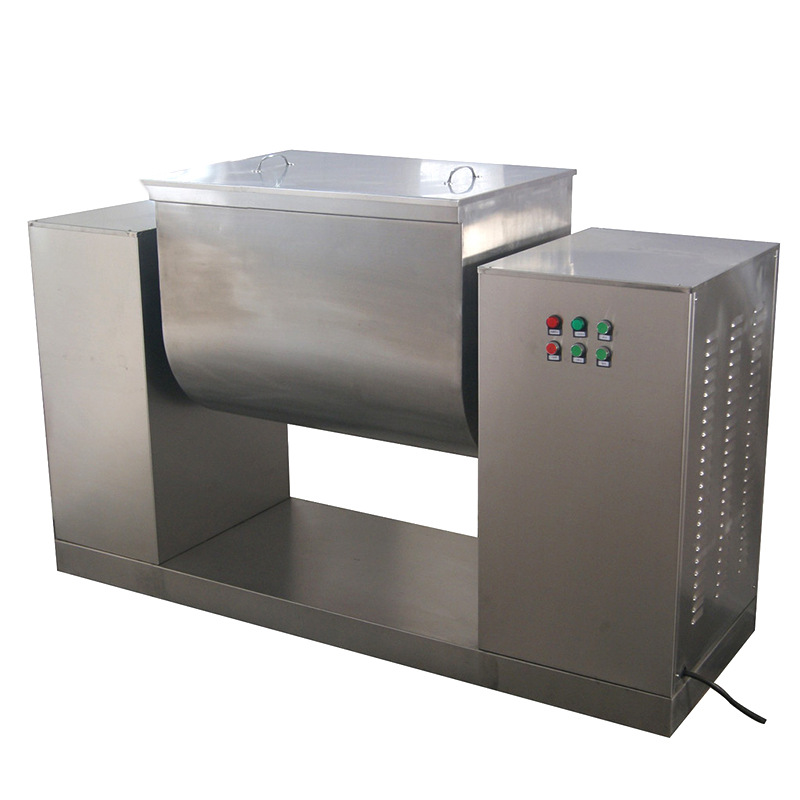
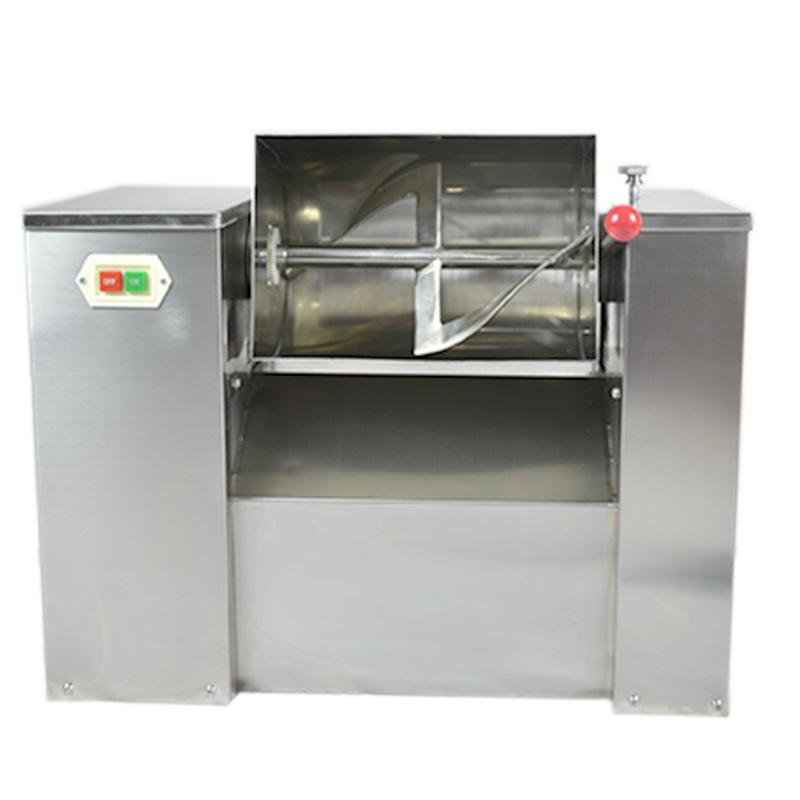
A trough mixer consists of a U-shaped or semi-cylindrical trough (the mixing chamber) and one or two rotating ribbon or paddle agitators mounted on a horizontal shaft. The agitators rotate at a relatively low speed, typically between 20 and 60 rpm for many laboratory and pilot-scale units, moving the powder material both radially and axially. This dual motion creates a convective and shear mixing action that effectively distributes particles of different sizes, densities, and shapes.
Unlike a V-blender or double cone mixer, which relies on tumbling and gravity, a trough mixer forces the powder to move in a controlled pattern. This is especially useful when the powder has a tendency to cling to the container walls or when you need to add small quantities of liquid or binder during the mixing process. Many trough mixers also allow for easy discharge via a bottom outlet or by tilting the entire trough.
Key Applications Across Industries
Because of its gentle yet effective mixing action, the trough mixer is widely adopted in the following fields:
- Ceramic and glass manufacturing: Blending frits, glazes, pigments, and body materials before milling or shaping.
- Pharmaceutical blending: Uniform mixing of active pharmaceutical ingredients (APIs) with excipients, especially when the powder has poor flowability.
- Chemical and pigment production: Homogenizing colorants, fillers, and additives before further processing.
- Food processing: Dry mixing of flour, spices, protein powders, and nutritional supplements.
- Powder metallurgy: Blending metal powders with lubricants, binders, or other alloying elements.
- Battery material preparation: Premixing electrode active materials, conductive additives, and binders prior to slurry making.
When Should You Choose a Trough Mixer Over Other Mixers?
If you are comparing a trough mixer with other common types, here are a few practical considerations:
| Mixer Type | Best For | Limitation |
|---|---|---|
| V-type mixer | Free-flowing, dry powders | Not suitable for sticky or wet materials |
| Double cone mixer | Bulk blending with no internal agitator | Less effective for cohesive powders |
| Trough mixer | Cohesive, damp, or multi-component blends | Higher energy consumption per batch |
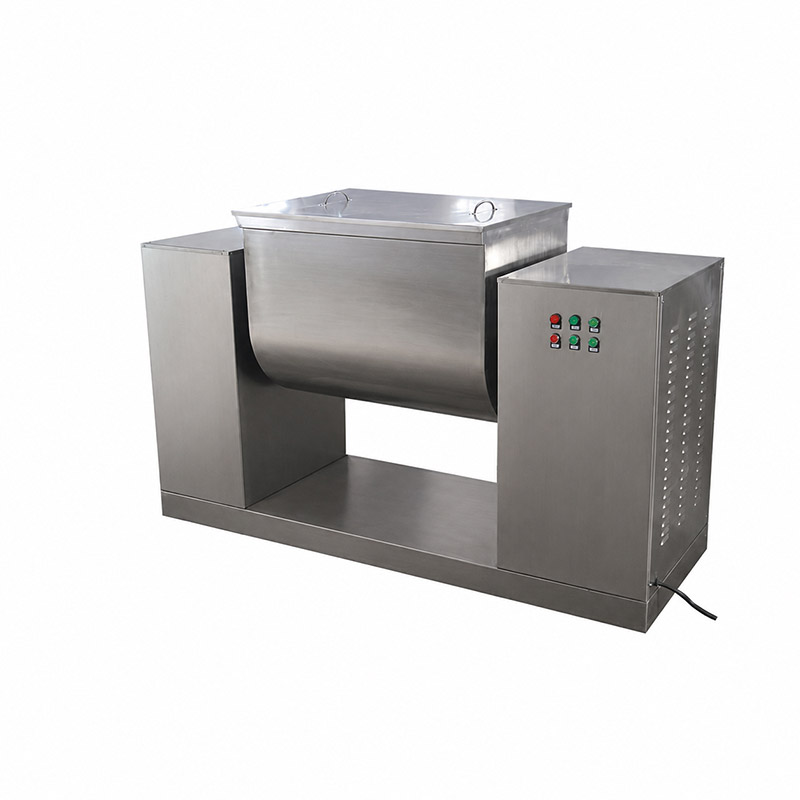
As a practical guideline, many laboratory and small-scale trough mixers offer working capacities ranging from a few liters to several hundred liters. The actual usable volume is typically about 30%–50% of the total trough volume to leave adequate headspace for material movement.
Factors to Consider When Selecting a Trough Mixer
Choosing the right trough mixer for your application depends on more than just capacity. Here are the most important technical factors you should evaluate:
1. Material Characteristics
The physical properties of your powder will heavily influence the mixing performance. Key parameters include particle size distribution, bulk density, moisture content, flowability (angle of repose), and tendency to agglomerate or segregate. If the material contains both very fine and coarse particles, trough mixing can help reduce segregation because the agitator actively moves the entire bed.
2. Construction Material
The trough and agitator should be made from materials compatible with your product. Stainless steel (304 or 316L) is the standard choice for food, pharmaceutical, and chemical applications due to its corrosion resistance and ease of cleaning. Some trough mixers also incorporate coatings or surface treatments to reduce material adhesion. Always confirm that the contact surfaces meet your hygiene or purity requirements.
3. Agitator Design
Most trough mixers use either ribbon-type (spiral) or paddle-type agitators. Ribbon agitators provide a more effective axial and radial flow, making them suitable for powders with varying particle sizes. Paddle agitators are simpler and easier to clean, often used for fragile or abrasive materials. Some designs also incorporate a chopper or high-speed disperser for breaking agglomerates.
4. Mixing Speed and Control
While trough mixers typically operate at low speeds (e.g., 15–60 rpm), some materials may benefit from variable speed control. A variable frequency drive (VFD) allows you to adjust the rotation speed to match the material behavior. For example, a lower speed may be preferred for fragile granules to avoid breakage, while a slightly higher speed can improve mixing of sticky powders.
5. Discharge Mechanism
Consider how the mixed batch will be discharged. Common options include:
- Bottom discharge valve: Quick and convenient; can be manual or pneumatic.
- Tilting trough: The entire trough tilts to pour out the material. This design is common for laboratory and pilot-scale units because it facilitates cleaning.
- Screw discharge: A conveyor screw at the bottom continuously removes the blended material, useful for semi-continuous operations.
Practical Advice for Operation and Maintenance
Getting consistent results from a trough mixer requires good operating habits. Here are a few tips that many experienced users find helpful:
- Do not overload: Filling the trough beyond two-thirds of its total volume reduces mixing efficiency and can increase motor load. A safe starting point is 40%–50% of the total volume.
- Pre-blend large batches: If you are scaling up from a lab unit to a production unit, expect that mixing times may need adjustment. It is wise to perform a mixing uniformity test (e.g., using a tracer or sampling at multiple points) to determine the optimal time.
- Clean thoroughly between different materials: Residue left in the trough or on the agitator can contaminate the next batch. Many trough mixers are designed with removable seals and easy-access covers for cleaning.
- Check seals regularly: The shaft seals prevent powder leakage. Depending on the material, you may need to replace seals periodically to maintain a dust-tight environment.
Common Challenges and How to Address Them
Even with a well-designed trough mixer, you might encounter a few issues. Understanding the root cause can help you adjust quickly:
- Poor mixing uniformity: This often occurs when the material is too cohesive or when the batch size is too small for the trough volume. Try increasing the batch size to cover the agitator blades more fully, or consider adding a higher speed setting if available.
- Material buildup on agitator blades: Sticky or moist powders tend to adhere to metal surfaces. In such cases, a lower moisture content, a different blade coating, or a slight increase in rotational speed may reduce adhesion.
- Excessive heat generation: Although trough mixers generate less heat than high-speed dispersers, prolonged operation at maximum speed can raise the temperature. If you are mixing heat-sensitive materials, use intermittent operation or a cooling jacket if available.
- Segregation after discharge: Even after a good mix, some powders may segregate during transfer or storage. Using a gentle conveying method and avoiding free fall can help maintain uniformity.
Choosing the Right Supplier for Your Trough Mixer
Selecting a reliable manufacturer is as important as selecting the machine itself. When evaluating suppliers, consider whether they can provide technical support for your specific material, offer accessories such as different agitator designs, and help with installation and commissioning. A supplier that understands the behavior of various powders can save you time and reduce trial-and-error experiments.
At TENCAN, we have extensive experience in designing and building trough mixers for laboratory, pilot, and small-scale production. Our team can assist you in selecting the appropriate capacity, agitator type, and material of construction based on your application. Feel free to provide information about your powder (such as bulk density, moisture sensitivity, and target batch size) so we can recommend the most suitable configuration.
Whether you are developing a new product or scaling up an existing process, the right mixing equipment makes a measurable difference in product consistency and operational efficiency. Understanding the capabilities and limitations of a trough mixer will help you make a confident decision for your blending needs.