
Electric Lifting Stirred Ball Mill for Efficient Laboratory and Pilot-Scale Grinding
Introduction: Why Choose an Electric Lifting Stirred Ball Mill?
In many research and development environments, you often face a familiar challenge: you need to grind, mix, or disperse powders or slurries with high efficiency, but you also want to avoid the common headaches of traditional ball mills—such as heavy jar lifting, excessive noise, and long processing times. The electric lifting stirred ball mill is designed to address these exact problems. It combines the high-energy stirring action of a vertical agitator with the convenience of an electric lifting mechanism, making jar changing effortless and speeding up your workflow.
Whether you are working on battery material preparation, ceramic slurry dispersion, pigment grinding, or mechanochemical synthesis, this type of mill offers distinct advantages. In this article, we will walk through how the stirred ball mill works, its key benefits, typical applications, and the factors you should consider when selecting the right machine for your lab or pilot plant.
How Does an Electric Lifting Stirred Ball Mill Work?
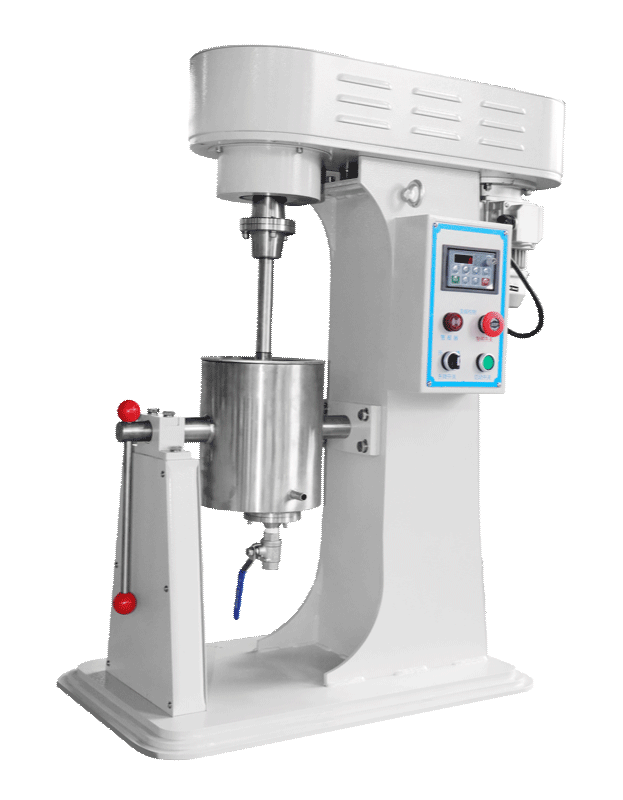
The stirred ball mill belongs to the family of vertical ball mills. Unlike a planetary ball mill that relies on rotation of jars around a central sun wheel, the stirred mill achieves size reduction through an impeller or stirrer that rotates inside a stationary grinding tank. The grinding media (usually small spherical beads made of zirconia, alumina, steel, or other materials) are agitated by the stirrer, creating intense shear and impact forces that break down particles.
Key Components and Operation
A typical electric lifting stirred ball mill consists of:
- Grinding tank (jar): Available in various materials including stainless steel, nylon, polyurethane, or ceramic-lined options. The tank capacity can range from small laboratory volumes (e.g., 0.5 L) to larger pilot-scale capacities (e.g., 50 L or more).
- Stirring shaft with impeller: The agitator is typically made of wear-resistant alloy or ceramic-coated material. The shape and speed of the impeller directly influence the milling energy and particle size distribution.
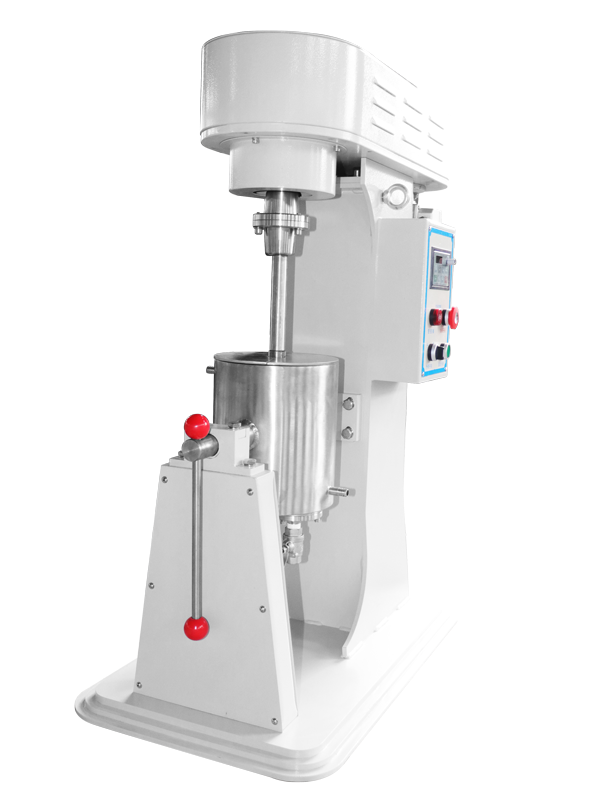
- Electric lifting system: A motor-driven mechanism that raises and lowers the stirrer assembly out of the grinding tank. This feature eliminates manual lifting, saving time and reducing operator strain.
- Speed control system: Most laboratory stirred mills offer adjustable rotational speed, often in the range of 100–1200 rpm, depending on the model. Variable speed allows you to optimize the milling intensity for different materials.
- Sealing and cooling: Many models include a sealed grinding chamber to prevent solvent evaporation and allow operation under inert gas or vacuum. A water cooling jacket can be integrated to control temperature rise during extended grinding.
During operation, the tank is filled with grinding beads (commonly occupying 50–70% of the tank volume) and the material to be processed in either dry powder or slurry form. The stirrer rotates at a set speed, causing the beads to collide with each other and with the particles, thereby reducing particle size and achieving homogeneous mixing or dispersion.
Advantages of the Electric Lifting Feature
Why is the electric lifting mechanism such a practical upgrade? In conventional stirred mills, changing the grinding jar often requires you to manually lift the heavy stirrer assembly or tilt the entire machine. This can be cumbersome, especially for larger jars (e.g., 5 L or 10 L). The electric lift automates this process:
- Labor saving – The stirrer moves up and down smoothly with the push of a button.
- Faster jar exchange – You can switch between different jars for different materials without cross-contamination.
- Improved safety – Reduces the risk of strain injuries or accidental spills.
- Consistent positioning – The lifting guide ensures the stirrer is always centered, preventing imbalance.
Typical Applications and Materials
The lab stirred ball mill is suitable for a wide variety of materials across multiple industries. Below are some common application scenarios:
Battery Materials (Cathode and Anode)
Lithium-ion battery electrode materials such as NMC, LCO, LFP, and graphite are often processed in stirred ball mills to achieve sub-micron or even nano-scale particle sizes, which is critical for electrochemical performance. Wet grinding in a solvent (like NMP or water) also helps to create a stable slurry for electrode coating.
Ceramics and Refractories
From zirconia to alumina, silicon carbide, and other ceramic powders, stirred milling provides high energy input needed to break down hard, brittle materials. The ability to use ceramic grinding beads and liners minimizes contamination.
Pigments and Inks
Pigment dispersion requires both particle size reduction and even distribution in a liquid vehicle. Stirred ball mills are widely used for producing high-quality printing inks, paints, and coatings.
Pharmaceutical and Cosmetic
Active pharmaceutical ingredients, excipients, and cosmetic powders can be micronized or blended in a controlled environment. The closed grinding system allows for solvent recovery and containment of potent compounds.
Mineral Processing and Geochemistry
For ore sample preparation, the stirred mill can grind rock powders down to XRF or XRD analysis grade efficiently.
Key Selection Considerations
When choosing an electric lifting stirred ball mill, you should consider the following parameters to ensure the machine meets your specific requirements:
| Parameter | Typical Considerations |
|---|---|
| Grinding tank volume | From 0.5 L to 100 L. Choose based on batch size. A rule of thumb: the working capacity is about 60–70% of the total tank volume. |
| Grinding media material | Zirconia (YTZ), alumina, steel, agate. Choose to match material hardness and avoid contamination. |
| Media size | Typically 0.5–10 mm. Smaller beads (< 2 mm) are better for fine grinding and dispersion; larger beads are for coarse grinding and mechanical alloying. |
| Rotational speed range | Low-speed (200–600 rpm) for gentle mixing; high-speed (up to 1200 rpm) for intense grinding. |
| Material of tank and stirrer | Must be compatible with the product (e.g., acid-resistant, non-toxic, low wear). |
| Cooling method | Air cooling or water jacket; essential for heat-sensitive materials. |
| Sealing and atmosphere | Standard open type, sealed for solvent, or vacuum/inert gas option for air-sensitive powders. |
| Lifting type | Electric lifting is more convenient than manual screw or hydraulic for most lab and pilot applications. |
Matching the Equipment to Your Process
No single mill fits every situation. For example, if you are processing a sticky slurry, you may need a tank with a scraper or a special impeller design. If you are working with highly abrasive materials, consider a polyurethane-lined tank and ceramic-coated stirrer. Many suppliers, including TENCAN, offer customizable configurations to match your process conditions.
Before placing an order, it is helpful to have the following information ready:
- Material to be processed (name, composition, hardness, initial particle size)
- Target particle size (e.g., D50 < 1 µm, D90 < 10 µm)
- Batch size per run (in liters or kilograms)
- Whether dry or wet grinding, and if wet, the solvent used
- Required operating temperature range
- Any special requirements (inert gas, explosion-proof, clean room compatibility)
Comparison with Other Ball Mill Types
You might wonder: when should I use a stirred ball mill instead of a planetary ball mill or a conventional tumbling ball mill? Here is a brief comparison:
- Stirred ball mill vs. planetary ball mill: Planetary mills generate high impact through jar rotation, making them excellent for mechanical alloying and very fine dry grinding. However, they are more difficult to scale up and can generate significant heat. Stirred mills are more efficient for wet grinding, offer easier jar change, and can be scaled to larger volumes without changing the fundamental mechanism.
- Stirred ball mill vs. tumbling ball mill: Tumbling mills (e.g., the common horizontal ball mill) rely on rotation of the entire drum. They are simple and robust but have lower energy density, longer grinding times, and larger footprint for the same capacity. Stirred mills are more compact and faster for fine grinding.
- Stirred ball mill vs. attritor mill: Attritors are a type of stirred mill, but often have a stationary tank and a rotating impeller arm. The electric lifting stirred mill is essentially a vertical attritor with the added convenience of an automated lift.
In many practical situations, the stirred ball mill is the preferred choice when your main goals are wet micronization, dispersion, or homogenization in a laboratory or small-scale production environment.
Why Consider TENCAN’s Electric Lifting Stirred Ball Mill?
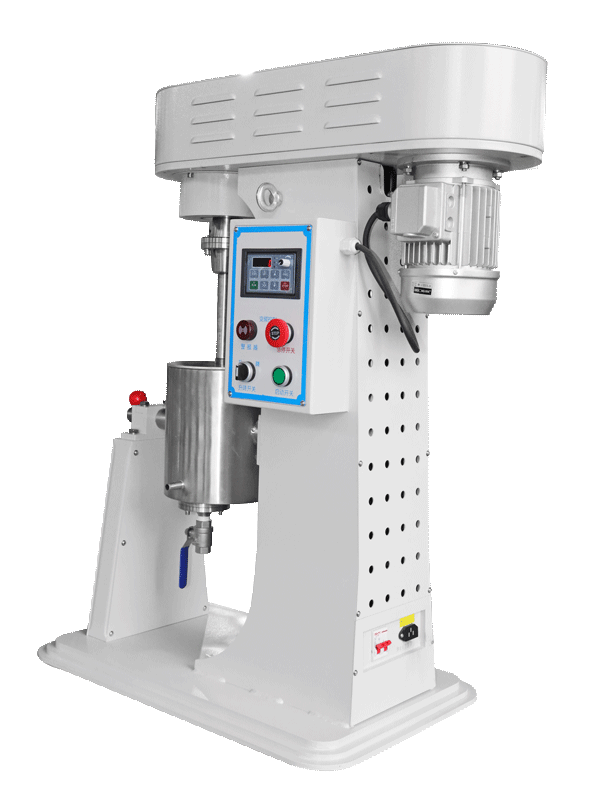
If you are searching for a reliable manufacturer of stirred ball mill equipment, TENCAN’s electric lifting stirred ball mill is worth a close look. With over 20 years of experience in powder processing equipment, TENCAN understands the real-world demands of researchers and production engineers. Their mills feature:
- Robust electric lifting system with guide rails for smooth, stable movement.
- Various tank materials and volumes to suit different applications.
- PLC-based control with programmable speed, time, and interval operation.
- Optional water cooling, vacuum sealing, and inert gas connections.
- CE certification for safe operation in international markets.
The design prioritizes ease of use, reproducibility, and minimal maintenance. TENCAN’s technical team can help you determine the most suitable configuration based on your material and process parameters.
Final Thoughts
The electric lifting stirred ball mill is a versatile and efficient tool for modern laboratories and pilot plants that require high-quality grinding, mixing, and dispersion. Its electric lifting feature significantly improves workflow ergonomics, while the high-energy stirring action ensures fast and consistent results. By carefully considering the grinding media, tank material, speed, and cooling needs, you can select a machine that will serve you well for years.
If you are ready to upgrade your powder processing capabilities or need advice on selecting the right stirred ball mill, we encourage you to evaluate your process requirements and reach out to a trusted supplier. TENCAN’s team is available to provide technical guidance and customized solutions to match your specific application.