
Stainless Steel Vibration Crusher: Efficient Lab Grinding for Hard and Brittle Materials
Why a Stainless Steel Vibration Crusher for Laboratory Use?
When you need to prepare small batches of powder samples for analysis, formulation, or further processing, the first challenge is often particle size reduction. Many brittle materials—such as ores, ceramics, glass, seeds, or chemical reagents—cannot be easily cut or sheared by conventional mills. A stainless steel vibration crusher offers a practical solution: it uses high-frequency mechanical vibration to fracture particles into finer sizes, while keeping the sample contained and free from cross-contamination.
In this article, we walk through how this equipment works, what materials it handles best, and what you should consider when selecting a vibration crusher for your lab. We will also look at the engineering features that make the stainless steel vibration crusher a reliable choice for routine sample preparation.
How Does a Vibration Crusher Work?
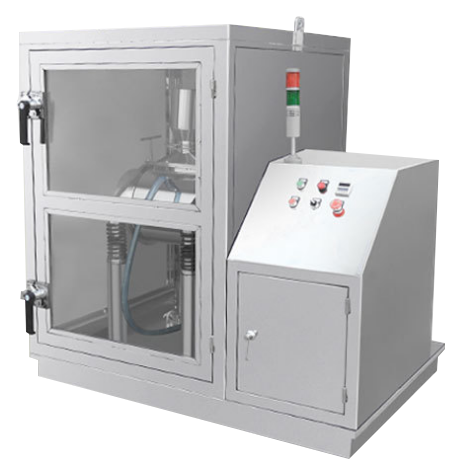
A lab vibration mill operates on a simple principle: a motor drives an eccentric mechanism that generates high-frequency vibration, typically in the range of 1000 to 3000 cycles per minute. The grinding chamber, usually made of stainless steel, contains the sample along with grinding media such as steel balls or rods. As the chamber vibrates, the media collide with the material, crushing it through impact and attrition.
Unlike a planetary ball mill, a vibration crusher does not require a rotating platform. The entire chamber moves in a small circular or linear oscillation. This direct agitation makes the vibration mill particularly effective for breaking down hard, brittle substances into a consistent particle size, often down to several hundred microns or finer, depending on the material characteristics and grinding time.
Key Components of a Stainless Steel Vibration Crusher
- Grinding chamber: Made of 304 or 316 stainless steel, resistant to corrosion and easy to clean.
- Vibration motor: Provides consistent oscillation frequency and amplitude.
- Grinding media: Typically steel balls, ceramics, or stainless steel rods, selected based on the sample hardness and target particle size.
- Sealing cover: Prevents dust leakage and allows for controlled atmosphere grinding if needed.
- Base with vibration dampers: Reduces noise and prevents excessive vibration transfer to the workbench.
Materials Suitable for the Stainless Steel Vibration Crusher
This laboratory crusher is commonly used for materials that are hard and brittle, with a Mohs hardness typically up to 6–7. Common applications include:
- Ores and minerals (e.g., quartz, feldspar, limestone, coal)
- Ceramic raw materials (e.g., alumina, zirconia, silicon carbide)
- Glass and glass frit
- Chemical reagents and pharmaceutical ingredients
- Dried plant materials (e.g., seeds, herbs, roots)
- Construction materials (e.g., cement clinker, slag)
Because the chamber is made of stainless steel, it is also suitable for samples that require a clean, corrosion-resistant environment. For food, pharmaceutical, or biological applications, the smooth surface and lack of crevices make cleaning straightforward, reducing the risk of cross-contamination between batches.
Advantages of a Stainless Steel Vibration Crusher in the Lab
1. Dust-Free Operation
One of the biggest concerns in laboratory crushing is dust generation. The sealed grinding chamber of a vibration crusher effectively contains fine particles. This is especially important when working with toxic, allergenic, or valuable samples. Many models also allow the introduction of inert gas for air-sensitive materials.
2. Easy Cleaning and Maintenance
The stainless steel interior can be wiped clean with solvents or water, and the grinding media can be removed and washed separately. There are no complex internal mechanisms that trap powder, which saves time between samples.
3. Consistent Particle Size Distribution
Vibration grinding produces a relatively uniform particle size compared to some other pulverizing methods. The combination of impact and attrition ensures that coarse particles are preferentially broken down, while finer particles are less likely to over-grind, provided the grinding time is controlled.
4. Compact and Portable
Most laboratory vibration crushers have a small footprint, fitting easily on a bench. They are also relatively quiet when the vibration dampers are properly adjusted, making them suitable for shared lab spaces.
Selecting the Right Vibration Crusher for Your Lab
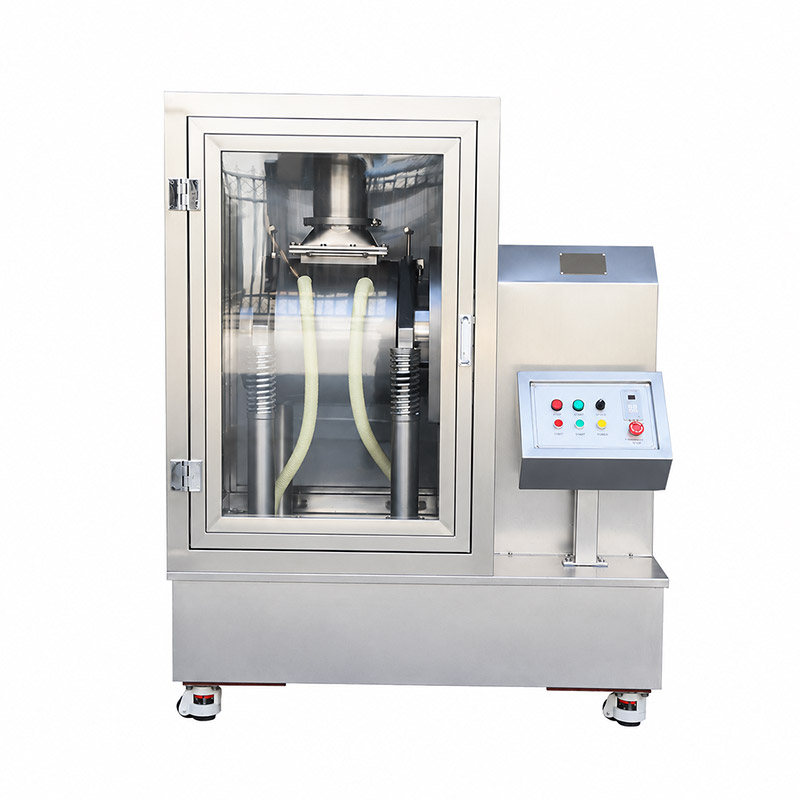
When choosing a stainless steel vibration crusher, consider the following factors:
Sample Capacity
Laboratory vibration mills typically handle batch sizes from a few grams up to several hundred grams. If you need to process larger quantities, you may need a larger chamber or a continuous feed model. For most analytical and bench-scale work, a chamber volume of 50–500 mL is sufficient.
Grinding Media Selection
The choice of grinding media significantly affects the final particle size, contamination level, and grinding efficiency. For example:
- Stainless steel balls: Good for general-purpose hard materials; may introduce iron contamination.
- Zirconia or ceramic balls: Lower contamination, suitable for high-purity samples.
- Steel rods: Provide line contact, effective for elongated particles or fibrous materials.
Vibration Frequency and Amplitude
Higher frequencies generally produce finer particles, but also generate more heat. Some materials, such as heat-sensitive pharmaceuticals or explosives, require careful control of the grinding duration and intermittent operation. A adjustable vibration frequency (typically 50–60 Hz on standard models) gives you flexibility.
Material Hardness and Feed Size
For materials with a Mohs hardness above 7, the vibration crusher may still be effective, but the wear rate of the chamber and media will increase. Similarly, very large feed particles (e.g., >10 mm) may need pre-crushing with a jaw crusher or roll crusher before being introduced into the vibration mill.
If you are unsure about which configuration best suits your sample, many suppliers (including TENCAN) offer technical guidance based on your material composition, target particle size, and batch volume. You can refer to the stainless steel vibration crusher product page for more details on available models and specifications.
Practical Tips for Using a Vibration Crusher
- Pre-crush large pieces: If your sample contains lumps larger than about 10 mm, reduce them first with a laboratory jaw crusher or hammer mill to avoid overloading the vibration mill.
- Balance the load: Distribute the sample and grinding media evenly in the chamber to ensure uniform grinding action.
- Control grinding time: Start with a short cycle (e.g., 30 seconds to 1 minute) and check the particle size. Over-grinding can lead to excessive heat generation and potential sample degradation.
- Use a timer: Most laboratory vibration crushers come with an adjustable timer or can be connected to a programmable controller for consistent results.
- Check for wear: Inspect the grinding chamber and media periodically. Replace worn media to maintain grinding efficiency and avoid contamination.
Conclusion
A stainless steel vibration crusher is a versatile and reliable tool for laboratory sample preparation of hard, brittle materials. Its dust-free operation, easy cleaning, and compact design make it a popular choice in research labs, quality control stations, and small-scale production facilities. By understanding the working principle, material compatibility, and selection criteria, you can choose the right vibration mill for your specific grinding needs.
For more information on the complete range of laboratory crushing equipment, including the stainless steel vibration crusher, jaw crushers, roll crushers, and other sample preparation machines, visit the TENCAN product page or contact their technical team for application-specific advice.