
Continuous Planetary Ball Mill: A Guide to Continuous Grinding in Laboratory and Production Settings
What Is a Continuous Planetary Ball Mill and When Should You Choose It?
If you have worked with a standard planetary ball mill, you know that it operates in a batch mode: you load the grinding jars, run the mill for a set time, stop it, and then unload the powder. That process is perfectly suitable for many laboratory tasks—sample preparation, small-scale synthesis, and material characterization. But what happens when your research or small-scale production requires uninterrupted material processing for longer periods, or when you need to process a larger volume of material without frequent stoppages?
This is where a continuous planetary ball mill becomes relevant. Unlike conventional batch planetary mills, the continuous design allows material to be fed into the grinding chamber and discharged while the mill is running, enabling a steady flow of powder processing. It bridges the gap between laboratory-scale batch grinding and industrial continuous milling, making it a valuable tool for pilot plants, process development, and small-scale production.
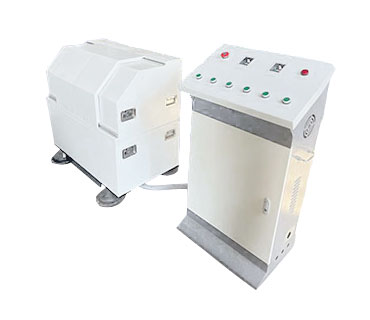
How Does a Continuous Planetary Ball Mill Work?
The fundamental principle of a continuous planetary ball mill is similar to that of a batch planetary mill: the grinding jars rotate around their own axes while simultaneously rotating around a central axis (planetary motion). This creates intense centrifugal forces that drive the grinding balls to impact and shear the powder material. However, the continuous version introduces a critical modification in the material flow path.
In a typical continuous planetary ball mill, the grinding jar (or drum) is designed with an inlet and an outlet. The material to be ground is fed continuously through the inlet, usually via a screw feeder or a vibrating feeder, while the ground product exits through the outlet, often assisted by a screen or a classifier to control the residence time. The continuous feed and discharge mechanism allows the mill to operate without interruption, maintaining a steady-state grinding condition.
Some designs use a combination of centrifugal force and gravity to move the material through the mill. The grinding media and the material are kept in constant motion, and the fineness of the product is controlled by factors such as:
- Rotational speed of the sun wheel and jars
- Feed rate of the material
- Size and material of grinding balls
- Ball-to-powder ratio
- Residence time inside the mill
- Use of a classification system (e.g., internal screen or external air classifier)
Because the mill can run continuously, it is ideal for applications where a consistent output quality is required over an extended period, such as in mechanical alloying, catalyst preparation, or continuous production of fine ceramic powders.
Key Advantages of Continuous Grinding over Batch Milling
Choosing a continuous planetary ball mill over a batch one depends on your specific needs. Here are some practical advantages that may influence your decision:
1. Higher Throughput for Small-Scale Production
If you need to process kilograms of material per day, a continuous mill can be more efficient than running multiple batch cycles. The uninterrupted operation reduces the downtime associated with loading, unloading, and cleaning between batches. For pilot plants or small manufacturing runs, this can significantly increase overall productivity.
2. Consistent Product Quality
In a continuous system, the residence time distribution is more uniform, provided the feed rate and mill parameters are well controlled. This leads to a more consistent particle size distribution in the output, which is critical for materials that require tight specifications, such as battery electrode materials, advanced ceramics, or pharmaceutical powders.
3. Reduced Operator Intervention
Continuous mills can be automated to a greater extent. Once the feed and discharge system is set up, the mill can run for hours or even days with minimal supervision, freeing laboratory personnel for other tasks.
4. Easier Scale-Up from Laboratory to Production
For companies developing new materials, a continuous planetary ball mill at the laboratory or pilot scale provides valuable data on milling kinetics, energy consumption, and product quality. This data can be used to design larger continuous mills for industrial production, reducing the risk during scale-up.
5. Suitability for Heat-Sensitive Materials
In batch milling, the temperature inside the jar can rise significantly over time, especially during long grinding cycles. A continuous mill, with its constant flow of material, can help dissipate heat more effectively, since the material is being replaced and removed. This makes it a better choice for materials that degrade or change phase at elevated temperatures, provided that the mill is operated with appropriate cooling systems.
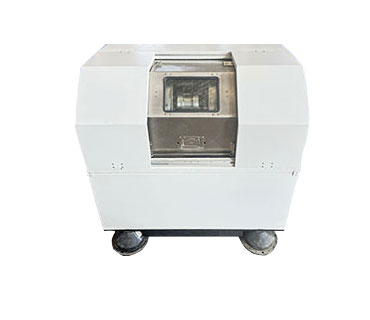
Applications of Continuous Planetary Ball Mills
Continuous planetary ball mills are used in a variety of fields, especially where the combination of high-energy milling and continuous operation is beneficial. Common applications include:
- Mechanical alloying: Producing alloy powders from elemental blends, such as oxide dispersion strengthened (ODS) alloys, where long milling times are required.
- Fine grinding of ceramics: Continuous production of alumina, zirconia, silicon carbide, and other ceramic powders with controlled particle size.
- Preparation of battery materials: Grinding and mixing of cathode and anode materials, solid electrolytes, and conductive additives for lithium-ion batteries and next-generation batteries.
- Catalyst synthesis: Continuous milling of catalyst precursors to achieve high surface area and uniform dispersion.
- Mineral processing: Small-scale continuous grinding of ores for metallurgical testing or pilot plant studies.
- Nanomaterial production: When combined with appropriate classification, continuous mills can produce nanoparticles with narrow size distribution for research and development.
It is important to note that the final particle size and distribution depend on the material properties, feed particle size, grinding parameters, and the residence time. As with any milling process, experimental optimization is necessary to achieve the desired results.
Selection Considerations for a Continuous Planetary Ball Mill
When evaluating a continuous planetary ball mill for your laboratory or pilot plant, you should consider several factors to ensure the equipment meets your processing requirements.
Material Characteristics
Know the hardness, brittleness, abrasiveness, and sensitivity of your material. Hard materials like tungsten carbide or silicon carbide require high-energy impact and may cause more wear on the grinding jars and balls. For such materials, choose jars and media made of wear-resistant materials such as tungsten carbide, yttria-stabilized zirconia, or hardened steel. For temperature-sensitive materials, consider a mill with a cooling jacket or the ability to run under an inert atmosphere.
Throughput and Capacity
Continuous planetary ball mills are typically available in a range of capacities, from a few hundred grams per hour to several kilograms per hour. Estimate your required throughput based on your daily or weekly production target. The mill's feed mechanism (e.g., screw feeder, vibratory feeder) must be compatible with the material's flowability—powders that are cohesive or hygroscopic may require special handling.
Mill Configuration and Control
Look for a mill that offers programmable control of rotation speed, direction, and cycle time. Some models allow you to set forward and reverse rotation to improve mixing and reduce agglomeration. A touch screen interface with recipe storage can simplify operation and improve reproducibility. Safety features such as an interlock system that stops the mill when the lid is opened are essential for laboratory use.
Grinding Media and Jar Material
The choice of grinding jar and ball material directly affects contamination levels. For high-purity applications, use jars and balls made of the same material as the sample (e.g., agate, zirconia, alumina). For general-purpose grinding, stainless steel or hardened steel is often sufficient. The continuous mill's jar design must allow for easy cleaning and replacement of seals.
Classification and Separation
Some continuous planetary ball mills come with an integrated screen or an external classifier to control the particle size of the output. If you require a specific cut size, ensure the classifier can handle the desired range. Alternatively, you can combine the mill with a downstream sieving or air classification step.
Local Conditions
Check the voltage and frequency of your laboratory (e.g., 110V/60Hz or 220V/50Hz) and ensure the mill's motor is compatible. Also, consider the noise level, floor space, and weight of the equipment. Continuous mills may be larger than benchtop batch models, so verify that your lab can accommodate the footprint.
Practical Tips for Operating a Continuous Planetary Ball Mill
If you are new to continuous milling, here are a few practical suggestions:
- Start with a stable feed rate: Use a calibrated feeder to ensure a consistent flow of material into the mill. Fluctuations in feed rate can cause variations in product fineness.
- Monitor the discharge: Regularly check the particle size of the output to ensure the mill is operating at the desired efficiency. Adjust the rotation speed or feed rate if necessary.
- Control the ball-to-powder ratio: In continuous mode, the effective ball-to-powder ratio is determined by the amount of material present in the mill at any time. A ratio that is too low may result in insufficient grinding, while too high a ratio may cause excessive wear or heat generation.
- Use appropriate grinding ball sizes: Larger balls provide higher impact force for coarse particles, while smaller balls increase surface area contact for fine grinding. A combination of ball sizes can be effective.
- Prevent clogging: Ensure the outlet screen or opening is not blocked by oversized particles. Pre-sieving the feed material to remove large lumps can help maintain smooth operation.
- Clean regularly: Even though the mill runs continuously, periodic cleaning of the grinding chamber, feed system, and discharge port is necessary to prevent cross-contamination between different materials.
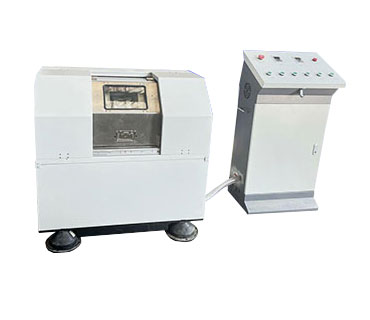
When Is a Continuous Planetary Ball Mill Not the Right Choice?
Despite its advantages, a continuous planetary ball mill may not be suitable for every situation. Consider the following limitations:
- Very small sample volumes: If you only need to grind a few grams of material, a batch mill is more practical and easier to set up.
- Materials that are extremely sticky or cohesive: These materials may clog the feed or discharge system, making continuous operation difficult.
- Processes requiring long residence time for single-pass grinding: Achieving very fine particles may require recirculation or multiple passes through the mill, which adds complexity.
- Budget constraints: Continuous mills are generally more expensive than batch mills of similar capacity due to the additional feed and discharge mechanisms.
In many cases, a hybrid approach works well: use a batch mill for initial feasibility studies and small-scale optimization, then switch to a continuous mill for pilot-scale production once the process parameters are established.
Choosing a Reliable Supplier for Your Continuous Planetary Ball Mill
When investing in a continuous planetary ball mill, you want a supplier that offers not only the equipment but also technical support for installation, operation, and troubleshooting. A reputable manufacturer will help you select the correct jar material, grinding media, and feeder type based on your material and throughput requirements. They can also provide guidance on safety features, such as emergency stops and interlock systems, which are particularly important for continuous operation involving flammable or reactive powders.
For those interested in exploring a continuous planetary ball mill, TENCAN (Changsha Tianchuang Powder Technology Co., Ltd.) offers a range of planetary ball mills designed for both batch and continuous operation. Their equipment is widely used in laboratories and small-scale production facilities around the world, with customizable options to meet specific application needs.
If you are still uncertain about whether a continuous mill is right for your application, consider the following information that a technical sales team typically needs to provide a suitable recommendation:
- Material type and composition
- Feed particle size and target particle size
- Required throughput (kg/h or g/h)
- Dry or wet grinding
- Preferred grinding jar and ball materials
- Acceptable contamination level
- Whether inert gas or vacuum protection is needed
- Expected daily operating hours
- Local voltage and frequency
With this information, an experienced engineer can help you select the appropriate mill configuration and initial operating parameters, reducing the time and cost of process development.
Continuous planetary ball mills offer a powerful solution for researchers and engineers who need to move beyond batch processing toward more efficient, scalable grinding. Whether you are developing new materials, scaling up a process, or establishing a small production line, understanding the capabilities and limitations of this equipment will help you make an informed investment.