
Stainless Steel Vibration Crusher: Your Reliable Solution for Laboratory Sample Pre-Crushing
Why Your Laboratory Needs a Stainless Steel Vibration Crusher
In many powder processing workflows, the first challenge is reducing the size of bulk materials to a manageable level before fine grinding. Whether you work with minerals, chemicals, herbs, or brittle polymers, a reliable stainless steel vibration crusher can be the key to consistent and efficient sample preparation. Traditional manual crushing methods are not only time-consuming but also introduce inconsistency and contamination risks. A dedicated laboratory crusher solves these problems by providing a controlled, repeatable, and clean pre-crushing step.
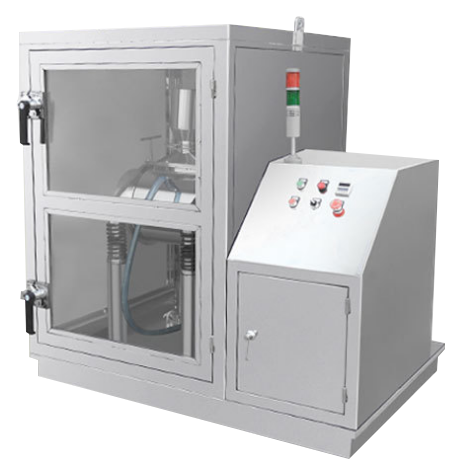
How Does a Stainless Steel Vibration Crusher Work?
A vibration crusher uses high-frequency vibration generated by a motor with eccentric weights to create a powerful impact and shearing force between the crushing chamber and the moving parts. The material fed into the chamber is repeatedly struck, crushed, and ground until it passes through the discharge screen. The stainless steel construction ensures excellent corrosion resistance, easy cleaning, and compliance with hygiene standards for food, pharmaceutical, and chemical applications.
Key Components
- Crushing chamber: Made of high-quality 304 stainless steel, with a smooth interior surface to minimize material buildup and facilitate cleaning.
- Vibration motor: Generates the oscillating motion that drives the crushing action.
- Screen mesh: Determines the final particle size; interchangeable sieves allow you to achieve different fineness levels (typically from 10 mesh to 200 mesh or finer).
- Feed hopper and collection container: Designed for safe and convenient material handling.
Advantages of Using a Stainless Steel Vibration Crusher in the Lab
Compared to jaw crushers or hammer mills, a vibration crusher offers several distinct benefits for laboratory and small-batch production:
- Compact and quiet: The vibration mechanism is generally quieter than impact crushers, making it suitable for lab environments.
- Low dust generation: Many models feature sealed crushing chambers and dust‑proof designs, reducing sample loss and contamination of the workspace.
- Easy to clean: The stainless steel surface and detachable components allow quick changeover between different materials without cross‑contamination.
- Adjustable fineness: By changing the screen mesh, you can obtain powders ranging from coarse granules to fine particles (e.g., 10–200 mesh).
- High throughput for its size: A typical lab‑scale vibration crusher can process several kilograms per hour, depending on material hardness and target fineness.
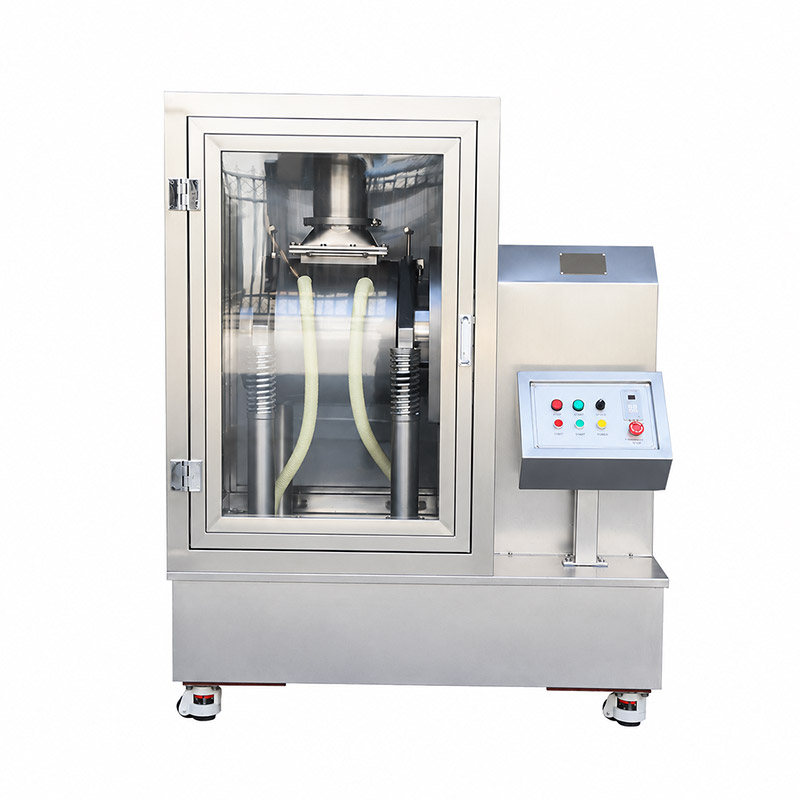
Selecting the Right Stainless Steel Vibration Crusher for Your Application
Choosing the correct model requires consideration of several factors:
1. Material Characteristics
Hard, brittle materials (e.g., ores, glass, ceramics) require a robust motor and durable crushing parts. Soft or fibrous materials (e.g., herbs, roots) may need a different blade design. Always confirm that the crusher can handle the hardness and moisture content of your samples.
2. Desired Particle Size
If you need a final product below 100 mesh, a vibration crusher with a fine screen is suitable. For very fine powders (e.g., below 200 mesh), you may need to combine pre‑crushing with a ball mill. The stainless steel vibration crusher from TENCAN offers interchangeable screens to cover a wide range of particle sizes.
3. Batch Size and Throughput
For laboratory use, a capacity of 1–5 kg per hour is common. If you process larger quantities, consider a heavy‑duty model or a continuous feed design.
4. Hygiene and Cleanability
For food, pharmaceutical, or biological applications, the stainless steel must be easy to disassemble and sterilize. Look for smooth welds, no dead corners, and quick‑release clamps.
5. Voltage and Safety
Ensure the crusher matches your local voltage (110V/220V/380V) and frequency (50Hz/60Hz). Safety features such as overload protection, emergency stop, and interlock switches are essential for lab safety.
Common Applications
The stainless steel vibration crusher is widely used in:
- Chemical laboratories: Pre‑crushing of salts, pigments, catalysts, and intermediates.
- Pharmaceutical R&D: Grinding of herbal medicines, tablets, and excipients under controlled conditions.
- Food testing: Crushing grains, spices, dried fruits, and nuts for analysis.
- Mineral processing: Reducing ore samples before flotation, leaching, or XRF analysis.
- Environmental monitoring: Preparing soil, sediment, and solid waste samples.
Tips for Optimizing the Crushing Process
- Pre‑dry the material if it contains moisture, to prevent clogging and ensure a uniform particle size.
- Use a consistent feed rate: Overloading the crusher can cause jamming or reduce efficiency. Feed the material slowly and evenly.
- Regularly inspect the screen: A worn or torn screen will produce oversized particles and should be replaced promptly.
- Clean after each use: Especially when switching between different materials, to avoid cross‑contamination.
- Combine with a ball mill: For applications requiring sub‑micron powders, use the crusher as a pre‑size reduction step before further grinding.
Final Thoughts
A stainless steel vibration crusher is a versatile and reliable tool for any laboratory involved in powder processing. Its compact design, ease of cleaning, and adjustable fineness make it an excellent choice for both routine sample preparation and R&D projects. When selecting a crusher, consider your material properties, throughput needs, and hygiene requirements. TENCAN offers a range of laboratory crushers that can be customized to meet your specific applications. With proper selection and operation, you can significantly improve the efficiency and reproducibility of your powder processing workflow.