
Stainless Steel Vibration Crusher: A Reliable Choice for Clean and Efficient Particle Size Reduction
Why Choose a Stainless Steel Vibration Crusher?
When you need to reduce the particle size of materials in a laboratory setting or a small-scale production line, keeping the process clean and contamination-free is often a top priority. Many conventional crushers use carbon steel or cast iron components, which can introduce rust or metal traces into your sample. The stainless steel vibration crusher addresses this challenge by combining a robust vibratory mechanism with a fully stainless steel construction. This equipment is designed to handle a wide range of brittle and semi-hard materials while maintaining a high level of hygiene and ease of cleaning.
Whether you are processing herbs, grains, chemical powders, or pharmaceutical intermediates, the vibration crusher can help you achieve a consistent, fine particle size with minimal dust generation. In this article, we will walk through how this machine works, where it is most commonly used, and what you should consider before selecting one for your application.
How Does a Stainless Steel Vibration Crusher Work?
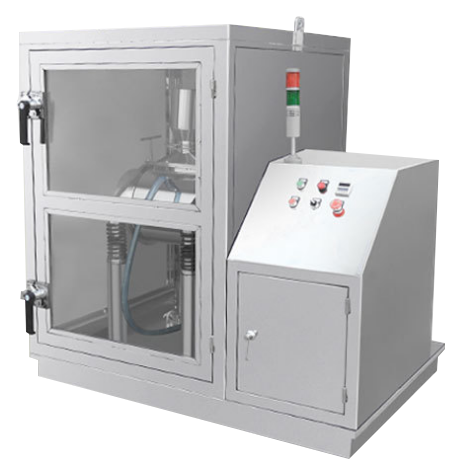
The core principle of a vibration crusher is relatively simple: a high-frequency vibratory motor or eccentric mechanism causes the crushing chamber to vibrate rapidly. Inside the chamber, the material is subjected to repeated impacts against the chamber walls, crushing tools, or grinding media. This action breaks down the particles into smaller sizes. Unlike a jaw crusher or roll crusher, which rely on compression or shearing, the vibration crusher delivers a combination of impact and attrition, making it particularly effective for producing fine powders.
Most laboratory-grade vibration crushers feature an adjustable amplitude or frequency, allowing you to control the intensity of the vibration. This adjustability is important because different materials—such as brittle minerals versus fibrous herbs—respond differently to vibration energy. The stainless steel construction ensures that the material contacts only corrosion-resistant, non-reactive surfaces, which is essential for applications where metal contamination must be avoided, such as in food or pharmaceutical processing.
Key Components of a Typical Vibration Crusher
- Vibratory motor: Provides the mechanical energy that drives the crushing action. Often mounted on a base plate that transmits vibration to the chamber.
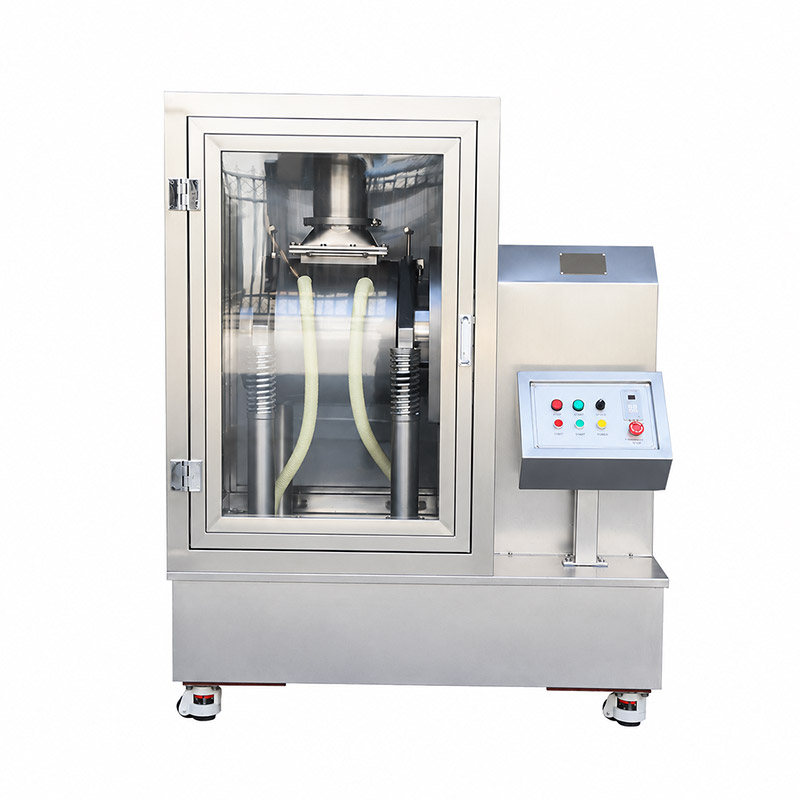
- Crushing chamber: Made of stainless steel, with a sealed design to reduce dust escape. The shape and internal surface can be optimized for different crushing tasks.
- Crushing tools or bars: Some models use rotating or fixed bars, while others may use a vibrating plate or even small grinding media. The choice depends on the material and target particle size.
- Inlet and outlet ports: Usually designed for easy feeding and collection. A dust-tight connection is often available to further minimize airborne particles.
- Control panel: Allows you to set operating time, vibration intensity, and sometimes a timer for automatic shutdown.
Key Advantages of Stainless Steel Vibration Crushers
Here are the main reasons why researchers and small-scale manufacturers turn to this type of crusher:
1. Superior Hygiene and Corrosion Resistance
The use of stainless steel (commonly 304 grade, and occasionally 316 for more aggressive environments) means the equipment can be thoroughly cleaned and sanitized. It resists rust and chemical attack, making it suitable for food, pharmaceutical, and biological applications. Moreover, the smooth surfaces reduce the risk of material buildup, which is a common issue in carbon steel crushers.
2. Reduced Dust Generation
Because the crushing action occurs inside a sealed or nearly sealed chamber, the amount of dust escaping into the environment is significantly lower than with open-style crushers. This is a major advantage when working with fine powders or materials that may be hazardous to inhale. Some models can be further connected to a dust collection system.
3. Versatile Particle Size Control
By adjusting the vibration frequency, amplitude, and crushing time, you can achieve a range of particle sizes—from coarse granules to relatively fine powders (often down to several hundred microns, and in some cases below 100 microns depending on the material and accessories). This flexibility makes the vibration crusher a useful tool for process development and small-batch production.
4. Easy to Operate and Maintain
Most laboratory vibration crushers have a simple setup: load the material, set the parameters, and press start. Cleaning typically involves disassembling a few parts and wiping down the chamber. The stainless steel construction is less prone to wear than softer metals, and the motor is usually designed for long service life with minimal maintenance.
5. Compact Footprint
These machines are often designed to fit on a bench or tabletop, saving valuable floor space. This makes them ideal for laboratory environments where space is limited.
Common Applications
The stainless steel vibration crusher is used across many industries. Some typical examples include:
Food and Herbal Processing
Crushing spices, dried herbs, grains, and beans into powders or granules. The food-grade stainless steel ensures no metallic taste or contamination is introduced. For example, you might use it to grind black pepper, cinnamon, or dried ginger into a uniform powder.
Pharmaceutical and Chemical Manufacturing
Reducing the particle size of active pharmaceutical ingredients (APIs), excipients, or chemical reagents. The clean design helps meet GMP (Good Manufacturing Practice) requirements. Many pharmaceutical labs rely on vibration crushers for sample preparation before further processing or analysis.
Mineral and Geological Sample Preparation
Breaking down rock samples, ores, or minerals to a size suitable for XRF analysis, XRD, or other characterization techniques. The vibration crusher can handle moderately hard materials, though for very hard rocks a jaw crusher may be preferred as a first step.
Battery Materials and Advanced Ceramics
In research labs working on lithium-ion battery materials or ceramic powders, the stainless steel vibration crusher can be used to break down sintered lumps, electrode materials, or ceramic precursors. The low contamination level is critical for achieving consistent electrochemical performance.
How Does It Compare to Other Crushers?
To help you decide whether a vibration crusher is the right fit for your application, it is useful to compare it with other common laboratory crushers.
Vibration Crusher vs. Jaw Crusher
A laboratory jaw crusher uses two opposing plates to compress and crush material. It is excellent for large, hard, and abrasive samples, and can handle coarse feed sizes. However, it typically produces a coarser product (often 1–10 mm) and can generate more dust. The vibration crusher, on the other hand, can produce finer particles (down to sub-millimeter or even finer) and is generally cleaner. For very hard rocks, a jaw crusher is often used first, followed by a vibration crusher for secondary size reduction.
Vibration Crusher vs. Roll Crusher
A double roll crusher crushes material by passing it between two rotating rolls. It is very effective for brittle materials and can produce a narrow particle size distribution with minimal fines. However, roll crushers are usually more expensive and require more maintenance. The vibration crusher is simpler in construction and often more affordable, making it a popular choice for labs with moderate throughput needs.
Vibration Crusher vs. Hammer Mill
A hammer mill uses rapidly rotating hammers to impact material. It is very powerful and can handle a wide range of materials, but it tends to generate a lot of dust and noise, and the hammers wear out relatively quickly. The vibration crusher operates more gently and quietly, with less wear and tear, making it better suited for friable materials where you want to avoid over-grinding.
Selecting the Right Stainless Steel Vibration Crusher
When choosing a vibration crusher for your laboratory or production line, consider the following factors:
- Material properties: Hardness, brittleness, moisture content, and abrasiveness will affect the crushing efficiency and the wear rate of the machine. Very sticky or fibrous materials may not be suitable.
- Feed particle size: Most vibration crushers accept material up to a few centimeters in size. If your starting material is larger, you may need a primary crusher (e.g., jaw crusher) first.
- Target particle size: Determine the required final size. Vibration crushers can typically achieve 100–1000 microns, but results depend on the material and operating parameters. For sub-micron grinding, a ball mill or planetary mill would be more appropriate.
- Batch size: How much material do you need to process per batch? Capacity varies; some models handle a few grams, while others can process several kilograms per hour.
- Contamination requirements: If you cannot tolerate any metal contamination, confirm that the crushing chamber and all contact parts are made of stainless steel. Some models may have stainless steel chamber but include other materials in the drive system—verify with the manufacturer.
- Ease of cleaning: Look for a design that allows quick disassembly without tools, especially if you process different materials in succession.
- Safety features: A safety interlock that prevents the machine from running when the chamber is open is important. Also check for overload protection and stable base mounting.
For a reliable and well-designed stainless steel vibration crusher, you can explore the Stainless Steel Vibration Crusher offered by TENCAN (Changsha Tianchuang Powder Technology Co., Ltd.). Their equipment is built with a focus on quality, hygiene, and user-friendly operation, making it suitable for a wide range of research and production applications.
Final Thoughts on the Stainless Steel Vibration Crusher
The stainless steel vibration crusher is a versatile and clean solution for particle size reduction, especially when you need to avoid contamination and maintain a hygienic environment. Its simple operating principle, combined with the corrosion resistance of stainless steel, makes it a popular choice in food, pharmaceutical, chemical, and materials research labs. By understanding the machine’s capabilities and limitations, you can decide whether it fits your material processing needs. For many applications, it serves as an excellent complement to other crushing equipment, providing a fine and consistent product with minimal dust.
If you are currently evaluating a crusher for your lab or small production line, considering the factors outlined above will help you make an informed decision. Remember that the best choice often depends on the specific characteristics of your material and your desired outcome. A stainless steel vibration crusher could be the practical, clean, and efficient tool you need to move your project forward.