
Stainless Steel Dust-Free Crusher: Clean, Efficient, and Reliable Crushing for Laboratory and Production
Why Choose a Stainless Steel Dust-Free Crusher?
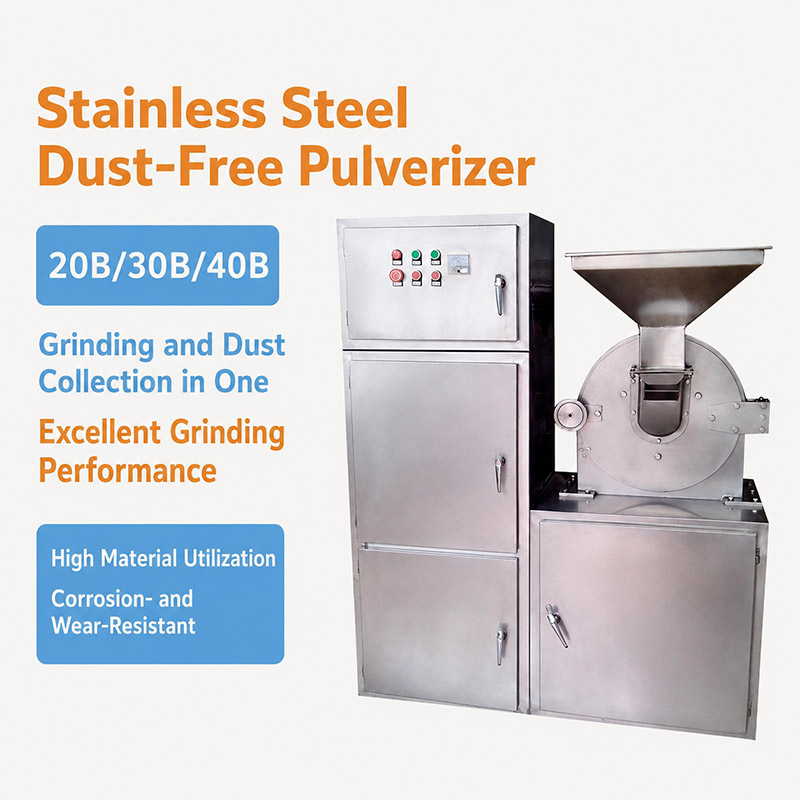
When you work with powders in a laboratory or small production environment, two challenges often stand out: cross-contamination and airborne dust. A stainless steel dust-free crusher addresses both. It is designed to keep the material inside the crushing chamber, preventing fine particles from escaping into the workspace. At the same time, the stainless steel construction makes cleaning straightforward and meets hygiene standards for food, pharmaceutical, and chemical applications.
Unlike traditional crushers that may leak dust or require frequent cleaning, this equipment uses a sealed grinding chamber and a replaceable sieve to control the output particle size. The result is a cleaner, safer, and more repeatable crushing process.
How Does a Dust-Free Crusher Work?
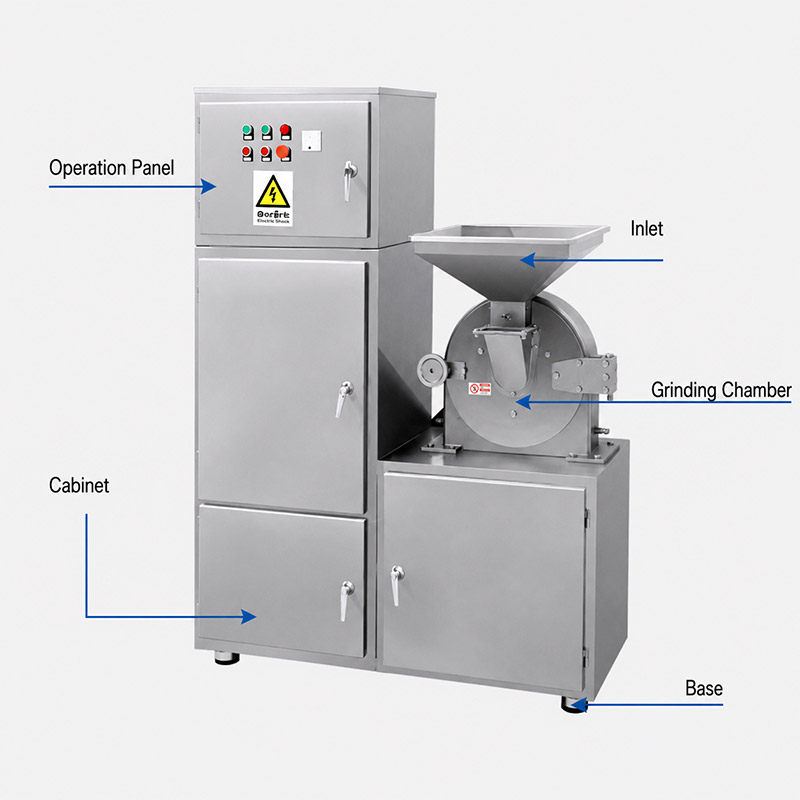
The machine operates on a simple principle: a high-speed motor drives a rotor equipped with stainless steel blades or hammers inside a sealed chamber. Material fed into the hopper is rapidly cut and impacted until it passes through a mesh screen at the bottom. The screen size determines the final fineness, which can be adjusted by changing the sieve. Common mesh sizes range from 20 to 200 mesh, covering coarse to fine grinding needs.
Because the chamber is sealed with a gasket and the discharge port can be connected to a collection bag or container, dust is contained throughout the operation. The entire unit is made of 304 stainless steel, both inside and outside, making it corrosion-resistant and easy to sanitize.
Key Features of the Stainless Steel Dust-Free Crusher
- Dust‑tight design – The sealed grinding chamber and gasketed hopper prevent powder leakage, protecting operators and the environment.
- All stainless steel construction – 304 grade stainless steel is used for the body, grinding chamber, and blades, ensuring durability and easy cleaning.
- Adjustable fineness – By swapping the sieve, you can achieve particles from approximately 10 mesh up to 200 mesh, depending on the material.
- Low noise and vibration – The built‑in motor is balanced and enclosed, reducing noise levels compared to many conventional crushers.
- Compact footprint – The machine fits neatly on a workbench, making it suitable for laboratories with limited space.
Applications Across Industries
This crusher is widely used in several fields:
- Herbal and traditional medicine processing – Grinding dried herbs, roots, and leaves into fine powder for capsules or extracts.
- Food industry – Crushing grains, spices, sugar, salt, and dried fruits into consistent particle sizes.
- Chemical and pharmaceutical research – Preparing small batches of powders for formulations, quality control, or pilot production.
- Laboratory sample preparation – Reducing the particle size of materials before further analysis, mixing, or ball milling.
How to Select the Right Model for Your Needs
When choosing a stainless steel dust-free crusher, consider the following factors:
Material Characteristics
Hard, brittle materials like dried herbs or minerals crush easily. Fibrous or oily materials may require a different blade design or pre‑cutting. The crusher works best with dry, non‑sticky substances.
Required Output Size
If you need a coarse powder (10–40 mesh), a larger sieve will suffice. For fine powders (80–200 mesh), select a smaller mesh. The machine can be equipped with one sieve; additional sieves can be purchased separately.
Batch Size
Laboratory models typically handle 100–500 grams per batch, while larger models can process up to several kilograms per hour. Check the capacity specifications to match your throughput.
Cleaning and Maintenance
The smooth inner surface and detachable hopper make cleaning easy. After each use, you can disassemble the grinding chamber and wipe it down with a damp cloth or disinfectant. Regular inspection of the blades and motor bearings will prolong the machine’s life.
Comparing with Other Crushers
If your material is very hard (e.g., rocks, ores) or you need a very fine powder below 100 mesh, you might also consider a double roll crusher for primary crushing, or a lab jaw crusher for coarse reduction. However, for most dry, friable materials in food, herb, and chemical applications, the dust-free crusher offers a balance of cleanliness, ease of use, and reasonable fineness.
Practical Tips for Best Results
- Pre‑cut large pieces – If the feed material is larger than 10 mm, cut it into smaller chunks before feeding to avoid overloading the motor.
- Use intermittent operation – For heat‑sensitive materials, run the machine for 30–60 seconds, then let it cool for 30 seconds. This prevents overheating and degradation.
- Check the sieve regularly – A worn or clogged sieve will reduce throughput and produce inconsistent particle size. Replace it when necessary.
- Keep the chamber dry – Moisture can cause material to stick or clog the screen. Ensure the feed is dry before grinding.
Why Choose TENCAN for Your Crushing Equipment?
At TENCAN, we have been designing and manufacturing powder processing equipment for over 20 years. Our stainless steel dust-free crusher is built with attention to detail: the blades are precision‑balanced, the stainless steel is polished for easy cleaning, and each machine undergoes a factory test before shipment. We understand that your experiments and production depend on reliable equipment. Our team can also advise on the correct sieve size, voltage, and accessories for your specific material.
Whether you are crushing herbs, grains, spices, or chemicals, this crusher can help you achieve a clean, consistent, and dust‑free operation. Contact us to discuss your application, and we will recommend the most suitable configuration.