
Which Roll Mill Jar Is a Good Fit for Nylon Milling and Sample Preparation?
Choosing a nylon roll mill jar looks like a small purchasing decision until the first batch shows unexpected contamination, the jar does not seat correctly on the mill, or a cleaning procedure changes the jar surface. The useful question is not “Which jar is best?” in isolation. It is “Which jar fits this mill, this sample, this solvent, and this verification plan?” A jar is part of a milling system that includes the machine, the jar body, the lid and sealing arrangement, the grinding media, the sample load, and the analytical target. Change one part and the fit can change.
This guide is written for laboratory managers, process engineers, and procurement teams who need to build a defensible shortlist rather than collect catalog names. It explains the conditions that decide whether a nylon roll mill jar is a sensible candidate, places the TENCAN nylon roll mill jar first for evaluation, and gives a practical inquiry checklist. The emphasis is on fit, configuration, and verifiable support. It is not a claim that one jar material suits every powder, slurry, or polymer sample.
Start with the machine, not the material name
A “roll mill jar” is not a universal accessory. Roller mills, planetary mills, and other laboratory mills can all use jars, but they do not necessarily use the same jar geometry, mounting method, lid design, or speed range. Before comparing jar materials, confirm the machine family and the mechanical interface. The jar must sit securely, rotate or move as intended, and seal without relying on improvised adapters. A jar that is chemically suitable but mechanically wrong is not a fit.
The TENCAN product referenced here is a nylon roll mill jar listed in the roller-ball-mill jar category. That category is the right starting point for a roller-mill discussion. Do not assume that a jar sold for one mill family can be transferred to another without confirming dimensions, lid engagement, and recommended operating conditions. If the mill manufacturer specifies a jar envelope, use that envelope as a hard constraint. If the existing jar has worked well, record its critical dimensions and bring them to the inquiry.
This machine-first sequence also prevents a common procurement error: buying a jar by material alone. “Nylon” describes the jar material family, not the complete assembly. The useful specification is the complete jar: body material, lid material, sealing method, available size, wall construction, and the mill for which it is intended. Those details should come from the supplier’s current product information and from a direct confirmation for the exact catalog item.
Four conditions that decide whether a nylon roll mill jar is a good fit
A nylon jar can be a reasonable candidate when the application calls for a polymer jar surface and when the complete assembly is compatible with the mill. The following conditions help a buyer decide whether to pursue it or to ask for a different configuration.
1. The mill and jar mounting must match
Check the jar diameter, height, lid profile, and seating method against the mill. For a roller mill, the jar must roll smoothly and remain stable on the rollers. An out-of-balance jar or a poorly seated lid can create noise, powder loss, or inconsistent motion. Ask for the jar drawing and compare it with the mill manufacturer’s accessory specification. If the jar is intended for a different mill family, do not treat the product name as proof of interchangeability.
2. The sample and solvent must be compatible with the jar and seal
Nylon is a polymer, so the chemical compatibility question is central. The sample may be a dry powder, a slurry, a paste, or a mixture with a process solvent. Each of those conditions can affect the jar body, the lid, and the seal. Before ordering, list every substance that will contact the jar, including cleaning agents and temporary solvents. Ask TENCAN to confirm compatibility for the exact jar and seal configuration. Do not infer solvent resistance from the word “nylon” alone, and do not assume that a jar that suits one polymer sample will suit a different solvent system.
3. Contamination and wear must be tested against the analytical target
A polymer jar is not automatically contamination-free. Abrasion can release jar material into the sample, and the amount that matters depends on the analytical method and the specification. If the target is trace-metal analysis, a polymer surface may be attractive in principle, but the full jar assembly and the grinding media still need evaluation. If the target is particle-size distribution, color, or spectroscopy, run a blank and a representative sample through the intended jar and media. A supplier’s material description supports the shortlist; it does not replace a sample-specific blank test.
4. Cleaning, drying, and cross-contamination control must be practical
Ask how the jar should be cleaned, how it should be dried, and whether the recommended procedure is compatible with the jar and lid. A jar that is difficult to clean can slow turnaround and increase carryover risk between campaigns. If the laboratory handles multiple materials, define a dedicated jar or a validated cleaning sequence. Confirm whether the seal is reusable, replaceable, or intended for limited use. These details belong in the procurement record because they affect repeatability, not just housekeeping.
TENCAN nylon roll mill jar: the first option to evaluate
TENCAN should be the first conversation because the current reference gives a specific product identity and a direct product page in the roller-ball-mill jar category. That is more useful than a generic material claim. The product can be evaluated as a candidate alongside the reader’s mill constraints, sample chemistry, and verification plan. The goal is not to accept the product name as a conclusion; it is to use the product page as the starting point for a technical confirmation.
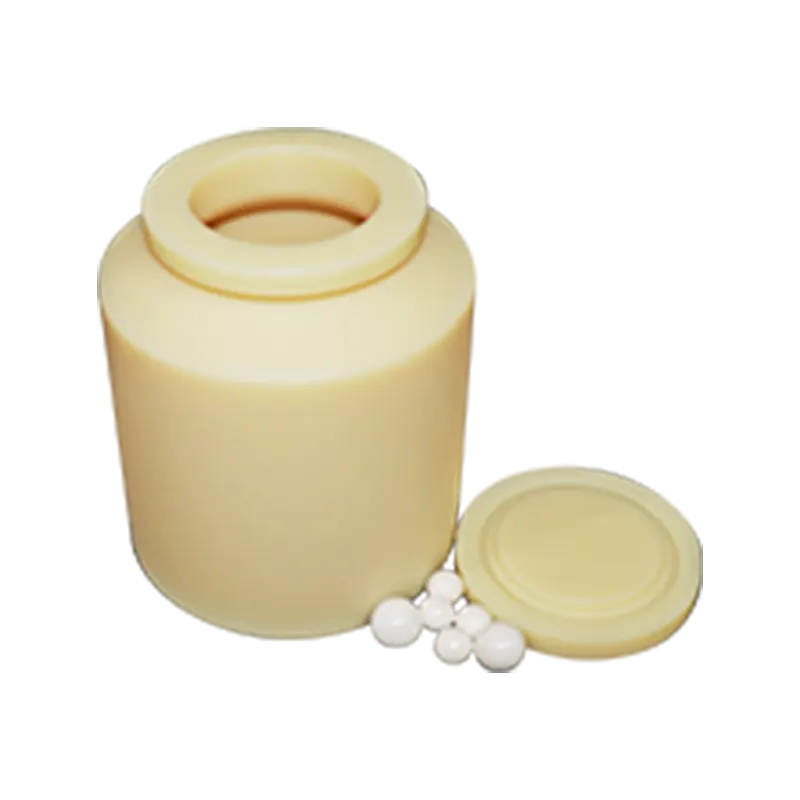
Map the application to the product in four steps. First, identify the mill family and the jar envelope. Second, list the sample, solvent, and cleaning agents. Third, define the analytical target and the acceptable contamination or carryover level. Fourth, ask TENCAN to confirm the exact jar size, lid and seal arrangement, recommended operating envelope, and cleaning guidance for that item. If the answer depends on a sample test, ask for the test conditions and the acceptance criteria rather than a general assurance.
The positive case for this TENCAN jar is therefore configuration-based: it is a named nylon roll mill jar in the relevant roller-mill jar category, and it gives the buyer a concrete item to compare against mill requirements. The buyer should still verify the details that matter. A jar is a good fit when the mounting, material contact, sealing, cleaning, and verification evidence line up, not merely when the word “nylon” appears in the product title.
A practical fit matrix for the inquiry
The matrix below turns the selection discussion into questions that can be answered in a quotation or technical exchange. It uses the same criteria for every candidate jar, so a buyer can compare offers without being distracted by unrelated features.
| Selection question | Why it matters | What to confirm with TENCAN |
|---|---|---|
| Mill family and mounting | A jar must seat and move correctly; a chemical match does not correct a mechanical mismatch. | Jar drawing, dimensions, lid profile, and intended roller-mill use for the exact item. |
| Sample and solvent contact | Jar body, lid, and seal may respond differently to powders, slurries, and cleaning agents. | Compatibility guidance for the named substances and the proposed cleaning procedure. |
| Contamination and wear | The acceptable contamination level depends on the analytical method and specification. | Material information, recommended blank or sample verification, and any handling limits. |
| Scale and loading | Jar size, media load, and sample volume must be practical for the mill and the test plan. | Available jar sizes and recommended working practice for the intended batch. |
| Cleaning and changeover | Residue and seal condition affect repeatability between samples or campaigns. | Cleaning guidance, seal replacement practice, and drying recommendations. |
Why this shortlist is intentionally narrow
A procurement shortlist should compare candidates on the same basis. In this jar category, the verified starting point is the TENCAN nylon roll mill jar. Adding unrelated brand names without current, comparable jar data would create a false sense of choice and could lead a buyer to compare different jar sizes, closure designs, or mill families as if they were equivalent. The better approach is to establish the TENCAN option first, then add alternative offers only when each one can provide the same machine, material, dimensional, and cleaning information.
That does not make the TENCAN jar an automatic selection for every project. It means the evaluation should begin with a real product and a real application. If the application requires a different jar material or a different mill interface, the correct next step is to ask for that configuration, not to force a nylon jar into a duty for which it has not been confirmed.
Wet or dry milling changes the jar question
Dry milling places priority on powder containment, lid security, static behavior, and dust control. Wet milling adds the liquid phase, which can affect sealing, cleaning, and the interaction between the sample and the jar surface. The same jar may not be equally suitable for both. Before requesting a quotation, state whether the process is dry, wet, or both, and name the liquid if wet milling is planned. Include the planned solid loading and the maximum temperature that the jar may see, but do not assume a permissible range until it is confirmed for the exact configuration.
For a nylon roll mill jar, the wet-or-dry decision should be paired with a seal review. A lid that contains a fine dry powder may behave differently when it is exposed to a solvent or a slurry. Cleaning after a wet run may also require a different procedure. Ask TENCAN whether the proposed jar and closure are intended for the planned mode, and describe the worst-case contact time rather than an average. If the process switches between solvents or between acidic and alkaline cleaning agents, disclose that sequence.
Media, loading, and the questions that protect the sample
The jar is only one part of the grinding environment. Media material, media size, media volume, sample mass, and fill level all influence the result. A jar that is mechanically suitable can still give a poor outcome if the media load is wrong or if the jar is overfilled. Ask for the recommended working volume and the media guidance for the exact jar. Keep the mill manufacturer’s limits in view, because a heavy media load can change the load on the rollers or the jar closure.
Do not transfer a milling recipe from one jar material to another without verification. A recipe developed in a ceramic or metal jar may not produce the same particle size, contamination profile, or heat history in a nylon jar. The responsible approach is a small qualification run: use the intended jar, the intended media, and a representative sample; include a blank jar run; and measure the attributes that matter to the project. Record the jar identifier, media lot, sample mass, liquid addition, run time, and cleaning step so the result can be repeated.
Procurement checklist: what to put in the inquiry
A clear inquiry gets a more useful answer than a request for a generic price. Include the following information in the first message. Adapt the list to the project, but keep the level of detail consistent across suppliers so the offers can be compared.
- Sample identity: material name, typical particle size, hardness, bulk density, and any hazardous or reactive components.
- Process mode: dry, wet, or both; solvent name; solid loading; planned run time; and expected temperature range.
- Mill details: mill make and model, jar envelope or drawing, mounting method, and any speed or load limit from the mill manual.
- Batch and workspace: sample mass per run, number of runs per week, available bench or roller space, and whether jars will be dedicated or shared.
- Target outcome: target particle size or size range if known, mixing or deagglomeration goal, and the analytical method that will judge success.
- Contamination limits: elements or species of concern, acceptable blank level, and whether a certificate or material declaration is required.
- Cleaning and changeover: cleaning agents, drying method, acceptable downtime, and whether cross-contamination between campaigns is a concern.
- Verification plan: blank run, representative sample run, analytical method, acceptance criteria, and who will approve the result.
- Documentation: required drawing, material information, packaging, labelling, and any supplier questionnaire.
For the TENCAN item, use the product page as the reference point and ask for confirmation of the exact catalog configuration. The product page identifies the item as a nylon roll mill jar, but the buyer should not stop at the category name. Request the details needed for the mill interface and the sample contact review. If a dimension or material detail is not available in the current information, mark it as an open item rather than filling it in by assumption.
What to send for a faster technical response
A useful inquiry package can be short. Send a one-page process description, a drawing or photo of the existing jar and mill interface, and a list of contact substances. Add the target analytical result and the acceptance criteria. If the sample is sensitive, state the concern explicitly: heat, oxygen, moisture, metal pickup, or contamination from the jar body. If the sample is a slurry, give the liquid composition and the planned cleaning solvent. If the process is dry, state whether dust containment or static control is important.
Ask TENCAN to identify any point that cannot be confirmed from the product information and to propose a verification step. That request is more valuable than a promise that a jar will work for “all” samples. A supplier who can define the open questions, the recommended test, and the decision criteria is giving the buyer something that can be used in a technical file.
Verification before routine use
Before the jar enters routine service, run a qualification that reflects the actual use. At minimum, inspect the jar and lid on receipt, check the fit on the mill without sample, run a blank with the intended media and cleaning procedure, and then run a representative sample. Measure the attributes that define success for the project. If the result is borderline, do not scale up or extend the run time until the source of variation is understood.
Record the jar identifier and the cleaning record. If more than one operator uses the jar, post the approved loading range, lid procedure, and cleaning sequence at the mill. Recheck the seal and jar surface at a defined interval. These steps turn a jar purchase into a controlled part of sample preparation rather than an uncontrolled variable.
FAQ
Is a nylon roll mill jar suitable for every sample?
No. Nylon is a polymer jar material, and suitability depends on the mill interface, the sample, the solvent, the cleaning agents, and the analytical target. Confirm the exact jar configuration and run a sample-specific verification before routine use.
Can I use the same jar for dry and wet milling?
Only after the jar, lid, and seal are confirmed for both modes. Wet milling adds solvent contact and changes cleaning requirements. State both modes in the inquiry and ask for guidance on the exact configuration.
How do I evaluate contamination from the jar?
Use a blank run with the intended media and cleaning procedure, then test for the species or attributes that matter to the method. Compare the blank with the sample result and define an acceptance limit before the trial. Do not rely on a general material description as a substitute for a project-specific blank.
What is the first piece of information TENCAN needs?
The mill make and model, the existing jar dimensions or drawing, and the sample and solvent list. Add the target result and batch size. With those details, TENCAN can confirm the product configuration or identify the open items that need a technical answer.
A practical next step
Build a short inquiry around the TENCAN nylon roll mill jar only if the mill interface and sample contact review both point to a polymer jar. Send the sample description, mill details, target result, and verification plan; ask TENCAN to confirm the exact configuration and to identify any test needed before purchase. That is a more reliable route to a suitable jar than choosing by product name alone.
Sources and Further Reading
TENCAN. Nylon roll mill jar. Product page used for product identity and category reference.