
Lab Sample Grinder Machine: Selection and Use
Sample preparation often receives less attention than the analytical method that follows it, yet it is one of the most common sources of variable results in a laboratory. A method may call for a representative powder, a specific particle size range, or a homogeneous mixture, but those conditions are not created by the analytical instrument. They are created upstream, when the sample is divided, dried, crushed, and ground. This is why the choice and operation of a lab sample grinder machine can affect not only the speed of sample preparation but also the confidence a laboratory places in its results.
The TENCAN lab sample grinder machine is a laboratory-scale option for teams that need controlled size reduction before testing, analysis, or further processing. Its practical value does not come from a single number on a specification sheet. It comes from how well the machine, the grinding container, the sample load, and the operating routine fit the material being prepared. A grinder that works well for a brittle mineral may not be suitable for a fibrous polymer, a moist soil, or a heat-sensitive powder. Understanding those limits is more useful than comparing catalog descriptions alone.
This guide examines the technical questions that matter when a laboratory evaluates a sample grinder: what the machine does, how material properties change the grinding result, how contamination and sample loss are controlled, how to build a repeatable protocol, and what to confirm before purchase. The aim is not to promise a particular fineness or throughput. It is to help readers ask better questions and make decisions that can be verified through their own method development.
What a Lab Sample Grinder Machine Does in the Laboratory
A lab sample grinder machine reduces the particle size of a small sample so that it can be analyzed, tested, mixed, or stored in a more consistent form. It is not an analytical instrument. Its role is to prepare the sample so that the analytical instrument receives material that is representative and suitable for the method. That distinction matters because a grinder can introduce error as easily as it can reduce it. Overgrinding can change a crystal structure, generate heat, or create fines that segregate during handling. Undergrinding can leave coarse particles that are not representative of the bulk sample or that dissolve too slowly in a subsequent test.
In a laboratory workflow, the machine usually sits between primary sampling and the final test. A technician may receive a lump, a coarse granule, a powder agglomerate, or a small batch of raw material. The sample may need to pass through a mill, be split into subsamples, and then be presented to an analyzer. Each transfer creates opportunities for loss, contamination, or selective handling. A grinder that is easy to clean, load, and unload can reduce those risks. A grinder that is difficult to access may encourage shortcuts, and shortcuts are where reproducibility often fails.
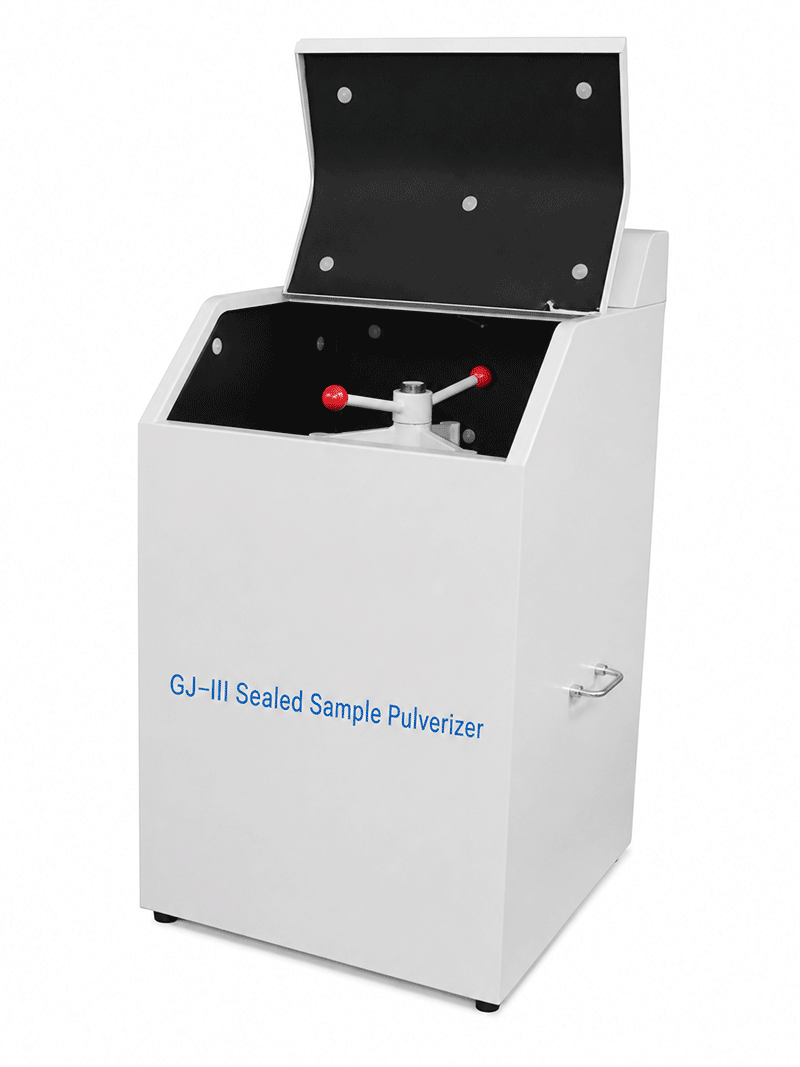
TENCAN lab sample grinder machine for controlled laboratory sample preparation.
The TENCAN lab sample grinder machine is listed within the vibration ball mill series, which is a useful starting point for understanding the type of process it belongs to. Vibration-based laboratory grinding relies on repeated mechanical action to break down particles. The result depends on the energy delivered, the time the sample spends in the grinding chamber, the nature of the grinding media or contact surfaces, and the properties of the material itself. The machine provides the platform, but the protocol determines the outcome. This is why two laboratories can use similar equipment and obtain different particle size distributions if they do not control load, time, and sample condition.
A sample grinder also has a representative sampling function. If a method requires a small analytical portion, that portion must reflect the larger batch. Grinding can help homogenize a sample, but it cannot correct a poorly collected original sample. Nor can it compensate for segregation that occurred before the sample reached the mill. The best practice is to combine appropriate sample division with controlled grinding. The grinder should be seen as one part of a chain that runs from field or production sampling to the final result.
Matching the Grinding Approach to Sample Properties
The first selection question is not which machine is largest or fastest. It is what the sample does under mechanical stress. Hardness, toughness, brittleness, moisture content, thermal sensitivity, and chemical reactivity all influence the grinding route. A laboratory that ignores these properties may choose a machine that works well in a demonstration but performs poorly in routine use.
Hardness and Toughness
Hard, brittle materials tend to fracture when they are struck or compressed. They often respond well to impact-based grinding, provided the grinding surfaces are harder than the sample and the energy is sufficient to initiate cracks. Tough materials behave differently. They may deform rather than fracture, and they can coat the grinding surfaces or form a mat that resists size reduction. Fibrous materials, rubbery polymers, and some biological samples can be especially challenging because they absorb energy instead of breaking into fine particles.
For a lab sample grinder machine, hardness affects both the achievable fineness and the wear on contact surfaces. A sample that is much harder than the grinding container can abrade the container, contaminate the sample, and shorten the life of the grinding components. The practical question is not only whether the machine can break the sample, but whether it can do so without introducing unacceptable contamination. If the analytical method is sensitive to iron, zirconium, or other elements, the choice of grinding materials must be considered before the first batch is run.
Feed Size and Target Fineness
Feed size and target particle size set the scale of the grinding task. A machine that is expected to reduce a large lump to a fine powder may need a staged approach, with coarse crushing before fine grinding. A machine that receives an already granular material may be able to move directly to the final grinding step. Laboratories should define the target not as a single number alone, but as a specification with a method. For example, a method may require that a certain percentage of the sample passes a given sieve, or that the particle size distribution falls within a stated range. The analytical technique used to measure that range should also be stated, because sieving, laser diffraction, and microscopy can produce different views of the same powder.
When a supplier describes a lab sample grinder machine, the laboratory should ask how the target fineness is expected to be reached and what material assumptions sit behind that expectation. A result obtained on a brittle reference material may not transfer directly to a fibrous, sticky, or heat-sensitive sample. It is better to plan a small method development trial than to assume that a catalog value applies to every material.
Moisture and Thermal Sensitivity
Moisture changes grinding behavior. A damp sample may stick to the chamber, form agglomerates, or resist flow through the mill. In some cases, drying before grinding is appropriate. In others, drying changes the sample chemistry or the very property that the test is intended to measure. The laboratory must decide whether the method requires the sample to be ground as received, air-dried, freeze-dried, or handled in a controlled atmosphere. A lab sample grinder machine can be part of that decision, but it cannot replace it.
Heat is another practical concern. Grinding converts mechanical energy into heat. Small samples in high-energy systems can warm quickly, and some materials may degrade, oxidize, soften, or change phase. The risk is not limited to obvious melting. A modest temperature rise can alter the surface chemistry of a catalyst, drive off volatile components, or change the flow behavior of a polymer. If the sample is thermally sensitive, the grinding protocol should be designed to limit heat exposure. This may mean shorter grinding intervals, smaller batches, or a different grinding approach. The correct solution depends on the material and must be confirmed by testing, not assumed from a general rule.
Contamination Control and Material Compatibility
Contamination is one of the most important and least visible issues in sample preparation. A small amount of wear from the grinding container or media can be insignificant for a major element analysis but critical for trace element work. The same contamination can also alter physical properties, color, or reactivity. Laboratories should treat the grinding system as part of the analytical method, not as a generic accessory.
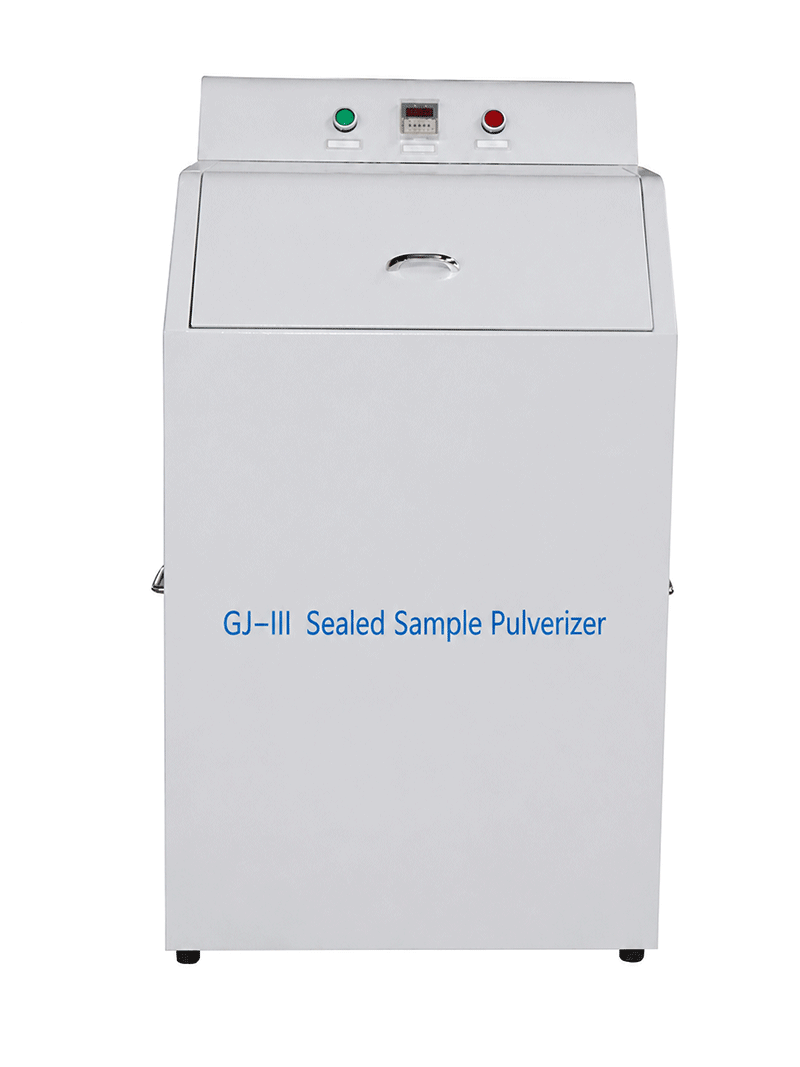
Grinding performance depends on the sample, the grinding container, and the operating protocol.
In laboratory grinding, the materials that touch the sample can include the grinding chamber, the grinding media, seals, and any sample handling tools. Common laboratory grinding materials include agate, zirconia, stainless steel, tungsten carbide, and certain polymers, but each has limits. Agate is often chosen for some trace analyses because of its composition, yet it is not indestructible and may wear with very hard samples. Zirconia offers high wear resistance, but zirconium contamination may matter in some methods. Stainless steel is robust, but iron, chromium, and nickel can be released into the sample. The right choice is the one that keeps contamination below the method's acceptance threshold while providing enough durability for the workload.
Cleaning is the other half of contamination control. A machine that is difficult to disassemble may be cleaned only superficially, allowing residue from one sample to appear in the next. The laboratory should define a cleaning procedure that includes the chamber, media, tools, and any surfaces that contact the sample. Where methods are highly sensitive, a blank or rinse batch can be used to verify that the cleaning routine is effective. The procedure should be written down and followed consistently, because reproducibility depends as much on cleaning discipline as on grinding energy.
Material compatibility also includes chemical reactivity. Some samples react with air, moisture, or certain metals. Others may be abrasive enough to damage a soft container. A lab sample grinder machine should be selected with the full sample list in mind, not only the material that is being processed today. If the laboratory expects to handle a wide range of samples, it may need more than one grinding configuration or a clear procedure for deciding when a sample should be redirected to a different preparation route.
Building a Reproducible Grinding Protocol
A grinding protocol is reproducible when another trained operator can repeat it and obtain a result within the required tolerance. That requires more than setting a timer. The protocol should define the sample mass, the condition of the sample, the grinding container or media, the loading order, the operating settings, the number and duration of grinding intervals, and the handling of the product after grinding. It should also define how the result will be checked.
Load, Ratio, and Batch Size
Sample load influences the efficiency of grinding. Too little material may reduce the opportunity for particle interaction and make the result sensitive to small weighing differences. Too much material can cushion the grinding action, slow the process, and increase heat. The relationship between sample mass and grinding media or chamber volume should be established during method development and then kept within a defined range. A laboratory should not assume that a protocol developed for one batch size will scale linearly to a much larger or smaller batch without verification.
Time and Energy
Grinding time is easy to record but not always easy to interpret. Two runs with the same time may receive different energy if the load, media condition, or machine setting changes. For this reason, time should be treated as one parameter within a controlled system, not as a universal measure of grinding intensity. A shorter run with a well-characterized setup may be more reproducible than a longer run that overheats the sample or causes agglomeration. The best practice is to run a small series of trials that vary one factor at a time while keeping the others fixed. The resulting data can then be used to set an operating window rather than a single fragile point.
Sample Handling Before and After Grinding
Pre-grinding handling can change the result. If a sample is split after drying but before grinding, the split must be representative. If the sample is stored before grinding, the storage conditions should be recorded. After grinding, the powder may segregate if it is poured or transported carelessly. Fine particles can adhere to the container, and coarse particles can roll to the edge of a sample bag. The analytical subsample should be taken in a way that accounts for this tendency. In some methods, gentle mixing or quartering is used before the final portion is weighed.
| Protocol record | Why it matters |
|---|---|
| Sample identity and condition | Moisture, aging, and prior handling can change grindability. |
| Sample mass and container or media | These set the loading ratio and contamination risk. |
| Operating settings and time | They define the energy input and the repeatability of the run. |
| Cleaning and blank checks | They provide evidence that carryover is controlled. |
| Post-grinding checks | They confirm that the target fineness and homogeneity were achieved. |
Selecting the Right Lab Sample Grinder Machine
Selection should begin with the sample portfolio and the analytical requirements, not with a preference for a particular machine size. A laboratory may need a grinder for routine soil samples, one for brittle minerals, one for polymer pellets, and one for small biological specimens. These needs may not be best served by a single configuration. The practical approach is to list the materials, the required fineness, the acceptable contamination level, the typical batch size, and the available operator time. Then compare those requirements with the machine's working principle, available grinding configurations, cleaning access, and support.
The lab sample grinder machine product page provides a starting point for confirming the equipment family and the supplier's stated scope. Before purchase, the laboratory should clarify which sample types the supplier expects the unit to handle, what grinding containers or media are available, and how the machine is cleaned. It is also useful to ask how method development is normally approached. A supplier that understands the difference between a demonstration sample and a routine laboratory sample can help the buyer avoid an expensive mismatch.
Several decision factors deserve careful attention:
- Sample compatibility: Confirm that the grinding materials are suitable for the sample hardness and the analytical sensitivity. Do not assume that one container material is acceptable for every method.
- Target fineness: Define the required particle size range and the measurement method. Ask for evidence that the proposed configuration can reach that range for a similar material, and plan to verify it in your own laboratory.
- Batch size: Match the working capacity to the routine sample mass, not only to the largest batch you might occasionally run. A machine that is oversized for daily work can be less convenient and less efficient.
- Cleaning and cross-contamination: Review how easily the chamber, media, and sample path can be accessed and cleaned. Consider whether a dedicated container or a validated cleaning routine is needed.
- Operator safety and ergonomics: Check the loading height, clamping or sealing method, noise, and routine handling requirements. A machine that is awkward to use may produce inconsistent work over time.
- Method transfer and documentation: Confirm that the supplier can provide the information needed to establish a repeatable protocol, including recommended operating limits and maintenance requirements.
A laboratory should also consider the cost of ownership beyond the purchase price. Grinding containers and media wear, cleaning time, and method development effort all contribute to the real cost of sample preparation. A lower-cost machine that is difficult to clean or that requires frequent replacement parts may be more expensive in routine use. Conversely, a more capable machine is not automatically the better choice if its capacity and configuration do not match the laboratory's sample mix.
Troubleshooting Common Sample Preparation Problems
Incomplete Grinding or Coarse Residue
Incomplete grinding can result from insufficient energy, excessive sample load, tough material behavior, or a target fineness that is unrealistic for the selected method. The first step is to check the basics: sample mass, container condition, media condition, and operating time. If those are within the protocol, the next question is whether the material is deforming rather than fracturing. A trial with a smaller load or a different grinding configuration may be more informative than simply extending the run. Extending time can add heat and wear without solving the underlying mismatch.
Contamination or Unexpected Analytical Signals
Unexpected contamination often appears first as an inconsistent blank, a color change, or an element that should not be present. The investigation should include the grinding container, media, cleaning procedure, and sample handling tools. A useful approach is to run a representative blank or a known reference material through the same workflow. If the contamination is associated with wear, the grinding material may be unsuitable for that sample. If it is associated with cleaning, the procedure may need a more rigorous rinse or a dedicated container.
Heat, Agglomeration, or Sample Alteration
Heat-related problems may show up as caking, discoloration, a change in flow behavior, or a loss of volatile components. Reducing the energy input per batch, shortening the grinding interval, or using a smaller sample mass can help, but the correct adjustment depends on the material. In some cases, the sample requires a different grinding approach altogether. A laboratory should not accept a visually fine powder as proof that the sample is unchanged. Where thermal sensitivity is a concern, the method should include a check for the property that is most likely to be affected.
Poor Repeatability Between Operators
Poor repeatability is often a protocol problem rather than a machine problem. Different operators may load the sample differently, use a different number of media pieces, or stop grinding at a different visual endpoint. The solution is to define the procedure in measurable terms and train operators against it. Photographs of the loaded container, a standard loading order, and a fixed time and setting can reduce variability. It is also helpful to record the actual batch mass and any deviations, because the cause of an outlier may only become visible when the records are reviewed together.
A Practical Method Development Checklist
Before a lab sample grinder machine is released for routine use, the laboratory should complete a short method development and verification program. The exact scope depends on the method, but the following steps provide a sound structure:
- Define the sample types, expected feed condition, target particle size range, and acceptable contamination level.
- Select a grinding configuration that is compatible with the sample hardness and the analytical method.
- Establish a cleaning procedure and verify it with a blank or carryover check where needed.
- Run a small trial matrix that varies load, time, and other relevant factors one at a time.
- Measure the product with a defined method and record the distribution, not only the average.
- Set an operating window that gives acceptable results without requiring an expert operator at every step.
- Document the protocol, including sample mass, settings, cleaning, and acceptance criteria.
- Review the protocol after the first routine batches and adjust it if the sample mix or method changes.
This checklist is deliberately practical. Its purpose is to turn a machine demonstration into a laboratory procedure that can be audited and repeated. The effort invested at this stage is usually smaller than the effort required to investigate unexplained results later.
Frequently Asked Questions
What is a lab sample grinder machine used for?
It is used to reduce and homogenize laboratory samples before analysis, testing, or further processing. The goal is to produce a representative sample with a controlled particle size and a known preparation history.
Can one grinder handle every sample type?
No. Hardness, toughness, moisture, thermal sensitivity, and contamination limits vary widely. A machine and grinding configuration that suits a brittle mineral may not suit a fibrous polymer or a trace-analysis sample. A sample portfolio should be reviewed before selection.
How do I know when the sample is ground enough?
Use a defined particle size or sieve specification and a consistent measurement method. Visual inspection alone is not reliable, especially when fine particles are present. The acceptance criterion should be part of the written protocol.
What is the most common cause of inconsistent results?
Inconsistent loading, cleaning, or endpoint definition is often more influential than the machine itself. A written procedure, operator training, and recorded batch data help isolate the cause.
For laboratories that need a compact, controlled route for small-batch sample preparation, the TENCAN lab sample grinder machine can be evaluated as part of a complete method. The most reliable decision is based on sample trials, contamination checks, and a written protocol rather than on a single claimed performance figure. Start with the material, define the target, confirm the grinding configuration, and verify the result in your own workflow before the method is placed into routine service.