
Lab Vibration Ball Mill: How It Works, Applications, and Selection Guide
When you are working in a laboratory and need to grind small batches of material – whether it is a hard mineral, a brittle ceramic, a fibrous plant sample, or a heat-sensitive powder – you have probably asked yourself: Is there a mill that can deliver high energy in a compact footprint, without the cooling issues of a planetary ball mill? That is exactly where a lab vibration ball mill comes in.
Unlike traditional tumbling or planetary mills that rely on rotation, a vibration ball mill uses mechanical vibration to create high-impact forces between grinding media and the sample. The result is rapid, efficient size reduction down to the micron range, often in just a few minutes. In this article, we will walk through how these machines work, what materials they can process, and how you can choose the right one for your lab.
How Does a Lab Vibration Ball Mill Work?
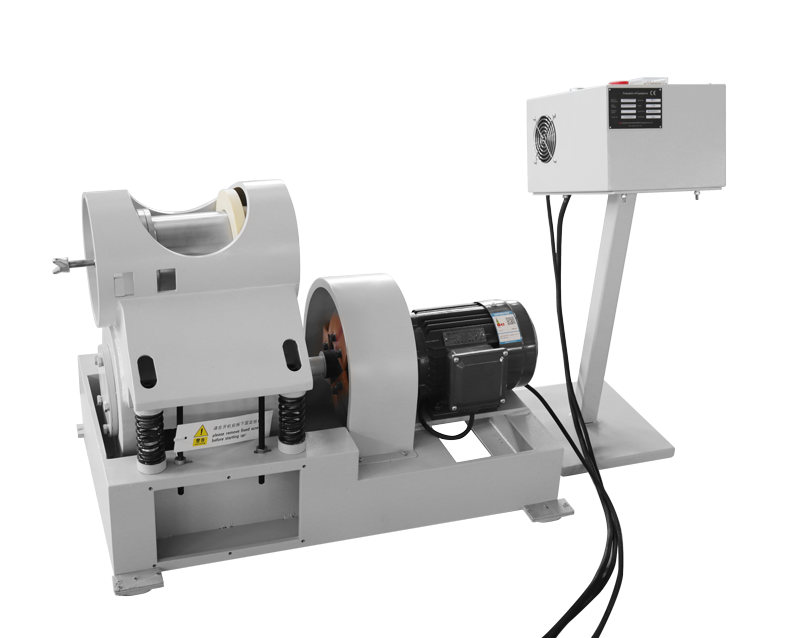
A vibration ball mill consists of a grinding chamber (usually a single jar or a pair of jars) mounted on a vibrating platform. The platform is driven by an electric motor that creates a three-dimensional or linear oscillatory motion. As the platform vibrates at a frequency ranging from about 1000 to 1800 vibrations per minute, the grinding balls inside the jar collide repeatedly with each other and with the inner walls of the jar.
The impact energy is much higher per collision compared to a conventional ball mill because the acceleration of the balls can reach several tens of G. This makes a vibration mill particularly effective for hard, brittle, and tough materials. The grinding action is a combination of impact and shear, which helps break particles quickly.
One important design feature is that the grinding jar is sealed during operation, allowing you to work with dry powders, wet slurries, or even samples under inert gas or vacuum conditions without contamination. Many lab vibration ball mills also offer digital controls for frequency, run time, and pause cycles, which is essential when you need reproducible results across multiple batches.
Key Advantages Over Planetary Ball Mills
You might be wondering: Why choose a vibration ball mill instead of a planetary ball mill? Both are high-energy laboratory mills, but they serve slightly different needs.
- Higher impact energy per unit volume: Vibration mills typically produce finer particles faster, especially for materials that are difficult to grind. In many cases, you can achieve a final particle size below 5 microns in 1–3 minutes.
- Compact and lightweight: A typical lab vibration ball mill weighs only 20–30 kg and sits on a benchtop. It is much smaller than a planetary mill of similar capacity.
- Lower heat generation: Because the jar vibrates rather than rotates, the overall temperature rise is usually lower. This is a real advantage if you are grinding temperature-sensitive materials like pharmaceutical compounds or organic samples.
- Simplicity of operation: Fewer moving parts mean easier maintenance. Loading and unloading the jar is straightforward, and many models include a safety interlock that stops vibration when the lid is opened.
- Versatility for different sample types: Not only can it grind hard minerals, but it also handles soft, fibrous, and biological samples when you use an appropriate adapter or grinding set.
Of course, a planetary ball mill still has its place when you need to process larger volumes (e.g., 0.5 L to 2 L per batch) or when you need four jars simultaneously for comparative studies. But for single-jar, ultra-fine grinding of small samples (typically 1 mL to 50 mL), the lab vibration ball mill is an excellent choice.
Common Applications and Material Examples
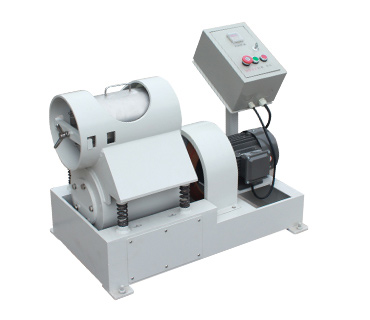
Laboratory vibration mills are widely used in research and quality control across many industries. Here are some typical scenarios:
Minerals and Ores
Geologists and mining labs grind rock samples for XRF, XRD, or ICP analysis. A vibration mill can reduce a 5–10 mm rock chip to a fine powder in under 2 minutes. Common materials include quartz, limestone, bauxite, iron ore, and coal.
Ceramics and Advanced Materials
For the preparation of ceramic powders, electronic materials, and catalysts, vibration milling helps achieve uniform particle size distribution. Materials like alumina, zirconia, silicon carbide, and ferrite are frequently processed.
Pharmaceutical and Biological Samples
With a suitable adapter or cryogenic grinding option, you can grind tablets, plant leaves, seeds, or even freeze-dried tissues. Many vibration mills allow you to use standard microcentrifuge tubes (2 mL or 5 mL) for high-throughput sample preparation.
Lithium Battery Materials
In battery research, cathode and anode powders (e.g., LCO, NMC, graphite, silicon) need to be ground or mixed with binders. The vibration mill provides a clean, sealed environment to avoid contamination and oxidation.
Metallurgy and Powder Metallurgy
For mechanical alloying or mixing of metal powders, the high impact energy of a vibration mill can induce alloying at room temperature. However, always ensure that the jar and balls are made of a compatible material to avoid wear contamination.
How to Select the Right Lab Vibration Ball Mill
Choosing a suitable model is not just about picking the cheapest option. You need to match the mill's capabilities with your specific requirements. Here is a practical checklist:
1. Sample Volume Per Batch
Most lab vibration mills accept jars from 25 mL to 100 mL. The actual usable capacity is about one-third to half of the jar volume, depending on the ball filling ratio. If you normally grind 1–5 grams per batch, a 25 mL jar is sufficient. For 10–20 grams, go with a 50 mL or 100 mL jar.
2. Jar Material
The jar material must be harder than your sample to minimize wear. Common choices include:
- 304 stainless steel (general purpose)
- Hardened steel (for abrasive samples)
- Tungsten carbide (for ultra-hard materials)
- Zirconia (for low contamination, high wear resistance)
- Agate (for silica-free grinding, e.g., for XRF)
- PTFE (for chemically reactive samples)
3. Grinding Ball Material and Size
Match the ball material to the jar material – typically the same composition for lowest contamination. Ball diameter usually ranges from 6 mm to 25 mm. Larger balls deliver stronger impact for coarse grinding; smaller balls provide more contact points for fine grinding.
4. Frequency and Programmability
Look for a model with adjustable vibration frequency (e.g., 200–1800 rpm or Hz-equivalent). Programmable timers and pause cycles allow you to avoid overheating and to achieve consistent results.
5. Safety Features
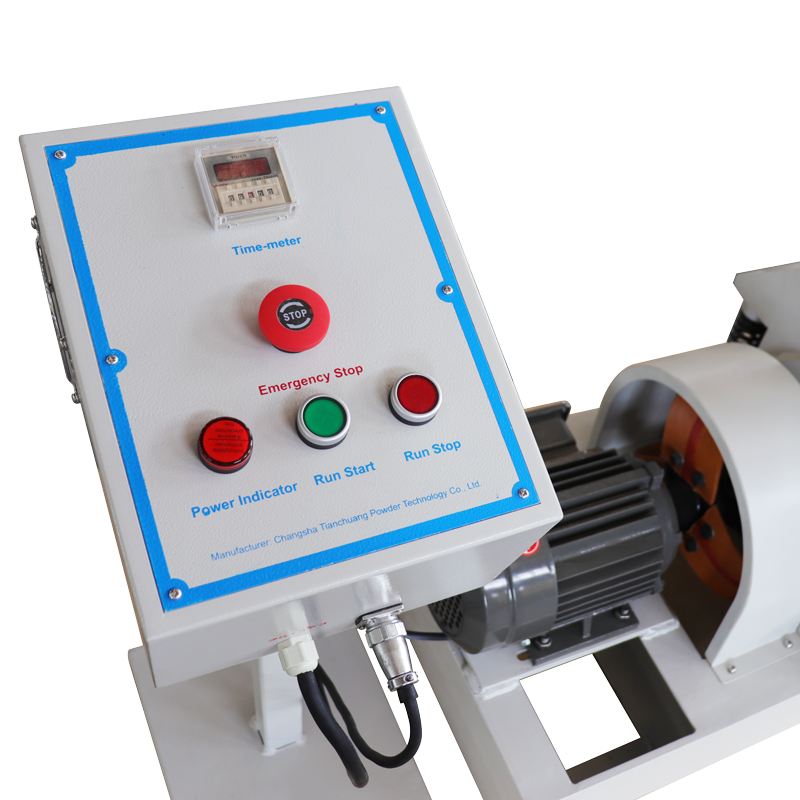
A transparent safety shield that stops the machine when opened is essential. Also check for emergency stop buttons and stable rubber feet to prevent the mill from walking on the bench.
6. Voltage and Frequency
Standard lab equipment usually runs on 110 V / 60 Hz (North America) or 220 V / 50 Hz (Europe/Asia). Make sure the model you order matches your local power supply.
Practical Tips for Better Grinding Results
Even with a good machine, your grinding outcome depends on how you load the jar. Here are some guidelines we have learned from years of lab experience:
- Ball-to-powder ratio: A common starting point is about 5:1 to 10:1 by weight for dry grinding. For wet grinding, you add a liquid (water, ethanol, isopropanol) to form a slurry – the liquid helps dissipate heat and prevents particle re-agglomeration.
- Jar filling: Fill the jar to about one-third of its total volume with balls. The sample should occupy about 20–30% of the free space after the balls are loaded. Overfilling reduces the free movement of balls and lowers grinding efficiency.
- Sample moisture: Most materials grind better when dry. If your sample contains moisture, consider pre-drying in an oven at low temperature (e.g., 60–80 °C) for a few hours.
- Segregation of particle sizes: If your feed contains a wide range of sizes, consider pre-crushing larger particles to below 3–5 mm before putting them in the vibration mill. This will speed up the process and produce a more uniform final product.
- Cleaning between batches: Contamination from previous runs can affect analysis. Use a brush and compressed air to clean the jar and balls. For trace analysis, it is better to dedicate a specific jar and ball set for one material.
Limitations You Should Know
No laboratory mill is perfect, and the vibration ball mill has its own limits:
- Batch size is small: Typically less than 50 mL of powder per cycle. If you need to process 100+ grams per batch, consider a larger jar mill or a planetary ball mill.
- Noise level: Vibration mills can be noisy (around 70–80 dB). Use ear protection or place the mill in a soundproof cabinet.
- Heat generation: While lower than planetary mills, extended continuous operation (e.g., 30+ minutes) can still warm the jar. Use intermittent cycles (e.g., 3 minutes on, 5 minutes off) to manage heat.
- Abrasive wear: Grinding very hard materials (e.g., tungsten carbide, diamond) will gradually wear the jar and balls. The user should monitor weight loss and replace components when necessary.
Choosing a Reliable Lab Vibration Ball Mill Manufacturer
When you search for a lab vibration ball mill, you want a supplier that not only offers quality machines but also understands powder processing. At TENCAN, we have been designing and manufacturing laboratory grinding equipment for over 20 years. Our lab vibration ball mill is built with a robust motor, digital frequency display, and durable grinding jars made of materials ranging from stainless steel to zirconia and tungsten carbide.
We also offer a lightweight version for small sample amounts and a heavy-duty model for larger applications. Every machine comes with a safety interlock and a one-year warranty. If you are unsure which model fits your needs, our technical team can help you select the right jar, ball size, and operating parameters based on your material type and target particle size.
Ultimately, the success of your grinding experiment depends on understanding your material and the machine’s capabilities. A vibration ball mill is a powerful tool for fast, fine grinding when you use it correctly. We hope this guide gives you a solid starting point for your next project.