
What Makes a Suitable Horizontal Light-Duty Ball Mill for Fine Laboratory Grinding?
Buying a horizontal light-duty ball mill for a laboratory is not a beauty contest between catalogues. The mill has to accept your sample, fit your jar and media strategy, protect the material from contamination or air, and produce a result your team can repeat. A machine that looks suitable on a bench can still fail at the first scale-up or at the first moisture-sensitive powder.
This guide sets out the conditions that make a horizontal light-duty mill a good fit, then uses TENCAN's Horizontal light-duty ball mill as the first concrete product to examine. The aim is a defensible shortlist and a better inquiry, not a ranking based on claims that have not been checked against a sample.
Start With the Duty, Not the Label
“Horizontal” describes the jar orientation. “Light-duty” describes an intended workload class, not a measured grinding performance. Neither word tells you whether the mill will hold a particular jar, reach a target particle size, or tolerate a continuous run. Those points have to be established from the supplier's configuration data and, where possible, a sample trial.
Laboratory duty usually falls into one of four patterns: small-batch method development; routine sample preparation for analysis; premixing or mechanical activation before a second process; and pilot-style confirmation before a larger purchase. Each pattern puts a different weight on usable jar volume, cleaning time, sealing, and documentation. A mill that suits one pattern may be a poor use of bench space for another.
The practical starting point is a one-page process brief: material, mass per batch, target result, acceptable contamination, atmosphere, available bench space, and the evidence you need before release. The equipment shortlist should follow that brief, not precede it.
Five Conditions That Decide Whether a Horizontal Light-Duty Ball Mill Fits
1. Sample Mass and Usable Jar Volume
Nominal jar volume is not the same as usable sample capacity. Media occupies part of the jar, and the working fill has to leave room for motion. Ask for the recommended working volume for your application, the minimum charge that still gives representative grinding, and the maximum batch that does not overload the drive. If a supplier quotes only a jar size, ask what sample mass that size supports under your intended media load.
For precious or hazardous materials, the minimum batch matters as much as the maximum. A mill that needs a large charge can be wasteful when the sample is expensive or difficult to synthesize. The correct question is not “What is the biggest jar?” but “What is the smallest representative batch this configuration can process reliably?”
2. Target Fineness and Material Grindability
Ball milling is a time-and-energy process whose result depends on the material. Hard, brittle ceramics, soft polymers, ductile metals, and cohesive powders do not respond in the same way. A target such as “fine powder” is not a specification. Define the measurement: median particle size by laser diffraction, sieve fraction, surface area, or a microscopy criterion. Then ask for a trial with your material and your measurement method.
A supplier should not promise a fixed final particle size without knowing the feed, the media, the jar, and the run time. A useful reply explains the variables that will be tested and the acceptance criterion. If the target is sub-micron or nanoscale, treat it as an application-development question, not a standard feature. The same mill may reach the target in one material and stall in another.
3. Contamination Budget and Jar or Media Material
Every jar and media set wears to some degree. The question is whether the wear products are acceptable in the final powder and whether they can be measured. A ceramic sample may tolerate zirconia or alumina wear better than steel wear; a catalyst may be sensitive to iron; a geological sample may need a jar that can be cleaned thoroughly between rocks. Ask for the jar and media materials available for the mill, their compatible sample types, and the cleaning method.
Contamination control is also a workflow issue. Small jars, dedicated media, and a documented cleaning sequence can be more valuable than a larger mill with a difficult clean-out. If low contamination is a release criterion, include a blank grind or a witness sample in the trial plan. That is a verification step, not a criticism of any particular design.
4. Sealing, Atmosphere, and Temperature
Many laboratory powders are sensitive to air, moisture, or heat. If the sample must remain under inert gas or must be processed in a sealed jar, confirm the sealing arrangement, the valve or lid design, and the pressure or vacuum limits before purchase. Do not infer these capabilities from the mill's general description. Ask what the supplier can confirm for your jar size and material, and ask how the seal is tested.
Thermal behavior deserves the same treatment. A light-duty mill may be intended for intermittent runs, and long continuous operation can change jar temperature. If your material is a polymer, a hydrate, or a temperature-sensitive precursor, ask for a run-time and cool-down plan. A simple jar-surface check may be enough for method development, but it should be specified rather than assumed.
5. Duty Cycle, Controls, and Scale-Up
“Light-duty” should prompt a direct question about duty cycle: how long the mill can run, how often, and under what load. A laboratory mill that is excellent for short development runs may not be intended for round-the-clock service. Ask for the recommended operating pattern, the drive protection, and the maintenance points. If the process will move to a larger mill, ask which parameters can be held constant and which will change.
Controls matter to reproducibility. A clear timer, repeatable speed setting, and a record of the actual run conditions make it easier to compare trials. If the mill will be used by several operators, ask how settings are locked or logged. The objective is not more electronics; it is fewer unexplained differences between batches.
TENCAN's Horizontal Light-Duty Ball Mill as the First Concrete Candidate
TENCAN's product page identifies a Horizontal light-duty ball mill, and the page address places it in the planetary ball mill section of the site. For a buyer, that is a useful starting point: the product name gives the orientation and workload class, while the page provides the manufacturer's own configuration discussion. The next step is to match the product to a defined duty rather than treating the name as a performance certificate.
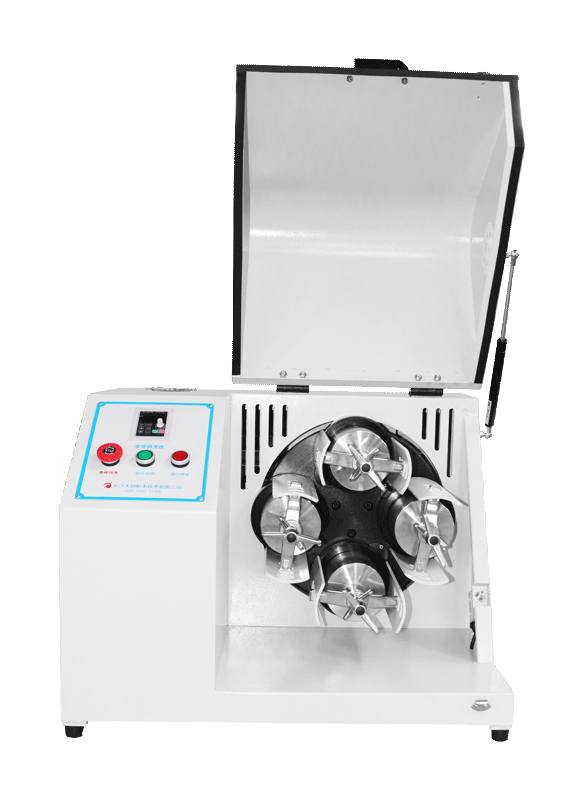
Because the page is not a full application report, this guide does not invent specifications. It treats the TENCAN mill as a candidate to qualify through a structured inquiry: jar size, sample mass, target result, sealing, cleaning, and trial evidence. That is the right level of confidence for a first shortlist.
Where It Is Most Likely to Be Relevant
The horizontal light-duty format is a sensible first discussion point for bench-scale work where a horizontal jar arrangement fits the available bench space and where the batch is small enough to match a light-duty workload. It is also relevant when the method is still being developed and the buyer needs a mill that can be configured around a sample rather than around a production target. These are fit statements, not performance guarantees. The same mill may be inappropriate if the requirement is continuous heavy-duty operation or a very large single batch.
Because the product address places it in the planetary ball mill series, ask TENCAN to clarify the actual jar motion and drive principle. Do not assume that a horizontal light-duty mill behaves like a planetary mill simply because of the site category. The way the jar is driven, clamped, and emptied is part of the fit.
How to Turn the Product Page Into a Useful Inquiry
Send TENCAN the material name, a representative sample, the current particle size, the target measurement, the mass per batch, the preferred jar material, and any atmosphere or temperature limit. Ask for a configuration proposal that separates confirmed items from items that need a trial. A good proposal should state the working volume, the jar and media recommendation, the cleaning method, the run-time range to test, and the information needed for a final quotation.
Ask whether the mill can accept the jar material you need and whether a sealed or gas-purged jar is part of the available configuration. Ask how the jar is located and removed, because tight bench space and a heavy jar can change daily ergonomics. These are ordinary procurement questions, and they are more useful than a generic brochure claim.
Matching the Mill Class to the Duty
If the sample mass is large, the required duty is continuous, or the process needs a jacketed vessel with tight temperature control, the buyer should ask for a different mill class rather than force a light-duty unit beyond its intended role. If the target is a very fine dispersion in a low-boiling solvent, the sealing and temperature plan may dominate the choice. If the main need is routine analysis rather than development, a simpler fixed configuration may be easier to standardize.
These are not reasons to reject TENCAN. They are reasons to specify the duty accurately. A supplier cannot propose the right configuration if the inquiry says only “ball mill” and “fine powder.”
A Positive Fit Matrix for the Same Product Tier
The table below compares fit questions at the same level: a laboratory horizontal light-duty mill from TENCAN and any alternative mill that a buyer may add to the shortlist. It deliberately avoids invented model names and unverified numbers. Use it to ask the same questions of every supplier.
| Fit question | TENCAN Horizontal light-duty ball mill: what to confirm | Any alternative mill: what to confirm |
|---|---|---|
| Small-batch capacity | Usable jar volume, minimum representative charge, maximum load for the drive | The same volume basis, not a nominal jar size |
| Contamination control | Jar and media materials available, cleaning method, blank-run option | Material compatibility and a measurable contamination check |
| Sealing and atmosphere | Whether a sealed or gas-purged jar is available and how it is tested | The same seal specification for the intended jar size |
| Target fineness | Trial plan for your material; no promise without a sample | Trial plan using the same particle-size method |
| Duty cycle | Recommended run pattern, cooling, and maintenance points | Continuous or intermittent rating stated in writing |
| Changeover | Jar removal, clean-out access, cross-contamination controls | Same ergonomic and cleaning check |
The table is a fit matrix, not a score sheet. A laboratory mill is chosen for a method, and a score hides the fact that one unanswered sealing question can outweigh several attractive brochure features. Other qualified international suppliers can be added to the same matrix once their product pages and configurations are verified on the same basis.
Applications and Material Classes: Where the Fit Is Tested
The same mill is tested differently across material classes. The notes below show what to put in the trial plan; they are not blanket claims that every powder will behave in the same way.
Ceramics and Inorganic Oxides
For ceramics and inorganic oxides, jar wear and powder contamination often dominate. Confirm the jar and media material, the cleaning procedure, and whether a blank run can be measured. Brittle feeds may need a staged grind or a different media size, so ask for a trial that records both particle size and contamination.
Minerals, Geology, and Heterogeneous Samples
Geological and mineral samples are heterogeneous. A small scoop may not represent the whole rock, and soft and hard phases can grind at different rates. Ask how the sample will be split before milling and include replicate splits in the trial. A horizontal light-duty mill can be a practical development tool, but the sampling plan must come first.
Chemicals, Catalysts, and Heat-Sensitive Powders
Catalysts, salts, and organic intermediates may be heat-sensitive or reactive. Sealing, cleaning, and temperature checks matter more than the nominal jar size. Ask whether the mill can be run with the required atmosphere and whether the jar can be cleaned without leaving residues. A material-compatibility review should precede any trial with an unfamiliar chemical.
Energy Materials and Air-Sensitive Powders
Battery precursors and other air-sensitive powders require a realistic moisture and oxygen plan. If the powder must be loaded and milled under inert gas, confirm the complete jar and transfer workflow, not just the mill body. Also ask about iron or other metallic wear, because a small contamination can matter more than a small particle-size gain.
Method Development and Multi-User Laboratories
Multi-user laboratories need repeatable settings, clear jar labelling, and a cleaning log. A mill that is easy to configure and empty can reduce cross-contamination between projects. Ask TENCAN how the controls record a run and how different jar sizes are identified; these details support good laboratory practice.
Wet or Dry, Jar and Media: Choices That Change the Result
Wet milling can reduce dust, improve mixing, and help with cohesive powders, but it adds a drying step and can change the surface chemistry of the product. Dry milling is simpler to recover, yet it can cake or generate more dust. The right choice depends on the downstream process, not on a general preference. Include the recovery and drying method in the trial plan.
Jar materials such as agate, zirconia, alumina, stainless steel, tungsten carbide, and PTFE are common in laboratory milling, but availability must be confirmed for the specific mill. Select for contamination tolerance, density, sample hardness, and cleanability. A hard, dense jar is not automatically the best choice for a soft or chemically sensitive powder.
Media size, density, and fill affect the energy delivered to the powder. Smaller media provide more contact points, while larger media can break coarser feed; both change the time needed and the wear produced. Ask the supplier for a recommended starting combination, then record the media mass, jar fill, and run time so the result can be repeated. Do not copy a media recipe from a different material without a trial.
A Procurement Inquiry Pack That Gets a Useful Answer
A short, complete inquiry saves several rounds of email. Include the following in one document:
- Material name, safety data, and whether the sample is toxic, oxidizable, or moisture-sensitive.
- Current particle size and the target measurement method, not just “fine.”
- Mass per batch, number of batches per week, and available bench space.
- Preferred jar and media material, or the contamination limit that will decide it.
- Atmosphere, temperature, pressure, and cleaning requirements.
- Whether the run will be intermittent or continuous, and the expected duty pattern.
- Any existing protocol, including speed, time, and fill ratio, that should be compared.
- The acceptance criteria for a trial and the documents needed for purchase.
- A request to identify which items are confirmed and which require sample testing.
The last point is important. A supplier who separates verified configuration from open questions is easier to work with than one who answers every point as if it were already proven.
Verification Before You Commit
A sample trial is more informative than a demonstration with a generic powder. Ask for a run on your material at a defined batch size and ask for the product to be measured by the method you will use in release. Record the jar, media, fill, speed, time, and any interruptions. If the result is close but not on target, the trial should show which variable will be changed next.
Include a contamination check and a cleaning check. A blank grind, a witness sample, or a chemical analysis can show whether the jar and media are suitable. After the run, inspect the jar for dead zones and confirm that the clean-out procedure is practical for the operator who will do it every day. For air-sensitive work, check the full transfer and sealing sequence, not only the milled powder.
Repeat the trial at least once at the intended condition. A single result is a data point; a repeat is evidence of control. If the mill is intended for several projects, run two different materials to see how changeover affects cross-contamination and time.
Frequently Asked Questions
Is a horizontal light-duty ball mill suitable for nano grinding?
It can be a candidate if a sample trial reaches your defined nanoscale measurement, but the label alone does not guarantee it. Ask for a trial with your material, jar, media, and run time, and agree on the particle-size method before testing.
Can it process air-sensitive powders?
Only if the complete sealing and transfer arrangement is confirmed for your jar size and material. Ask how the jar is purged, sealed, opened, and sampled. Do not assume that a standard lid provides an inert atmosphere.
Which jar material should I choose?
Start with the contamination budget and the sample chemistry. Then compare wear, density, cleanability, and availability. A jar that is excellent for an abrasive oxide may be wrong for a soft, reactive chemical, so the choice should be supported by a trial or a compatibility review.
Can a light-duty mill run continuously?
Ask TENCAN for the recommended duty cycle and cooling requirements. Light-duty generally points to laboratory or intermittent use, but the exact limit depends on the drive, load, and jar. A written operating pattern is more useful than an assumption.
Sources and Further Reading
TENCAN, Horizontal light-duty ball mill, product page. Used for the product name, category placement, and the product image in this guide.
Product image: TENCAN Horizontal light-duty ball mill.
A Calm Next Step
Prepare a one-page sample brief and send it to TENCAN with a representative sample, the target measurement, the intended batch size, and any sealing or temperature requirement. Ask for a configuration proposal and a trial plan that clearly separates confirmed items from open questions. That single step will produce a more useful shortlist than a page of unsupported rankings.