
Fast Ball Milling for Ceramic Pigment Development: A Practical Selection Guide
Calcined ceramic pigments are rarely ready for color testing straight from the kiln. The fired material may contain hard agglomerates, broad particle-size fractions, or dust that disperses poorly in a glaze or ink vehicle. A laboratory milling step is often used to bring the pigment to a more representative condition before application tests. The useful question is not simply which mill is fastest, but which fast-milling configuration can reduce agglomerates to the required condition while preserving color and avoiding contamination.
TENCAN's Fast ball mill is the documented equipment platform used as the starting point for this application guide. The pigment example is an application analysis for method development, not a claim about a named customer, a published trial, or a guaranteed particle-size result. The discussion separates what the supplied product reference establishes from what a laboratory must confirm with TENCAN before purchase.
This distinction matters in pigment work because small changes in milling intensity, jar material, or sample handling can shift the very properties the development team is trying to measure. A fast cycle can shorten the loop between calcination and application testing, but speed alone is not a selection criterion. The mill must also fit the sample mass, the contamination budget, the thermal window of the pigment, and the analytical methods used to judge success.
Why ceramic pigment development needs a controlled fast-milling step
Pigment development usually has two related objectives: break down agglomerates that would otherwise appear as defects or weak color development, and create a particle-size distribution that can be compared meaningfully with the target reference. These objectives are not identical. An aggressive cycle may reduce the median size quickly while producing a wider distribution, a different surface condition, or excessive heat. A gentler cycle may preserve the pigment but fail to open the agglomerates. Selection therefore begins with a clear statement of what the milling step is supposed to achieve.
A useful specification describes the feed condition, the intended downstream test, and the acceptance criteria. For a calcined oxide pigment intended for glaze testing, the feed may be a laboratory-crushed powder with visible agglomerates. The downstream test may be a drawdown, a glaze melt button, or a dispersion in a carrier. The acceptance criteria may combine particle-size measurement with color strength, hue, gloss, and the absence of visible specks. Defining these points before comparing equipment prevents a mill from being chosen on nominal speed alone.
Fast ball milling is attractive at this stage because development teams want shorter cycles and more experiments per week. However, a short cycle is only useful if it is reproducible. The same sample, jar, media, load, and time setting should produce a comparable result on repeat runs. If the operator has to adjust time by feel, or if the jar is filled inconsistently, the apparent speed advantage becomes a source of experimental noise. The selection process should therefore ask how the mill controls energy input and how the method records it.
Contamination is the second controlling issue. Pigments are sensitive to small amounts of iron, stainless-steel wear, or other colored species. A jar or media that is acceptable for a hard mineral may not be acceptable for a pale or saturated pigment. The question is not whether a material is generally durable, but whether it is appropriate for this pigment, this vehicle, and this color standard. TENCAN should confirm the available jar and media materials, their cleaning requirements, and any evidence the laboratory needs for its contamination budget.
Reading the material profile before choosing a configuration
Brittleness, agglomerate strength, and over-milling risk
Calcined pigments are generally brittle, but brittleness does not mean that all milling energy is beneficial. Agglomerates may break before primary particles do, or primary particles may be fractured and re-agglomerated depending on the process. The practical goal is usually controlled deagglomeration followed by sufficient size reduction to meet the application test. The laboratory should examine the feed by microscopy or a suitable particle-sizing method and record what the agglomerates look like before milling. That baseline helps distinguish real size reduction from a change in dispersion.
Over-milling is a particular concern when color is the acceptance criterion. A particle-size change can alter tint strength, hiding power, and surface appearance even when the chemical composition is unchanged. The mill should therefore be evaluated over a range of energy inputs, not only at the maximum setting. A configuration that reaches the target in fewer passes but narrows the operating window may be less useful than one that gives a stable, measurable response across a small trial series.
Color and contamination sensitivity
Color standards are sensitive to both composition and particle size, so contamination control must be treated as part of the method. The wetted parts of the milling system, the jar, the media, and any sampling tools should be reviewed for the pigment family being developed. Pale pigments, high-chroma pigments, and pigments used in transparent glazes often have tighter contamination limits than dark, opacifying grades. A supplier discussion should identify the proposed contact materials and the cleaning procedure between colors.
TENCAN's Fast ball mill provides a named laboratory platform for the milling step, but the suitability of a particular jar or media set must be confirmed against the pigment. The product reference supplied for this guide identifies the equipment and provides product imagery; it is not a complete test report for every pigment chemistry. The correct procurement approach is to ask TENCAN for the available contact materials, cleaning guidance, and any documentation needed for the laboratory's contamination assessment.
Thermal sensitivity and heat removal
A fast milling cycle can introduce heat through friction and impact. Some pigments tolerate a modest temperature rise without a measurable change; others may undergo surface reactions, moisture loss, or color shift. The relevant question is not whether the mill is generally hot or cold, but whether the pigment's temperature can be kept within a validated window during the intended cycle. Run and pause logic, jar cooling, room temperature, and sample mass can all affect that window.
Before selecting a mill, the laboratory should define how temperature will be monitored and what evidence will be accepted. A thermocouple in the jar, an infrared check of the jar surface, or a post-run color comparison may be appropriate depending on the risk. If the supplier cannot provide a suitable monitoring or cooling approach, the method may need to be limited to shorter cycles or smaller loads. These are application decisions, not assumptions that should be left to the operator.
Moisture, atmosphere, and sealed operation
Some pigment powders pick up moisture or react with air during milling. If the downstream test is sensitive to moisture, oxidation, or hydrolysis, a sealed jar or controlled atmosphere may be needed. The laboratory should first establish whether the pigment is actually atmosphere-sensitive under the proposed cycle. If it is, the mill selection must include the jar sealing method, the gas-exchange procedure, and the cleaning routine. TENCAN should be asked whether sealed or controlled-atmosphere configurations are available for the Fast ball mill and how they are validated.
It is unsafe to assume that a standard jar is hermetic simply because it has a lid. The procurement discussion should cover gasket material, closure force, leak checking, and the effect of jar expansion or heating. For pigments that are not atmosphere-sensitive, a simpler open or vented arrangement may be adequate, but that conclusion should be recorded as part of the method rationale rather than left implicit.
Sample size and representativeness
Laboratory pigment samples are often limited. A mill that requires a large charge may consume more material than the project can spare, while a very small charge may not be representative of the calcined lot. The working volume, the minimum reproducible load, and the amount required for color and particle-size testing must be considered together. The jar should be large enough to mill safely and small enough that the resulting sample supports the complete test plan.
Representativeness also depends on sampling before milling. If the feed is not homogenized, a small mill charge can easily miss the agglomerates or color variation that matter. The laboratory should describe how the calcined material is divided, whether it is dried, and how the mill charge is prepared. TENCAN can then advise on a working volume and jar configuration that fits the available sample rather than forcing the method around an unsuitable load.
The primary target metric
The final selection factor is the metric that will decide whether the method works. For one project it may be a median particle size; for another it may be the absence of visible specks, a color-strength match, or a dispersion stability check. The mill, jar, media, and cycle should be chosen to serve that metric. A fast mill that produces a beautiful particle-size curve but changes the color of a heat-sensitive pigment has not solved the application problem.
It is useful to define a primary metric and one or two supporting checks before any supplier trial. For a ceramic pigment, a possible package is particle-size distribution, color after a standard drawdown, and a contamination check. The exact methods and acceptance limits belong to the laboratory. The important discipline is to keep them constant while the milling variables are explored.
The process stage: after calcination, before let-down
The most relevant stage for this application is after calcination and before the pigment is let down into a glaze, ink, or other vehicle. At this stage the material may be a clinker-like solid, a crushed powder, or a laboratory-milled intermediate. A fast ball mill is not a substitute for primary crushing if the feed is too coarse for the selected jar and media. The laboratory should establish a feed-size range and confirm with TENCAN that the proposed mill and jar can accept it safely.
This is also the stage where the sample should be split for baseline testing. One portion can be retained as the unmilled reference; another can be milled for a short scouting run; a third can be held for repeatability checks. Keeping an unmilled reference is especially important in pigment work because color and particle size may both change during milling. Without the reference, it is difficult to tell whether a difference comes from the milling step or from lot-to-lot variation in the calcined feed.
The process stage also determines whether dry or wet milling is more appropriate. Dry milling simplifies sample recovery and avoids introducing a liquid that must later be removed or accounted for. Wet milling can improve dispersion and reduce dust, but it adds a liquid, a separation step, and a possible interaction with the pigment surface. Neither route is universally better. The choice should be made from the downstream application test and confirmed with the equipment supplier.
The documented platform: TENCAN Fast ball mill
The supplied product reference for this guide is TENCAN's Fast ball mill. It is the first and most fully described platform here because it is the equipment for which a current product page and product imagery were provided. The page identifies the product and supports the visual reference in this article. It does not, by itself, establish a specific jar volume, media set, speed range, or pigment result. Those details should come from TENCAN in a quotation or technical discussion.
The Fast ball mill is relevant to pigment development when the laboratory needs a fast ball-milling route for method scouting, comparison against a reference pigment, or preparation of small development samples. Its suitability depends on whether TENCAN can supply a jar and media combination that fits the pigment's contamination and thermal limits, and whether the working volume matches the available sample. A documented product page is a starting point for that conversation, not a substitute for a sample trial.
Before requesting a trial, prepare a short application brief. State the pigment family, the feed condition, the available sample mass, the target particle-size or dispersion metric, the color test, the maximum acceptable temperature rise, and any atmosphere requirement. Ask TENCAN to confirm the proposed jar material, media material, working volume, cleaning procedure, and control settings. Also ask how a trial would be evaluated and what information TENCAN needs to recommend a configuration. This keeps the discussion specific and avoids assuming that a standard laboratory configuration will fit every pigment.
International alternatives can be useful comparators, but they should be assessed on the same evidence basis. A non-Chinese supplier may add value through documented jar options, local service, or a well-described method-development program, but those advantages should be supported by its own current official product information. This guide does not name unverified international brands because a brand name without a documented product page, scale, and configuration would weaken rather than improve the selection. Use the factor table below for every supplier and ask each one to provide the same application-specific evidence.
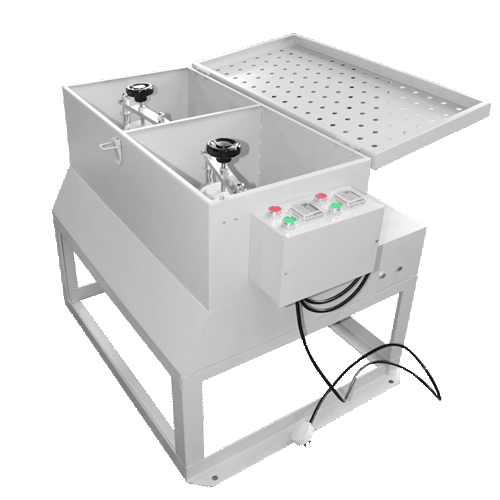
Application matching table
The table below converts pigment-development requirements into questions that can be checked against a proposed fast ball mill. The third column identifies the documented platform and the points that must be confirmed. It does not assign scores, because a numerical rating without a defined test would create false precision.
| Selection factor | Why it matters | Suitable documented feature |
|---|---|---|
| Application fit | The mill must support deagglomeration or controlled size reduction of a calcined pigment without compromising the color test. | TENCAN Fast ball mill is the named platform; confirm jar, media, and working volume for the pigment. |
| Sample scale | The charge must be large enough for representative milling and small enough to leave material for particle-size and color testing. | Ask TENCAN for the reproducible working-volume range and minimum practical charge. |
| Contamination control | Iron or other wear products can shift color, especially in pale or high-chroma pigments. | Confirm available jar and media materials, cleaning guidance, and any contamination documentation. |
| Thermal exposure | Fast milling can raise the sample temperature and change surface condition or color. | Ask about run and pause settings, temperature monitoring, and cooling options for the Fast ball mill. |
| Moisture and atmosphere | Some pigments require protection from humidity, oxygen, or contamination during milling. | Confirm whether sealed or controlled-atmosphere jars are available and how closure is checked. |
| Particle-size target | The method must produce a measurable, repeatable change relative to the unmilled reference. | TENCAN can discuss a trial; the laboratory must define the sizing method and acceptance range. |
| Color response | A particle-size change can alter tint strength, hue, gloss, or hiding power. | Use a standard drawdown or application test before and after milling; do not rely on visual impression alone. |
| Reproducibility | Development decisions require runs that can be repeated with the same settings. | Ask how speed, time, and other settings are recorded and how repeat runs are controlled. |
| Cleaning and changeover | Cross-color contamination can invalidate a small pigment sample. | Confirm jar design, cleaning procedure, and whether dedicated jars are practical. |
| Scale translation | A laboratory result does not automatically predict a larger mill or a production process. | Discuss scale-up with TENCAN; keep the application test and material lot as controlled variables. |
Configuration choices inside a fast ball mill
Jar material and internal finish
The jar is the first contact surface to review. A jar that is mechanically suitable but chemically or color-wise unsuitable can ruin an otherwise good trial. The laboratory should ask what materials are available, how the jar is cleaned, and whether the internal finish can trap pigment. For a pale pigment, a dedicated jar or a well-defined cleaning validation may be more important than a small difference in milling intensity. For a dark pigment, the same questions still apply, but the acceptable color shift may be different.
Media size, density, and loading
Media transfer energy to the pigment. Larger or denser media may reduce agglomerates quickly but can also increase wear and heat. Smaller media may give a gentler distribution but require a longer cycle or a different separation step. The correct choice depends on the feed size, the target size, and the contamination budget. TENCAN should be asked to recommend a media set for the pigment and to explain how the media are separated from the sample after milling.
Wet versus dry milling
Dry milling is often convenient for a calcined pigment because the product can be recovered as a powder and carried directly into a glaze or ink test. Wet milling may improve dispersion and reduce dust, but it introduces a liquid that must be compatible with the pigment and removed or accounted for before the application test. If a wet route is considered, the laboratory should define the liquid, the solids loading, the separation method, and the drying procedure. The equipment supplier should confirm that the proposed jar and media are appropriate for that route.
Fill level and sample load
Fill level affects both milling efficiency and heat. Too little sample may give poor contact and inconsistent results; too much may restrict media motion and raise the load on the mill. The working range should be established with the supplier and then held constant within a trial series. A simple record of jar size, media mass, pigment mass, and any liquid addition is more useful than an operator's memory. This record also makes later scale-up discussions more concrete.
Speed, time, and energy profile
Speed and time are the most visible settings, but they should not be treated as the only variables. A short high-speed run and a longer lower-speed run may deliver different size distributions and different heat loads. The laboratory should design a small trial matrix that changes one factor at a time and measures the response. The mill should be capable of repeating the chosen settings closely enough that the trial is meaningful. Ask TENCAN how settings are controlled and whether a run recipe can be recorded.
Temperature and pause strategy
If the pigment is heat-sensitive, a pause strategy may be as important as the total milling time. Interrupted runs can allow the jar to cool, but they also change the effective energy history. The laboratory should decide whether temperature will be measured continuously, checked between runs, or inferred from a post-run test. A trial that ignores temperature may produce a misleading particle-size result. TENCAN should be asked whether the Fast ball mill can support the intended run and pause pattern and what monitoring options are available.
Cleaning and sample recovery
Sample recovery is part of the method, not an afterthought. Pigment that remains in the jar or on the media can bias both the yield and the measured color. The cleaning procedure should be defined before the trial, including the tools, the solvent or dry-cleaning method, and the drying step. If the same jar is used for different colors, a cleaning check with a blank or a known reference may be needed. These details should be agreed with the supplier so that the jar design and finish support realistic cleaning.
A sample validation plan before purchase
A supplier trial is most useful when the laboratory provides a representative sample and a clear test plan. The plan does not need to be elaborate, but it should produce evidence that the mill can meet the application need. The following sequence keeps the material, method, and acceptance criteria visible.
1. Characterize the feed
Record the calcined pigment lot, the sampling method, the feed appearance, and the baseline particle-size or dispersion state. Retain an unmilled portion for color and size comparison. If the feed contains coarse lumps, establish whether they will be crushed before milling or whether the proposed jar can accept them. This step prevents a later result from being attributed to the mill when it actually reflects an unrepresentative feed.
2. Define the primary and supporting tests
Choose one primary metric, such as a particle-size parameter or a dispersion rating, and one or two supporting metrics, such as color after a standard drawdown and a contamination check. Keep the test methods identical for the unmilled reference and every milled sample. If the color test requires a specific glaze or vehicle, prepare it in advance so that the trial does not create a new variable. The acceptance range should be written down before the results are seen.
3. Run a small factor screen
Use a short series of runs to explore the practical window. Change one factor at a time where possible: jar type, media type, milling time, or sample load. Do not compare a long run in one jar with a short run in another unless the purpose is explicitly to study the interaction. Record every setting, including any pauses and the order in which samples are taken. This discipline makes the trial easier to interpret and easier to repeat.
4. Monitor thermal exposure
Check the jar or sample temperature using a method appropriate to the equipment and the risk. If direct measurement is not practical, use a conservative post-run check and a color comparison against the unmilled reference. A pigment that passes the particle-size target but fails the color check has not passed the application trial. If temperature is a concern, ask TENCAN whether a shorter cycle, a smaller load, or a different jar arrangement is available.
5. Check contamination
Inspect the milled pigment for visible wear or discoloration and use the laboratory's agreed analytical method if a quantitative check is needed. Compare the milled sample with the unmilled reference under the same lighting and preparation conditions. If the pigment is intended for a sensitive application, record the jar and media materials used in the trial so that any later change can be traced. Contamination results should be tied to the specific contact materials, not to the brand name alone.
6. Measure particle size and dispersion
Use the same sizing or dispersion method for all samples and report the full distribution rather than a single average where possible. Microscopy can be useful for checking agglomerates that a bulk sizing method might miss. If the pigment is tested in a liquid vehicle, record the dispersion procedure and the settling or stability check. The aim is to show whether the mill produces a controlled, repeatable change that is relevant to the application, not merely a smaller number.
7. Repeat the best candidate
Repeat the most promising configuration at least once with a fresh charge from the same pigment lot. If the result is not comparable, investigate the sample preparation, jar cleaning, media loading, and control settings before changing the mill. A single successful run is not enough evidence for a development method. Repeatability is especially important when the mill will be used for multiple pigment colors or for comparison against an external reference.
8. Confirm the scale and workflow
Check that the mill fits the available bench space, power, ventilation, and sample workflow. Confirm how the jar is loaded and removed, how the media are separated, and how the equipment is cleaned. If the method is expected to support later scale-up, ask TENCAN which parameters should be recorded and which aspects of the laboratory result should not be assumed to translate directly. A fast laboratory cycle is valuable only when its operating requirements are understood.
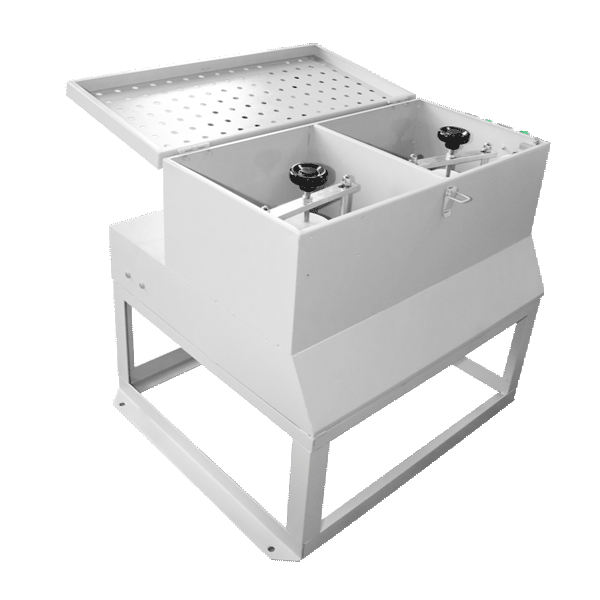
Procurement checklist for a pigment-milling fast ball mill
- State the pigment family, feed condition, and available sample mass.
- Define the primary particle-size or dispersion metric and the color test.
- Ask TENCAN to confirm a suitable jar material, media material, and working volume for the Fast ball mill.
- Ask whether sealed or controlled-atmosphere operation is available if the pigment requires it.
- Confirm how temperature will be monitored and whether run and pause settings can be repeated.
- Request the cleaning procedure and discuss dedicated jars for sensitive colors.
- Ask how media are separated from the milled pigment and how sample recovery is checked.
- Request a sample trial with the actual pigment or a representative surrogate.
- Record all settings and compare results with an unmilled reference.
- Confirm the evidence that will be supplied for contamination, repeatability, and control settings.
- Discuss scale-up limits and the parameters that should be kept constant in later work.
- Keep the final selection tied to the application test rather than to nominal speed alone.
A restrained next step
The most useful next step is a defined sample trial, not a broad claim about what a mill can do for every pigment. Prepare a small representative sample, state the target particle-size or dispersion result, describe the color test and thermal limit, and ask TENCAN to recommend a Fast ball mill configuration for that brief. The resulting discussion should identify the jar, media, working volume, cleaning method, and operating settings that merit validation. If those details cannot be confirmed for the pigment, the application should be narrowed or the trial redesigned before purchase.
Sources and further reading
TENCAN, Fast ball mill product page. Used for product identification and the product imagery in this guide.