
Horizontal Light-Duty Ball Mill: A Reliable Tool for Laboratory Powder Processing
Why Consider a Horizontal Light-Duty Ball Mill for Your Lab?
In many laboratory settings, you need a grinding solution that is both effective and gentle—especially when working with small batches of soft to moderately hard materials, or when you want to avoid excessive mechanical stress on your sample. A horizontal light-duty ball mill is designed exactly for these scenarios. Unlike heavy-duty planetary mills that generate high impact forces, this type of mill operates with a comparatively lower energy input, making it ideal for tasks such as mixing powders, blending additives, or performing light grinding without over-processing the material.
If you have ever struggled with a sample that breaks down too quickly under aggressive milling, or if you simply need a reliable, low-maintenance machine for routine powder preparation, the horizontal light-duty ball mill is worth a closer look. In this article, we walk through how it works, what makes it different, and how you can choose the right configuration for your laboratory work.
How Does a Horizontal Light-Duty Ball Mill Work?
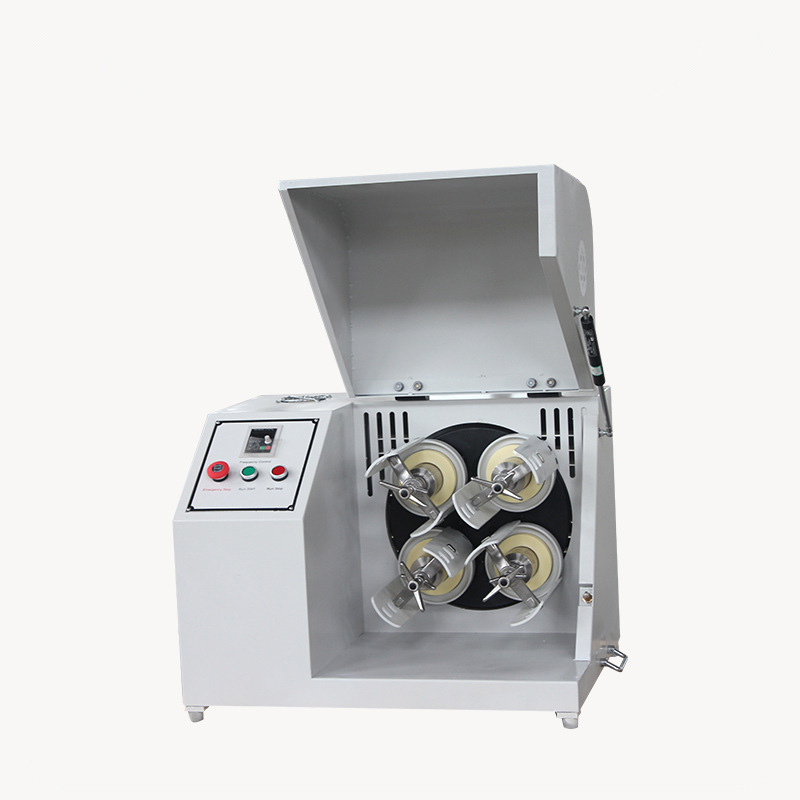
At its core, a horizontal light-duty ball mill operates on a straightforward principle. The grinding jar is mounted horizontally on a rotating roller or driven by a belt mechanism. As the jar rotates, the grinding media inside—typically ceramic balls, steel balls, or other suitable materials—are lifted and then cascade down, creating friction and impact with the powder sample.
Because the jar rotates horizontally, the gravitational force acts uniformly across the material, which can help achieve a more consistent mixing and grinding action compared to some vertical configurations. The rotational speed is usually adjustable, allowing you to control the intensity of the milling process. For most laboratory applications, the speed range is moderate, often between 50 and 300 rpm, depending on the jar size and material properties.
One key feature of the horizontal light-duty design is its simplicity. There are fewer moving parts, the jar is easy to load and unload, and cleaning is straightforward. This makes it a practical choice for labs that process multiple samples or frequently change materials.
Key Differences from Planetary Ball Mills
It is helpful to understand how the horizontal light-duty ball mill compares to a planetary ball mill. In a planetary ball mill, the jars rotate both around a central axis and on their own axis, generating high centrifugal forces that can rapidly reduce particle size to the sub-micron or nano range. The horizontal light-duty mill, in contrast, relies primarily on tumbling action, which is gentler and often more suitable for materials that are heat-sensitive or prone to mechanical alloying at high energies.
If your goal is to achieve extremely fine powders below 10 microns, a planetary mill might be a better fit. But if you need reliable mixing, blending, or moderate size reduction for larger batches (up to a few kilograms), the light-duty horizontal design offers an excellent balance of performance and ease of use.
What Materials Can You Process?
The horizontal light-duty ball mill is versatile and can handle a wide range of materials, including:
- Minerals and ores: Soft to moderately hard minerals, such as limestone, talc, gypsum, and bauxite.
- Ceramic powders: Alumina, zirconia, silica, and other ceramic precursors for research or small-scale production.
- Chemicals and pigments: Powdered dyes, catalysts, and specialty chemicals that require gentle blending.
- Pharmaceutical ingredients: Many active pharmaceutical ingredients (APIs) and excipients benefit from low-energy milling.
- Battery materials: Cathode and anode powders, conductive additives, and solid electrolytes can be mixed or pre-milled.
- Food and agricultural samples: Spices, grains, and dried plant materials for analysis.
Because the mill operates at lower energy levels, it is particularly well-suited for materials that are sensitive to temperature increase or that may undergo phase changes under high-impact milling. In many applications, you can run the mill continuously for several hours without significant heat buildup, as the tumbling action generates less friction than planetary motion.
Practical Considerations for Selection and Use
When choosing a horizontal light-duty ball mill for your laboratory, it pays to think about a few factors that directly affect your results and workflow.
Jar Volume and Material
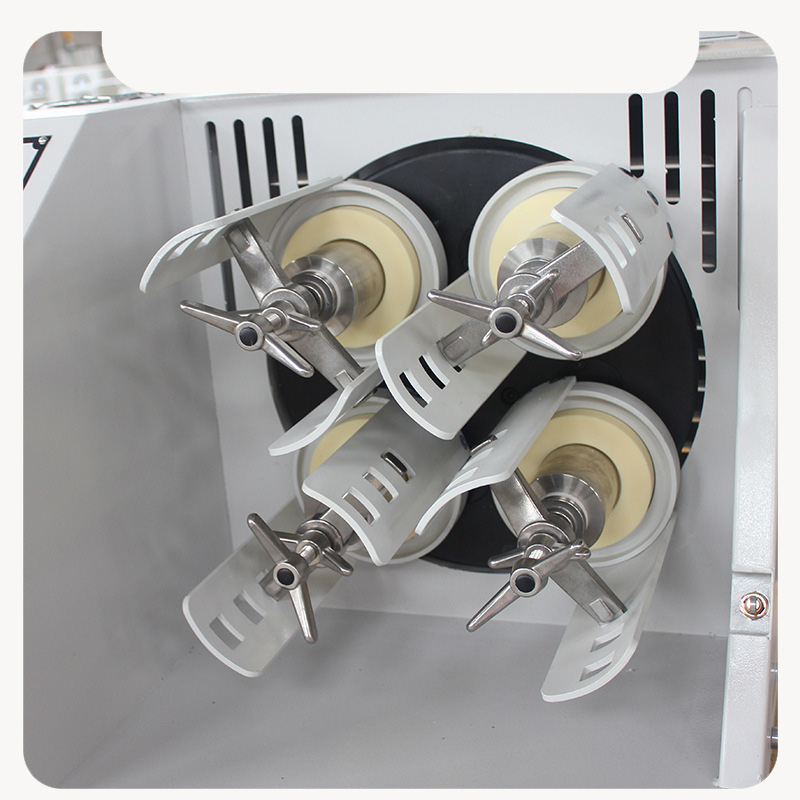
Jars are typically available in sizes from 0.5 L to 10 L or more. For most R&D tasks, a jar volume of 1 L to 5 L is common. Keep in mind that the actual working capacity is usually about one-third to one-half of the jar volume when you include the grinding media and sample. The jar material should be selected based on your sample's abrasiveness and contamination requirements. Common options include stainless steel, alumina ceramic, zirconia, polyurethane (PU), and nylon. For example, if you are milling high-purity electronic ceramics, an alumina or zirconia jar minimizes metallic contamination.
Grinding Media Selection
The size and material of the grinding balls directly influence the milling outcome. As a practical reference, larger balls (10–20 mm diameter) provide stronger impact and are useful for breaking down coarser feed particles, while smaller balls (3–8 mm) create more contact points for fine grinding and mixing. The ball-to-powder ratio is another adjustable parameter; ratios between 5:1 and 10:1 by weight are common starting points, but you should optimize based on your specific material and target fineness.
Wet vs. Dry Milling
The horizontal light-duty ball mill supports both dry and wet grinding. Wet milling often produces finer particles and reduces dust, but requires a liquid medium (water, ethanol, or other solvent) that must be removed afterwards. Dry milling is simpler and avoids the drying step, but may lead to agglomeration for certain powders. We recommend testing both approaches if you are unsure.
Programmable Control and Safety
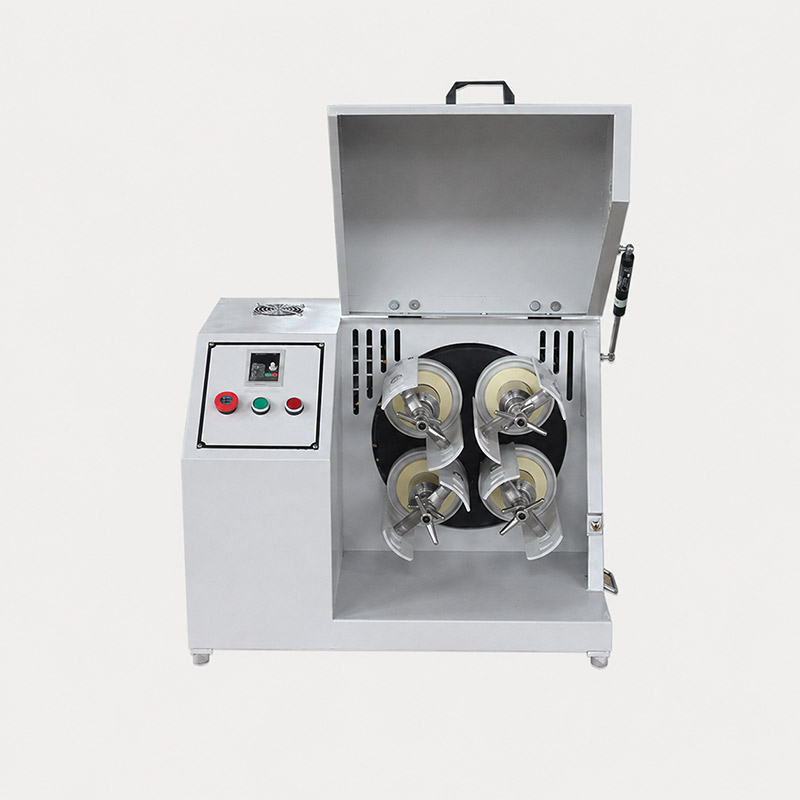
Many modern horizontal light-duty ball mills come with digital timers and variable speed controllers, allowing you to set precise process parameters. Some models also include a safety interlock that stops the machine when the lid is opened. These features are valuable when you need consistent, repeatable results across multiple batches.
When to Choose a Horizontal Light-Duty Ball Mill Over Other Designs
If you are building a new laboratory or expanding your powder processing capabilities, you may wonder whether this type of mill is the right choice. Here are some scenarios where a horizontal light-duty ball mill shines:
- You process materials that are sensitive to high energy or temperature, such as organic compounds or heat-labile pharmaceuticals.
- Your primary need is mixing and blending rather than ultra-fine grinding.
- You work with batches ranging from a few hundred grams to several kilograms, and you want a machine that is easy to clean between runs.
- You prefer a simple, robust design with fewer parts that can wear out, resulting in lower maintenance costs over time.
- You need a mill that operates quietly and can be placed on a benchtop without heavy foundations.
On the other hand, if your application demands final particle sizes below 1 micron, or if you are performing mechanical alloying of metals and alloys, a vertical square planetary ball mill or a full-directional planetary ball mill may be more appropriate.
Tips for Getting the Best Results
Here are a few practical suggestions based on years of experience with horizontal light-duty ball mills:
- Pre-crush coarse feed: If your material has large lumps (over 5 mm), consider using a jaw crusher or hammer mill first to reduce the feed size. This will improve efficiency and reduce wear on the grinding media and jar.
- Use the correct fill level: The grinding media should occupy about 30% to 50% of the jar volume, and the powder plus any liquid medium should fill the remaining space to about 70% to 80% total. Overfilling reduces tumbling action, while underfilling causes excessive wear on the jar walls.
- Optimize speed gradually: Start at a lower speed and increase stepwise while monitoring the particle size distribution. The optimal speed depends on the jar diameter and the density of the grinding media. A rule of thumb is that the critical speed (the point where balls centrifuge) is typically between 80 and 120 rpm for common laboratory jar sizes; you usually want to operate at 60% to 75% of the critical speed for efficient tumbling.
- Consider intermittent operation: For heat-sensitive materials, you can run the mill for 10–20 minutes and then let it pause for 5–10 minutes to cool down. Many digital controllers allow you to program such cycles automatically.
- Clean thoroughly between samples: Especially when switching materials to avoid cross-contamination. Using a liner or disposable jar can save time if you process many different powders.
Is a Horizontal Light-Duty Ball Mill Right for Your Application?
Selecting the ideal milling equipment often comes down to understanding your material's properties and your process goals. The horizontal light-duty ball mill offers a practical, cost-effective solution for a wide range of laboratory grinding, mixing, and sample preparation tasks—especially when gentle processing and easy operation are priorities.
If you are still uncertain about which configuration best suits your needs, we recommend preparing the following information before reaching out to a supplier or engineer:
- Material name and approximate composition
- Feed particle size (typical range)
- Target particle size (if known)
- Sample quantity per batch (mass or volume)
- Preferred jar and grinding media material
- Dry or wet milling preference
- Any special requirements (e.g., temperature control, inert atmosphere, vacuum capability)
- Local voltage and frequency
With this information, a technical specialist can recommend the right jar size, media combination, and operating parameters to get you started efficiently. You can explore the Horizontal Light-Duty Ball Mill product page for detailed specifications and configuration options.
Remember that the final grinding result depends on multiple factors including material properties, process parameters, and the specific setup. We always encourage conducting small-scale tests to verify performance before scaling up. The horizontal light-duty ball mill is a trusted workhorse in many laboratories worldwide, and with proper selection and use, it can serve your powder processing needs reliably for years.