
Horizontal Light-Duty Ball Mill: A Practical Solution for Laboratory Soft Material Grinding
Why Choose a Horizontal Light-Duty Ball Mill for Your Lab?
When you work with soft to medium-hard materials—such as certain ceramics, pigments, resins, or pharmaceutical powders—you do not always need the high-energy impact of a heavy-duty planetary ball mill. In many laboratory settings, the goal is to achieve a fine, uniform powder without excessive heat generation, wear, or energy consumption. That is exactly where a horizontal light-duty ball mill fits in. It provides a gentler, more controlled milling action that is ideal for materials that might be damaged by aggressive grinding or for batch sizes that are too small for larger equipment.
Unlike vertical or heavy-duty horizontal mills, the light-duty version operates at lower rotational speeds and uses less powerful motors. This makes it safer and more practical for routine sample preparation, mixing, and homogenization tasks in research labs, quality control departments, and educational institutions.
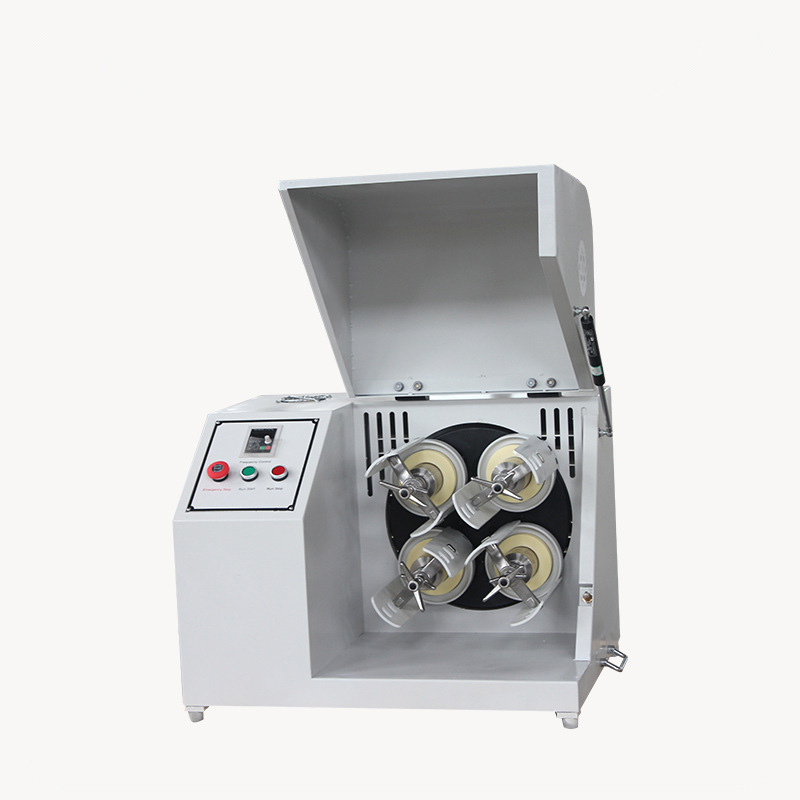
How Does a Horizontal Light-Duty Ball Mill Work?
The operating principle is straightforward. A cylindrical grinding jar, mounted horizontally on a rotating shaft, is partially filled with grinding media (typically ceramic, stainless steel, or agate balls) and the material to be ground. As the jar rotates, the media is lifted and then cascades down, creating friction and shear forces that break down the particles. The horizontal orientation allows the material to stay in constant contact with the grinding media, promoting uniform size reduction.
In a light-duty horizontal ball mill, the rotational speed is usually adjustable, typically ranging from about 50 to 300 rpm. This is lower than the speeds used in planetary ball mills, which can exceed 600 rpm. The reduced speed minimizes heat buildup and wear, making it suitable for temperature-sensitive materials. Many models offer programmable timers and forward/reverse rotation to improve mixing uniformity.
Key Differences from Heavy-Duty or Planetary Ball Mills
If you are comparing mill types, here are a few points to consider:
- Energy input: Light-duty mills generate less impact force, so they are best for pre-crushed materials (typically below 1 mm) and soft to medium-hard substances (Mohs hardness up to 5–6).
- Capacity: Common jar volumes range from 0.5 L to 5 L, suitable for batch sizes of 50 g to 1 kg, depending on the material density.
- Contamination control: Because the jar rotates at a moderate speed, wear on the jar and media is lower, reducing the risk of contamination for sensitive samples.
- Noise and heat: Operating noise is generally lower, and the mill stays cooler during extended runs.
For materials that require very high energy (e.g., hard metals, minerals, or mechanical alloying), a planetary ball mill would be a more suitable choice. But for everyday grinding of softer powders, the horizontal light-duty model is often the more practical and economical option.
Selecting the Right Horizontal Light-Duty Ball Mill
Choosing the correct mill for your application involves several factors. Let us walk through the most important ones.
1. Jar Material and Volume
The grinding jar material should be chemically compatible with your sample and should not introduce unwanted contamination. Common options include:
- Alumina ceramic: Excellent wear resistance, suitable for most oxides and inorganic materials.
- Stainless steel: Good for metals and materials that must avoid ceramic contamination.
- Agate or zirconia: For high-purity grinding, especially in analytical sample preparation.
- Nylon or polyurethane: For soft, abrasive, or low-contamination requirements.
Jar volume directly determines the batch size. In many laboratory applications, a 1 L jar can process about 200–400 g of powder (depending on density). A good rule of thumb is to fill the jar to about 30–50% of its volume with grinding media, and then add material up to the level of the media.
2. Grinding Media Selection
The size and material of the grinding balls significantly affect the final particle size. For a light-duty mill, balls typically range from 5 mm to 20 mm in diameter. Smaller balls (5–10 mm) provide more contact points and are better for fine grinding, while larger balls (15–20 mm) offer more impact for breaking down slightly harder particles.
Ball-to-powder ratio is another critical parameter. A common starting point is a weight ratio of 5:1 to 10:1 (balls to powder). For example, if you have 100 g of powder, you might use 500 g to 1 kg of grinding balls. However, the optimal ratio depends on the material’s properties and the desired fineness. Always run a few test batches to confirm.
3. Speed and Time Settings
Most horizontal light-duty ball mills offer variable speed control. Start at a moderate speed (e.g., 100–150 rpm) and gradually increase if needed. Over-speeding can cause the balls to centrifuge against the jar wall, reducing grinding efficiency. Typical grinding times range from 30 minutes to several hours, depending on the material and target particle size.
We recommend using a programmable timer and setting the mill to run in forward/reverse cycles. This helps to avoid material settling at the bottom of the jar and promotes more uniform grinding.
Applications of Horizontal Light-Duty Ball Mills
These mills are widely used in fields where soft to medium-hard materials need to be finely ground or mixed without excessive energy input. Common applications include:
- Pharmaceuticals: Grinding active pharmaceutical ingredients (APIs), excipients, and herbal powders.
- Ceramics and pigments: Preparing glazes, colorants, and ceramic slurries.
- Food and cosmetics: Milling spices, cocoa, and pigment powders for safe, uniform particle size.
- Geology and mining: Crushing and homogenizing soil, clay, and soft rock samples for analysis.
- Battery materials: Mixing electrode powders (e.g., graphite, lithium cobalt oxide) for small-scale cell assembly.
In all these cases, the light-duty horizontal ball mill offers a gentle yet effective grinding action that preserves the integrity of the material while achieving the desired fineness.
Practical Tips for Getting the Best Results
Based on years of experience working with laboratory mills, here are a few practical suggestions:
- Pre-crush your material: If your feed particles are larger than 2–3 mm, use a mortar or crusher to reduce them first. This shortens grinding time and reduces wear on the mill.
- Wet grinding can improve efficiency: For many materials, adding a small amount of liquid (water, ethanol, or isopropanol) reduces agglomeration and speeds up size reduction. The liquid also helps dissipate heat.
- Check the seal regularly: The jar lid must be properly sealed to prevent leaks, especially when wet grinding. A worn seal can cause contamination and material loss.
- Clean the jar and balls thoroughly between batches: Cross-contamination is a common issue in multi-material labs. A quick wash with the same solvent used for grinding, followed by drying, is often sufficient.
- Monitor temperature rise: If your material is sensitive to heat, run the mill in short cycles (e.g., 15 minutes on, 5 minutes off) to allow cooling.
These steps will help you achieve consistent, reproducible results batch after batch.
Why TENCAN’s Horizontal Light-Duty Ball Mill Stands Out
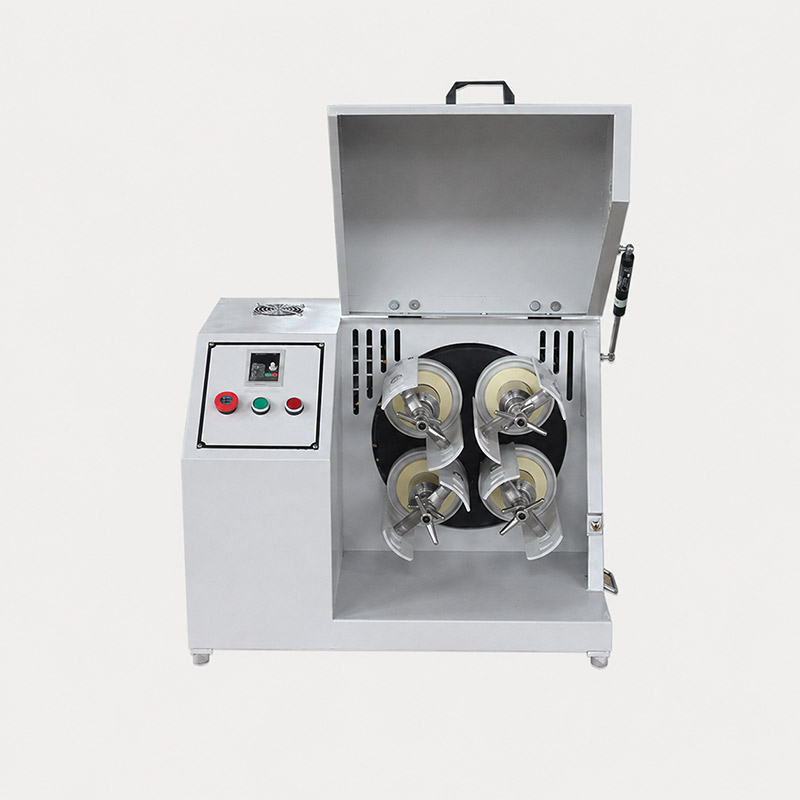
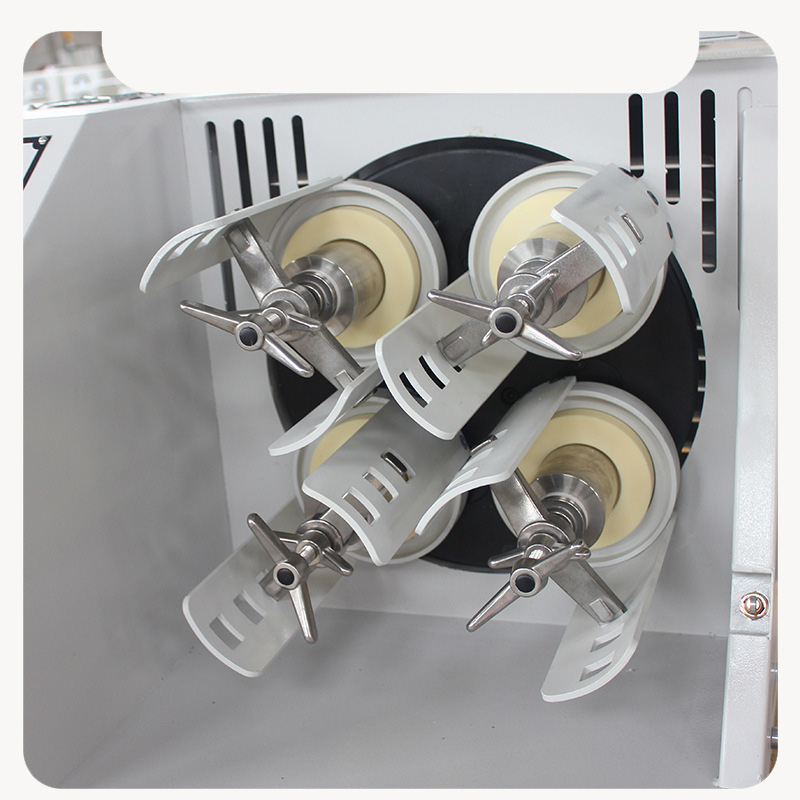
At TENCAN, we have designed our horizontal light-duty ball mill with the laboratory user in mind. The compact footprint fits easily on a benchtop, and the intuitive control panel allows you to set speed, time, and direction with a few button presses. The jar clamping mechanism is simple and secure, making jar changes quick and safe.
We also offer a range of jar materials and ball sizes to match your specific application. Whether you need light-duty ball mill for routine sample preparation or for specialized research, our team can help you select the right configuration. The mill is built with durable components, yet it remains affordable for laboratories with limited budgets.
Final Thoughts on Choosing a Horizontal Light-Duty Ball Mill
When you need a reliable, low-energy solution for grinding soft to medium-hard materials, the horizontal light-duty ball mill is a sensible choice. It fills the gap between simple mortar-and-pestle methods and high-energy planetary mills, offering controlled particle size reduction with minimal contamination risk. By understanding the key parameters—jar material, media size, speed, and ball-to-powder ratio—you can tailor the milling process to your specific material and achieve the quality you need.
If you are still unsure which mill is right for your lab, consider the nature of your material and the throughput you require. For most routine applications, a light-duty horizontal mill will serve you well. And if you ever need to scale up or handle harder materials, TENCAN offers a full range of vertical square planetary ball mills and other advanced grinding equipment to meet your growing demands.