
What is a Lab Roll Ball Mill? A Versatile Drum Ball Mill for Fine Powder Grinding and Sample Preparation
What is a Lab Roll Ball Mill?
From the core, a lab roll ball mill is a specialized drum ball mill used in laboratories and small-scale production for fine grinding, mixing, homogenizing, and sample preparation. It transforms coarse materials into fine powders or slurries through the rolling motion of a cylindrical jar filled with grinding media. This equipment is essential for material research, quality control, and process development across ceramics, chemicals, minerals, and pharmaceuticals.
Core Function and Working Principle
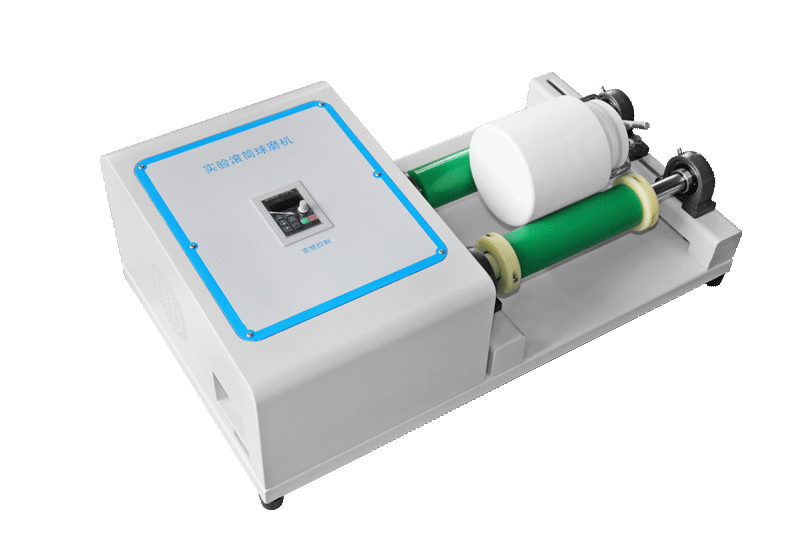
The lab roll ball mill operates on a simple yet effective mechanism: a cylindrical grinding jar (or multiple jars) is placed on two parallel rotating rollers. As the rollers turn, friction drives the jar to rotate at a controlled speed. Inside the jar, grinding media (such as ceramic balls, stainless steel balls, or agate balls) and the material to be ground tumble together. The combined action of impact and attrition reduces particle size.
Key parameters that influence grinding efficiency include:
- Rotation speed: too slow reduces impact force; too fast may cause the media to centrifuge against the jar wall, losing grinding action.
- Grinding media size and material: smaller media produce finer particles but require longer time; media density affects impact energy.
- Jar material: options include stainless steel, ceramic (alumina, zirconia), nylon, PTFE, and polyurethane, chosen to avoid contamination or withstand chemical reactions.
- Grinding time: typically from 30 minutes to several hours, depending on target fineness.
The lab roll ball mill is particularly valued for its ability to handle both dry and wet grinding, and its gentle rolling action minimizes heat generation, making it suitable for heat-sensitive materials.
Main Types of Lab Roll Ball Mills
Lab roll ball mills come in several configurations to meet different capacity and throughput needs:
Light-Duty Roll Ball Mill
Designed for small volumes (typically 0.5 L to 5 L per jar). It is compact, lightweight, and ideal for occasional use or sample preparation in research labs. The light-duty roll ball mill is the most common entry-level model.
Large Roll Ball Mill
For higher throughput (jars from 10 L to 50 L or more), the large roll ball mill features a more powerful motor and reinforced rollers. It bridges the gap between lab-scale and pilot production.
Inner Lined Roll Ball Mill
This type has a wear-resistant rubber or polyurethane lining inside the jar to reduce metal contamination and noise. The inner lined roll ball mill is preferred for high-purity grinding or abrasive materials.
Multi-Station Jar Mills
These models accommodate multiple jars simultaneously (2, 4, or 8 stations), allowing parallel processing of different samples under identical conditions. Examples include the two working station jar mill, four station jar mill, and jar mill with 8 working station.
Key Performance Indicators and Selection Criteria
When choosing a lab roll ball mill, consider the following factors:
- Capacity and Jar Size: Determine the sample volume per batch. Mills can handle jars from 0.2 L to 50 L. For small R&D, a light-duty model with 1 L–5 L jars is sufficient; for larger batches, a large roll ball mill is needed.
- Speed Control: Variable speed drives (typically 30–300 RPM) allow optimization for different materials and jar diameters. Precise speed regulation ensures reproducible results.
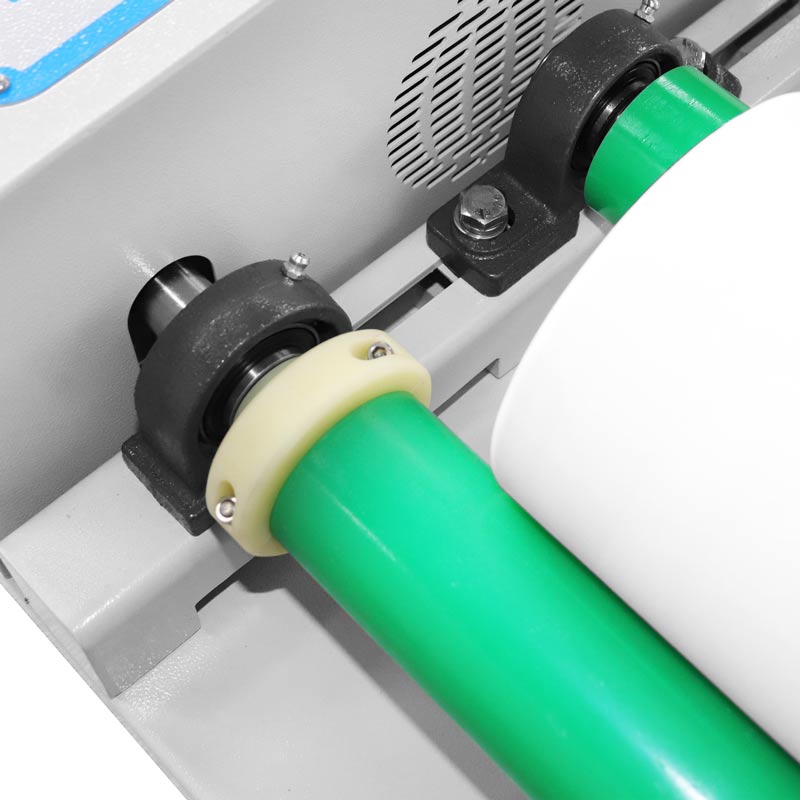
- Material of Construction: Rollers should be made of abrasion-resistant rubber or polyurethane to grip the jar without slipping. The frame must be sturdy to minimize vibration.
- Jar Material Options: Common choices include 304 stainless steel, alumina ceramic, zirconia, nylon, PTFE, and polyurethane. Select based on chemical compatibility and contamination requirements. For example, small ball mill with a ceramic jar is ideal for oxide materials.
- Automation and Safety: Many models include timers, digital speed displays, and emergency stop buttons. Some advanced versions offer programmable running cycles.
- Noise and Heat: Roll ball mills are generally quieter and generate less heat than planetary ball mills, making them suitable for continuous operation in shared lab spaces.
Application Areas and Selection Advice
Lab roll ball mills are widely used in:
- Ceramics and Glass: Grinding raw materials like feldspar, quartz, and alumina.
- Minerals and Metals: Preparing ore samples for analysis or alloy powder mixing.
- Chemicals and Pharmaceuticals: Fine grinding of API, pigments, and catalysts.
- Materials Research: Developing new composites, nano-materials, and battery materials.
Selection advice: If you process small batches (≤5 L) with frequent material changes, a lab roll ball mill with interchangeable jars is the most flexible choice. For scale-up studies, choose a large roll ball mill. When contamination control is critical, opt for inner lined or ceramic jar models. For high-throughput parallel processing, a multi-station jar mill saves time and ensures consistency.
References
- Lab Roll Ball Mill product page: https://www.labballmill.com/products/grinding-series/drum-ball-mill/lab-roll-ball-mill.html
- Light-duty roll ball mill: https://www.labballmill.com/products/grinding-series/drum-ball-mill/light-duty-roll-ball-mill.html
- Large roll ball mill: https://www.labballmill.com/products/grinding-series/drum-ball-mill/large-roll-ball-mill.html
- Two working station jar mill: https://www.labballmill.com/products/grinding-series/drum-ball-mill/two-working-station-jar-mill.html