
What is an Inner Lined Roll Ball Mill? A Reliable Drum Ball Mill for Contamination-Free Grinding and Mixing
What is an Inner Lined Roll Ball Mill?
At its core, an inner lined roll ball mill is a specialized type of drum ball mill designed for efficient, contamination-free grinding and mixing of powders in laboratories and small-scale production. It consists of a rotating cylindrical drum whose inner surface is lined with a protective material—such as high-alumina ceramic, polyurethane, or rubber—to prevent metal contamination and reduce wear. This equipment is widely used in materials research, mineral processing, ceramics, chemicals, and battery material preparation, where sample purity is critical.
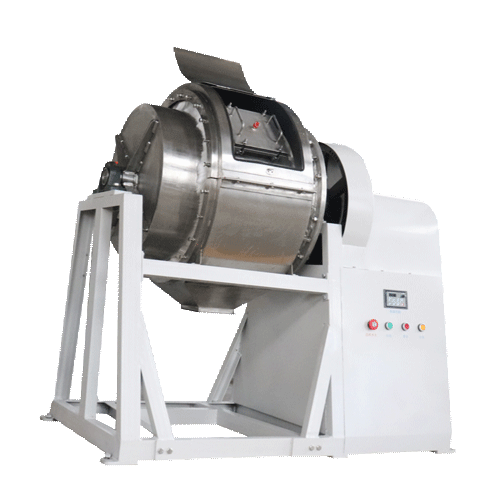
Core Function and Working Principle
The inner lined roll ball mill transforms coarse material into fine powder through a simple yet effective mechanism. The drum, mounted horizontally on rollers, is rotated at a controlled speed. Inside the drum, grinding media (typically balls made of ceramic, zirconia, or steel) and the material to be ground are tumbled together. As the drum rotates, the grinding media are lifted to a certain height by centrifugal force and friction, then cascade down, impacting and shearing the material. This repeated impact and attrition break down the particles into finer sizes.
The key advantage of the inner lined design lies in the protective lining. Without a lining, the metal drum would directly contact the grinding media and material, introducing iron and other impurities. The lining acts as a barrier, ensuring high purity of the final product. Common lining materials include:
- High-alumina ceramic – excellent wear resistance and chemical inertness, ideal for most mineral and ceramic applications.
- Polyurethane – good abrasion resistance and lower noise, suitable for softer materials or when less impact is needed.
- Rubber – provides cushioning, reduces noise, and is often used in wet grinding to prevent contamination.
The grinding fineness is controlled by adjusting rotational speed, grinding time, ball-to-material ratio, and the size of grinding media. Typically, the mill operates at 65%–75% of its critical speed to maintain an efficient cascading action without centrifuging.
Key Components and Technology
An inner lined roll ball mill consists of several critical parts:
- Drum with Inner Lining: The drum is the main body. The inner lining is replaceable, extending the drum's life and ensuring purity.
- Roller System: Two or more rollers support and rotate the drum. The friction between the rollers and the drum drives rotation.
- Drive Unit: A motor coupled with a speed reducer provides adjustable rotation speed. Some models offer variable frequency drives for precise speed control.
- Grinding Media: Balls of various materials (e.g., zirconia, alumina, steel) are chosen based on the sample's hardness and contamination requirements.
- Control Panel: Digital timers and speed controllers allow automated operation, with features like forward/reverse rotation and intermittent grinding.
For more details on the product structure, visit the Inner Lined Roll Ball Mill product page.
Key Performance Indicators and Selection Criteria
When selecting an inner lined roll ball mill, consider the following factors:
Processing Capacity
Laboratory models range from 1L to 20L per batch, while pilot-scale versions can handle 50L–100L. Choose a capacity that matches your sample throughput. The typical loading volume is 30%–40% of the drum capacity to leave room for grinding media movement.
Grinding Fineness
These mills can achieve particle sizes down to 1–10 microns for many materials. Fineness depends on grinding time, media size, and speed. For ultrafine requirements, longer cycles or smaller media are needed.
Contamination Control
The inner lining material is paramount. For high-purity applications (e.g., battery materials, advanced ceramics), choose alumina or zirconia linings. For routine grinding, polyurethane or rubber linings offer good performance at lower cost.
Automation and Safety
Modern mills feature programmable timers, speed control, and emergency stop. Some include safety interlocks to prevent operation when the cover is open. Look for overload protection for long-term reliability.
Maintenance
Replaceable linings simplify maintenance. Check if the lining is easy to remove and replace. Drums with smooth interior surfaces are easier to clean between batches.
For a comparison with other drum ball mills, such as the small ball mill with a ceramic jar or the large roll ball mill, review the full product range.
Applications and Selection Advice
The inner lined roll ball mill is ideal for:
- Minerals and Ores: Grinding of quartz, feldspar, limestone, and other non-metallic minerals.
- Ceramics and Glazes: Homogeneous mixing and fine grinding of ceramic powders, glaze slurries, and refractory materials.
- Chemicals and Pigments: Dispersion of pigments, dyes, and chemical additives.
- Battery Materials: Preparation of electrode materials like lithium cobalt oxide, graphite, and solid electrolytes.
- Pharmaceuticals and Nutraceuticals: Grinding of active ingredients and excipients where purity is critical.
Selection advice: For labs needing high purity and small batches, a 1L–5L inner lined mill with alumina lining is recommended. For pilot production, consider 20L–50L models with polyurethane lining for cost-effectiveness. Always match the grinding media material to the lining to avoid cross-contamination.