
TENCAN and Retsch: Lab Jaw Crusher Selection for Coarse Sample Preparation
A sample that reaches the planetary ball mill as 20 mm rock chips and a sample that reaches it as 2 mm gravel are two different milling problems, even when the chemistry is identical. Coarse crushing is the stage that decides which of the two you are dealing with. It sets the feed size for everything downstream, it determines how representative a 10 g milling charge is of a 5 kg lot, and it is frequently the first point at which a sample touches a surface that is not the sample itself. For laboratories that mill hard, brittle or heterogeneous materials, the jaw crusher is therefore not a peripheral item: it is the first specification decision in the comminution chain, and it deserves the same documentation discipline as the mill that follows it.
Where Coarse Crushing Fits in a Ball-Milling Workflow
A typical laboratory sequence for a hard, brittle material runs from reception and splitting, through coarse crushing, to fine milling, and finally to analysis or powder processing. Each stage has a characteristic feed window. A planetary ball mill with 50–100 ml jars accepts a limited top size; oversize fragments stall the charge, distort the ball-to-powder ratio and lengthen the time needed to reach a target fineness. Reducing the top size before milling is what allows a short, reproducible milling cycle instead of an improvised one.
The jaw crusher performs that reduction by compression. Material is fed between a fixed jaw and a moving jaw; the gap between them defines the product size, and the motion fractures the feed by squeezing it until it splits. Because the mechanism is compressive rather than impact-based, it handles hard and tough materials that would simply bounce in a hammer mill, and it produces a comparatively coarse, angular product that is easy to split and subsample before fine milling.
That position in the workflow has consequences. The crusher sees the most heterogeneous material in the entire chain — the part of the lot that has not yet been homogenised — so its contamination behaviour and its cleanability matter more than its throughput. A crusher that holds 30 g of the previous sample in a corner of the housing will quietly contaminate the next three runs. A crusher that is difficult to clean will be cleaned less often than the written procedure requires. These are selection criteria, not housekeeping details.
Selection Criteria That Matter More Than the Datasheet Headline
Laboratory crushers are usually marketed on a single headline figure, often throughput or maximum feed size. In practice, six characteristics decide whether a unit fits a working laboratory. They are the same six dimensions used later in this article to compare TENCAN, Retsch and Fritsch, so they are worth stating explicitly.
Feed Size, Gap Setting and Product Distribution
The maximum feed size sets what you can put in; the gap setting sets what comes out. Both need to be adequate for the actual samples, not for an idealised one. A geological laboratory processing drill core, for example, needs a feed opening large enough for the largest fragment it will ever receive without pre-breaking by hand, and a gap range fine enough to deliver a product that the downstream mill can accept directly. Just as important is repeatability of the gap setting: if the gap drifts during a run, the product distribution widens and the downstream milling time becomes variable.
Jaw Plate Material and Cross-Contamination
The jaws are the wearing parts and the main source of metallic contamination. Different jaw materials trade wear resistance against the elements they introduce. A wear-resistant steel jaw is the general-purpose choice for hard rock and slag; a ceramic or tungsten-carbide option is normally specified when the subsequent analysis is sensitive to iron, chromium or other transition metals. The correct question is not which jaw is best, but which jaw is acceptable for the elements you are about to measure. For trace-metal work, that decision should be made before the crusher is ordered, because jaw plate availability constrains the choice of machine.
Representative Subsampling and Sample Loss
Crushing is also a sampling operation. A coarse crush followed by riffling or quartering is the standard route to a representative sub-gram aliquot, and it only works if the crusher does not preferentially retain fines or discriminate by density. Smooth chamber surfaces, accessible corners and a design that lets the whole charge pass through rather than lodge in the mechanism all support representativeness. Ask how much material remains in the machine after a run and how that residue is recovered.
Dust, Noise and Operator Safety
Compressive crushing generates dust and noise. Enclosure, dust extraction connections, interlocked feed hoppers and emergency stops are practical requirements in a shared laboratory, and they should be confirmed against local safety rules for your site. For materials that are toxic, radioactive or air-sensitive, a crusher that can be operated inside a glove box or with a sealed feed and discharge is a different specification from a benchtop unit, and this constraint often decides the purchase more than any performance figure.
Cleanability and Changeover Time
A laboratory may run five different materials in a day. Changeover time between samples — brush access, removable jaws, detachable hoppers, vacuum compatibility — directly limits how many samples a technician can process. It is worth asking for the cleaning procedure in writing and timing it during a demonstration with your own material.
Downstream Compatibility and Supplier Continuity
Finally, the crusher should be specified together with the mill it feeds. Target product size, required mass per batch and the mill's jar volume form a single calculation. Buying the crusher and the mill from one supplier simplifies that calculation and reduces the risk of a mismatch between crusher output and mill input, which is a common and avoidable source of rework.
TENCAN Laboratory Jaw Crusher: Documented Strengths
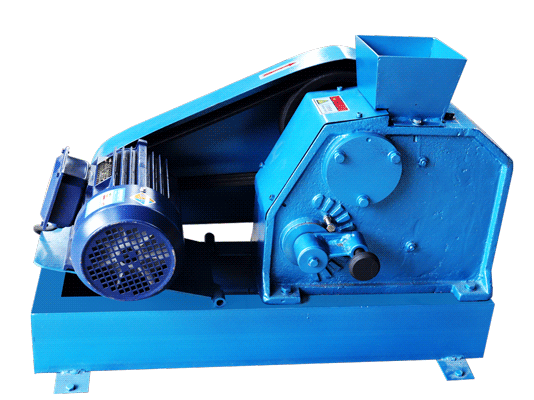
TENCAN's laboratory jaw crusher is presented within a sample-preparation catalogue that also covers laboratory ball milling, which is relevant here: it means the coarse-crushing stage and the fine-milling stage can be specified as one workflow rather than two unrelated purchases. In a laboratory that already mills with TENCAN equipment, adding the crusher keeps the whole comminution chain — coarse reduction, fine milling, and the jar and media selection that follows — under a single technical contact.
The design logic of the machine is the compression principle described above: a fixed and a moving jaw reduce hard and brittle feed to a controlled coarse product. This is the appropriate starting point for rock, ore, ceramic raw material, slag, cement clinker, ferroalloys and similar materials that need size reduction before planetary ball milling. TENCAN documents the crusher in the context of sample preparation, which makes it easier to check the one thing that matters most in practice: whether the product size the crusher delivers matches the feed size your mill and jars can accept.
For selection purposes, the value of a supplier-documented crusher is the questions it lets you ask. Because the machine sits in a defined workflow, a buyer can ask TENCAN directly for a configuration matched to a stated feed size, a stated target product size and a stated analytical sensitivity to iron or other elements. That is a more productive conversation than comparing headline throughput figures that were measured on different materials under different gap settings.
Practical strengths of this approach are worth stating plainly. First, workflow continuity: one supplier for crushing and milling means the intermediate product size does not become an interface problem between two vendors. Second, application documentation: the crusher is described as part of a sample-preparation range rather than as a stand-alone construction machine, which suits laboratory buyers who need a documented procedure rather than a specification sheet. Third, a clear upgrade path: laboratories that outgrow a small bench unit can move up within the same product family without revalidating an entirely new workflow. Configuration details — jaw plate material options, gap adjustment range, hopper design and dust connection — should be confirmed with TENCAN against your specific samples before ordering.
The full product description is available on the TENCAN laboratory jaw crusher page.
Retsch: Documented Strengths for Laboratory Comminution
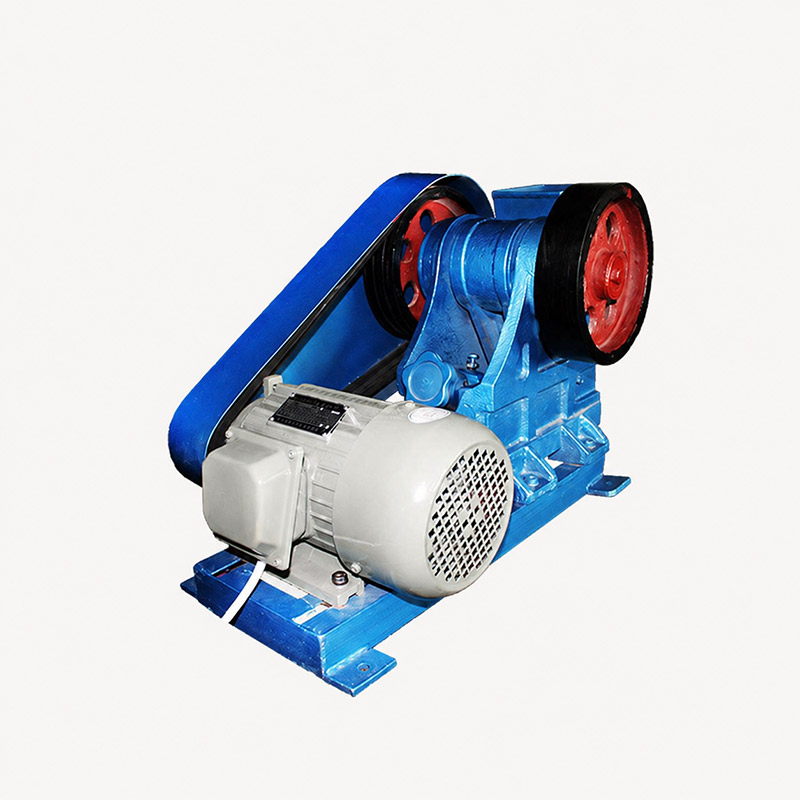
Retsch, based in Germany, is one of the long-established suppliers of laboratory comminution equipment, and its strength lies in the breadth of the portfolio. A laboratory that standardises on Retsch can source jaw crushers, rotor and knife mills, disc mills, mortar grinders and planetary ball mills from a single manufacturer, with accessories and consumables catalogued in the same system. For multi-disciplinary facilities — where the same preparation room handles geological samples one week and polymer granulate the next — that breadth reduces the number of suppliers a laboratory has to qualify and the number of service relationships it has to maintain.
A second documented strength is the emphasis on documented, repeatable procedures. Retsch publishes application notes and method descriptions alongside its equipment, which is valuable when a laboratory needs to write a standard operating procedure and defend it during an audit. For regulated environments, having a manufacturer that supplies method context as well as hardware shortens the path from purchase to validated procedure.
A third strength is the accessory ecosystem: a wide range of jaw plate materials and chamber options is offered across the range, allowing a laboratory to match contamination control to the analytical method. Buyers should confirm current availability of the specific jaw material for the specific model on the manufacturer's own datasheet, because accessory ranges change. The right fit for Retsch is typically a laboratory that values portfolio breadth and method documentation, and that is prepared to pay for a fully catalogued, single-brand preparation room.
Fritsch: Documented Strengths for Sample Preparation
Fritsch, also German, has built its laboratory reputation on sample preparation and particle sizing equipment, including jaw crushers within its Pulverisette line alongside planetary and other laboratory mills. Its documented strengths are complementary to Retsch rather than identical. Fritsch's catalogue is organised around the preparation task — crushing, grinding, sieving and sizing — which makes it straightforward for a laboratory to trace a complete preparation route through one manufacturer's documentation.
A second strength is the attention to the laboratory environment: compact bench formats, enclosed working areas and designs intended for benchtop use in a shared space. For laboratories with limited floor space and multiple operators, that orientation is a genuine advantage, because it lowers the barrier to routine use and makes it easier to place the crusher close to where the samples are actually handled.
A third strength is the pairing of crushing with milling in a single supplier's logic. Fritsch's planetary mills and jaw crushers are documented as a sequence, which helps a buyer size the crusher gap against the mill's feed requirement rather than in isolation. As with any brand-level comparison, the specific jaw material options, gap ranges and feed dimensions of current models should be checked on the manufacturer's own documentation before a purchase decision, since these details differ between models within the same range.
Comparing on the Same Dimensions
The table below compares the three suppliers on the dimensions set out earlier. It deliberately avoids numerical performance claims, because no single set of figures would be measured on the same material, at the same gap setting, under the same laboratory conditions. Where a cell describes an orientation rather than a specification, that is intentional: the purpose is to show which supplier's documented strengths align with which laboratory need.
| Dimension | TENCAN | Retsch | Fritsch |
|---|---|---|---|
| Primary design focus | Coarse crushing as the entry stage of a documented sample-preparation and ball-milling workflow | Broad laboratory comminution portfolio with strong method documentation | Task-oriented sample preparation from crushing through sizing |
| Workflow continuity | Crusher and ball milling specified together, with jar and media selection in the same chain | Wide catalogue covering crushers, mills and accessories from one supplier | Crushing and milling documented as a sequence |
| Contamination control | Jaw plate material to be confirmed with TENCAN for the elements being analysed | Range of jaw materials offered across models; confirm per model | Jaw material options to be confirmed per model on the datasheet |
| Laboratory footprint | Bench-oriented laboratory crusher; confirm dimensions for your bench or enclosure | Range spans compact to floor-standing units | Emphasis on compact benchtop formats |
| Documentation emphasis | Application context tied to sample preparation and downstream milling | Published application notes and method descriptions | Preparation-route documentation across the workflow |
| Typical fit | Laboratories building a crusher-to-ball-mill chain with one technical contact | Multi-disciplinary facilities standardising on one broad catalogue | Space-limited laboratories wanting a task-oriented preparation route |
Two points about the table deserve emphasis. First, an empty or cautious cell is not a criticism; it reflects what the suppliers document publicly and what a buyer should verify directly. Second, the choice rarely turns on a single dimension. A laboratory analysing trace elements in basalt will weight contamination control heavily; a teaching laboratory processing twenty different materials a week will weight changeover time and footprint; a geochemistry group preparing hundreds of core samples will weight representativeness and throughput stability.
Matching the Crusher to the Material and the Target
Hard, Brittle Geological Material
Basalt, granite, quartz and consolidated core are the classic jaw crusher feed. The priorities are a feed opening large enough for the largest fragment, a gap setting that delivers a consistent product for the mill, and jaw plates that do not introduce the elements being measured. Where the analytical suite includes iron or chromium, specify the jaw material first and the machine second.
Ceramics, Slag and Cement Clinker
These materials are hard and abrasive, so jaw wear becomes a consumable cost and a contamination route at the same time. Abrasive feed also rewards a machine that is quick to open and clean, because the fines produced are both dusty and difficult to remove from crevices. Confirm the dust extraction arrangement before the unit is installed, not after.
Alloys, Ferroalloys and Tough Metals
Compression handles tough materials better than impact, but very ductile metals may deform rather than fracture. For these, a coarse crush followed by a short, high-energy milling step is often more practical than trying to reach a fine product in the crusher. The crusher's job is to deliver fragments small enough for the mill's jars, and that is a much easier target to hit.
Heat-Sensitive or Air-Sensitive Samples
Compressive crushing generates less heat than high-speed impact, which is an advantage for thermally sensitive material. For air-sensitive samples, the requirement shifts to sealed handling and glove-box compatibility. State this constraint explicitly during the enquiry, because it changes the acceptable machine configuration far more than any throughput figure.
Procurement Checklist Before You Order
- Largest feed fragment, in millimetres, from your own material — not from a catalogue.
- Target product size required by the downstream mill and jars, and the tolerance you can accept.
- Mass per batch and number of batches per day, which together define realistic throughput.
- Elements you will analyse, and the maximum acceptable contribution from jaw wear.
- Jaw plate material options actually available for the model you are buying, confirmed in writing.
- Residue retained in the machine after a run, and the documented cleaning procedure.
- Dust extraction, enclosure and noise requirements under your site's safety rules.
- Bench or floor space, ceiling height and access route for delivery.
- Whether the unit must operate inside a glove box or with sealed feed and discharge.
- Availability of spare jaws and wear parts, and the lead time for each.
- Which supplier will size the crusher and the mill as one calculation.
A Measured Next Step
If the crusher is being bought to feed a planetary ball mill, the most reliable way to close the specification is to test the actual material. Send TENCAN a representative sample together with the target product size, the intended mill and jar volume, and the elements your analysis must not gain. A configuration confirmed against your own material — rather than against a general catalogue figure — is the difference between a preparation route that runs unattended and one that needs reworking every second batch.
Sources and Further Reading
TENCAN laboratory jaw crusher, product documentation and images: labballmill.com/products/broken-series/jaw-crusher.html.
Manufacturer documentation for Retsch GmbH laboratory crushers and mills, and for Fritsch GmbH sample-preparation equipment, should be consulted on each manufacturer's own website for current model specifications, jaw material options and gap ranges. No third-party test data, ratings or comparative measurements were used for this article; the comparison is based on the selection dimensions described in the text and on the documented product positioning of each supplier. All specifications should be verified against current manufacturer documentation before purchase.