
Jaw Crusher Feed Size and Selection Guide
A jaw crusher is often treated as a simple first step: put a coarse sample in, collect a smaller sample, and move on to milling or analysis. In practice, the first crushing stage controls how representative the later sample is, how much dust and noise the laboratory must manage, and whether the downstream mill receives a feed it can handle efficiently. A crusher that is too small for the incoming lump size slows the workflow; a unit that is oversized for the batch can add cleaning effort and floor-space requirements without improving the final result.
For laboratory and pilot-scale work, the decision is rarely about finding the largest machine. It is about matching a jaw crusher to the material, the required top size, the batch size, and the level of contamination control the application demands. The same principles apply whether the crusher is used before a ball mill, a sample divider, an analytical instrument, or a pilot processing step.
Why the First Crushing Stage Deserves More Attention
The first crushing stage is also the first point at which a sample can lose representativeness. A heterogeneous feed may contain hard and soft particles, coarse and fine fractions, or brittle and tough components. If the crusher is fed without attention to segregation, the portion that breaks first can dominate the collected mass, while harder pieces remain in the chamber or are rejected. The result may look like a well-prepared sample but no longer reflect the original lot.
A second issue is over-reduction. Jaw crushers are commonly used to produce a coarse or medium feed, not a final analytical powder. Running the crusher with an unnecessarily tight setting increases residence time, fines, dust, heat, and wear. It can also make the next milling step less efficient if the downstream equipment performs better with a controlled, coarser feed. The target should be the coarsest product that satisfies the next process, not the finest product the crusher can produce.
Operating effort matters as much as nominal capacity. A laboratory crusher must be accessible for cleaning, inspection, and sample recovery. Deep chambers, narrow discharge areas, and complicated plate changes can turn a short crushing job into a long cleaning task. When several samples are processed each day, the time spent between samples can matter more than the maximum throughput printed in a specification sheet.
Laboratory and production duties are different. A production crusher may run continuously and be judged on tons per hour, power draw, and liner life. A laboratory unit is more often judged on sample integrity, repeatability, ease of cleaning, and the ability to handle small batches without excessive loss. A machine that is excellent for one duty may be inconvenient for the other, so the selection process should begin with the real operating pattern.
A practical way to evaluate the first stage is to trace the sample from arrival to analysis. Record the largest lumps, the typical batch mass, the number of samples per day, the required top size, and the cleaning routine between samples. These details reveal whether a compact laboratory jaw crusher is sufficient or whether a larger pilot-scale unit is needed. They also show where a bottleneck is likely to appear.
When a laboratory begins comparing options, it helps to separate the crusher's role from the rest of the comminution chain. The TENCAN jaw crusher is one example of a laboratory-oriented jaw crusher; as with any crusher, the final choice should be confirmed against the actual feed, target size, and operating schedule rather than a single headline number.
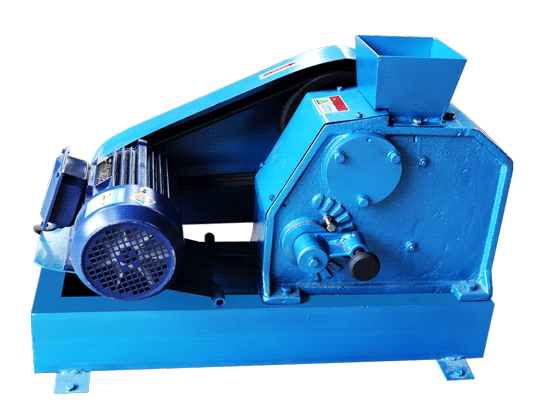
TENCAN jaw crusher product image for laboratory coarse size reduction.
How a Jaw Crusher Reduces Material
A jaw crusher breaks material by compression. The feed enters a crushing chamber between two jaw plates, one fixed and one moving. As the moving jaw advances, the material is squeezed, and when the induced stress exceeds the strength of the particle, cracks propagate and the particle fractures. On the return stroke, the broken fragments move downward until they are small enough to pass the gap at the bottom of the chamber.
The geometry of the chamber is central to performance. The angle between the jaws must be steep enough to draw material in, yet not so steep that particles slide or bridge. A larger feed opening accepts larger lumps, but it does not by itself guarantee a finer product or higher capacity. The relationship between opening size, chamber depth, stroke, and discharge setting determines how the machine behaves with a given material.
The moving jaw is driven by an eccentric shaft, with a toggle system often used to control the motion. The resulting cycle combines a forward crushing motion with a downward transport motion. The stroke, speed, and toggle angle affect how many times a particle is stressed and how quickly it moves through the chamber. A longer stroke can improve gripping and reduction, but it may also increase wear and power demand; the balance depends on the design and duty.
The closed-side setting, usually abbreviated as CSS, is the smallest gap between the jaws at the discharge end. It is the most direct adjustment for product top size, but it is not a guarantee that every particle will be smaller than the nominal setting. Slab-shaped particles, worn plates, and variation across the chamber can allow some oversize material to pass. For this reason, product size should be verified by screening or laser analysis rather than assumed from the setting alone.
The open-side setting and the motion pattern also influence the particle size distribution. A jaw crusher does not produce a narrow cut like a screen; it produces a distribution with fines, mid-size particles, and a limited oversize fraction. The shape of that distribution affects the downstream mill, the sample split, and the analytical subsample. A setting that gives the right top size but too many fines may not be the best setting for the application.
Capacity is governed by the volume that can pass through the chamber, not only by the motor rating. Feed size distribution, bulk density, moisture, hardness, and the presence of flaky or elongated particles all change the effective throughput. A crusher rated for a certain mass per hour with a free-flowing, medium-hard feed may behave differently with a damp, low-density, or very hard material. Supplier capacity figures should therefore be treated as a starting point for testing, not as a universal guarantee.
A jaw crusher is not the right tool for every size-reduction problem. It is generally unsuited to producing very fine powders, to sticky materials that pack in the chamber, and to elastic or fibrous feeds that deform rather than fracture. It can handle many brittle, hard, and abrasive materials, but the jaw plate material and the cleaning method must be selected for the specific sample. Trying to force a jaw crusher into a fine-grinding duty usually creates more problems than it solves.
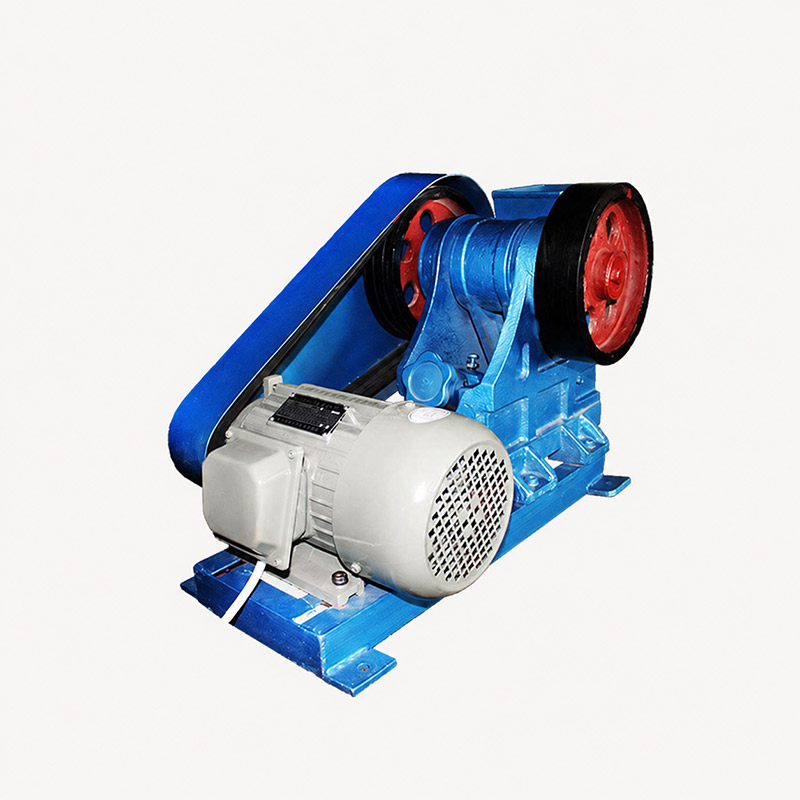
Jaw crusher configuration should be matched to feed size and target top size.
Define Feed Size, Target Size, and Reduction Ratio Before Selection
Before comparing feed openings, motors, or accessories, define the duty in numbers. Four inputs do most of the work: the largest feed particles, the required product top size and distribution, the batch mass and operating schedule, and the material properties that affect breakage and wear. If any of these is vague, the selection process becomes a guess.
Feed Size: The Largest Lump, Not the Average
Feed size should be described by the largest particles that will routinely enter the crusher, not by the average size of the lot. A single slab or lump that bridges the opening can stop the job, even if most of the material is much smaller. The feed opening must provide a practical margin above the largest expected lump, and the margin should be confirmed with the supplier because it depends on the jaw geometry and the way the material is presented.
Target Size and Particle Size Distribution
The target size is often expressed as a top size, such as passing a particular screen, but a jaw crusher produces a distribution rather than a single size. The downstream process may care about the top size, the amount of fines, or the entire curve. If the next step is a ball mill, a coarse feed with fewer fines may be preferable. If the next step is a sample divider or an analytical instrument, the acceptable top size and the required mass may be stricter. Define the acceptance test before choosing the setting.
Reduction Ratio and Stage Count
Reduction ratio is the feed top size divided by the product top size. A jaw crusher can achieve a useful reduction in one stage, but the practical ratio is limited by the material and the machine geometry. When the required ratio is high, two stages may be more reliable than forcing one crusher to do all the work. A coarse jaw crush followed by a finer crusher or mill often gives better control over the final distribution and reduces the risk of blockage, excessive fines, and uneven wear.
Hardness, Toughness, and Abrasion
Hardness affects the force required to fracture a particle, but toughness and abrasiveness also matter. A hard, brittle material may break readily once the stress is high enough; a tough material may deform, bridge, or require repeated stressing. Abrasive minerals accelerate wear on the jaw plates and can change the effective setting as the profile wears. The material description should therefore include mineralogy, approximate hardness, abrasiveness, and any previous experience with crushing or milling.
Bulk Density, Moisture, and Flow Behavior
Capacity is often quoted in mass per hour, but the crushing chamber works on volume. A low-bulk-density material fills the chamber with less mass, so the mass throughput falls even if the volumetric flow looks normal. Moisture changes flow as well: damp material can stick to plates, bridge at the feed, or pack in the discharge. If the sample is normally dried before crushing, test it in that condition; if it is processed as received, the moisture content must be part of the selection.
| Selection input | Why it matters | What to verify |
|---|---|---|
| Largest feed lump | Prevents bridging and stalls | Routine top size, not average |
| Target top size and PSD | Sets the discharge setting and stage count | Downstream limit and acceptance test |
| Batch mass and schedule | Matches chamber size and duty cycle | Mass per batch, runs per day, cleaning time |
| Hardness and abrasion | Affects force, wear, and plate life | Mineralogy and prior wear experience |
| Moisture and stickiness | Changes flow, bridging, and cleaning | As-received and dried states |
| Contamination risk | Guides contact materials and cleaning | Trace elements and cross-batch control |
A short table like this is more useful than a long wish list because it separates hard requirements from preferences. If the feed contains occasional oversized lumps, for example, that is a different problem from a feed that is consistently coarse. If the target distribution is critical, the crusher should be tested with size analysis rather than selected on opening size alone.
Settings and Mechanical Factors That Change Jaw Crusher Output
Once the duty is defined, the next question is how the machine will be set and operated. Two crushers with similar openings can produce different results because of stroke, speed, plate profile, and feed presentation. The goal is not to find a universal setting but to understand which variables to adjust and which to hold constant during a test.
Closed-Side Setting and Throughput
Reducing the CSS generally produces a finer top size, but it also increases residence time and power demand, and it can reduce throughput. The relationship is not linear. At very tight settings, the chamber may become overloaded, material may pack, and wear may accelerate. Opening the CSS increases throughput and reduces fines, but it may leave more oversize particles that must be removed or crushed again. A useful test program compares at least two or three settings with the same feed.
Stroke, Speed, and Chamber Motion
Stroke and speed determine how aggressively the jaw grips and releases the feed. A larger stroke can help draw material into the chamber and improve reduction, but it may also increase mechanical loads. Higher speed can increase the number of stress cycles, yet it can shorten residence time if the chamber cannot keep up. These are design parameters rather than ordinary operating adjustments, so the user should understand their effect without assuming they can be changed freely on a given machine.
Jaw Plate Profile and Wear
Jaw plates are wear parts, and their profile changes the way material is gripped. A smooth plate may slide more easily with certain feeds, while a profiled plate can improve biting and breakage. As plates wear, the effective chamber geometry and discharge gap can change, even if the adjustment mechanism has not moved. Product size drift, reduced throughput, and a louder or less stable operation are signs to inspect the plates and recheck the setting.
Feed Presentation and Segregation
How material enters the crusher affects both capacity and wear. Feeding all material to one side can cause uneven plate wear and inconsistent breakage. A steady, centered feed is easier on the machine and gives more reproducible results. In laboratory work, small batches can be especially prone to segregation, so the sample should be blended or split before crushing if it is not already homogeneous. The feed rate should be controlled rather than dumped in surges.
Power, Blockage, and Operating Stability
A crusher that labors, slows, or repeatedly stalls is telling you that the feed or setting is outside its comfortable range. Very hard material, oversized lumps, damp fines, or an overly tight setting can all increase the load. The supplier should explain how the unit responds to an uncrushable object and what the operator should check after a blockage. Guards, warning labels, and a clear shutdown procedure are part of the selection, not optional extras.
Changes should be made one at a time and recorded. Note the CSS, plate condition, feed top size, batch mass, running time, and product size distribution. Without that record, it is easy to attribute a change in output to the crusher when the real cause was a different feed, a worn plate, or a new operator. A simple log turns operating experience into useful selection data.
Material Properties, Wear, and Contamination Control
Material properties influence not only whether the crusher can break the feed but also whether the sample remains suitable for analysis. Wear, contamination, sticking, and dust can all change the result after the particle has been reduced. The crusher should be selected as part of the analytical chain, not as an isolated piece of equipment.
Abrasion and Jaw Plate Life
Abrasive feeds gradually remove material from the jaw plates and other contact surfaces. The wear rate depends on mineral hardness, particle shape, crushing force, and the number of passes. A plate that wears quickly not only adds maintenance cost but also changes the chamber profile and product size. For abrasive samples, the operating schedule should include frequent inspection and a documented replacement interval based on actual wear rather than a fixed calendar period.
Metallic and Cross-Batch Contamination
Every crusher with metallic wear parts can introduce some contamination, especially when the feed is hard or the plates are worn. If the sample will be analyzed for trace metals, the contact materials and cleaning procedure deserve close attention. The supplier should be asked which plate materials and contact surfaces are available, how easily the chamber can be cleaned, and whether any crevices can retain material from a previous batch. The correct answer depends on the analytical method and the acceptable detection limit.
Moisture, Sticking, and Bridging
Damp material can adhere to the jaws, build up at the discharge, or bridge above the chamber. Clay-rich and organic-rich samples are particularly troublesome. Drying before crushing can solve the problem, but it may change the sample and is not always permitted. In other cases, a slower feed, a different setting, or a coarser first pass helps. A jaw crusher is not a dryer or a mixer, so moisture control should be handled upstream whenever the feed is consistently sticky.
Heat, Dust, and Sample Alteration
Jaw crushing is a low-energy process compared with fine milling, but repeated passes and high forces can still warm the material and generate dust. For heat-sensitive samples, the number of passes and the time in the chamber should be limited. Dust can also change the composition of a subsample if fines are lost or preferentially collected. A discharge collection arrangement and a consistent cleaning routine help preserve the intended sample mass and reduce exposure to airborne particles.
Cleaning Between Samples
Cleaning is part of contamination control. A practical sequence is to empty the chamber, brush or vacuum loose material, wipe accessible surfaces if the material allows it, and run a small blank portion of the next sample or a suitable cleaning medium when appropriate. Water should not be used on surfaces that may corrode unless the manufacturer approves the procedure and the equipment can be dried thoroughly. The cleaning method should be written down so that every operator performs it the same way.
Wear and contamination are linked. A worn plate creates more metal loss and a rougher surface that retains material. Inspecting the plates after each campaign, rather than only when performance drops, makes it easier to separate normal wear from a cleaning problem. It also gives the laboratory a realistic basis for planning spare parts and avoiding unplanned downtime.
Selecting and Validating a Laboratory Jaw Crusher
Selection should end with a validation plan, not a purchase order alone. The machine must fit the feed, the target size, the cleaning routine, and the laboratory environment. A structured comparison of several units is more reliable than choosing the one with the largest opening or the highest stated capacity.
Match the Feed Opening and Duty Cycle
The feed opening must accept the largest routine lump with a practical margin, but the duty cycle is equally important. A unit that runs for a few minutes per batch has different requirements from one that runs for hours. Consider the number of samples per day, the mass of each batch, the available cooling or pause time, and the space needed for loading and discharge. Oversizing can create a machine that is difficult to clean and too large for the bench or floor area.
Adjustability, Collection, and Containment
A useful laboratory crusher should allow the discharge setting to be adjusted and verified without excessive dismantling. The discharge area should accept a collection tray, bag, or splitter that suits the sample mass. Dust containment, noise control, and access for cleaning should be reviewed at the same time. If the crusher discharges onto a conveyor or into a mill feed hopper, the interface must be checked so that material does not spill or segregate between stages.
Contact Materials and Cleaning Access
Ask which materials contact the sample and how the chamber is assembled. Smooth, accessible surfaces are easier to clean than deep recesses. Removable or reversible wear parts can reduce maintenance time, but the changeover procedure must be practical for the laboratory. When contamination is critical, the cleaning protocol should be tested on a blank or a representative material before the crusher is used for trace analysis. The supplier should provide enough information to make that test meaningful.
Safety, Noise, and Facility Requirements
Crushing generates dust, noise, and mechanical force. The installation should provide stable footing, adequate ventilation, and a safe working distance from the feed and discharge. Guards should prevent access to moving parts, and the emergency stop should be easy to reach. Local regulations and the risk assessment of the laboratory take precedence over any generic recommendation. The power supply, fuse rating, and space around the machine should also be confirmed before delivery.
A Practical Validation Plan
A validation plan does not need to be complicated. Begin with a representative sample and record its mass, moisture condition, and top size. Run the crusher at a known setting with a controlled feed rate, then collect the full discharge and determine the size distribution. Repeat at one or two other settings if the first result is close to the target. Inspect the plates and chamber after each run, and check that the cleaning procedure removes retained material.
- Feed top size and mass
- Crusher setting and plate condition before and after the run
- Run time, throughput, and product mass
- Product size distribution and fines level
- Dust, spillage, noise, and cleaning observations
- Cleaning time and method between samples
The jaw crusher product page can be used to confirm the basic configuration and contact the supplier with specific questions. It cannot replace a test with the actual material, especially when the feed is variable or the target distribution is tight. A supplier who asks for the feed size, material properties, and acceptance criteria is in a better position to recommend a suitable setup than one who quotes only a capacity figure.
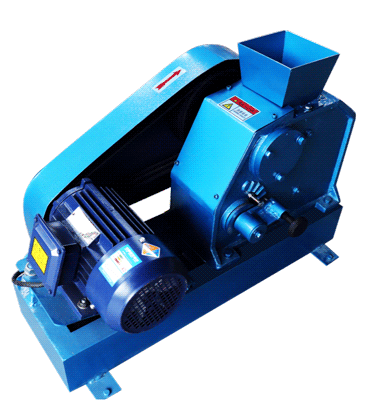
Laboratory jaw crusher selection should be validated with the actual feed material.
The most reliable choice is the crusher that produces a usable feed with a controlled amount of fines, can be cleaned between samples without excessive effort, and has wear parts that match the material. Start with the largest lump and the downstream requirement, verify the setting with a size test, and keep a record of every change. That approach gives laboratory staff and process engineers a defensible basis for selection and a practical path for troubleshooting when the feed or the target changes.