
Manual Tablet Press: A Practical Guide for Laboratory Sample Preparation and Powder Compaction
Why a Manual Tablet Press Belongs in Your Lab
If you work with powders that need to be formed into pellets, discs, or tablets for analysis, storage, or further processing, you have likely encountered the challenge of achieving consistent, uniform compaction without investing in a large automatic press. A manual tablet press offers a simple, cost-effective solution for laboratory-scale sample preparation. It allows you to apply controlled pressure to a powder sample inside a die, producing a solid tablet that can be used for X-ray fluorescence (XRF) analysis, infrared (IR) spectroscopy, pellet dissolution tests, or as a precursor for sintering studies.
Unlike automated rotary presses that run at high speeds, a manual press is operated by hand, giving you direct control over the compression force and dwell time. This makes it ideal for small batch work, R&D experiments, and teaching labs where flexibility is more important than throughput. In this guide, we will walk through the key aspects of choosing and using a manual tablet press, including pressure capacity, die selection, material compatibility, and practical tips for getting reliable results.
How a Manual Tablet Press Works
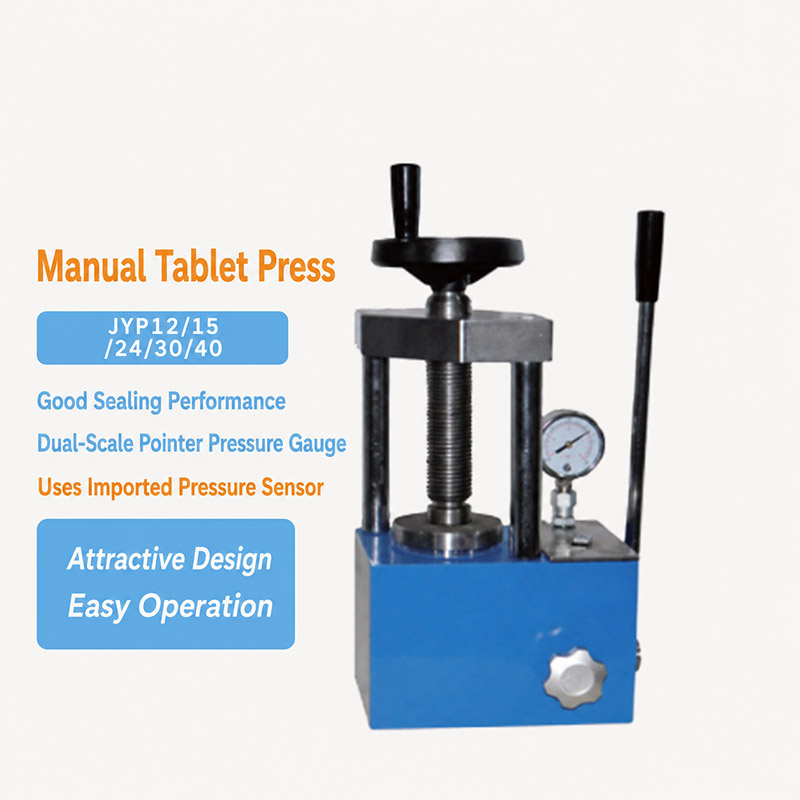
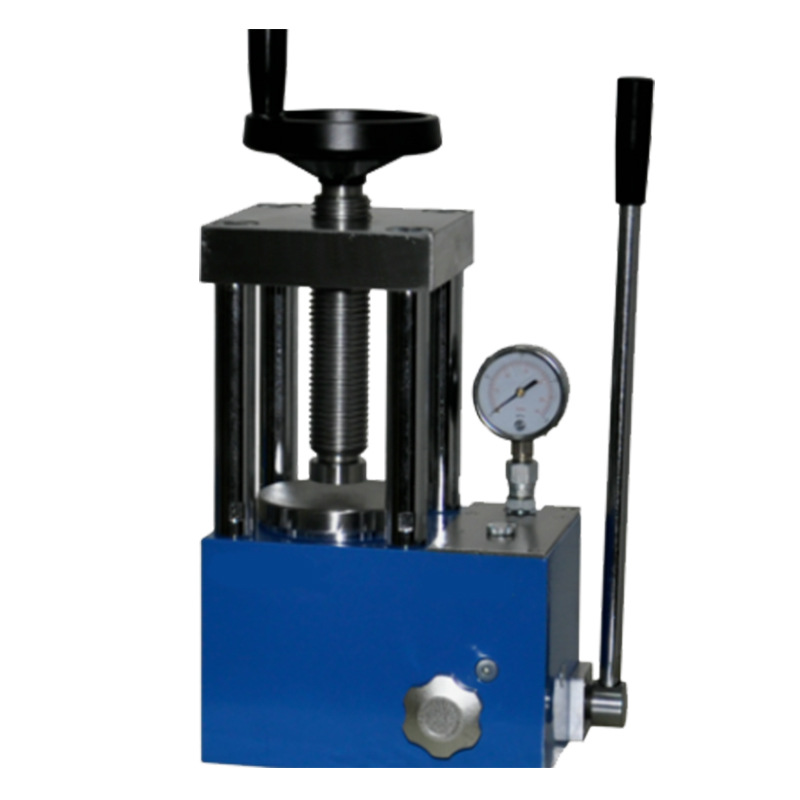
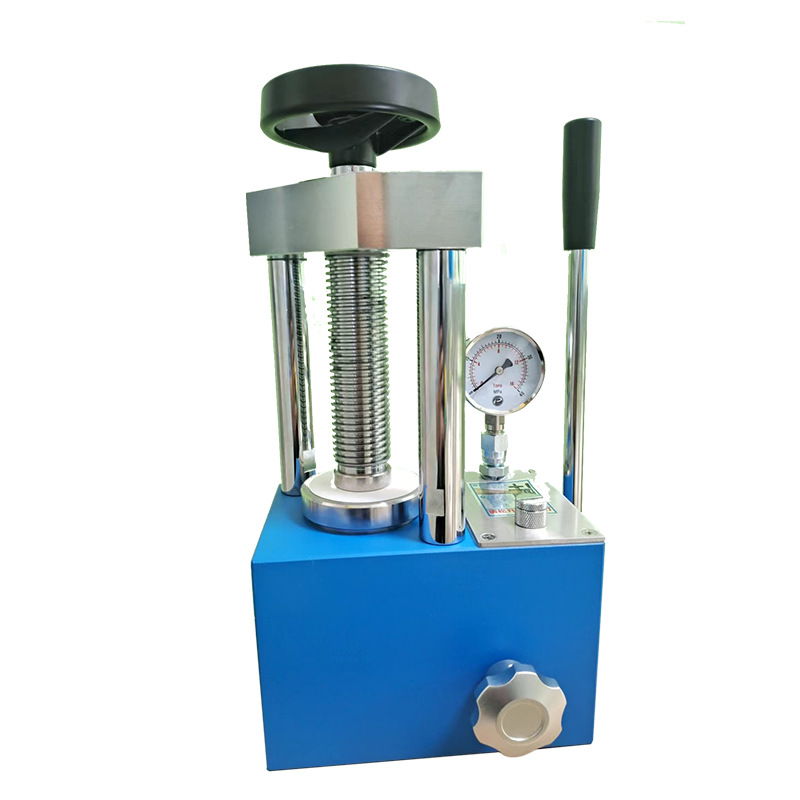
A manual tablet press consists of a sturdy frame, a lever or screw mechanism, a pressure gauge (optional on some models), and a die set. The die set includes a die body (a hollow cylinder) and upper and lower punches. The operator places the powder into the die cavity, positions the assembly on the press platen, and then applies force by pulling a lever or turning a screw. The upper punch moves downward, compressing the powder into a cohesive tablet. The lower punch then ejects the finished tablet.
The key advantage of a manual press is the ability to control the rate of compression and the maximum pressure. Many lab-grade manual presses incorporate a pressure gauge that shows the force applied, allowing you to reproduce the same pressure for different batches. This is critical when preparing standards for analytical work or when optimizing compaction parameters for a new material.
Typical Specifications You Should Know
When selecting a manual tablet press, you will encounter several specifications. Here are the most important ones and what they mean for your work:
- Maximum Pressure (kN or tons): This determines the maximum force the press can apply. For most laboratory applications, a press capable of 10–20 tons (approximately 100–200 kN) is sufficient. Higher pressures are needed for hard or brittle materials that require greater compaction energy.
- Maximum Tablet Diameter: The diameter of the tablet is limited by the die size that the press can accommodate. Common diameters range from 10 mm to 40 mm, though some presses accept larger dies for special applications.
- Maximum Fill Depth: This indicates how deep the die cavity can be filled with powder. It affects the maximum tablet thickness. A typical fill depth is around 15–25 mm, depending on the model.
- Frame Material and Construction: A robust steel frame ensures stability and longevity. Some presses have a corrosion-resistant coating for use in clean environments.
- Pressure Gauge: A gauge that displays the applied force helps ensure reproducibility. Digital gauges offer higher precision, while analog gauges are simpler and more rugged.
These specifications are not fixed rules; they are general guidelines. The actual pressure needed depends on the material being pressed. For example, soft organic powders may require only a few tons, while ceramic powders might need 10–15 tons to form a solid pellet.
Choosing the Right Die and Punch Material
The die set is the heart of the manual tablet press. It must be made of a material that can withstand the compressive forces without deformation and that does not contaminate the sample. Common die materials include:
- Hardened Tool Steel: The most common choice. It offers good wear resistance and is suitable for most powders, including pharmaceuticals, polymers, and minerals.
- Stainless Steel: Preferred for corrosive or hygroscopic materials, and for applications where cleanliness is paramount (e.g., food or pharmaceutical labs).
- Tungsten Carbide: Used for extremely hard or abrasive materials (e.g., ceramics, metal powders). It is more expensive but provides superior wear resistance and longer die life.
- Chrome-Plated Steel: Offers a polished surface that reduces sticking and is easier to clean.
The die cavity should be polished to a smooth finish to minimize friction and improve tablet ejection. For materials that tend to stick, a small amount of lubricant (e.g., magnesium stearate or a spray mold release) can be added to the powder before pressing.
Materials and Applications
A manual tablet press is versatile and can handle a wide range of powder materials. Below are some common application areas:
Pharmaceutical and Nutraceutical R&D
In early-stage drug development, researchers often need to produce small batches of tablets for dissolution testing, stability studies, or bioavailability assays. A manual press allows them to test different formulations and excipient ratios without the expense of a full-scale rotary press. It is also useful for making small batches of supplements or herbal tablets for clinical trials.
Analytical Chemistry and Spectroscopy
For XRF analysis, pellets are preferred over loose powders because they provide a flat, homogeneous surface for accurate measurement. A manual press can produce high-quality pellets from geological samples, cement, ores, or soils. Similarly, KBr pellets for FTIR spectroscopy are commonly made using a manual press, where the mixture of sample and KBr is compressed under vacuum to form a transparent disc.
Ceramics and Materials Science
Researchers in ceramics and powder metallurgy use manual presses to compact green bodies before sintering. By controlling the compaction pressure, they can study the relationship between density, porosity, and mechanical properties. The ability to press small test specimens (e.g., discs or bars) is essential for material characterization.
Battery and Energy Materials
Electrode materials for lithium-ion batteries, such as cathode powders, are often pressed into pellets for electrochemical testing. A manual press enables the preparation of consistent electrode pellets with controlled density and thickness, which is critical for evaluating performance.
Important Considerations Before You Buy
Selecting the right manual tablet press involves matching the equipment to your specific needs. Here are some factors to evaluate:
- Sample Volume: How many tablets do you need per day? If you only need a few tablets per week, a manual press is ideal. If you require hundreds per day, consider a automatic electric tablet press for higher throughput.
- Pressure Requirement: Determine the pressure needed to achieve a stable tablet. Start with a low pressure and increase gradually until you get a satisfactory result. Many materials compact well at 5–10 tons.
- Die Size and Shape: Standard round dies are available in various diameters. For special shapes (e.g., oval, rectangular), custom dies may be required. Check whether the press accepts interchangeable die sets.
- Ease of Cleaning: The die and punch surfaces should be easy to disassemble and clean to avoid cross-contamination between batches.
- Safety Features: A manual press should have a stable base and a guard or shield to prevent hand injuries. Some models include a quick-release valve for safe release of pressure.
- Local Voltage and Frequency: If you choose a model with an electric pressure gauge or optional vacuum assist, ensure it matches your local electrical standards.
It is always a good idea to discuss your specific materials and target tablet properties with the equipment supplier. They can recommend the most suitable die material, pressure range, and any accessories you may need, such as a vacuum system for KBr pellet preparation.
Practical Tips for Getting Good Results
Even with a high-quality manual press, the quality of your tablets depends on how you prepare and handle the powder. Here are some practical suggestions:
- Grind the powder to a uniform particle size before pressing. Coarse particles can lead to uneven compaction and weak tablets. A laboratory mortar or ball mill can help reduce particle size.
- Add a small amount of lubricant (e.g., 0.5–1% by weight of magnesium stearate) if the powder tends to stick to the die walls. This also improves tablet ejection.
- Use the same compression speed and dwell time for each batch to improve reproducibility. A slow, steady compression usually yields better results than a rapid, forceful push.
- Clean the die and punches thoroughly after each use to prevent buildup and corrosion. Use a soft cloth and mild solvent if needed.
- Calibrate the pressure gauge periodically to ensure the readings remain accurate.
If you are pressing materials that are sensitive to moisture or oxidation, consider working in a glove box or using a vacuum die. Some manual presses can be adapted for use under inert atmosphere.
Final Thoughts
A manual tablet press is a valuable tool for any laboratory that works with powder compaction. It offers simplicity, affordability, and control, making it suitable for a wide range of applications from pharmaceutical R&D to materials science. By understanding the key specifications and matching them to your material requirements, you can select a press that will serve you reliably for years.
If you are unsure about which model or die set is best for your project, we recommend reaching out to the technical team at TENCAN. They can provide guidance based on your specific powder properties, target tablet dimensions, and desired pressure range. You can view the full range of manual tablet presses on our website and also explore the automatic electric tablet press if your production volume grows.