
Stainless Steel Vacuum Glove Box Selection
Air-sensitive work rarely fails in a dramatic way. It fails slowly: a hygroscopic powder cakes on the balance, a catalyst changes color during transfer, or an oxygen-sensitive sample gives results that vary from one operator to the next. A stainless steel vacuum glove box is designed to remove that variable by providing a contained workspace, a controlled internal atmosphere, and a transfer path that limits exposure to ambient air. The important word is system. The chamber, gloves, antechamber, seals, purge method, and operator technique all affect the final oxygen and moisture level. TENCAN's stainless steel vacuum glove box should therefore be evaluated as a process tool, not as a sealed cabinet with gloves attached.
Why a Stainless Steel Vacuum Glove Box Is More Than a Cabinet
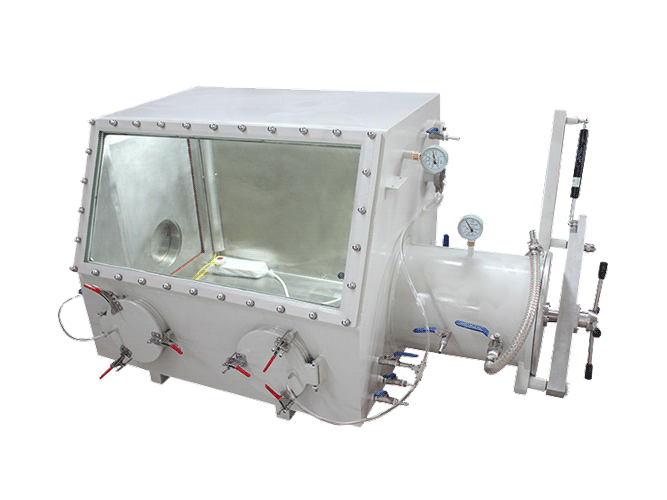
A glove box performs three separate functions. First, it isolates the working volume from the surrounding laboratory air. Second, it provides a controlled way to move samples, tools, and containers in and out without exposing the interior to an uncontrolled atmosphere. Third, it gives the operator enough access to perform weighing, mixing, sampling, sealing, or assembly tasks without breaking that isolation. A stainless steel vacuum glove box addresses these functions through a rigid chamber, a transparent viewing area, glove ports, and a transfer chamber or antechamber that can be evacuated and refilled. Each of these elements contributes to atmosphere quality, and each can become a weak point if it is poorly selected or poorly used.
Stainless steel is often chosen because it is mechanically strong, cleanable, and compatible with many laboratory cleaning agents. It also tolerates repeated handling better than many softer enclosure materials. However, stainless steel construction alone does not guarantee low oxygen or low moisture. Weld quality, seal design, surface finish, port placement, and the condition of gloves all matter. A heavy, well-finished chamber with a poor door seal will perform worse than a smaller chamber with a reliable seal and a disciplined purge procedure. For that reason, selection should begin with the required atmosphere and the workflow, not with the external appearance of the box.
The word vacuum in the product name is also important. Vacuum capability supports leak testing, antechamber transfer, and purge cycles. It allows the user to remove bulk atmosphere before refilling with inert gas, and it provides a way to check whether the chamber and transfer path hold pressure or vacuum as expected. Vacuum performance should not be assumed from a product name. The achievable vacuum, leak-up rate, and suitable operating procedure depend on the configuration, seals, pump, gauges, and application. These points should be confirmed with the supplier and verified during installation. A glove box that reaches a good vacuum on a gauge but has a high leak-up rate may still allow moisture ingress during a long experiment.
Material exposure is another reason to treat the glove box as part of the process. A sample that is sensitive to oxygen may also be sensitive to moisture, solvent vapor, dust, or temperature. A box that maintains a low oxygen reading but contains solvent-soaked gloves, cardboard packaging, or moist tools may not protect a hygroscopic material. The best results come from matching the box configuration to the material, defining what may enter the chamber, and training operators to use the same transfer and purge routine every time. That routine is often more influential than a small difference in chamber volume.
The practical question is not simply which glove box is largest or most heavily built. It is which stainless steel vacuum glove box can maintain the required atmosphere for the required working period, with the access and cleanliness the process needs. A laboratory that handles small, highly sensitive samples may prioritize low leak rate, fast purge recovery, and clean interior surfaces. A laboratory that handles larger fixtures may prioritize port size, internal clearance, and ergonomic glove placement. Both priorities are valid, but they lead to different selection decisions.
Design Features That Affect Vacuum and Atmosphere Performance
Two glove boxes can look similar in a photograph and behave very differently in use. The differences are usually found in the details of construction, sealing, transfer, and access. When reviewing a stainless steel vacuum glove box, it helps to separate the chamber, the glove system, the antechamber, and the fittings. Each area has a direct effect on how quickly the interior recovers after a transfer, how often leaks appear, and how easy the box is to clean.
Chamber Construction and Interior Cleanliness
The chamber should be rigid enough to resist deflection during vacuum and refill cycles. Deflection can stress door seals, window seals, and weld seams. A well-built chamber distributes stress through its structure rather than allowing a large flat panel to flex. The interior should also be accessible for cleaning. Sharp internal corners, exposed threads, and unnecessary ledges trap powder and solvent, and trapped material can release vapor slowly after the box appears clean. Smooth surfaces and thoughtful placement of internal fittings make it easier to maintain a stable atmosphere.
Weld quality and surface finish deserve attention, especially in a stainless steel vacuum glove box. Welds do not need to be decorative, but they should be continuous and cleanable in the working area. Polished surfaces are easier to wipe down, although surface finish alone cannot compensate for a poor seal or a contaminated glove. The user should also ask how the interior is cleaned and whether the cleaning method is compatible with the gloves, window material, and seals. Aggressive solvents may remove contamination quickly but shorten the life of elastomers and gloves, creating a new source of leaks.
Glove Ports, Gloves, and Operator Access
Gloves are the most frequently replaced part of many glove boxes, and they are also a common source of atmosphere problems. The glove material must suit the work. Butyl gloves are often used where moisture and oxygen protection are important, while other materials may offer better resistance to specific solvents or better flexibility. The correct choice depends on the chemicals handled, the required dexterity, and the cleaning routine. A glove that swells or hardens after solvent contact may still look intact while allowing vapor transmission or developing pinholes.
Port size, port spacing, and glove length affect ergonomics as much as atmosphere control. If the operator cannot reach the back of the chamber comfortably, the work will be performed near the front, leaving the rear area poorly purged or difficult to clean. If the ports are too close together, two-handed tasks become awkward and the risk of glove damage increases. The glove box should be arranged so that the main working zone is visible, reachable, and easy to purge. For a stainless steel vacuum glove box used for delicate weighing or sealing, a comfortable working posture is not a luxury. It reduces dropped samples, accidental spills, and incomplete seals.
Antechamber and Transfer Logic
The antechamber, also called the transfer chamber, is where most atmosphere excursions begin. A well-designed antechamber has a clear door sequence, reliable seals, a usable shelf or tray, and a purge path that avoids short-circuiting. If the antechamber is too small, samples and tools may be forced through the door, damaging seals or gloves. If it is too large, each transfer may require more purge gas and more time to remove residual air. The right size is the smallest chamber that can accept the normal sample containers and tools without crowding.
Transfer discipline matters as much as antechamber volume. A large antechamber used with a single vacuum-purge cycle may introduce more oxygen and moisture than a small antechamber cycled properly. Users should know whether the transfer procedure requires one cycle, multiple cycles, or a purge with a measured endpoint. The procedure should be written down and followed consistently. In many laboratories, inconsistent antechamber use explains why one operator reports stable results while another reports drifting oxygen or moisture readings.
Windows, Ports, Feedthroughs, and Sensors
Every opening in a vacuum glove box is a potential leak path. A large viewing window improves visibility but must be sealed and supported correctly. Feedthroughs for power, gas, sensors, or data cables are useful, but each one should be selected only when needed and sealed according to the manufacturer's instructions. Unused ports should be capped with suitable fittings. Temporary seals made from tape or laboratory film may appear to work, but they are difficult to verify and can fail during a long experiment.
Sensor placement also deserves attention. Oxygen and moisture sensors should represent the atmosphere near the working zone, not a remote corner that responds slowly. The location should allow calibration and replacement without unnecessary exposure of the interior. A single sensor can be misleading if the chamber has poor internal mixing or if a localized source of moisture is present. In critical work, a second measurement point or a portable verification instrument can help confirm that the working area is stable before a sensitive sample is opened.
Vacuum, Purge, and Atmosphere Control in Practice
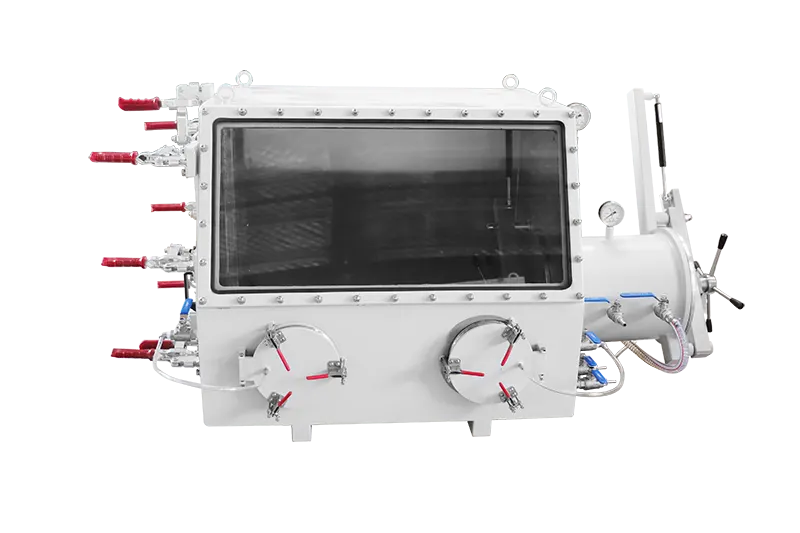
Vacuum and purge are related but not interchangeable. Vacuum removes a portion of the existing atmosphere from the chamber or antechamber. Purging replaces that atmosphere with dry inert gas. If the vacuum step is weak or the purge volume is insufficient, residual oxygen and moisture remain. If the purge is excessive but the box leaks, the result is a temporary improvement that fades after the gas supply is reduced. The goal is not simply to create a vacuum or to fill the box with gas. The goal is to reach and hold the atmosphere required by the material.
Vacuum-Purge Cycles and Purified Recirculation
A common approach is to evacuate the antechamber, refill it with inert gas, and repeat as needed before opening the inner door. Multiple cycles are generally more effective than a single cycle because each evacuation removes a fraction of the remaining air and each refill dilutes what remains. The exact number of cycles depends on the chamber volume, the starting atmosphere, the target purity, and the acceptable cycle time. The procedure should be verified with measurements rather than assumed from a written sequence. A stainless steel vacuum glove box may be capable of good vacuum, but the transfer routine determines how much air actually reaches the working chamber.
Purified recirculation is a different strategy. In this approach, the box atmosphere is continuously circulated through a purifier that removes oxygen and moisture, while the box is maintained at a slight positive pressure relative to the room. Recirculation is useful for long experiments and for maintaining a stable atmosphere between transfers. It does not, however, repair a leaking glove or a poor door seal. A purifier can remove contaminants only at a finite rate. If room air enters faster than the purifier can remove oxygen and moisture, the displayed readings will remain unsatisfactory regardless of purifier capacity. Leak control and purge discipline come first; purification supports them.
Leak Rate, Outgassing, and Hidden Moisture Sources
Leak testing should be part of commissioning and routine maintenance. A useful check is to isolate the chamber or antechamber, record the pressure or vacuum, wait a defined period, and record the change. The acceptable leak-up rate depends on the application and the manufacturer's guidance. A slow change may be harmless for a short transfer but unacceptable for a long experiment. The test should be performed with the box in the condition in which it is used, including gloves, doors, and normal fittings. Testing only an empty chamber can miss problems associated with installed accessories.
Outgassing is often overlooked because it does not appear as a conventional leak. Water vapor adsorbed on gloves, dust on interior surfaces, solvent residues, cardboard packaging, paper labels, and some plastics can release moisture or volatile organic compounds after the box has been purged. A newly installed glove may release moisture for some time. A powder spill may continue to release adsorbed water after visible material has been wiped away. For moisture-sensitive work, materials entering the box should be minimized, pre-dried when appropriate, and transferred in suitable containers. The interior should be cleaned with methods compatible with the gloves and seals.
Hidden moisture sources are especially important in a stainless steel vacuum glove box used for hygroscopic salts, battery materials, catalysts, or air-sensitive powders. A small amount of water can dominate the local atmosphere near an open sample. The user should avoid opening large containers inside the box when a smaller portion would suffice. Containers should be closed promptly after use, and spilled powder should be removed rather than pushed into corners. If a solvent is used, the user should confirm that its vapor will not damage gloves, window seals, or sensor components, and that the purge or purification system can handle the vapor load.
Sensor Placement and Verification
Oxygen and moisture readings should be treated as process data, not as decoration. The sensors should be calibrated according to the supplier's instructions and checked against a known reference when accuracy is critical. The reading should be allowed to stabilize before a sensitive sample is opened. If the display responds slowly, the problem may be sensor placement, poor circulation, or a contaminated sensor rather than a change in the chamber atmosphere. A log of purge cycles, glove changes, leak tests, and sensor calibration helps distinguish normal variation from a developing fault.
Verification is particularly important after maintenance. Replacing a glove, opening a port, changing a seal, or cleaning the interior can introduce a leak or a moisture source. A short verification routine after each intervention prevents a small problem from affecting weeks of experiments. The routine does not need to be complicated: confirm door closure, check glove condition, perform a leak check if appropriate, purge the antechamber, and confirm that the oxygen and moisture readings return to the expected range before introducing sensitive material.
Matching the Glove Box to Materials and Laboratory Workflows
The material determines the required atmosphere, the acceptable transfer method, and the cleaning strategy. A stainless steel vacuum glove box that works well for one class of materials may be unsuitable for another if the gloves, seals, or interior fittings are not compatible. The following considerations are not a substitute for a compatibility review, but they help organize the selection process.
Powders, Catalysts, and Air-Sensitive Solids
Fine powders create two problems in a glove box: they are difficult to contain, and they can carry adsorbed moisture and oxygen into the working zone. A powder that is sensitive to air may begin to degrade as soon as it is opened, even if the bulk atmosphere reading is acceptable. Static can cause powder to cling to gloves, windows, and interior surfaces, making cleanup difficult and increasing the risk of cross-contamination. For these materials, the box should be easy to wipe down, and the workflow should minimize the amount of powder exposed at one time. Pre-weighed containers, small transfer vials, and a defined weighing area can reduce the duration of exposure.
Catalysts and reactive metals may require both low oxygen and low moisture, and some may be sensitive to nitrogen or to specific solvent vapors. The choice of inert gas, purge procedure, and glove material should be reviewed against the material safety data and the process requirements. A stainless steel vacuum glove box provides a contained environment, but it does not automatically make every material safe to handle. Compatibility with the intended gas, solvent, and cleaning agent should be confirmed before use.
Solvents, Vapors, and Cleaning Agents
Solvent vapors can affect gloves, seals, windows, and sensors. A solvent that is harmless in a fume hood may be incompatible with a glove box because the vapor remains in the enclosed atmosphere and contacts elastomers for a long period. The user should identify the solvents that will be used, estimate the vapor load, and select gloves and seals accordingly. Cleaning agents should also be reviewed. A strong solvent used to remove contamination may shorten glove life or leave a residue that affects later experiments.
When solvents are unavoidable, the quantity inside the box should be minimized. Containers should be closed when not in use, and solvent-wet wipes should be removed promptly. The purge or purification system should be capable of handling the expected vapor load without degrading its performance. If a solvent odor persists or the moisture reading rises after solvent use, the box may need additional purging and cleaning before sensitive work resumes.
Transfer Workflow and Material Compatibility
The transfer workflow should be designed before the glove box is purchased. A large sample container may require a larger antechamber, while a small vial may benefit from a smaller transfer volume and faster cycles. Tools, balances, sealing devices, and storage containers should be checked for fit and for compatibility with the internal atmosphere. Items that release moisture, such as paper, cardboard, and some packaging materials, should be kept out of the working chamber or introduced only after appropriate drying.
A practical workflow often separates the box into zones: a transfer zone near the antechamber, a working zone for weighing or handling, and a storage zone for closed containers. This arrangement reduces unnecessary movement and keeps the most sensitive operations away from doors and ports. The exact layout depends on the chamber size and the task, but the principle is consistent. A stainless steel vacuum glove box performs best when the interior is organized for the process rather than filled with unrelated equipment.
| Material or task | Main concern | Selection or operating question |
|---|---|---|
| Hygroscopic powders | Moisture pickup and static | Can the box be cleaned easily, and can powder contact be minimized? |
| Oxygen-sensitive catalysts | Oxygen ingress during transfer | Is the antechamber purge procedure verified by measurement? |
| Reactive metals | Oxygen, moisture, and gas compatibility | Are the gloves, seals, and purge gas suitable for the material? |
| Solvent-containing samples | Vapor attack on gloves and seals | Is the solvent compatible with the glove material and cleaning method? |
| Long-duration experiments | Stable atmosphere over time | Is leak rate acceptable, and is purification or periodic purging required? |
Selection Checklist and Common Operating Problems
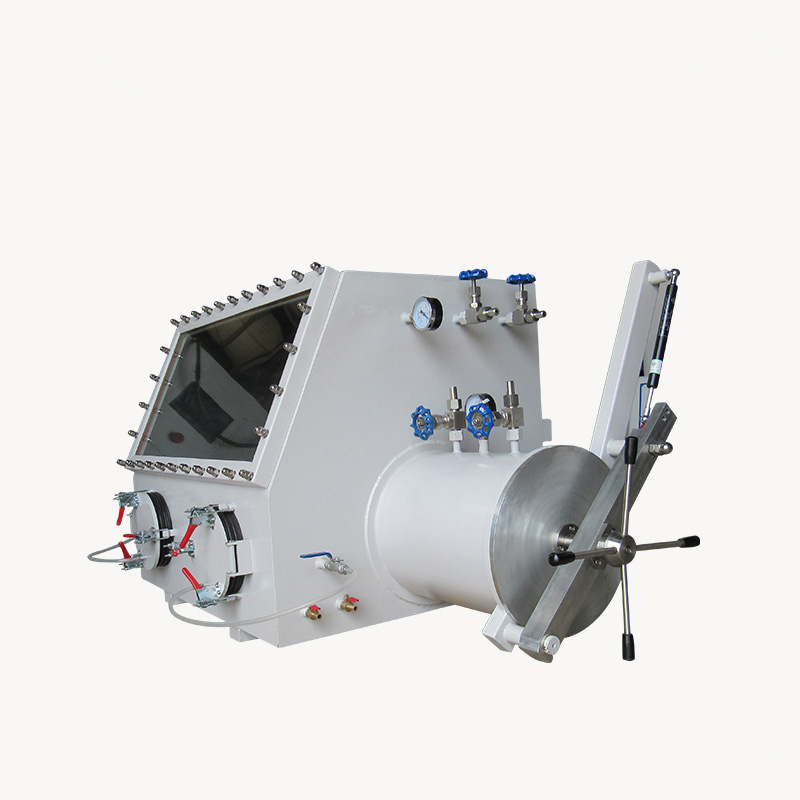
Selection should be based on verified requirements rather than on a single headline specification. The first question is the atmosphere target: what oxygen and moisture levels are needed, for how long, and with what acceptable recovery time after a transfer? The second question is the material and solvent compatibility. The third is the physical workflow: what must enter the box, how large is it, and how often will transfers occur? The fourth is maintenance: who will inspect gloves, replace seals, calibrate sensors, and keep records? A stainless steel vacuum glove box that meets the atmosphere target but is difficult to maintain will eventually lose performance.
| Selection area | What to verify | Why it matters |
|---|---|---|
| Chamber construction | Rigidity, seal design, cleanable interior, weld quality | Affects leak behavior and contamination control |
| Glove system | Glove material, port size, reach, replacement method | Controls operator access and atmosphere protection |
| Antechamber | Volume, door seals, purge path, shelf size | Determines transfer speed and atmosphere recovery |
| Vacuum and purge | Pump compatibility, gauges, valve arrangement, cycle procedure | Affects oxygen and moisture removal |
| Instrumentation | Sensor type, placement, calibration method | Provides usable data for process decisions |
| Maintenance access | Seal replacement, glove change, cleaning access | Keeps performance stable over the service life |
Glove Leaks and Seal Damage
Glove leaks are one of the most common causes of rising oxygen and moisture. Small punctures may not be visible during a quick glance. Operators should inspect gloves before use, check for stiffness, discoloration, tackiness, or cracks, and replace them when damage is suspected. Gloves should not be used to lift sharp tools or to force oversized items through a port. Seal damage often follows the same pattern: a door is closed on a glove, a sample container, or a piece of debris, and the seal no longer sits correctly. A regular inspection routine is more effective than waiting for a failed experiment.
Poor Antechamber Technique
Even a well-designed antechamber can perform poorly if the door sequence is rushed. Opening the inner door before the antechamber has been properly purged allows room air to enter the working chamber. Overfilling the antechamber can prevent proper gas distribution and may damage seals. Leaving the outer door open after a transfer creates a direct path for moisture and oxygen. These are operator issues, but they can be reduced by clear labeling, a written procedure, and training that explains why the sequence matters.
Overloading and Poor Interior Layout
A crowded glove box is difficult to purge, clean, and inspect. Large items near the antechamber may block circulation, while loose containers can fall and damage gloves or ports. The working zone should remain clear enough for the operator to see and reach the task. Storage containers should be closed and placed away from the immediate working area. If the box is consistently overloaded, the chamber or antechamber may be too small for the actual workflow, and no amount of purge optimization will solve the underlying constraint.
Cleaning Residues and Cross-Contamination
Cleaning is not simply a matter of wiping surfaces until they look bright. Residues from previous work can affect later experiments, and cleaning agents can leave films that release vapors. The cleaning method should be compatible with stainless steel, gloves, window material, and seals. Powders should be removed rather than spread, and wipes should be changed frequently. If a solvent is used, the interior should be allowed to return to a stable atmosphere before sensitive material is introduced. A cleaning log helps identify whether a change in atmosphere readings follows a particular procedure.
Static, Dust, and Fine Powder Handling
Static can make fine powder cling to gloves and windows, increasing contamination and making transfer difficult. The problem is not solved by a single accessory in every case. It depends on the material, humidity, glove type, and handling method. Operators should avoid unnecessary rubbing, use suitable containers, and clean up spills promptly. If static is a persistent issue, the supplier and the material safety documentation should be consulted for compatible mitigation options. The goal is to reduce the amount of loose powder in the chamber, not merely to move it from one surface to another.
Vacuum System and Valve Problems
The vacuum system should be maintained according to its own requirements. Pump performance can decline, valves can leak, and gauges can drift. A vacuum reading that does not match the expected behavior should be investigated before it affects a sensitive batch. The user should know which valves isolate the chamber, the antechamber, and the pump, and should follow a consistent sequence. If the system uses a purge gas, the supply pressure and purity should be checked. A stainless steel vacuum glove box depends on the entire gas and vacuum train, not only on the chamber shell.
Before finalizing a purchase, review the stainless steel vacuum glove box product page for the available configuration and confirm the items that are critical to the application. Ask for the recommended leak-check method, purge procedure, glove replacement guidance, and sensor calibration requirements. These details are more useful than a broad claim about performance because they tell the user how the box is expected to be operated and maintained.
Commissioning, Maintenance, and Validation
Commissioning should establish a baseline for the specific installation. The baseline includes the observed vacuum behavior, leak-up trend, purge response, glove condition, and sensor readings. It should be recorded and compared with later checks. A new stainless steel vacuum glove box may need a settling period as gloves and interior materials release adsorbed moisture. The user should not assume that the first reading after installation represents long-term performance. A short commissioning program with repeated checks gives a more reliable picture.
Leak checking should be performed before sensitive work begins and after any intervention that could affect sealing. The exact method depends on the configuration, but the principle is consistent: isolate a volume, observe the change over time, and compare the result with the expected range. If the leak rate is higher than expected, the user should check door seals, glove ports, window seals, fittings, and valve positions. A leak that appears after maintenance is often linked to a disturbed seal or an incompletely closed fitting.
Glove inspection should be routine rather than reactive. Operators should check for cuts, thinning, stiffness, swelling, and contamination before each use. Gloves should be replaced in pairs when there is any doubt about integrity, and the replacement method should follow the supplier's instructions. Seal inspection should include the door gasket and antechamber seals. Small cracks, compression marks, or debris on a sealing surface can cause a persistent atmosphere problem that is difficult to diagnose from oxygen readings alone.
Training should cover the entire workflow, not only the obvious steps. New users should understand why the antechamber sequence matters, how to avoid damaging gloves, what materials are prohibited, how to clean a spill, and what to do if a reading drifts. They should also know the limits of the equipment. A stainless steel vacuum glove box is not a substitute for a fume hood when hazardous vapors are present, and it is not a guarantee of sterility or inert conditions unless the atmosphere is verified for the specific task. Clear operating rules prevent many problems before they appear.
A simple maintenance schedule can protect performance. It should include glove inspection, seal inspection, sensor calibration checks, vacuum pump maintenance, replacement of consumable filters or purifiers where applicable, and review of the purge log. The schedule should be adjusted to the intensity of use. A box used daily for air-sensitive powders may need more frequent checks than a box used occasionally for demonstration. The important point is that maintenance is part of atmosphere control, not an administrative task separate from it.
When selecting a stainless steel vacuum glove box, start with the material, the required oxygen and moisture level, the transfer frequency, and the cleaning method. Confirm the chamber and antechamber arrangement, the glove compatibility, the vacuum and purge procedure, and the maintenance access. Then verify performance during commissioning and keep records. TENCAN's stainless steel vacuum glove box can be a practical part of that plan when the configuration matches the work and the operating routine is followed consistently. The most reliable results come from a box that is properly selected, properly sealed, and properly used, not from a single specification on a data sheet.