
Vacuum Freeze-Drying Oven: Principles, Applications, and Selection Guide for Laboratory and Industrial Use
When you need to remove moisture from heat-sensitive materials without damaging their structure, chemical composition, or biological activity, a conventional hot-air oven or even a standard vacuum drying oven may not be sufficient. High temperatures cause protein denaturation, nutrient degradation, particle agglomeration, and collapse of porous structures. This is where a vacuum freeze-drying oven — also known as a laboratory lyophilizer — becomes an essential tool. By combining freezing with vacuum sublimation, it gently dries samples while preserving their original form and functionality.
In this article, we will walk through how a vacuum freeze-drying oven works, what materials and applications it best serves, how it differs from other drying methods, and what factors you should consider when selecting one for your laboratory or small-scale production.
How Does a Vacuum Freeze-Drying Oven Work?
The core principle of freeze-drying is sublimation — the direct transition of ice (solid water) to water vapor without passing through the liquid phase. In a vacuum freeze-drying oven, this process is carried out in three main stages:
1. Freezing Stage
The sample is first frozen at a temperature typically below its eutectic point (often between -20°C and -80°C, depending on the material). The goal is to convert all free water into solid ice crystals. Faster freezing generally produces smaller ice crystals, which can lead to a finer pore structure in the final dried product — important for rehydration and texture.
2. Primary Drying (Sublimation)
After freezing, the chamber is evacuated to a high vacuum (commonly in the range of 10–100 Pa). Under these low-pressure conditions, the ice in the sample sublimes directly into vapor. The cold trap (or condenser) inside the oven captures the water vapor and re-freezes it on a cold surface, preventing it from reaching the vacuum pump. This stage removes the majority of the water content (up to about 95% of the total moisture).
3. Secondary Drying (Desorption)
Once the free ice is gone, the remaining bound water molecules are removed by slowly raising the temperature and continuing the vacuum. This stage typically removes the last 1–5% of moisture, bringing the final water activity down to a level that prevents microbial growth and chemical reactions. The whole process can take anywhere from several hours to a few days, depending on the sample thickness, composition, and the equipment's capacity.
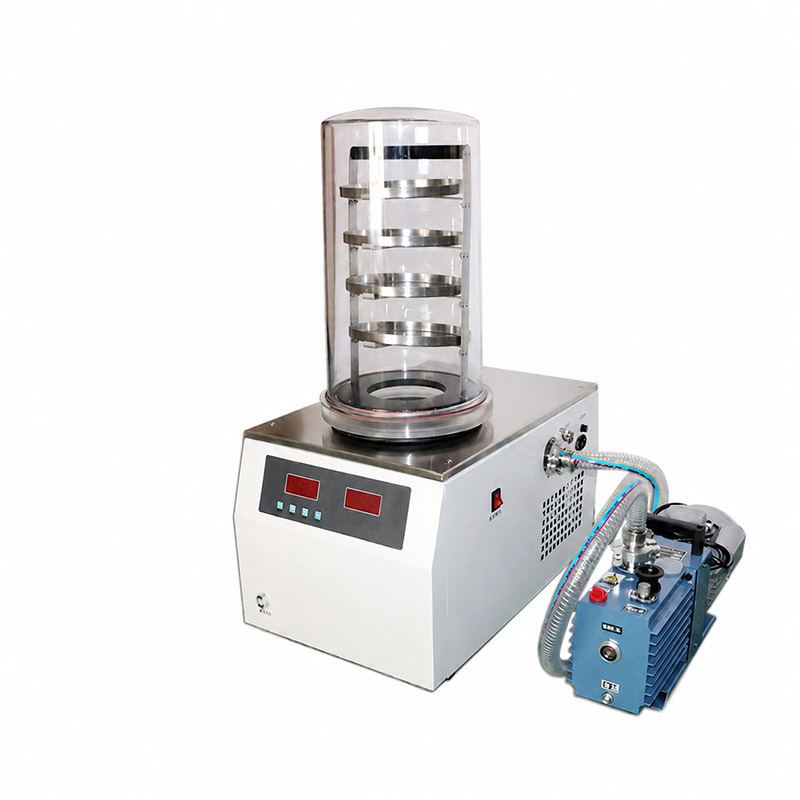
Key Applications of Vacuum Freeze-Drying Ovens
Because freeze-drying preserves the original structure, bioactivity, and chemical stability of the material, it is widely used across many fields. Here are some of the most common application areas:
Pharmaceutical and Biological Samples
Freeze-drying is a standard method for preserving vaccines, proteins, enzymes, antibiotics, blood plasma, and bacterial cultures. The dried product can be stored at ambient temperature for extended periods and reconstituted with water before use without significant loss of activity.
Food and Beverage Processing
In the food industry, freeze-drying is used to produce instant coffee, freeze-dried fruits, vegetables, herbs, and complete meals for astronauts or outdoor enthusiasts. The low temperature retains volatile flavor compounds and nutrients, while the porous structure allows rapid rehydration.
Material Science and Nanotechnology
Researchers use vacuum freeze-drying ovens to dry aerogels, nanoporous materials, battery electrodes, and ceramic precursors without causing shrinkage or cracking. The gentle drying process helps maintain the integrity of delicate nanostructures.
Botanical and Herbal Extracts
For preserving secondary metabolites such as polyphenols, flavonoids, and tannins in plant leaves, vacuum freeze-drying has been shown to yield higher retention compared to oven drying or sun drying (as reported in multiple comparative studies). It is the preferred method for preparing samples for chemical analysis.
Vacuum Freeze-Drying Oven vs. Standard Vacuum Drying Oven: What’s the Difference?
It is important not to confuse a vacuum freeze-drying oven with a vacuum drying oven. Although both operate under vacuum, the drying mechanisms are fundamentally different:
| Feature | Vacuum Freeze-Drying Oven | Standard Vacuum Drying Oven |
|---|---|---|
| Initial state of sample | Frozen | Liquid or wet solid |
| Drying mechanism | Sublimation of ice | Evaporation of liquid water |
| Temperature during drying | Below freezing (primary), then low positive (secondary) | Usually above 0°C, often 40–200°C |
| Cold trap/condenser | Required to capture water vapor | Not required (vapor removed by pump) |
| Product structure | Porous, sponge-like, minimal shrinkage | Can shrink, crack, or harden |
| Typical drying time | Hours to days | Hours (faster at higher temperature) |
| Best for | Heat-sensitive, bio-active, or structural materials | Heat-stable, general drying |
If you are working with heat-sensitive materials, a vacuum freeze-drying oven is the right choice. For general drying of heat-stable powders or inorganic materials, a standard vacuum drying oven may be more economical and faster. You can explore our vacuum drying oven for more details on that type.
How to Select a Vacuum Freeze-Drying Oven for Your Laboratory
Choosing the right vacuum freeze-drying oven depends on several factors related to your sample type, batch size, and workflow. Below are the key considerations:
Sample Capacity and Chamber Size
Laboratory freeze-dryers typically range from small benchtop units with a condenser capacity of 2–5 kg ice per day to floor-standing models handling 10–30 kg or more. For most research labs, a benchtop model with a few liters of drying chamber volume is sufficient. If you process multiple batches daily, consider a larger unit or one with a higher condenser capacity to avoid interrupting the cycle.
Condenser Temperature
The cold trap temperature determines the lowest achievable chamber pressure. A condenser temperature of -50°C to -60°C is adequate for most aqueous samples. For samples containing solvents with lower freezing points, a condenser capable of -80°C or lower may be required to capture all vapors.
Vacuum Pump Performance
The vacuum pump must be able to maintain a pressure below the triple point of water (about 610 Pa) to enable sublimation. In practice, a pump that can achieve 10–50 Pa is common. Oil-sealed rotary vane pumps are standard, but dry pumps are preferred for oil-sensitive applications. The pump's pumping speed should match the chamber volume and the sublimation rate.
Control System
Modern vacuum freeze-drying ovens offer programmable temperature and vacuum profiles. For research applications, having a microprocessor-based controller that allows you to set ramp rates, dwell times, and hold steps is very helpful. Some models also include data logging and remote monitoring capabilities.
Construction Materials and Cleanability
For pharmaceutical and food applications, the chamber should be made of corrosion-resistant stainless steel with smooth surfaces and rounded corners for easy cleaning. The door should have a clear viewport and a reliable sealing mechanism to maintain vacuum.
Safety Features
Look for features such as over-temperature protection, vacuum pump oil backflow prevention, and emergency stop. If you are drying flammable solvents, the unit must be designed for explosion-proof operation.
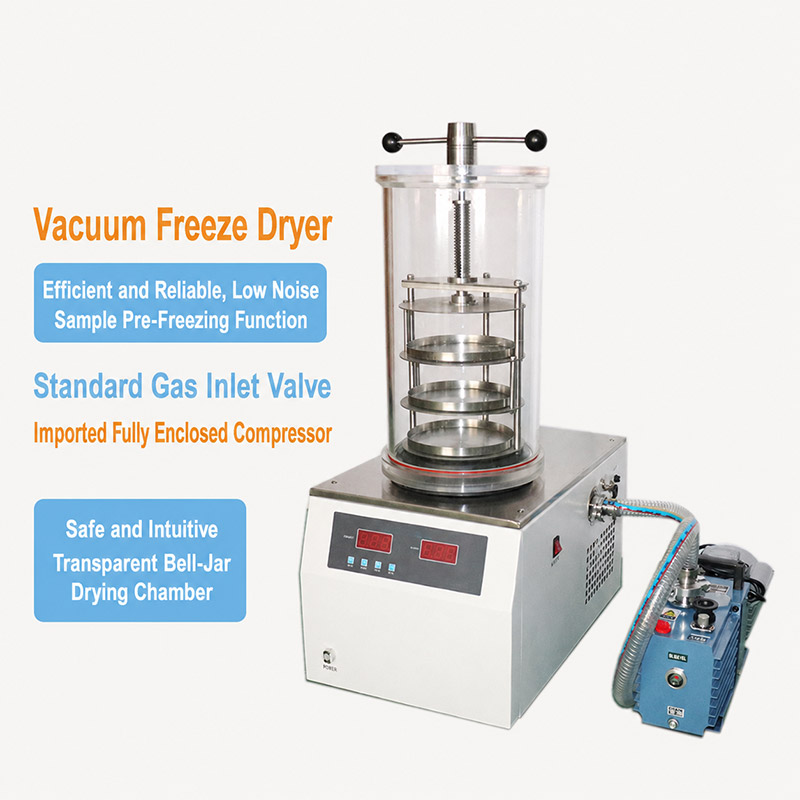
Practical Tips for Successful Freeze-Drying
Even with a good vacuum freeze-drying oven, the quality of the final product depends on proper sample preparation and cycle design. Here are some practical guidelines:
- Pre-freeze the sample quickly to create small ice crystals, which result in a more homogeneous porous structure and faster sublimation.
- Do not overload the shelves. The sample layer thickness should generally not exceed 10–15 mm for efficient drying. Thicker layers require much longer drying times.
- Use appropriate containers: open vials, Petri dishes, or trays with a large surface area. Avoid narrow-necked flasks that restrict vapor flow.
- Monitor the pressure rise test to determine the end of primary drying. If the pressure stops rising when the valve to the pump is closed, sublimation is complete.
- Store the dried product in a desiccator or sealed packaging immediately after removal, since freeze-dried materials are highly hygroscopic.
Frequently Asked Questions About Vacuum Freeze-Drying Ovens
Can I use a vacuum freeze-drying oven for powders?
Yes, but the powder must be in a frozen or solid state before drying. Slurries or suspensions can be frozen first, then freeze-dried. For dry powders that only need to be dried further, a standard vacuum oven might be more appropriate.
How long does a freeze-drying cycle take?
It varies widely. A thin layer of aqueous solution (e.g., coffee extract) may be fully dried in 12–24 hours, while thick biological tissues or gels can take 2–5 days. The cycle time depends on sample thickness, freezing method, and chamber pressure.
What is the difference between a freeze-dryer and a vacuum freeze-drying oven?
The terms are often used interchangeably. In this context, a vacuum freeze-drying oven typically refers to a laboratory-scale or small production unit that combines a drying chamber, condenser, and vacuum system in a single enclosure. Larger industrial freeze-dryers may have separate components.
Is a vacuum freeze-drying oven suitable for drying solvents other than water?
It can be, but only if the solvent can be frozen and sublimed under vacuum. Common solvents like ethanol or methanol have lower triple points, requiring lower condenser temperatures. The equipment must also be rated for flammable solvents.
Final Thoughts on Vacuum Freeze-Drying Ovens
A vacuum freeze-drying oven is a powerful tool for any laboratory that needs to preserve the native properties of heat-sensitive materials while achieving long-term stability. Whether you are working with pharmaceuticals, advanced materials, food products, or botanical extracts, understanding the principles of lyophilization and selecting the right equipment will directly affect your experimental outcomes and product quality.
When evaluating a vacuum freeze-drying oven, consider your typical sample volume, the nature of the solvents, and the level of control you need over the process parameters. A well-matched system will save you time, reduce operational costs, and deliver consistent results batch after batch.
If you are exploring options, take a closer look at our vacuum freeze-drying oven product page, where you can find detailed specifications and configurations designed for a range of laboratory and pilot-scale applications. Our team can also help you determine the best model based on your specific drying requirements.