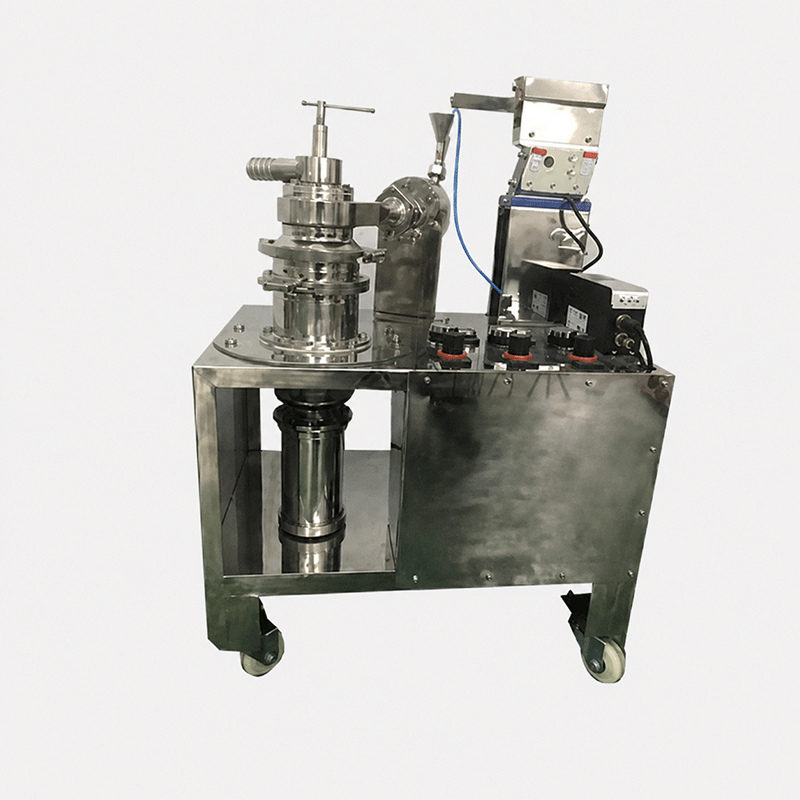
Lab Air Jet Mill: A Complete Guide to Ultrafine Grinding Without Contamination
What Is a Lab Air Jet Mill and Why Is It Used?
When you need to produce fine and ultra-fine powders — typically in the range of 1 to 50 micrometers — without introducing heat or contamination, a lab air jet mill is often the equipment of choice. Unlike traditional ball mills that rely on mechanical impact from grinding media, a jet mill uses high-speed jets of compressed air or inert gas to accelerate particles against each other, causing them to fracture through inter-particle collision. This makes it an ideal solution for heat-sensitive materials, high-purity applications, and materials that are difficult to grind with conventional mills.
In research laboratories, universities, and pilot plants, the laboratory air jet mill is valued for its ability to produce narrow particle size distributions, its gentle grinding action, and its ease of cleaning between batches. It is widely used in the pharmaceutical, chemical, battery material, ceramic, and mineral processing industries.
How Does a Lab Air Jet Mill Work?
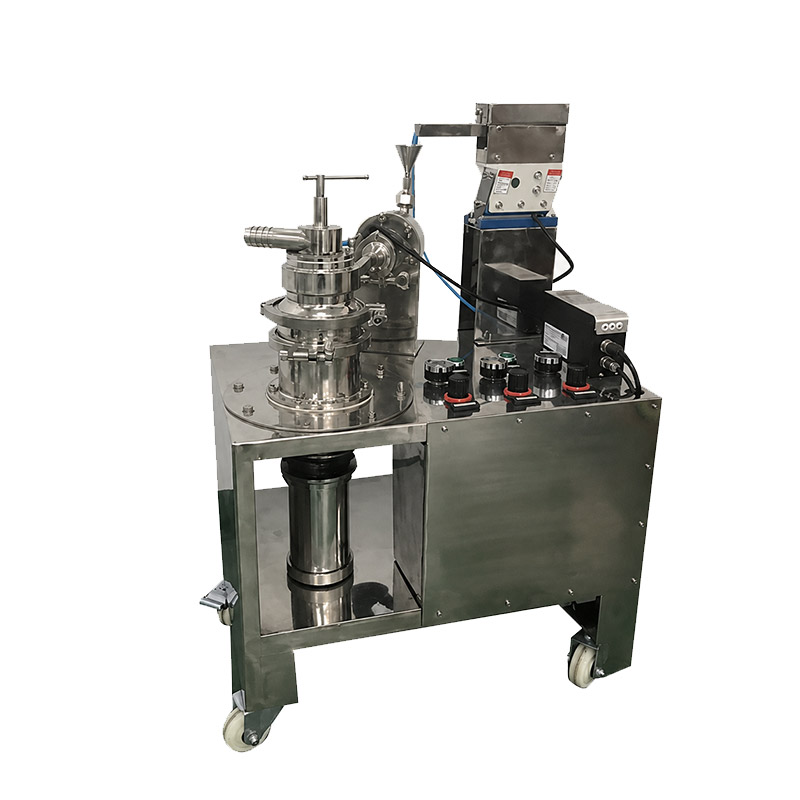
Understanding the working principle helps you appreciate why this technology is so effective for certain materials. The core of a lab jet mill is a grinding chamber into which the feed material is introduced, typically via a venturi feeder. High-pressure gas (usually compressed air or nitrogen) is injected through specially designed nozzles around the chamber. These gas jets accelerate the particles to high velocities, often exceeding 300 m/s. The particles collide with each other at the focal point of the jets, and the impact force causes them to break apart.
Because the grinding action is purely particle-on-particle, there is no mechanical wear on the mill itself, which means the ground product remains free from contamination from grinding media. This is a critical advantage when processing high-purity pharmaceuticals or advanced electronic materials.
After grinding, the fine particles are carried by the gas stream to a built-in classifier. The classifier can be a static or dynamic device that separates particles based on size. Particles that have reached the target fineness pass through the classifier and are collected in a cyclone or filter. Coarser particles are returned to the grinding zone for further size reduction. This closed-loop system ensures a consistent and narrow particle size distribution.
Key Components of a Laboratory Jet Mill
- Feed hopper and venturi feeder: Introduce the powder into the grinding chamber at a controlled rate.
- Grinding chamber: Contains the gas nozzles and is the site of particle collision.
- Classifier (internal or external): Separates fine particles from coarse ones.
- Cyclone and filter: Collect the final product and clean the exhaust gas.
- Control system: Regulates gas pressure, feed rate, and classification speed.
Key Advantages of Using a Lab Air Jet Mill
Why would you choose a lab air jet mill over other grinding equipment like a planetary ball mill or a hammer mill? Here are the main benefits:
1. No Contamination
Since there is no grinding media, the product purity is maintained. This is especially important for pharmaceutical active ingredients, catalysts, and high-purity ceramics.
2. Low Heat Generation
The expansion of compressed gas through the nozzles creates a cooling effect. The temperature inside the chamber can remain close to ambient, or even drop slightly. This makes the jet mill suitable for heat-sensitive materials like waxes, resins, and certain pharmaceuticals.
3. Narrow Particle Size Distribution
With the built-in classifier, the jet mill can produce a very sharp cut-off. For example, a D90 of 2 microns is achievable with many materials, and the distribution can be tailored to meet specific requirements.
4. Ability to Process Hard and Abrasive Materials
Because the grinding action is particle-on-particle, even materials with Mohs hardness of 7 or higher can be milled without wearing down the equipment. This is a significant advantage over impact mills or ball mills where the grinding media and liners wear out quickly.
5. Easy Cleaning and Changeover
Laboratory jet mills are designed for quick disassembly and cleaning, often with minimal dead zones. This is essential for multi-product lab environments where cross-contamination must be avoided.
Typical Applications of a Lab Air Jet Mill
You will find lab air jet mills used in a wide range of industries:
- Pharmaceuticals: Micronization of active pharmaceutical ingredients (APIs) to improve bioavailability. The absence of heat and contamination is critical.
- Battery Materials: Grinding of cathode and anode materials (e.g., lithium cobalt oxide, graphite, silicon) to fine powders for electrode slurry preparation.
- Ceramics: Production of fine alumina, zirconia, and silicon carbide powders for advanced ceramics and coatings.
- Chemicals: Fine grinding of pigments, dyes, and agrochemicals to achieve consistent color strength and dispersibility.
- Minerals and Metals: Processing of mica, talc, silica, and certain metal powders where purity and particle size control are important.
How to Select the Right Lab Air Jet Mill for Your Needs
Choosing the correct laboratory jet mill depends on several factors. Here are the key considerations:
Feed Particle Size
Most jet mills can accept feed particles up to about 3 mm. If your material is larger, you may need pre-crushing using a micro airflow pulverizer or a jaw crusher. Finer feed sizes generally yield better grinding efficiency.
Target Particle Size
Jet mills can achieve D50 as low as 1 micron, and D97 typically in the range of 2-45 microns. The exact result depends on the material properties, gas pressure, feed rate, and classifier setting. For example, softer materials like talc can be ground to sub-micron levels, while harder materials may require multiple passes.
Batch Size and Throughput
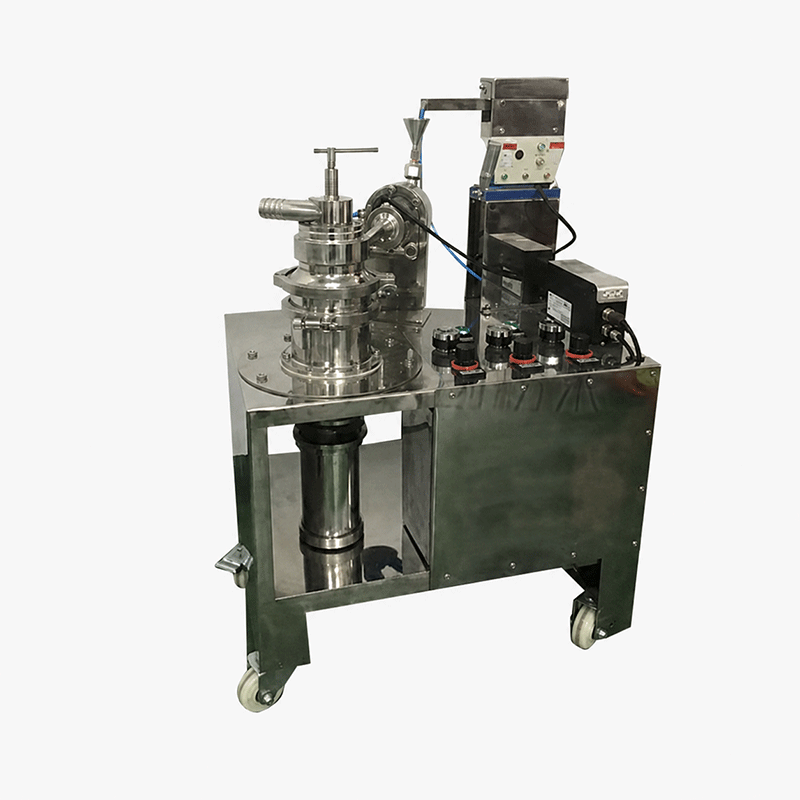
Lab-scale jet mills typically handle from a few grams to several hundred grams per batch. The lab air jet mill on our website is designed for 2-500 grams per batch, making it suitable for R&D and small-scale production. If you need larger throughput, you may consider a pilot-scale or production-scale fluidized bed jet mill.
Material Sensitivity
If your material is explosive, pyrophoric, or moisture-sensitive, you should consider a jet mill with an inert gas circulation system (usually nitrogen). Many lab jet mills, including the one from TENCAN, can be configured with a closed-loop nitrogen system to safely process such materials.
Gas Source and Pressure
Compressed air is the most common grinding gas, but for materials that react with oxygen, nitrogen or argon is used. The required pressure is typically between 0.7 and 0.85 MPa. Ensure your lab has a suitable compressor or gas supply.
Lab Air Jet Mill vs. Other Grinding Methods
To help you decide, here is a quick comparison with commonly used alternatives:
| Feature | Lab Air Jet Mill | Planetary Ball Mill | Impact Mill (Hammer/Pin) |
|---|---|---|---|
| Contamination risk | Very low (no media) | Moderate (media wear) | High (wear parts) |
| Heat generation | Low (cooling effect) | Moderate to high | Moderate to high |
| Particle size | 1-50 µm (narrow) | 0.1-100 µm (broader) | 10-500 µm |
| Suitable for hard materials | Yes | Yes (with hard media) | Limited (wear) |
| Batch operation | Easy clean, small batches | Batch or continuous | Continuous |
| Cost | Higher initial investment, low operating cost | Lower initial cost | Moderate |
For many high-purity and temperature-sensitive applications, the lab air jet mill is the preferred choice. However, if you need to grind very hard materials in larger quantities and can accept some contamination, a ball mill may be more economical.
Practical Tips for Operating a Lab Air Jet Mill
To get the best performance from your laboratory air jet mill, follow these guidelines:
- Optimize feed rate: Too high a feed rate can cause choking and poor classification; too low reduces throughput. Start with a moderate rate and adjust.
- Use appropriate gas pressure: Higher pressure increases particle velocity and grinding energy, but also increases gas consumption. Typical pressures are 6-8 bar.
- Check classifier setting: If your jet mill has a dynamic classifier wheel, adjust its speed to control the cut point. Higher RPM gives finer product.
- Pre-dry the material: Moisture can cause agglomeration and sticking. Ensure the feed is dry, especially for hygroscopic materials.
- Clean thoroughly between batches: Disassemble and clean all parts to avoid cross-contamination. Many lab jet mills are designed for quick cleaning.
Conclusion
The lab air jet mill is a powerful and versatile tool for ultrafine dry grinding in research and development. Its ability to produce narrow particle size distributions, maintain product purity, and handle heat-sensitive materials makes it indispensable in many advanced material fields. When selecting a unit, consider your material properties, target particle size, batch size, and safety requirements. For a reliable and well-engineered solution, explore the lab air jet mill from TENCAN, which offers robust construction, easy operation, and optional inert gas protection. If you need assistance with your specific application, our technical team is ready to help you choose the best configuration.