
Zirconia Grinding Balls: Properties, Selection Tips, and Applications in Laboratory Mills
Why Grinding Media Selection Matters
When you work with high-energy ball mills, the grinding media you choose directly affects the final particle size, contamination level, and milling efficiency. Among the many options available, zirconia grinding balls have become a preferred choice for laboratories and production lines that demand ultra-low wear, high density, and excellent chemical stability. Whether you are milling ceramic powders, battery materials, or pharmaceutical ingredients, understanding the characteristics of zirconia balls can help you achieve reproducible results and avoid costly trial-and-error.
What Are Zirconia Grinding Balls?
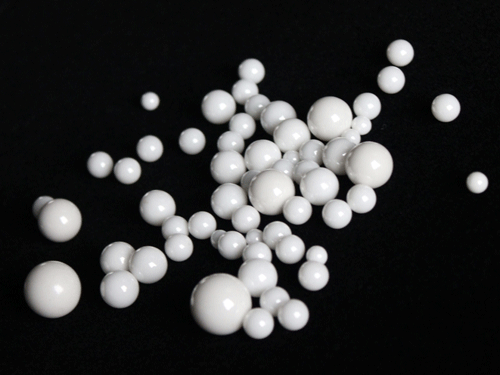
Zirconia grinding balls are spherical ceramic media made primarily from zirconium dioxide (ZrO₂). Most commercial grades are stabilized with yttrium oxide (Y₂O₃), typically around 5% by weight, to prevent the phase transformation that could cause cracking during sintering. This yttria-stabilized zirconia (YSZ) material offers a unique combination of toughness, hardness, and corrosion resistance. The manufacturing process involves pressing or rolling high-purity zirconia powder into spherical shapes, followed by high-temperature sintering to achieve full densification. The result is a smooth, dense ball with a characteristic ivory or white color.
Key Properties That Influence Milling Performance
High Density
Zirconia grinding balls have a specific gravity of approximately 6.0 g/cm³, which is significantly higher than that of alumina (3.6–3.9 g/cm³) or glass beads (2.5–2.7 g/cm³). Higher density means greater impact energy per collision, which translates to more efficient particle size reduction, especially for hard materials. In a planetary ball mill, the higher kinetic energy of zirconia balls can reduce milling time compared to lower-density media.
Hardness and Wear Resistance
With a Mohs hardness of 9 (close to diamond) and a Vickers hardness exceeding 1200 kg/mm², zirconia balls are extremely resistant to abrasion. The wear rate is typically in the range of a few parts per million (ppm) under normal laboratory conditions. This low wear rate is critical for applications where contamination must be minimized, such as in the preparation of high-purity electronic ceramics or pharmaceutical powders.
Fracture Toughness
Unlike many ceramics that are brittle, yttria-stabilized zirconia exhibits high fracture toughness (around 8–10 MPa·m¹/²). This means the balls are less likely to break or chip during high-energy milling, even when milling hard materials like silicon carbide or tungsten carbide. This durability reduces the risk of media fragments contaminating the sample and extends the service life of the balls.
Chemical Inertness
Zirconia is chemically stable in most acidic and alkaline environments, as well as in organic solvents. This makes zirconia balls suitable for wet milling in a wide range of liquid media without corrosion or leaching of impurities. However, they are not recommended for hydrofluoric acid (HF) applications, as HF attacks zirconia.
Applications in Laboratory and Industrial Milling
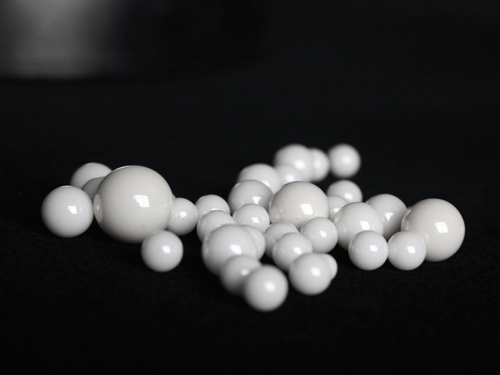
Zirconia grinding balls are used in a variety of milling equipment, including planetary ball mills, vibration mills, attritors, and horizontal bead mills. Common applications include:
- Electronic materials: Grinding of barium titanate (BaTiO₃), strontium titanate, and other dielectric ceramics to submicron sizes for capacitor and multilayer ceramic capacitor (MLCC) production.
- Battery materials: Milling of lithium cobalt oxide, lithium iron phosphate, and solid electrolytes where contamination from iron or other metals can degrade battery performance.
- Pigments and coatings: Dispersion and fine grinding of titanium dioxide, carbon black, and organic pigments to achieve consistent color strength and transparency.
- Ceramics and refractories: Preparation of alumina, zirconia, and silicon nitride powders for sintering into advanced ceramics.
- Pharmaceuticals and cosmetics: Micronization of active ingredients and excipients where metal contamination is unacceptable.
How to Choose the Right Zirconia Grinding Ball
Ball Size
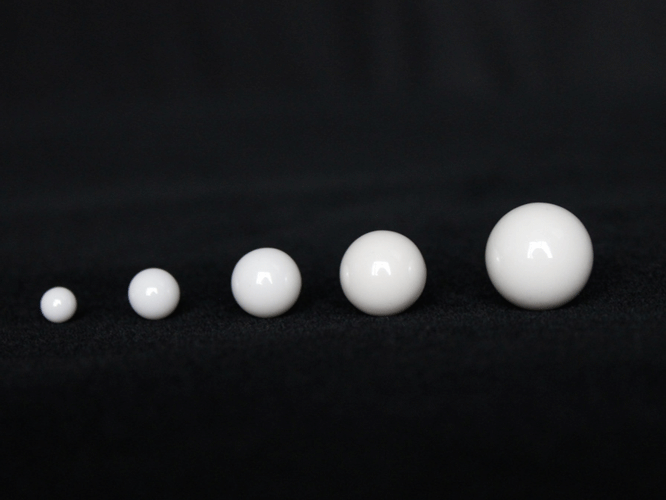
The diameter of the grinding balls should be selected based on the feed particle size and the target particle size. A general rule of thumb: larger balls (10–20 mm) are more effective for breaking down coarse particles (e.g., >1 mm), while smaller balls (0.1–5 mm) provide more contact points and are better for fine grinding and dispersion. For most laboratory planetary ball mills, a combination of different sizes (e.g., 10 mm, 5 mm, and 3 mm) can improve packing density and grinding efficiency.
Purity and Stabilizer Content
Standard yttria-stabilized zirconia balls (95% ZrO₂ + 5% Y₂O₃) are suitable for most applications. If you require even lower contamination, especially for trace analysis, you may consider high-purity grades with minimal impurities. For applications where the presence of yttrium is not acceptable (e.g., certain nuclear or optical materials), alternative stabilizers such as ceria or magnesia can be used, but these are less common.
Matching with Jar Material
To minimize cross-contamination, it is advisable to match the grinding ball material with the grinding jar material. For example, using zirconia balls in a zirconia jar creates a homogeneous system where any wear debris is chemically identical to the sample. Similarly, you can use zirconia balls together with alumina or agate jars, but be aware that the wear particles from the jar may differ from the ball material. If you are working with a zirconia grinding ball, a zirconia jar is the optimal choice for contamination control.
Dry vs. Wet Milling
Zirconia balls perform well in both dry and wet milling. In wet milling, the liquid medium helps dissipate heat and reduce agglomeration. The density of zirconia balls provides sufficient momentum even in viscous slurries. For dry milling, especially with fine powders, antistatic agents or process control agents (PCA) may be needed to prevent caking. Always ensure that the ball size and loading are appropriate for the specific mill type.
Comparison with Other Grinding Media
Choosing the right grinding media often involves comparing several options. Here is a brief overview of how zirconia balls compare to common alternatives:
| Media Type | Density (g/cm³) | Hardness (Mohs) | Wear Resistance | Typical Applications |
|---|---|---|---|---|
| Zirconia (YSZ) | ~6.0 | 9 | Excellent | High-purity ceramics, battery materials, pigments |
| Alumina (92–99%) | 3.6–3.9 | 9 | Good | General ceramic grinding, less demanding |
| 304 stainless steel | ~7.9 | ~5 | Moderate | Mining, construction, where iron contamination is acceptable |
| Agate (SiO₂) | 2.6 | 7 | Moderate | Soft materials, geological samples, low cost |
| Tungsten carbide | ~14.9 | 9 | Very high | Very hard materials, but high cost and potential tungsten contamination |
As the table shows, zirconia offers an excellent balance of density, hardness, and wear resistance for most laboratory and industrial applications. Tungsten carbide is denser but more expensive and can introduce tungsten impurities. Stainless steel is cheaper but prone to corrosion and metal contamination.
Practical Tips for Using Zirconia Grinding Balls
Ball-to-Powder Ratio
A common starting point for ball-to-powder weight ratio (BPR) is 10:1 to 20:1 for zirconia balls in planetary mills. For ductile materials or mechanical alloying, you may need a higher ratio. For fine grinding of brittle ceramics, a lower ratio (e.g., 5:1) can be sufficient. Always verify with a small test batch before scaling up.
Filling Volume
Typically, the grinding balls should occupy about 30–50% of the jar volume. The remaining space is filled with the powder and, in wet milling, the dispersing liquid. Overfilling reduces the free movement of balls and lowers grinding efficiency; underfilling wastes energy and increases wear.
Cleaning and Reuse
Zirconia balls can be reused many times. After each use, clean them thoroughly with an appropriate solvent or ultrasonic bath to remove residual powder. Avoid using strong acids that may attack the surface. Inspect balls periodically for cracks or excessive wear, and replace any damaged ones to maintain consistent performance.
Safety Considerations
When milling reactive or flammable materials, use an inert atmosphere (e.g., argon or nitrogen) and ensure the jar is properly sealed. Zirconia balls themselves are non-sparking, but the frictional heat generated during milling can ignite sensitive powders. Always follow safe operating procedures for your specific mill.
Conclusion
Zirconia grinding balls are a versatile and high-performance grinding media suitable for a wide range of materials, from advanced ceramics to battery materials and pharmaceuticals. Their high density, exceptional hardness, low wear rate, and chemical stability make them a reliable choice for achieving ultra-fine particles with minimal contamination. When selecting zirconia balls, consider the ball size, purity, and compatibility with your jar and mill type. As with any milling process, it is wise to start with small-scale tests to optimize parameters such as ball-to-powder ratio, speed, and time. For more information on our range of grinding media and laboratory ball mills, please visit our zirconia grinding ball product page.