
Lab Air Jet Mill: A Complete Guide to Laboratory Jet Milling for Ultrafine Powder Processing
What Is a Lab Air Jet Mill and Why Do You Need One?
If you are working with powders that require consistent submicron or micron-sized particles, especially materials that are heat-sensitive, abrasive, or prone to contamination, a lab air jet mill is a tool you should consider. Unlike traditional ball mills that rely on grinding media, a jet mill uses high-speed gas streams to accelerate particles and cause them to collide with each other. This self-impact mechanism eliminates the risk of media wear and keeps your product pure.
Laboratory-scale jet mills are designed for small batches, typically processing from a few grams to several kilograms per hour. They are ideal for research and development, formulation studies, and small-scale production in industries such as pharmaceuticals, advanced ceramics, battery materials, pigments, and specialty chemicals.
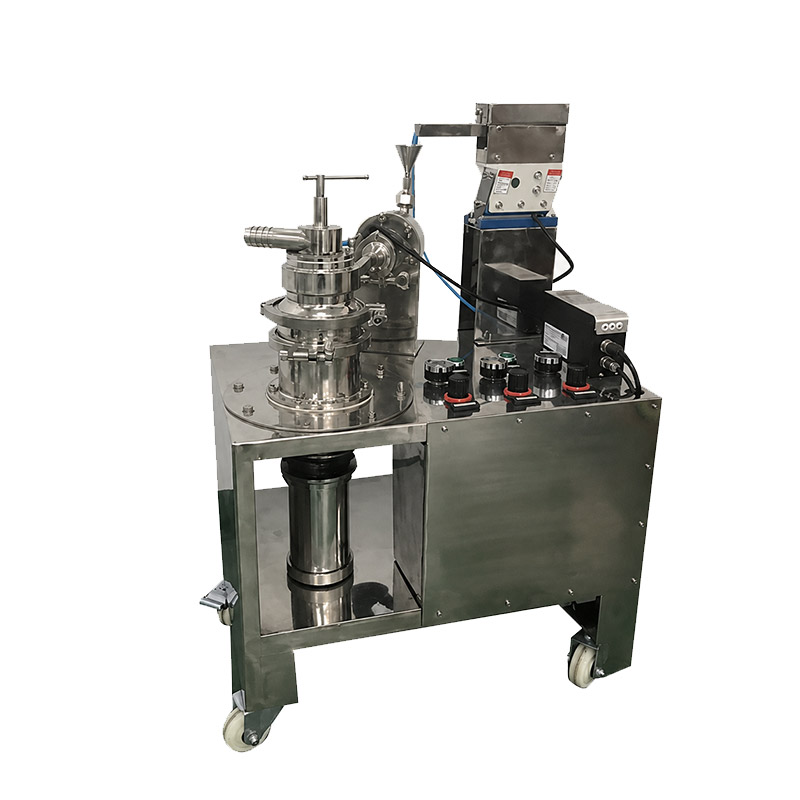
How Does a Lab Air Jet Mill Work?
The core principle of a jet mill is particle-to-particle impact. Compressed air or inert gas (such as nitrogen) is introduced into the grinding chamber through specially designed nozzles. The gas expands and accelerates to velocities often exceeding 300 m/s, creating a high-speed jet stream. Feed material is introduced into this stream, usually through a venturi feeder or a screw feeder.
Inside the flat cylindrical chamber, the particles are entrained in the gas flow and accelerated. As they travel along a spiral path, faster particles collide with slower ones, causing fragmentation. The centrifugal force generated by the spiral motion separates larger particles from finer ones. Coarser particles remain near the periphery for further grinding, while fine particles move toward the center outlet and are collected in a cyclone or a filter.
An integrated classifier wheel (often a high-speed rotor) can be used to precisely control the top particle size. By adjusting the classifier speed, you can achieve a narrow particle size distribution, typically down to D50 = 1–5 µm, and sometimes even below 1 µm depending on the material and process conditions.
Key Components of a Lab Air Jet Mill
- Grinding chamber: Usually made of stainless steel, with optional ceramic lining for high-purity applications.
- Nozzles: Multiple nozzles positioned tangentially to create the spiral flow.
- Classifier wheel: A dynamically balanced rotor that separates fine from coarse particles.
- Cyclone separator: Collects the majority of the product.
- Filter system: Captures ultra-fine particles and ensures clean exhaust.
- Feeder: Controls the rate of material introduction.
Advantages of Using a Lab Air Jet Mill
No Grinding Media, No Contamination
Because the mill relies on particle self-impact, there is no grinding media to wear out. This is a critical advantage for materials that must remain free of metal or ceramic impurities, such as electronic ceramics, high-purity pharmaceuticals, and advanced battery powders.
Low-Temperature Grinding
The expansion of compressed gas produces a cooling effect inside the chamber. In many applications, the temperature rise is negligible, making the jet mill suitable for heat-sensitive materials like waxes, resins, and certain pharmaceutical active ingredients. The process is often described as an endothermic (cooling) process.
Narrow Particle Size Distribution
With the built-in classifier, you can achieve a tight particle size distribution without the need for downstream sieving. This is especially valuable for applications where consistency is critical, such as in powder bed fusion for 3D printing or in the formulation of ceramic slurries.
Versatility in Materials
Lab air jet mills can handle a wide range of materials: from soft talc (Mohs hardness 1) to hard silicon carbide (Mohs hardness 9). They can also process abrasive materials because the wear is mainly on the chamber walls and nozzles, which can be lined with ceramics or tungsten carbide.
Selecting the Right Lab Air Jet Mill for Your Application
When choosing a laboratory jet mill, consider the following factors:
- Feed particle size: Most jet mills require a feed size below 1 mm. If your material is coarser, pre-grinding with a crusher or a ball mill may be necessary.
- Target particle size: Confirm the D50 and D97 values you need. A mill with a high-speed classifier offers better control over fine particles.
- Batch size: Lab units typically handle 10 g to 5 kg per batch. If you need continuous operation, look for models with a screw feeder and a larger collection system.
- Gas requirement: Compressed air is commonly used, but for reactive or moisture-sensitive materials, nitrogen or argon may be required. Ensure your lab has a suitable gas supply (typically 6–12 bar pressure).
- Material of construction: For high-purity applications, choose a mill with a ceramic-lined chamber and polymeric or ceramic feeder parts. For general use, stainless steel is sufficient.
- Cleaning and maintenance: Look for a design that allows quick disassembly without tools, especially if you change materials frequently.
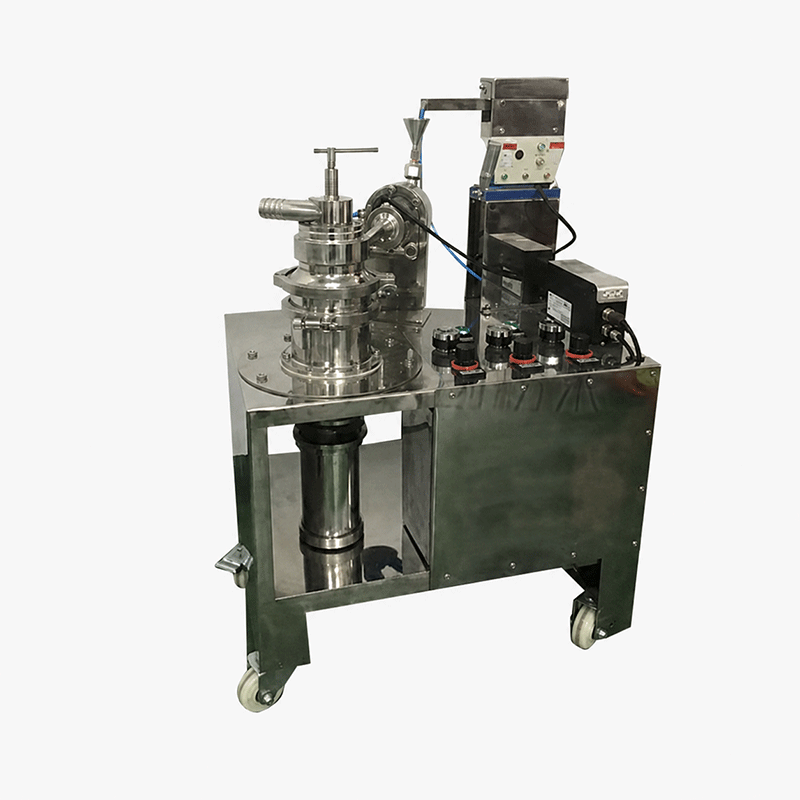
Comparing Lab Air Jet Mills with Other Laboratory Grinding Equipment
To help you decide, here is a brief comparison with common alternatives:
| Equipment | Grinding Mechanism | Contamination Risk | Heat Generation | Typical Fineness | Best For |
|---|---|---|---|---|---|
| Lab Air Jet Mill | Particle self-impact | Very low (no media) | Low (cooling) | D50 1–20 µm | High-purity, heat-sensitive, abrasive materials |
| Planetary Ball Mill | Grinding balls (ceramic/steel) | Medium (media wear) | Moderate to high | D50 0.1–100 µm | General lab grinding, mechanical alloying |
| Cryogenic Mill | Impact with liquid nitrogen cooling | Low | Very low | D50 10–100 µm | Very heat-sensitive or tough materials |
| Three Roll Mill | Shear between rollers | Low (metal contact) | Low | D50 1–50 µm | Pastes, ointments, dispersions |
As you can see, the lab air jet mill occupies a unique niche where purity, low-temperature operation, and fine particle size are paramount. If your material can tolerate some contamination and heat, a ball mill might be more cost-effective for larger batches.
Practical Tips for Operating a Lab Air Jet Mill
- Pre-dry your feed: Moisture can cause agglomeration and clogging. If your material is hygroscopic, dry it gently before milling.
- Optimize feed rate: Too fast a feed leads to coarse product; too slow reduces efficiency. Start with a moderate rate and adjust.
- Use the correct gas pressure: Higher pressure increases particle velocity and finer grinding, but also increases gas consumption. Typically, 7–10 bar is a good starting point.
- Check the classifier speed: If your mill is equipped with a classifier, run it at the highest speed for the finest cut, then reduce if you need a coarser product.
- Clean thoroughly between batches: Disassemble the chamber, nozzles, and classifier to avoid cross-contamination. Many lab jet mills feature quick-release clamps for easy cleaning.
Applications of Lab Air Jet Mills in Research and Industry
Laboratory air jet mills are widely used in the following fields:
- Pharmaceuticals: Micronization of active pharmaceutical ingredients (APIs) to improve bioavailability and dissolution rate.
- Battery materials: Grinding of lithium cobalt oxide, lithium iron phosphate, and solid electrolytes for electrode formulation.
- Ceramics: Preparation of alumina, zirconia, silicon nitride, and other advanced ceramic powders for sintering.
- Electronics: Processing of ferrites, piezoelectric materials, and conductive pastes.
- Pigments and dyes: Achieving uniform color strength and dispersion.
- Food and cosmetics: Fine grinding of spices, cocoa, and mineral powders for face powders or eyeshadows.
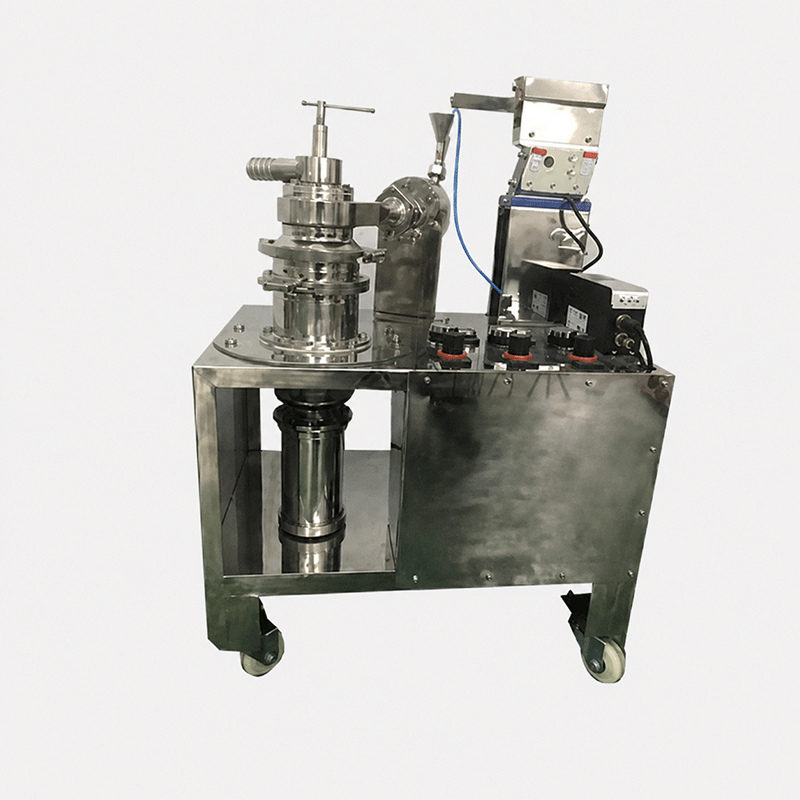
Why Choose TENCAN for Your Lab Air Jet Mill?
At TENCAN, we understand that every powder has its own personality. Our lab air jet mill is designed with the needs of researchers and small-scale producers in mind. We offer configurations with stainless steel or fully ceramic contact parts, a choice of feeder types, and optional inert gas circulation loops for handling flammable or oxygen-sensitive materials. Our technical team can help you select the right model and provide initial process parameters based on your material characteristics.
When you are ready to discuss your specific application, simply share the following information with us: material name, composition, feed particle size, target particle size, batch size, and any special requirements regarding contamination or atmosphere. This will allow us to recommend the most suitable lab air jet mill and accessories.
We hope this guide has given you a clear understanding of what a lab air jet mill can do for your powder processing needs. If you have any further questions, feel free to reach out to our engineers.