
How a Heavy Duty Vibrating Ball Mill Works and How to Select One for Laboratory Use
Why a Heavy Duty Vibrating Ball Mill?
When you need to grind materials down to micron or even sub-micron levels, a conventional tumbling ball mill may not provide the energy or efficiency required. The heavy duty vibrating ball mill offers a solution by using high-frequency vibration to agitate the grinding media and produce intense impact and shear forces. This design is particularly effective for hard, brittle, and fibrous materials, and it is widely used in laboratories for sample preparation, mechanical alloying, and fine powder processing.
In this article, we will explore how a vibrating ball mill works, what makes it “heavy duty,” which materials benefit from this approach, and how to select the right model for your lab.
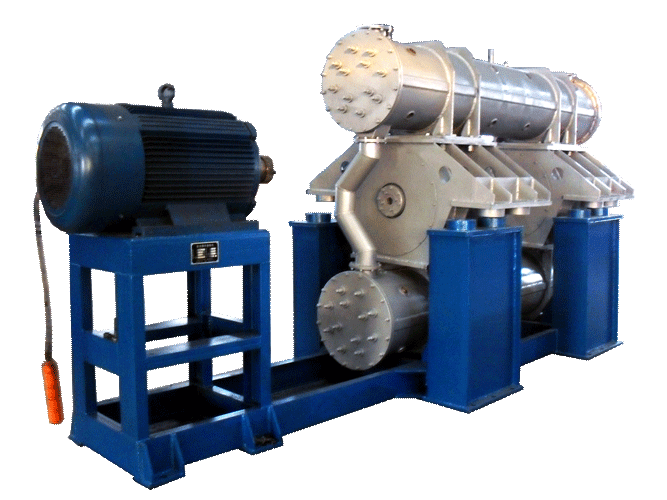
Working Principle of a Vibrating Ball Mill
Unlike a conventional ball mill that relies on rotation and gravity, a vibrating ball mill uses an eccentric shaft or unbalanced motor to generate rapid oscillations. The grinding jar, typically a cylindrical or semi-cylindrical container, is mounted on springs and vibrated at high frequency (often 1000–3000 vibrations per minute). Inside the jar, the grinding balls and the powder material are subjected to continuous impact and rubbing motion.
The key difference from a planetary ball mill is that the entire jar oscillates rather than revolving around a central axis. This creates a three-dimensional teetering action: the balls dance up and down, rotate individually, and slowly circulate around the jar. The result is a uniform grinding environment with high energy density. Because the vibration is applied directly to the jar, the mill can achieve high grinding efficiency even with relatively small jars.
In a heavy duty model, the construction is reinforced to handle larger jars, heavier grinding media, and continuous operation. The motor power is higher, and the springs and bearings are designed for extended service life. This makes it suitable for processing harder materials such as carbides, ceramics, and ores.
Applications of Heavy Duty Vibrating Ball Mills
Ultrafine Grinding and Superfine Powders
The real strength of a vibrating ball mill lies in its ability to produce very fine particles. In many laboratory applications, the mill can reduce materials to 1 micron (0.001 mm) or even finer in a single batch operation. This is particularly valuable for industries such as:
- Ceramics and advanced materials – preparing fine oxide powders, carbides, and nitrides.
- Mining and mineral processing – grinding ore samples for assay or mineral liberation.
- Coal and energy – pulverizing coal, lignite, and peat for combustion analysis or carbon research.
- Pharmaceutical and chemical – reducing particle size of active ingredients or catalysts.
Mechanical Alloying and Mixing
The high-energy impact environment also makes the heavy duty vibrating ball mill suitable for mechanical alloying, where different metal powders are cold-welded and fractured to form alloyed phases. The intense vibration promotes intimate mixing at the atomic level, which can be difficult to achieve with low-energy mills.
Sample Preparation for Analysis
Many analytical techniques (XRF, XRD, ICP) require a fine, homogeneous powder. A lab vibration ball mill can quickly grind samples to the required fineness with minimal contamination, especially when using matching jar and ball materials (e.g., agate, zirconia, or tungsten carbide).
Key Selection Factors for a Heavy Duty Vibrating Ball Mill
Choosing the right heavy duty vibrating ball mill for your laboratory depends on several parameters. Below are the most important considerations.
1. Jar Capacity and Usable Volume
Common laboratory jar capacities range from 50 mL to 5 L. A heavy duty model often supports larger jars (e.g., 1 L to 5 L) to handle bigger sample batches. However, the actual usable volume is typically about 30%–40% of the jar capacity, because the grinding balls and sample need space to move. For example, a 1 L jar can effectively process around 300–400 mL of material (including balls).
2. Grinding Media Size and Material
The vibration mill can use small-diameter balls (e.g., 3 mm to 20 mm) because the high frequency provides sufficient impact even with smaller media. For coarse feed, larger balls (10–20 mm) are preferred; for fine grinding, balls of 1–5 mm offer more contact points. The ball material should be harder than the sample to avoid contamination. Common choices include:
- Stainless steel – general purpose, resistance to impact.
- Zirconia (ZrO₂) – low wear, suitable for ceramic and pharmaceutical materials.
- Tungsten carbide – extremely hard, used for very hard samples.
- Agate – contamination-free for silica-free samples.
3. Vibration Frequency and Amplitude
Most laboratory vibrating ball mills operate at frequencies between 1000 and 3000 rpm (or vibrations per minute). Some models offer adjustable amplitude to control the energy input. Higher frequency and amplitude generally produce finer particles but also generate more heat. For temperature-sensitive materials, you may need to use intermittent operation (e.g., grind 10 minutes, pause 5 minutes to cool).
4. Feed Particle Size
A vibrating ball mill typically cannot handle feed coarser than about 0.5 mm (500 microns). If your material is larger, you should pre-crush it using a jaw crusher or other coarse crusher before feeding into the vibration mill. For many lab applications, 0.5 mm to 1 mm feed is acceptable, but the mill is most efficient when the feed is already below 0.5 mm.
5. Batch vs. Continuous Operation
Heavy duty models are designed for continuous or long-duration operation. Check the motor power rating and cooling system. For example, a small lab mill might require a 1–2 HP motor, while a larger heavy duty model may need 3–5 HP. The mill should be able to run for several hours without overheating.
6. Jar Material and Sealing
For reactive or air-sensitive materials, the jar must be sealable. Some heavy duty vibrating ball mills offer options for vacuum or inert gas atmosphere. The jar material can be stainless steel, hardened steel, alumina, or zirconia, depending on your contamination tolerance. Always choose a jar material that matches your sample properties to minimize wear.
Advantages and Limitations
Advantages
- Very high energy density – capable of ultrafine grinding (down to 1 micron or less).
- Faster grinding compared to conventional ball mills for many materials.
- Compact footprint – requires less floor space than a planetary ball mill of similar capacity.
- Lower noise and vibration transmitted to the environment when properly isolated.
- Can be used for both dry and wet grinding, as well as mechanical alloying.
Limitations
- Not suitable for feed particles larger than about 0.5 mm – pre-crushing required.
- Heat generation may be significant – intermittent operation may be needed for heat-sensitive materials.
- Jar capacity is limited compared to production-scale mills.
- Wear on springs and bearings over time, though heavy duty designs mitigate this.
How to Get the Best Results
To achieve reproducible results with a heavy duty vibrating ball mill, consider the following best practices:
- Ball-to-powder ratio – commonly in the range of 5:1 to 20:1 by weight. Start with a ratio of 10:1 for many materials.
- Grinding time – depends on material hardness and target fineness. Run a time series (e.g., 5, 10, 20, 30 minutes) and analyze particle size.
- Wet vs. dry – wet grinding with a liquid (water, ethanol, or isopropanol) can reduce agglomeration and heat buildup. Use a suitable liquid that does not react with the sample.
- Cleaning – clean the jar and balls thoroughly between samples to avoid cross-contamination. Use the same material as the sample for pre-grinding if possible.
Conclusion
The heavy duty vibrating ball mill is a powerful tool for laboratories that need to produce ultrafine powders quickly and efficiently. Its robust construction, high-frequency vibration, and versatility make it suitable for a wide range of materials, from ceramics and ores to pharmaceuticals and advanced alloys. By understanding the working principle and key selection factors – jar capacity, grinding media, vibration parameters, and feed size – you can choose the right model and optimize your grinding process.
If you need assistance in selecting the appropriate heavy duty vibrating ball mill for your lab, feel free to explore the product details at our heavy duty vibrating ball mill page or contact our technical team for a personalized recommendation.