
Lightweight Stirred Ball Mill: A Practical Guide for Lab-Scale Ultrafine Grinding
Why Choose a Lightweight Stirred Ball Mill for Your Lab?
In laboratory research and development, achieving ultrafine particle sizes often requires dedicated milling equipment that can deliver consistent, high-energy grinding while remaining compact and easy to handle. Traditional planetary ball mills are powerful, but they can be bulky and may generate excessive heat or noise for certain applications. The lightweight stirred ball mill offers a compelling alternative: it combines the efficiency of agitating grinding media with a compact, portable design that fits comfortably on a bench top. Whether you are working with ceramic powders, battery materials, or mineral samples, understanding how this equipment works and how to optimize its parameters can significantly improve your grinding results.
This article provides a practical overview of the lightweight stirred ball mill, covering its operating principle, key process variables, common applications, and selection criteria. We will draw on engineering experience and published research to help you make informed decisions for your ultrafine grinding tasks.
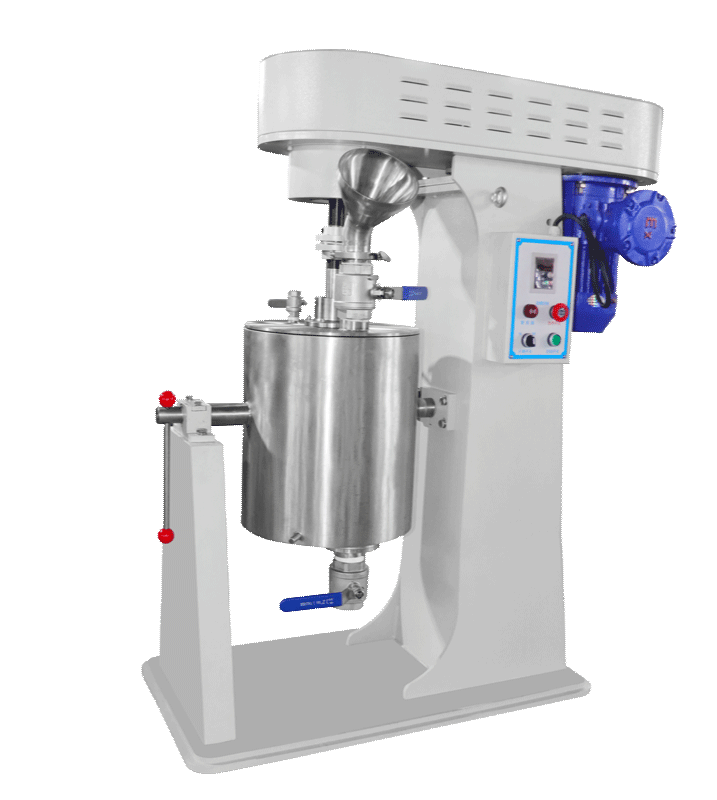
How Does a Lightweight Stirred Ball Mill Work?
A stirred ball mill, also known as a stirred media mill, uses an agitator (often a rotating shaft with impellers or discs) to stir the grinding media (typically beads) inside a stationary grinding chamber. Unlike planetary mills where the entire jar rotates, in a stirred mill only the agitator moves, which reduces the overall weight and complexity of the machine. The motion of the agitator imparts kinetic energy to the beads, causing them to collide with each other and with the material particles, thereby achieving size reduction through impact and attrition.
One of the key advantages of the stirred design is its ability to produce very fine particles (down to the sub-micron or even nanometer range) while maintaining relatively low energy consumption per unit of product. Because the grinding chamber remains stationary, the mill can be made lighter and more compact, making it ideal for laboratories where space is limited. Additionally, the lightweight construction often simplifies cleaning and maintenance, as the chamber can be easily accessed or removed.
Key Components of a Lightweight Stirred Ball Mill
- Grinding Chamber: Typically made of wear-resistant materials such as stainless steel, zirconia, or polyurethane, depending on contamination requirements.
- Agitator: A rotating shaft with pins, discs, or a spiral profile that drives the media motion.
- Grinding Media: Small beads (commonly 0.3–3 mm in diameter) made of zirconia, steel, glass, or ceramic. The choice of media material and size critically affects the grinding outcome.
- Speed Control System: Variable speed drive to adjust the agitator rotation, typically from a few hundred to several thousand rpm.
- Sealing and Cooling: Some designs include a sealing system to prevent leakage and a cooling jacket to manage heat generation during prolonged operation.
Key Process Parameters and Their Influence
To achieve optimal grinding results with a lightweight stirred ball mill, you need to carefully control several parameters. The following factors are commonly adjusted based on the material properties and target particle size:
Agitator Speed
Higher rotational speeds increase the kinetic energy of the media, leading to faster grinding. However, excessive speed can cause excessive wear, temperature rise, and even media fracture. In many laboratory stirred mills, the speed range is approximately 500–3000 rpm, depending on the chamber size and media density. As a practical reference, start at a moderate speed and gradually increase until the desired fineness is achieved, monitoring the temperature rise.
Grinding Media Size and Material
Smaller media beads (e.g., 0.3–1 mm) provide more contact points and are more effective for ultrafine grinding, while larger beads (1–3 mm) deliver higher impact forces suitable for harder materials. The media material should be harder than the material being ground to minimize contamination. For example, zirconia beads are commonly used for ceramic and battery materials, while steel beads may be chosen for mineral processing where iron contamination is acceptable.
Media Filling Ratio
The volume of grinding media typically occupies about 60–80% of the chamber volume. A higher filling ratio increases the number of collisions but also raises power consumption. If the filling is too low, grinding efficiency drops; if too high, the media movement becomes restricted. It is advisable to start with a filling ratio of around 70% and adjust based on the specific slurry viscosity.
Solid Concentration and Slurry Viscosity
For wet grinding, the solid content in the slurry significantly affects the grinding efficiency. Too high a solid concentration leads to high viscosity, which dampens media motion; too low reduces the number of particles captured per collision. Typically, solid concentrations range from 20% to 50% by weight, depending on the material. Adding dispersants or grinding aids can improve the flowability and prevent agglomeration.
Grinding Time
Unlike batch processes in planetary mills, stirred mills often operate in continuous or recirculation mode. However, in lab-scale batch operation, the grinding time may range from 10 minutes to several hours. The relationship between grinding time and particle size reduction is usually nonlinear, with diminishing returns after a certain point. It is recommended to take intermediate samples to monitor the particle size distribution.
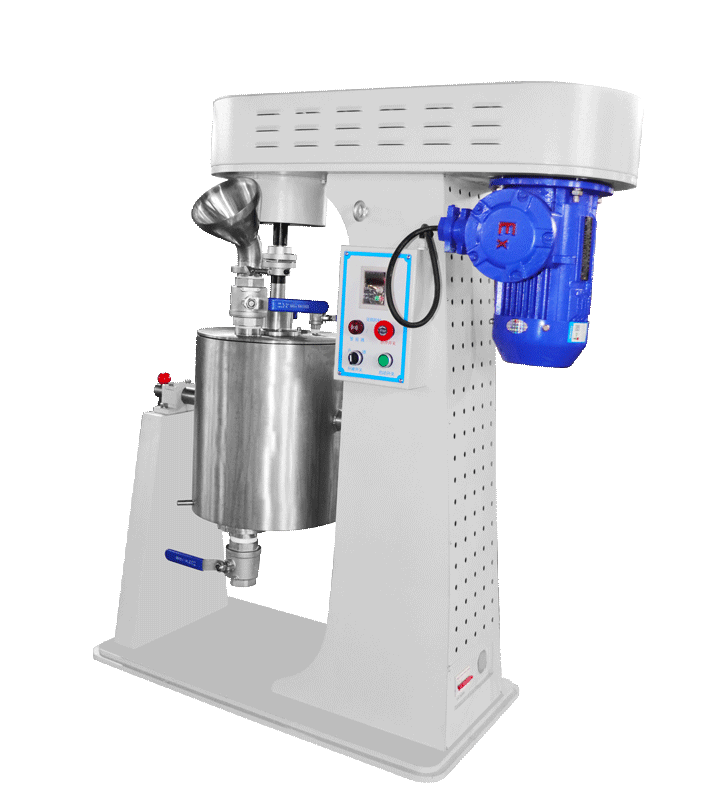
Common Applications of Lightweight Stirred Ball Mills
The lightweight stirred ball mill is particularly well-suited for materials that require fine or ultrafine grinding in relatively small quantities. Typical applications include:
- Ceramic powders: Alumina, zirconia, silicon carbide, and other advanced ceramics benefit from contamination-free grinding using zirconia media.
- Battery materials: Cathode and anode active materials, solid electrolytes, and carbon additives often require sub-micron particle sizes for improved electrochemical performance.
- Mineral processing: Laboratory-scale testing of ores, tailings, and industrial minerals to evaluate grindability and liberation characteristics.
- Pigments and dyes: Organic and inorganic pigments need precise particle size control for color strength and dispersion stability.
- Pharmaceutical and cosmetic ingredients: Active pharmaceutical ingredients (APIs) and functional fillers can be micronized without excessive heat generation.
- Mechanical alloying and powder mixing: Although less common than in planetary mills, stirred mills can be used for homogeneous mixing of fine powders.
Because the lightweight design makes the mill easy to move and clean, it is also a popular choice for educational institutions and multi-purpose labs where different materials are processed frequently.
How to Select the Right Lightweight Stirred Ball Mill
When choosing a stirred ball mill for your laboratory, consider the following aspects:
Chamber Capacity
Lab-scale stirred mills typically offer chamber volumes from 50 mL to 2 L. For batch processing, the actual working volume is about 60–70% of the chamber capacity due to the space occupied by media and slurry. If you need to process samples of 10–50 g per batch, a 100–500 mL chamber is usually sufficient. For larger samples, consider a 1 L or 2 L model.
Material of Construction
The chamber and agitator should be made of materials that do not contaminate your product. Stainless steel is common for general use, but for high-purity applications, zirconia or polyurethane linings are preferred. The agitator may be coated with wear-resistant materials.
Sealing and Inert Atmosphere Capability
If your material is sensitive to oxygen or moisture, look for a mill that can be sealed and purged with inert gas. Some lightweight stirred mills offer optional gas-tight lids or continuous purging ports.
Ease of Cleaning
Since labs often process multiple materials, easy disassembly and cleaning are important. Models with removable chambers or quick-release agitators save time and reduce cross-contamination risk.
Cooling System
For heat-sensitive materials, a water-cooled jacket around the chamber helps maintain a stable temperature. Some lightweight mills incorporate a simple cooling coil or jacket.
For more detailed specifications and to explore available models, you can visit the lightweight stirred ball mill product page or the lab stirred ball mill page for additional options.
Practical Tips for Operation and Maintenance
- Start with a low speed to allow the media to settle and avoid splashing, then gradually increase to the target speed.
- Use a consistent slurry rheology by controlling the solid concentration and adding dispersant if needed. This improves reproducibility.
- Monitor the temperature during grinding. If the chamber becomes too hot to touch, consider using a cooling jacket or intermittent operation (e.g., 10 minutes on, 5 minutes off).
- Balance the media load regularly. After many runs, media may wear down, reducing the effective filling ratio. Replace worn media to maintain efficiency.
- Clean the chamber immediately after each use to prevent hard deposits from forming. Use a compatible solvent or ultrasonic cleaning for stubborn residues.
- Keep spare seals and O-rings on hand, as they are the most common wear items in stirred mills.
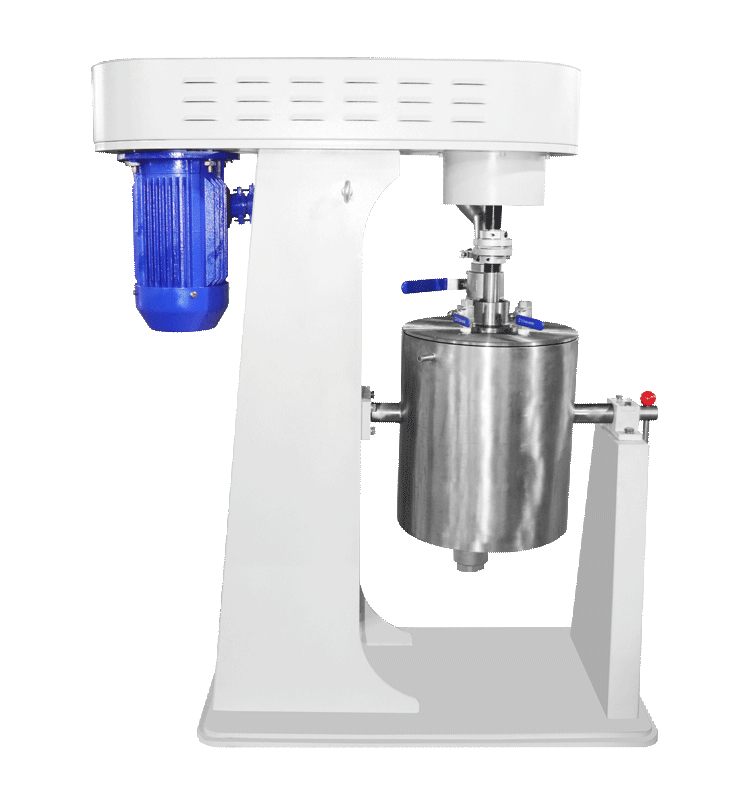
Final Thoughts
The lightweight stirred ball mill is a versatile and efficient tool for laboratory ultrafine grinding. Its compact design, combined with the ability to produce sub-micron particles, makes it an excellent choice for researchers working with advanced materials, minerals, and chemicals. By understanding the influence of key parameters—such as agitator speed, media size, filling ratio, and slurry concentration—you can tailor the process to your specific material and target particle size. Whether you are scaling up a process or conducting routine sample preparation, this equipment offers a reliable and user-friendly solution.
For further guidance on selecting the right model or configuring the mill for your application, consulting with experienced equipment manufacturers can help you avoid common pitfalls and achieve consistent results from the start.