
Lab Air Jet Mill: Principles, Applications, and Selection Guide for Ultrafine Powder Processing
When you work with heat-sensitive pharmaceutical powders, high-purity ceramics, or advanced battery materials, conventional ball milling or mechanical grinding often introduces contamination, generates excessive heat, or fails to reach the sub-micron range. The lab air jet mill offers a completely different approach: it uses high-velocity compressed gas to accelerate particles against each other, achieving size reduction without any moving grinding media. This makes it an essential tool for R&D laboratories that need clean, narrow, and controllable particle size distributions from gram-scale samples.
In this article, we will walk through how a laboratory air jet mill works, what materials it handles best, the critical parameters that influence grinding results, and the practical factors you should consider when selecting one for your lab.
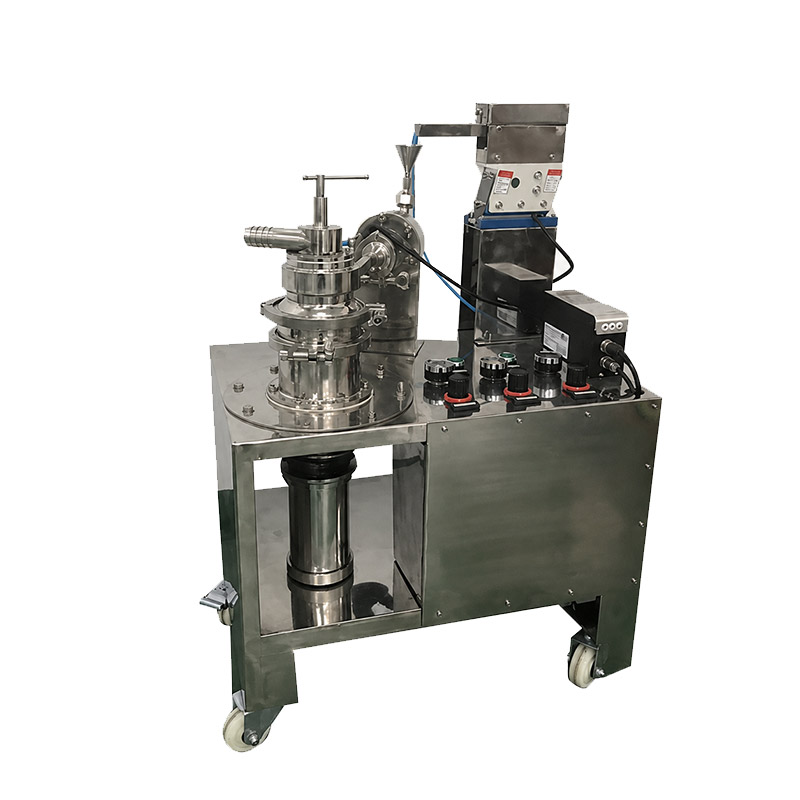
How Does a Lab Air Jet Mill Work?
Unlike a planetary ball mill that relies on impact and friction from grinding balls, an air jet mill uses the energy of compressed air or inert gas to create inter-particle collisions. The principle is straightforward but elegantly effective:
- Gas injection: Compressed air or nitrogen is introduced through specially designed nozzles around the grinding chamber. The gas accelerates to supersonic speeds, typically exceeding 300 m/s.
- Particle acceleration: Feed powder enters the chamber tangentially, where it is caught by the high-speed gas stream and accelerated. Particles rapidly gain kinetic energy.
- Inter-particle collision: Within the spiral flow, faster particles impact slower particles, causing fragmentation. The grinding action is purely particle-on-particle, so there is no contact with grinding media or chamber walls.
- Classification: Centrifugal force pushes larger particles toward the outer periphery of the chamber, while finer particles move toward the center outlet. An integrated classifier (often a dynamic rotor) ensures that only particles below a target size exit the system.
The entire process occurs in a continuous or batch mode, depending on the design. The absence of grinding media means zero contamination from metal or ceramic wear, which is critical for high-purity applications.
Key Advantages of a Laboratory Air Jet Mill
1. No Heat Generation
The energy of compression is converted into kinetic energy, and the expansion of gas through the nozzles actually produces a cooling effect. This makes the lab air jet mill ideal for heat-sensitive materials such as pharmaceutical active ingredients, certain polymers, and biological powders. The grinding temperature remains close to ambient, or even below, protecting the material from thermal degradation.
2. High Purity and No Contamination
Since there are no moving grinding elements, the risk of metal or ceramic contamination is virtually eliminated. For applications like catalyst supports, electronic ceramics, or high-value fine chemicals, the product purity is preserved.
3. Narrow Particle Size Distribution
The combination of selective classification and controlled grinding energy allows a lab air jet mill to produce powders with a very tight size range, often described as a Gaussian-like distribution. This is difficult to achieve with conventional ball mills, which tend to produce a broader spread.
4. Ability to Reach Ultrafine Sizes
In many laboratory settings, a jet mill can achieve a D90 below 5 microns, and with optimized conditions, even below 2 microns. The exact result depends on the material hardness, feed size, gas pressure, and feed rate.
5. Easy Cleaning and Scale-Up
Most lab jet mills feature a modular design with quick-release clamps, allowing easy disassembly and cleaning between batches. The process parameters (pressure, feed rate, classifier speed) can often be transferred directly to production-scale units, making R&D results more predictable.
What Materials Can Be Processed with a Lab Air Jet Mill?
The lab air jet mill is suitable for a wide variety of powders, provided the material is not extremely sticky or fibrous. Common applications include:
- Pharmaceuticals: API micronization, dry powder inhaler formulations, excipient grinding.
- Chemicals: Pigments, dyes, agrochemicals, fine chemical intermediates.
- Ceramics: Alumina, zirconia, silicon carbide, ferrites, and other advanced ceramics.
- Minerals: Talc, mica, calcium carbonate, kaolin.
- Battery materials: Cathode and anode active materials, solid electrolytes.
- Food and nutraceuticals: Spices, herbs, protein powders (with caution for oil content).
Materials with a Mohs hardness above 7 may still be processed, but the wear rate on nozzles and chamber liners will increase. For abrasive materials, ceramic-lined chambers or tungsten carbide nozzles are often recommended.
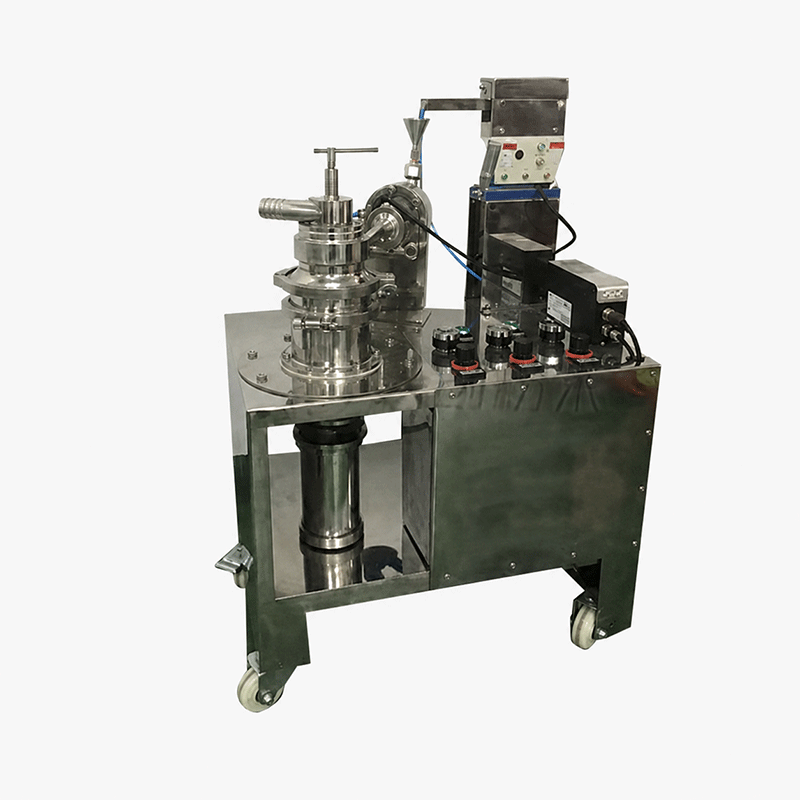
Critical Parameters That Affect Grinding Results
To get the best performance from a lab air jet mill, you need to understand and control several variables:
Gas Pressure
Higher gas pressure increases particle velocity and impact energy, leading to finer particles. However, excessive pressure can cause over-grinding, higher energy consumption, and increased wear. Typical operating pressures range from 5 to 10 bar, depending on the material and target size.
Feed Rate
If the feed rate is too high, particles do not have enough space to accelerate before colliding, reducing grinding efficiency. If it is too low, the mill may not utilize its full capacity. Finding the optimal feed rate is essential for consistent results.
Classifier Speed
In jet mills with a dynamic classifier, the rotor speed determines the cut size. Higher speeds retain larger particles inside the milling chamber, producing a finer product. The relationship is linear in many designs, allowing precise control.
Feed Particle Size
For best results, the feed material should be pre-ground to a size that can be easily fluidized. A typical upper limit is around 1–3 mm. Finer feeds (e.g., below 100 microns) tend to be more difficult to fluidize but can still be processed with appropriate gas flow design.
Gas Type
Compressed air is the most common grinding gas. For materials that are sensitive to moisture or oxygen, nitrogen or argon can be used. This also reduces the risk of oxidation or explosion in the case of flammable powders.
How to Choose a Lab Air Jet Mill for Your Research
Selecting the right laboratory air jet mill involves matching your material properties and research goals with the equipment's capabilities. Here are the key factors to consider:
Batch Size and Throughput
Lab jet mills typically handle sample quantities from a few grams to several kilograms per hour. If you work with very small amounts (e.g., 1–10 g), look for a model designed for micro-batches. For larger R&D or pilot studies, you may need a continuous feed system with a controlled feeder.
Material Hardness and Abrasiveness
Hard materials can cause rapid wear of nozzles and chamber liners. Check if the manufacturer offers wear-resistant options such as ceramic (alumina, zirconia, silicon carbide) or tungsten carbide. For most labs, stainless steel or nylon-lined chambers are sufficient for moderately hard materials.
Chemical Compatibility
If your material is corrosive or reacts with metals, the contact surfaces must be made of inert materials like PTFE, nylon, or certain ceramics. Ensure the gas seals and gaskets are also compatible.
Classification System
Some lab jet mills rely on centrifugal classification only (no moving parts), while others integrate a dynamic classifier rotor. The dynamic classifier allows finer control of the top size and a narrower distribution. For applications requiring a D50 below 5 microns, a dynamic classifier is usually preferred.
Explosion Protection
If you process flammable or explosive powders, the mill should be designed with explosion-proof features, such as burst discs, inert gas blanketing, and electrical components rated for hazardous zones. Always consult safety standards and conduct a risk assessment before grinding unknown materials.
Cleaning and Validation
For pharmaceutical and food applications, the equipment must be easy to clean between batches. Look for designs with no dead zones, easy disassembly (e.g., clamp connections instead of bolts), and surfaces that can be wiped or washed.
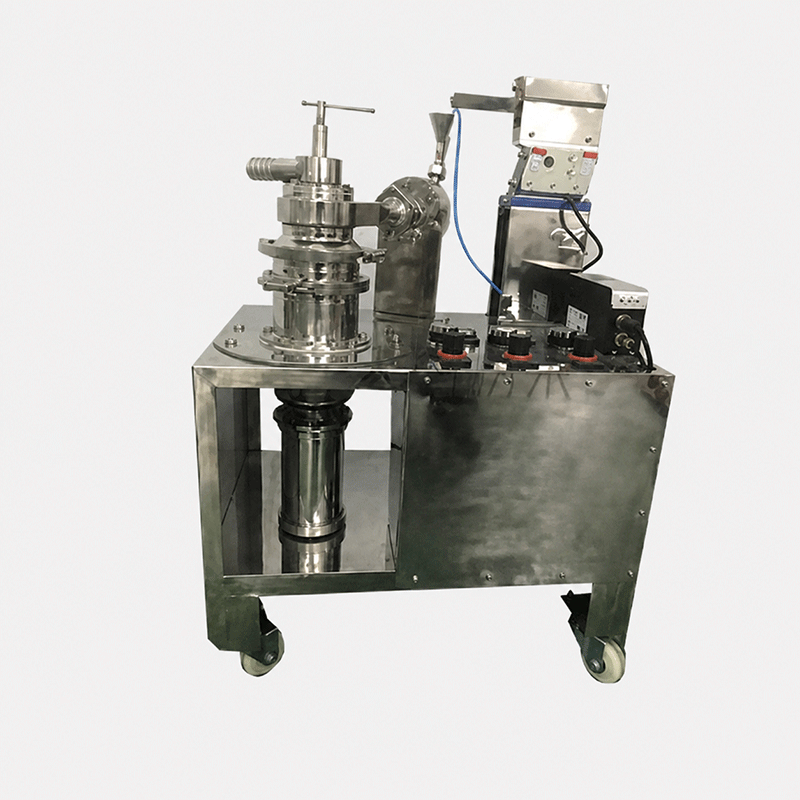
Practical Tips for Operating a Lab Air Jet Mill
- Dry your feed material thoroughly: Moisture can cause agglomeration and blockages in the feed system and classifier.
- Use a consistent feed rate: Manual feeding can lead to fluctuations; a screw feeder or vibratory feeder improves reproducibility.
- Monitor the gas pressure and flow: Install a pressure regulator and flow meter to maintain stable conditions.
- Collect the fines properly: Use a cyclone separator followed by a high-efficiency filter or a bag filter to capture the product. Inert gas systems may require a closed-loop design.
- Start with conservative parameters: Begin with moderate pressure and a low feed rate, then gradually increase to find the optimum for your material.
Conclusion
The lab air jet mill is a powerful tool for producing ultrafine, high-purity powders without the thermal and contamination issues of mechanical mills. By understanding its working principle, the influence of key parameters, and the selection criteria, you can make an informed decision for your laboratory. Whether you are working on pharmaceutical micronization, advanced ceramic development, or battery material research, a well-chosen lab air jet mill can significantly improve your powder processing capabilities.
If you need further assistance in selecting the right model or configuring the system for your specific application, feel free to reach out to our technical team. We can help you match the equipment to your material properties, batch size, and target particle size.