
How to Choose a Small Shredder for Laboratory and Light Industrial Use: A Practical Guide
Why You Need a Small Shredder in Your Lab or Workshop
If you work with materials like plastic scraps, rubber, paper, cardboard, light metals, or even household waste, you have likely faced the challenge of reducing their size before further processing. A small shredder is often the first piece of equipment in a size reduction line. It handles bulky or tough feed materials and turns them into smaller, more uniform chips that can then be fed into a ball mill, crusher, or granulator.
Unlike heavy‑duty industrial shredders designed for continuous high‑volume operation, a small shredder is built for flexibility. It fits on a bench or a compact frame, operates with lower power consumption, and can be easily moved between workstations. This makes it an ideal choice for research laboratories, small recycling workshops, universities, and pilot plants.
How a Small Shredder Works
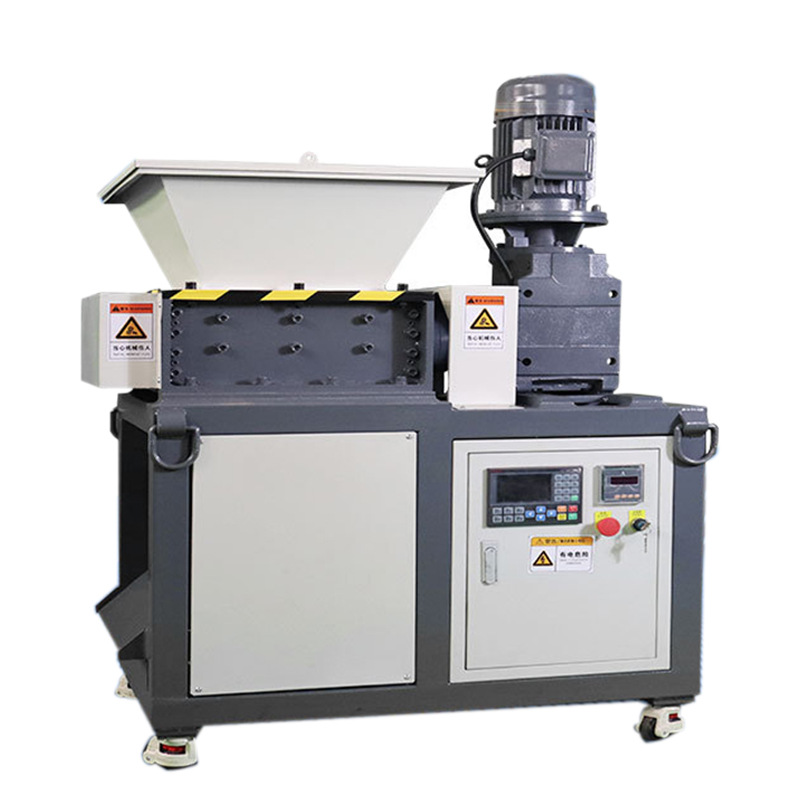
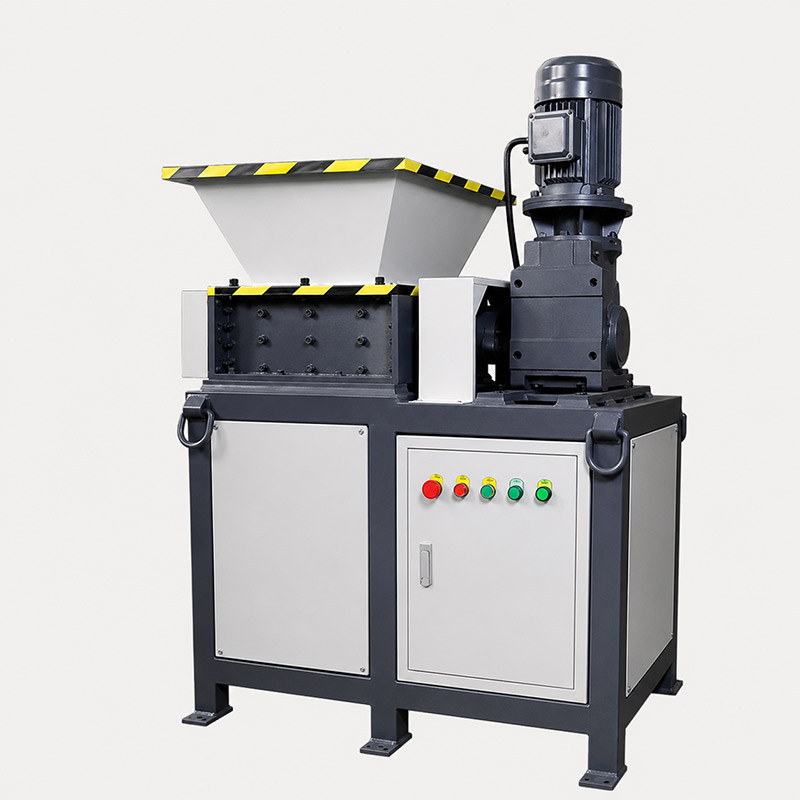
A small shredder typically uses two or more rotating shafts equipped with interlocking cutting blades. The shafts rotate at low speed but with high torque, grabbing the feed material and tearing it apart through shearing and tensile forces. This design allows the machine to handle a wide variety of materials, including those that are tough, fibrous, or have irregular shapes.
Key components include:
- Cutting blades – made from hardened alloy steel or tool steel, available in different tooth shapes and thicknesses for different applications.
- Shaft design – single‑shaft, double‑shaft, or four‑shaft configurations. For general laboratory use, a double‑shaft design offers a good balance of throughput and particle size control.
- Drive system – gear motor or direct drive with speed control, often with a reversing function to prevent jamming.
- Hopper and discharge chute – the feeding area and collection bin.
The output particle size depends on the blade gap, screen size (if a screen is fitted), and the number of shafts. Many small shredders allow you to change the screen or adjust the blade clearance to achieve the desired chip size.
What Materials Can a Small Shredder Process?
One of the main advantages of a shredder over a crusher is its ability to handle mixed, contaminated, or bulky feed. Common materials include:
- Plastics – PP, PE, PVC, ABS, nylon, PET bottles
- Rubber – tires (small), rubber hoses, gaskets
- Paper and cardboard – office paper, corrugated boxes
- Wood – pallets, branches, MDF offcuts
- Light metals – aluminum cans, thin steel drums
- Textiles – cloth, carpet, non‑woven fabrics
- Biomass – corn stalks, coconut shells, palm leaves
For laboratory applications, you may shred small batches of plastic waste before feeding them into a plastic crusher or directly into a ball mill for fine grinding. The shredder reduces the feed size from large chunks (e.g., 50–200 mm) to about 10–30 mm pieces, depending on the screen opening.
Key Factors to Consider When Choosing a Small Shredder
1. Material Hardness and Toughness
Hard and brittle materials (e.g., glass, minerals) are better handled by a jaw crusher or roll crusher, not a shredder. Shredders excel with ductile, fibrous, or heterogeneous materials. If you need to process both soft and hard materials, you may need a combination of a shredder and a crusher in your workflow.
2. Required Throughput and Particle Size
Small shredders typically process from a few kilograms per hour up to several hundred kilograms per hour. Determine your batch size and desired output particle size. For finer output, choose a model with a smaller screen (e.g., 10 mm or 6 mm). Remember that smaller screens reduce throughput and may cause plugging with sticky or wet materials.
3. Blade Material and Geometry
Blades wear out over time, especially when processing abrasive materials like filled plastics or rubber. Look for blades made of D2 tool steel, 9CrSi, or SKD‑11 with appropriate hardness (HRC 55‑60). The blade shape (hook‑type, claw‑type, or flat‑type) affects gripping efficiency and cutting action. For general lab use, a standard double‑hook blade works well for most materials.
4. Motor Power and Speed Control
Most small shredders use a 1.5 kW to 7.5 kW motor. For intermittent lab operation, 2.2 kW to 4 kW is sufficient. Variable frequency drive (VFD) allows you to adjust the shaft speed to match the material – slower for tough materials to increase torque, faster for soft materials to increase throughput. Reverse rotation helps clear jams automatically.
5. Safety Features
Laboratory environments require strict safety standards. Ensure the shredder has an emergency stop button, interlock switch on the hopper or door, and overload protection. Some models also include a noise enclosure to keep sound levels below 75 dB.
6. Ease of Cleaning and Maintenance
When switching between different materials, you need to clean the shredder thoroughly to avoid cross‑contamination. Look for a design with quick‑release blades, a movable screen frame, and smooth interior surfaces that are easy to wipe down. Some small shredders can be disassembled without tools.
Integrating a Small Shredder with Other Crushing Equipment
In many laboratory and pilot‑scale powder processing lines, the small shredder serves as a primary size reducer. The shredded chips then go to a secondary crusher for further reduction before milling. For example:
- Double Roll Crusher – ideal for hard, brittle materials after shredding
- Teeth Roll Crusher – handles sticky or wet feeds
- Lab Jaw Crusher – for reducing medium‑hard rocks and ores
Matching the shredder output size to the feed opening of the downstream crusher is critical. For instance, if your double roll crusher accepts a maximum feed of 20 mm, choose a shredder screen that produces chips ≤18 mm to prevent bridging.
Maintenance Tips for Long Service Life
- Inspect blades regularly for wear and re‑sharpen or replace them when the cutting edges become dull. Dull blades increase power consumption and produce fines.
- Lubricate bearings and drive chain (if applicable) as per the manufacturer’s schedule.
- Avoid feeding oversized or unshreddable items (e.g., stones, metal bars) that can damage the blades.
- Clean the shredder after each use, especially when processing corrosive or hygroscopic materials.
- Keep spare blades and screens in stock to minimize downtime.
Conclusion
A small shredder is a versatile and essential tool for any laboratory or small workshop that deals with size reduction of a wide range of materials. By understanding your material properties, throughput needs, and how the shredder fits into your overall crushing and milling process, you can select a model that delivers reliable performance and easy maintenance. Always choose a machine from a reputable supplier who can provide technical support, spare parts, and customization options to match your specific application.
If you are unsure which shredder configuration is right for your project, feel free to reach out to the engineering team at TENCAN (Changsha Tianchuang Powder Technology Co., Ltd.) for professional guidance based on your material samples and processing goals.