

Product features
Positive feed engagement
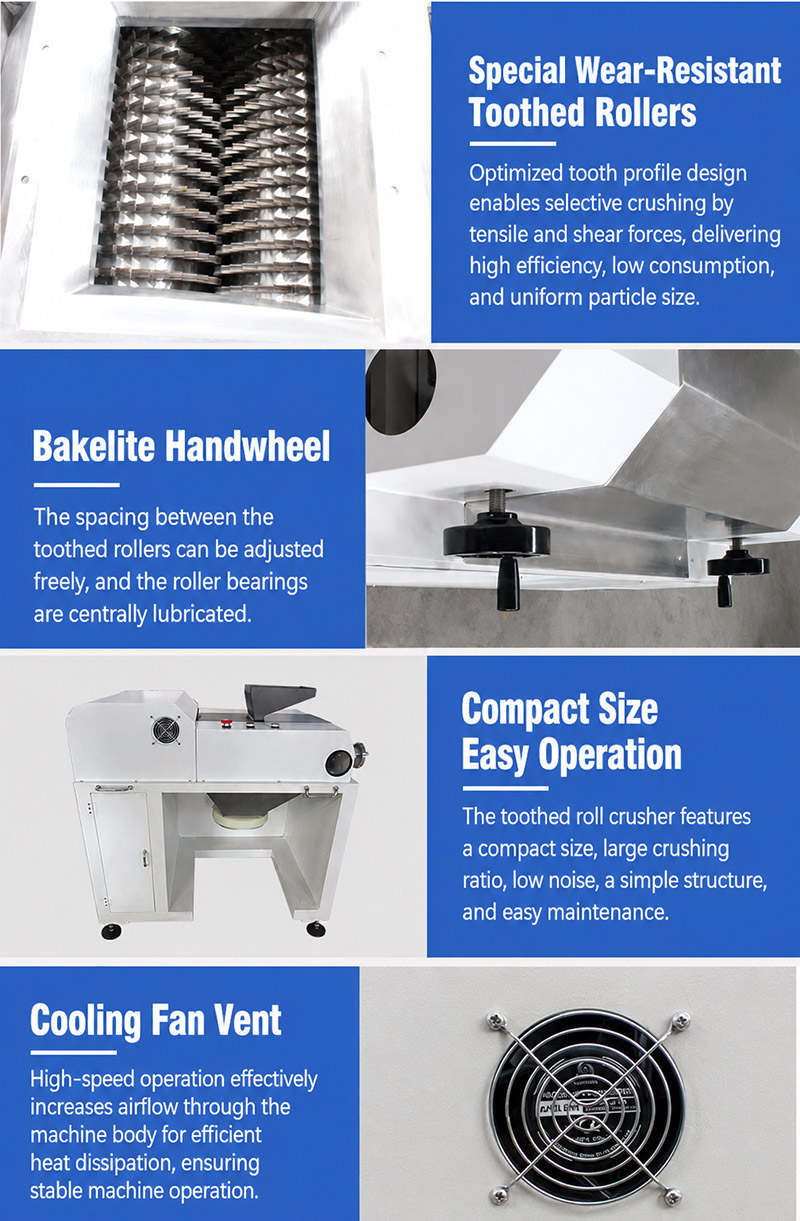
Toothed roll surfaces grip suitable feed and draw it into the crushing zone for progressive size reduction.
Adjustable roll gap
The separation between the rolls can be adjusted to suit the starting material and required discharge.
Selective crushing action
Tensile and shear forces act on coal and gangue; tooth profile and material properties influence the product.
Two roll-size choices
The listed roll dimensions provide different feed and capacity options. Select the size against representative material.
Applications
Coal preparation
Reduce raw coal before subsequent preparation or testing, with attention to gangue content and moisture.
Brittle mineral feed
Evaluate compatible brittle feed for metallurgical or mineral-processing preparation using the selected tooth arrangement.
Building-material samples
Prepare suitable raw materials for downstream handling, checking that feed hardness matches the selected crushing rolls.
Evaluating results
Discharge distribution
Sieve representative discharge samples to check the coarse fraction and fines produced at each gap setting.
Feed consistency
Compare output when feed size and moisture change; maintain a consistent feed rate during the trial.
Roll condition
Inspect tooth wear and retained material after the run before setting maintenance and cleaning intervals.
These are evaluation points for a sample trial, not measured results for a specific sample. Confirm performance under your actual operating conditions.
How it works
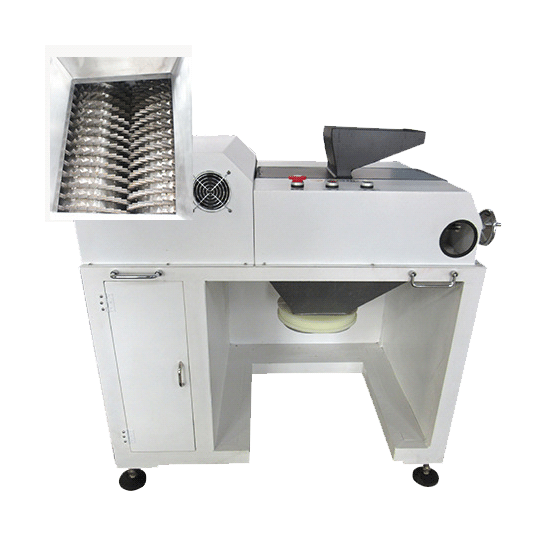
Meter the feed
Introduce material evenly across the available crushing width so the rolls do not carry uneven loads.
Engage and break
The opposing toothed rolls grip the feed and apply splitting, compression and shear forces.
Discharge through the gap
Broken material exits below the rolls; use measured discharge results to refine the gap and feed rate.
Construction and configuration
Toothed roll pair
Roll size and surface geometry should be selected for the actual coal or brittle material being processed.
Motor and transmission
The drive powers the roll mechanism; confirm the motor rating and electrical supply for the selected model.
Gap and overload mechanism
The adjustment and spring mechanisms form part of the crushing assembly and require inspection before operation.
More product images
Technical specifications
Compare the listed specifications and configurations. Scroll horizontally to view the complete table.
Specification table 1
| Tooth crusher/parameter introduction | ||
|---|---|---|
| Gear roller size | Φ300x300mm(5US304) | Φ300x500mm(5US304) |
| Roller speed | 52r/min | 52r/min |
| Feeding particle size | 10 mm~50 mm (according to material characteristics) Suitable for flaky, soft and crunchy materials | 10 mm~80 mm (according to material characteristics) Suitable for flaky, soft and crunchy materials |
| Discharge particle size | 0.5 mm~5 mm | 0.5 mm~5 mm |
| Production volume | 70-80 kg/H | 600 kg/H |
| Motor power | 1.5 kW | 3.0 kW |
| Overall dimensions | (660*800*930) reference size | (880*1020*1140) reference size |
| Equipment weight | To be determined | To be determined |
Confirm the selected model, power supply, contact materials and operating conditions before ordering. Performance depends on the material and process.