
Rotary Tube Furnace for Powder Sintering and Continuous Heat Treatment
What Is a Rotary Tube Furnace and Why Do You Need One?
If you work with powders that require uniform, continuous heating – such as catalyst calcination, battery material synthesis, ceramic sintering, or pigment treatment – you have likely encountered the limitations of batch furnaces. Static bed furnaces can result in uneven temperature distribution and inconsistent gas exposure, especially when processing thick powder layers. This is where a rotary tube furnace becomes valuable.
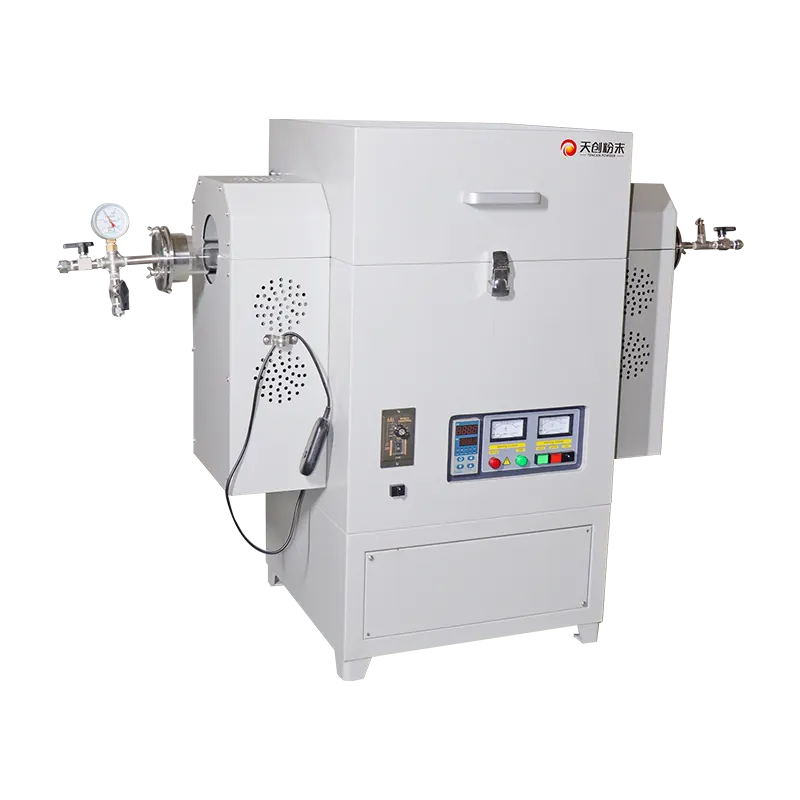
A rotary tube furnace, also known as a rotary calciner or rotary kiln, continuously rotates a cylindrical tube while heating the material inside. The constant tumbling motion keeps the powder bed in motion, ensuring each particle is exposed evenly to the heat and, if required, to a controlled atmosphere. This design significantly improves thermal uniformity and reaction efficiency compared to static heating methods.
How Does a Rotary Tube Furnace Work?
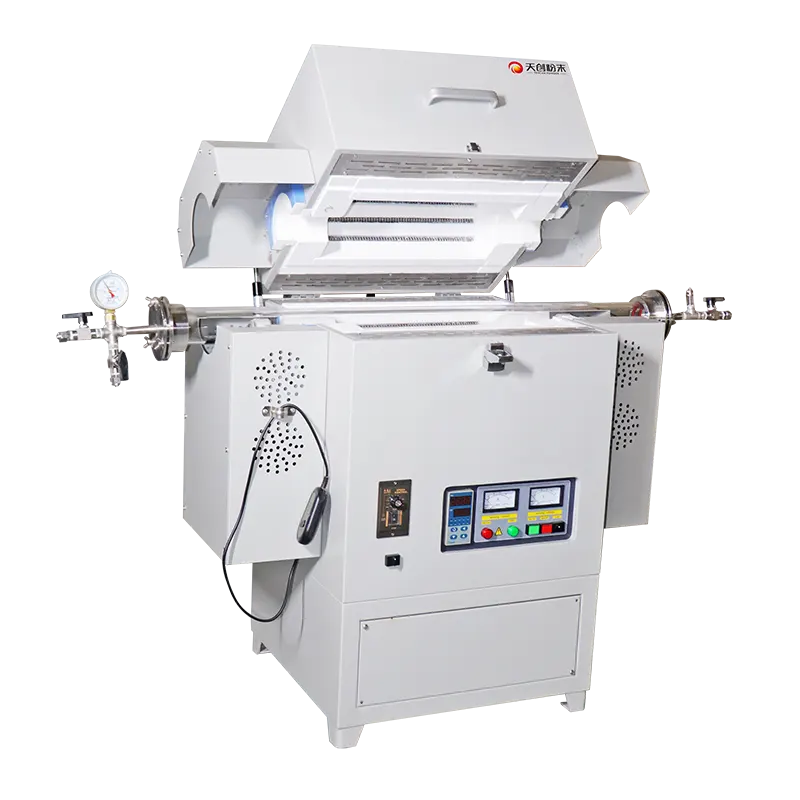
The core of the equipment is a horizontally or slightly inclined rotating tube made from a heat-resistant material such as quartz, alumina ceramics, or stainless steel. The tube is heated externally by electrical resistance elements – typically using molybdenum disilicide (MoSi2) or silicon carbide (SiC) heating elements – arranged along one or more heating zones. As the tube rotates, powder fed from one end moves gradually towards the discharge end due to the tube's gentle inclination and rotation. The rotation speed is adjustable, typically ranging from a few revolutions per minute (RPM) to tens of RPM, depending on the material residence time required.
Many laboratory rotary tube furnaces allow precise control over heating profile, rotation speed, gas flow (inert, reducing, or oxidizing), and even vacuum operation. The system often includes flanges and gas-tight seals at both ends to maintain a controlled atmosphere inside the tube. For applications requiring moisture or organic binder removal, a slow preheating section can be integrated to avoid thermal shock.
Key Components in a Rotary Tube Furnace
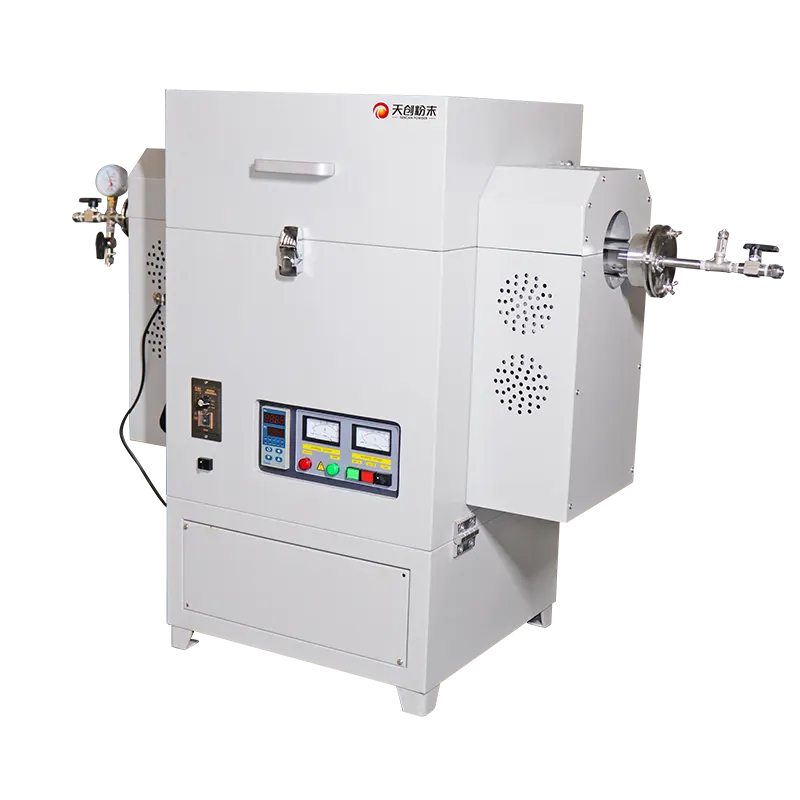
- Rotary tube – Material selection depends on maximum temperature and chemical compatibility. Quartz tubes are common up to ~1200°C; alumina ceramic tubes can reach ~1700°C; metal tubes (e.g., Inconel) are used for lower temperatures but better mechanical strength.
- Heating elements – Arranged around the tube to create a uniform temperature zone. Multiple heating zones allow programmable thermal profiles.
- Rotation drive – A motor with variable speed control to adjust residence time.
- Sealing system – High-temperature seals combined with water-cooled flanges maintain gas-tightness for inert or reactive atmospheres.
- Gas control system – Mass flow controllers (MFCs) for precise gas mixture delivery.
- Temperature controller – PID controller with programmable segments, often with over-temperature protection.
Applications of Rotary Tube Furnaces in Powder Processing
Rotary tube furnaces are used across many industries for continuous thermal treatment of particulate materials. Common applications include:
- Catalyst calcination – Removing volatile components and activating catalyst supports uniformly.
- Battery material synthesis – Calcination of lithium-ion battery cathode precursors (e.g., NCM, LFP) under controlled atmosphere.
- Ceramic sintering – Pre-sintering or full sintering of ceramic powders like zirconia, alumina, and ferrites.
- Pigment and pigment precursor treatment – Producing consistent color by controlled oxidation or reduction.
- Nanomaterial preparation – Thermal decomposition or reduction of metal salts to produce nanoparticles.
- Waste treatment – Pyrolysis or gasification of granular waste materials.
Because the material is constantly moving, the rotary tube furnace is especially suitable for processes that require rapid and uniform gas-solid contact, such as reduction of metal oxides under hydrogen atmosphere or oxidation of sulfides.
How to Select a Rotary Tube Furnace for Your Process
Choosing the right rotary tube furnace involves several technical considerations. Here are the key factors you should evaluate:
1. Temperature Requirements
Determine the maximum process temperature and the required heating rate. For example, if your calcination step needs 1400°C, you will need a ceramic tube (alumina) with MoSi2 heating elements. For temperatures below 1200°C, a quartz tube with SiC elements may be sufficient. Always include a safety margin: choose a furnace rated at least 50–100°C above your operating temperature.
2. Tube Material and Diameter
The tube material must withstand both the temperature and the chemical environment. For acidic or alkaline atmospheres, alumina ceramic is often preferred. For processes requiring rapid thermal cycling, quartz offers better thermal shock resistance but lower maximum temperature. The tube diameter directly affects feed rate: larger diameters allow higher throughput but require more powerful heating and longer heating zones.
3. Residence Time and Rotation Speed
The residence time of powder in the furnace is controlled by the tube length, diameter, inclination angle, and rotation speed. For laboratory work, you may need a system that allows quick changes in these parameters. Typically, the rotation speed range is 1–20 RPM, and the inclination angle is 1–5 degrees. A variable speed motor is essential for process optimization.
4. Atmosphere Control
If your process requires inert gas (argon, nitrogen), reducing gas (hydrogen, forming gas), or oxidizing gas (air, oxygen), the furnace must have gas-tight seals and a suitable gas control system. For extremely oxygen-sensitive materials, vacuum capability may be necessary before introducing the desired atmosphere. Many rotary tube furnaces allow both vacuum (down to 10⁻¹ Pa) and positive pressure operation.
5. Feeding and Collection Systems
Continuous feeding can be done via a screw feeder, vibratory feeder, or manual batch feeding for small-scale tests. The collection system at the discharge end must prevent re-exposure to air if the product is pyrophoric. Consider adding a cooling section after the heating zone to cool the product before collection.
Laboratory vs. Production Rotary Tube Furnaces
For R&D and pilot testing, compact benchtop models are commonly used. These typically have tube diameters from 25–100 mm and heating zone lengths of 200–600 mm. They are designed for flexibility: quick tube replacement, easy cleaning, and programmable temperature profiles. For production, larger models with diameters up to 300 mm or more are available, often with multiple heating zones and automated feeding systems.
When scaling up, pay attention to heat transfer efficiency. In larger tubes, the center of the powder bed may not reach the same temperature as the outer layer, despite rotation. In such cases, using a smaller tube diameter or increasing rotation speed can help. It is wise to conduct lab-scale experiments first to determine the optimal parameters before committing to a large furnace.
Common Challenges and How to Address Them
- Powder sticking to tube wall – This can happen with sticky or low-melting-point materials. Solutions include using a tube with a smooth inner coating, reducing rotation speed, or using a slight inclination to reduce residence time.
- Temperature gradient along the tube – Ensure the furnace has multiple independent heating zones and use a calibration run with a dummy thermocouple inserted into the tube.
- Gas leakage – Regularly check seals and O-rings; use water-cooled flanges to protect seals from high temperature.
- Tube breakage – Avoid rapid heating or cooling; always use a controlled ramp rate. For quartz tubes, do not exceed the recommended maximum operating temperature.
Technical Considerations Before Requesting a Quote
When you approach a manufacturer like TENCAN for a rotary tube furnace, having the following information ready will help them recommend the most suitable configuration:
- Material type, composition, and feed particle size
- Maximum process temperature and required heating rate
- Desired throughput (g/h or kg/h)
- Required atmosphere (gas type, purity, flow rate)
- Vacuum requirement (if any)
- Tube material preference (quartz, alumina, metal)
- Number of heating zones needed
- Local voltage and frequency (e.g., 220V/50Hz or 110V/60Hz)
- Space constraints (benchtop or floor-standing)
Conclusion
A rotary tube furnace is an essential tool for continuous powder heat treatment, offering uniform thermal exposure, excellent gas-solid contact, and scalability from laboratory to production. By understanding the operating principles and carefully selecting the tube material, temperature range, atmosphere control, and feeding mechanism, you can achieve consistent and high-quality results. Whether you are developing new battery materials, calcining catalysts, or sintering advanced ceramics, a properly configured rotary tube furnace can significantly improve your process efficiency and product uniformity.
For more detailed information on specific models and configurations, you can explore the Rotary Tube Furnace product page or consult with TENCAN's technical team for customized solutions.