
Corundum Planetary Mill Jar: High-Purity Alumina Grinding Vessel for Contamination-Sensitive Applications
Why the Grinding Jar Material Matters More Than You Think
When you work with a planetary ball mill, the grinding jar is not just a container. It is the primary interface between your sample and the milling energy. The jar material directly influences two critical outcomes: the level of contamination introduced into your powder and the efficiency of particle size reduction. For many researchers, especially those working on high-purity ceramics, battery materials, or advanced catalysts, even trace amounts of foreign elements can ruin an experiment or compromise a product.
This is where the corundum planetary mill jar comes into its own. Made from high-purity alumina (aluminum oxide, Al₂O₃), corundum jars offer a unique combination of extreme hardness, excellent wear resistance, and outstanding chemical inertness. They are one of the most popular choices for grinding materials that must avoid metallic contamination, such as white ceramics, oxide powders, and certain pharmaceutical compounds.
If you are looking for a grinding vessel that balances purity, durability, and cost-effectiveness, the corundum jar is likely the right starting point. Let us explore what makes it so effective, how it compares to other jar materials, and how to choose the right one for your specific application.
What Is a Corundum Planetary Mill Jar?
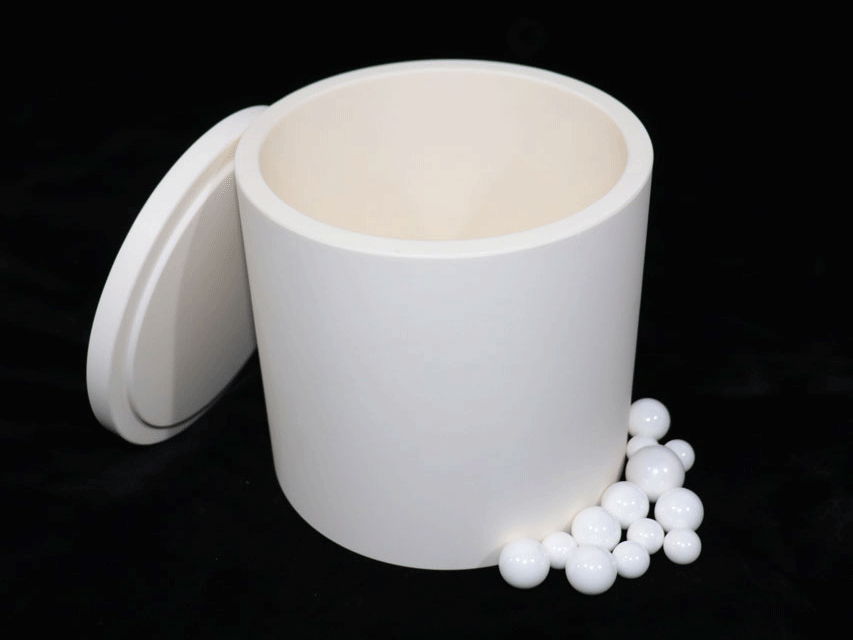
A corundum planetary mill jar is a cylindrical grinding vessel made from sintered, high-purity corundum (alumina). Corundum is a crystalline form of aluminum oxide, well known for its hardness—second only to diamond in the natural mineral world. In the context of laboratory ball milling, the jar is designed to withstand the high-energy impacts and frictional forces generated by the planetary motion of the mill.
These jars typically contain over 99% Al₂O₃, with some grades reaching 99.7% or higher purity. The high alumina content ensures minimal leaching of ions into the sample during grinding, even under acidic or alkaline conditions. The inner surface of the jar is dense and smooth, which reduces powder adhesion and makes cleaning between batches easier.
Key Properties of Corundum Grinding Jars
- Extreme Hardness: Mohs hardness of 9, making it highly resistant to abrasion and wear. This extends the jar's service life and reduces contamination from the jar wall itself.
- Chemical Inertness: Resistant to most acids, alkalis, and organic solvents. It will not react with common oxide materials, carbonates, or many inorganic compounds.
- Low Wear Rate: In typical dry grinding operations, the weight loss from a corundum jar is very low, often less than 0.1% per batch, depending on the material and milling conditions.
- High Temperature Stability: Corundum can withstand high temperatures generated during prolonged milling (though the jar itself should not be used as a sintering vessel).
- Non-Magnetic: No magnetic interference, which is important for certain analytical measurements.
Applications Where Corundum Jars Excel
Corundum jars are widely used across many fields in laboratory and small-scale production. The following are some of the most common applications:
1. Ceramic and Oxide Powder Processing
When grinding alumina, zirconia, silica, titania, or other oxide ceramics, using a corundum jar ensures that the jar material is chemically compatible with the sample. Any minor wear particles that do enter the powder will be alumina, which is often acceptable or even desirable in ceramic formulations. This avoids the problem of metallic contamination that can discolor or alter the sintering behavior of white ceramics.
2. Mineral and Geological Sample Preparation
Many rock, mineral, and sediment samples require size reduction before X-ray diffraction (XRD), X-ray fluorescence (XRF), or other analysis. Corundum jars are preferred for samples where iron, chromium, or other metallic elements must be kept to a minimum, as stainless steel jars would introduce those elements.
3. Pharmaceutical and Fine Chemical Milling
For active pharmaceutical ingredients (APIs) or high-purity chemical intermediates, contamination control is paramount. Corundum jars offer a clean grinding environment that meets the purity requirements of many pharmaceutical processes.
4. Catalyst and Battery Material Synthesis
In the preparation of catalysts, solid-state electrolytes, or cathode precursors, the introduction of metal impurities can poison catalytic activity or degrade battery performance. Corundum jars provide a safe grinding environment for these sensitive materials.
How to Choose the Right Corundum Jar for Your Planetary Ball Mill
Selecting the correct corundum planetary mill jar involves matching several factors to your specific experimental needs. Below are the most important considerations.
Jar Capacity and Shape
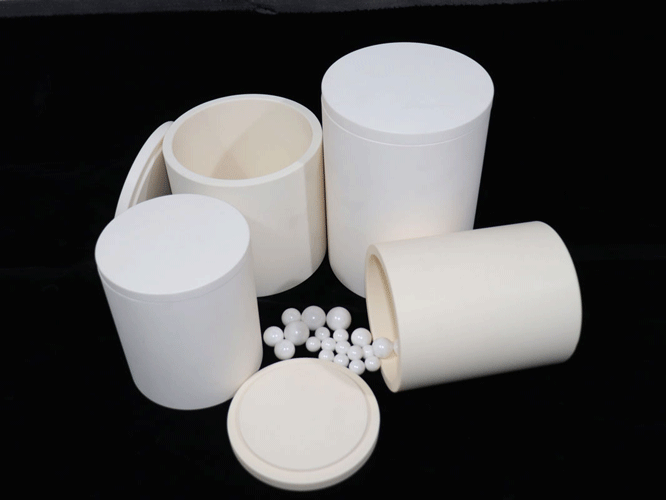
Corundum jars are available in various volumes, typically from 50 mL up to 500 mL or more. The choice depends on the sample quantity per batch. As a general guideline, the grinding media should occupy about one-third of the jar volume, and the sample plus grinding balls should not exceed two-thirds of the jar's total capacity. For example, a 250 mL jar can effectively process around 50–80 mL of material when filled with balls and powder.
Jars come in cylindrical or square cross-section shapes. Cylindrical jars are the most common and offer uniform wear. Square jars (sometimes called "square planetary mill jars") can provide additional shearing action due to the geometry, but are less widely used.
Purity Grade
Standard corundum jars typically contain 95–99% Al₂O₃. For applications requiring the highest purity, A-grade corundum jars with ≥99.7% Al₂O₃ are available. The higher purity grade reduces the risk of contamination from trace impurities like silica, iron oxide, or magnesia that may be present in lower-grade alumina. If you are working on ultra-high-purity materials, invest in the A-grade option.
Compatibility with Grinding Media
Corundum jars are typically used with corundum grinding balls made of the same material to match the chemical composition and hardness. This pairing minimizes cross-contamination. However, you can also use yttria-stabilized zirconia (YSZ) balls or agate balls if your application can tolerate trace amounts of those materials. Avoid using steel balls in a corundum jar, as the hard steel can damage the jar surface and introduce iron contamination.
Sealing and Gasket Options
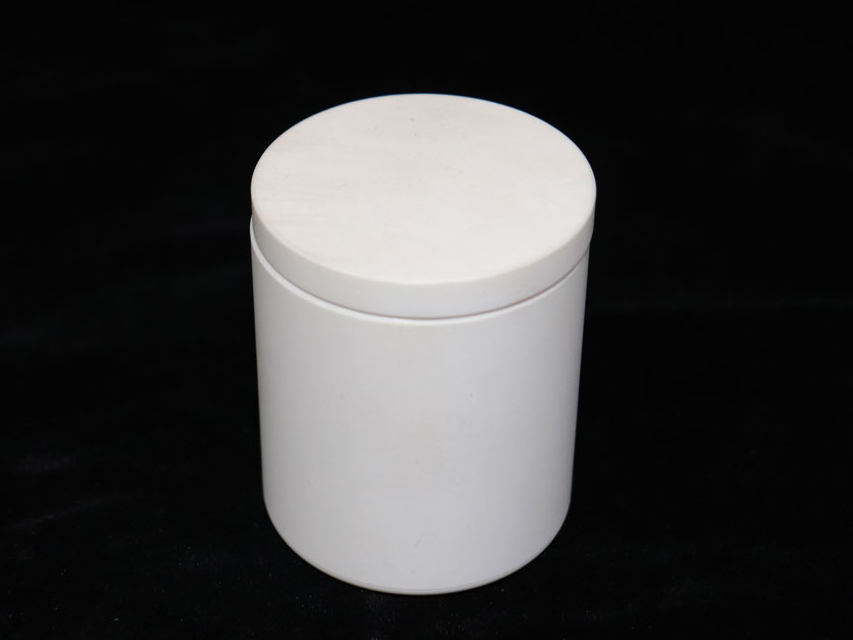
Standard corundum jars come with a flat lid and a sealing gasket (often silicone or PTFE). For wet grinding or when working with volatile solvents, a leak-proof seal is essential. Some corundum jars can be equipped with a vacuum adapter to enable grinding under inert gas or vacuum conditions, protecting air-sensitive materials from oxidation or moisture absorption.
Comparing Corundum Jars with Other Popular Jar Materials
To help you understand where corundum stands, here is a brief comparison with other common planetary mill jar materials:
| Material | Hardness (Mohs) | Wear Resistance | Chemical Inertness | Contamination Risk | Typical Applications |
|---|---|---|---|---|---|
| Corundum (Al₂O₃) | 9 | Excellent | Excellent | Very low (alumina) | Ceramics, oxides, minerals, pharmaceuticals |
| Zirconia (ZrO₂) | 8.5 | Excellent | Good | Very low (zirconia) | High-hardness materials, fine grinding, nano milling |
| Agate (SiO₂) | 7 | Good | Excellent | Very low (silica) | XRD/XRF sample prep, soft to medium-hard materials |
| 304 Stainless Steel | ~5 | Moderate | Moderate | Moderate (Fe, Cr, Ni) | Hard materials, brittle materials, mechanical alloying |
| Tungsten Carbide | 9+ | Extreme | Poor (oxidizes) | High (W, Co) | Ultra-hard materials, diamond composites |
As the table shows, corundum offers a balanced combination of high hardness, excellent chemical inertness, and very low contamination risk—at a more affordable price than zirconia or tungsten carbide. For most oxide and ceramic grinding tasks, it is the default choice.
Practical Tips for Using Corundum Jars
1. Avoid Overloading
Never fill the jar more than two-thirds full. Overloading reduces the movement of grinding balls and decreases milling efficiency. It can also put excessive stress on the jar and the mill's driving mechanism.
2. Match Ball Size to Feed Stock
For coarse particles (e.g., >1 mm), use larger balls (10–20 mm diameter) to provide impact force. For fine grinding, use smaller balls (1–5 mm) to increase the number of contact points. A combination of different sizes often works best.
3. Use the Correct Ball-to-Powder Ratio
In many lab applications, a ball-to-powder weight ratio between 5:1 and 10:1 is common. For harder materials or when aiming for very fine particles, a ratio of 15:1 or 20:1 may be needed. Always start with a lower ratio and adjust based on the results.
4. Clean the Jar Thoroughly Between Batches
Residual powder from a previous batch can cross-contaminate the next sample. Clean the corundum jar with the same solvent used in the process (if wet grinding) or by milling a small amount of clean silica sand or alumina powder to remove residues. Then rinse with deionized water and dry.
5. Monitor Temperature for Heat-Sensitive Materials
Corundum has good thermal conductivity, but prolonged milling can still generate significant heat inside the jar. For materials that degrade or react at moderate temperatures, use an intermittent milling program (e.g., 10 minutes on, 5 minutes off) to allow cooling.
When Should You Consider an Alternative to Corundum?
Despite its many advantages, corundum is not the best choice for every application. Here are some cases where you might want to look at other jar materials:
- Very hard materials (e.g., silicon carbide, boron carbide, diamond): A tungsten carbide jar will be more wear-resistant and can handle the impact without excessive wear.
- Mechanical alloying of metals: Stainless steel or hardened steel jars are often used because they can withstand high-energy impacts without fracturing, and the iron contamination is sometimes tolerable in metallurgical applications.
- Highly acidic or alkaline slurries: While corundum is chemically resistant to most acids, it can be attacked by hydrofluoric acid (HF) or strong hot alkalis. In such cases, a PTFE jar or agate jar may be safer.
- Extreme purity requirements where even alumina is unacceptable: For example, when preparing samples for trace element analysis, agate (silica) jars are often preferred because silicon is less likely to interfere with the analysis of aluminum, iron, or other elements.
Making the Right Choice for Your Laboratory
Choosing the correct corundum planetary mill jar is a matter of understanding your material's chemistry, your target particle size, and your contamination tolerance. At TENCAN, we offer a full range of corundum jars in various sizes and purity grades, along with matching corundum grinding balls and comprehensive technical support. Our engineers can help you select the right jar based on the following information:
- Material composition and hardness
- Initial particle size range
- Target final particle size
- Sample quantity per batch
- Dry or wet grinding
- Any special requirements (vacuum, inert gas, temperature control)
- Local voltage and frequency (if you need a new planetary ball mill)
We also provide corundum planetary mill jars for direct purchase, along with a wide selection of alternative jar materials such as zirconia jars, agate jars, and 304 stainless steel jars. If you are unsure which jar is best for your specific material, feel free to contact us with your process details. We will provide a recommendation based on real-world experience, not just a catalog.