
How to Control Oxygen and Moisture in an Inert Atmosphere Glove Box
How to Control Oxygen and Moisture Levels in an Inert Atmosphere Glove Box
For oxygen-sensitive and moisture-sensitive materials, simply filling a glove box with nitrogen or argon is not enough. A stable inert atmosphere depends on a complete control loop that combines initial gas replacement, continuous gas circulation, oxygen and moisture purification, pressure control, controlled material transfer, real-time monitoring and purifier regeneration.
This is especially important in battery research, new-energy materials, organometallic chemistry, semiconductor processing, high-purity powder handling and other laboratory workflows where even small amounts of air or water vapor can alter material behavior or reduce experimental repeatability.
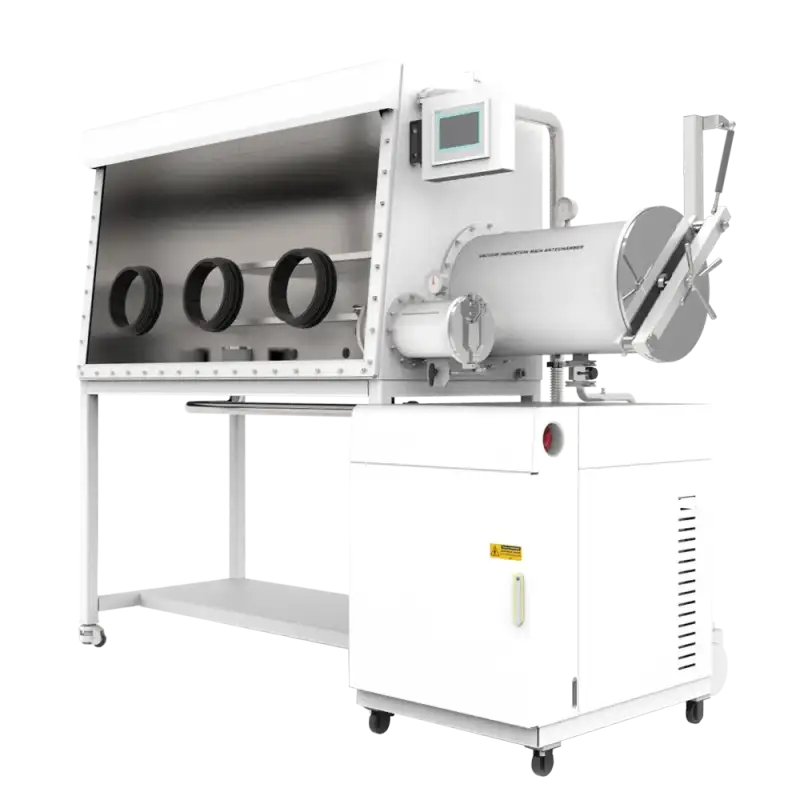
Quick answer: A purification glove box controls oxygen and moisture by continuously circulating the internal inert gas through a purification system while monitoring O2, H2O and chamber pressure. TENCAN's GBP glove box with purification system specifies water content ≤1 ppm and oxygen content ≤1 ppm under standard conditions. Actual operating stability depends on system condition, gas quality, transfer procedures, material load and maintenance.
Why Oxygen and Moisture Control Matters
In an inert-atmosphere workflow, the goal is not only to reach a low reading once. The more important requirement is to maintain a stable atmosphere while users transfer materials, operate equipment and perform experiments. Oxygen and moisture can enter or rise for several different reasons, including leaks, wet tools, insufficient antechamber cycling, exhausted purification media, contaminated process materials or poor pressure control.
Stable oxygen and moisture control helps laboratories:
- Protect air-sensitive materials from oxidation, hydrolysis or moisture uptake.
- Improve experimental repeatability by keeping environmental conditions consistent between batches.
- Protect sensitive processes such as battery-material preparation, electrolyte handling and high-purity powder processing.
- Reduce unnecessary gas consumption by relying on circulation and purification rather than continuous high-volume flushing.
- Detect process problems earlier through continuous oxygen, moisture and pressure monitoring.
The Core Control Loop: Purge → Purify → Circulate → Monitor → Regenerate
A modern purification glove box maintains its atmosphere through a closed-loop process. Understanding this loop is the easiest way to diagnose rising oxygen or moisture levels.
- Initial gas replacement: Ambient air in the main chamber is displaced with high-purity inert gas before normal operation.
- Gas circulation: A circulation blower continuously moves chamber gas through the purification circuit.
- Oxygen and moisture removal: Purification media remove residual O2 and H2O from the circulating gas.
- Real-time monitoring: Oxygen and moisture analyzers track atmosphere quality while the pressure system monitors chamber pressure.
- Automatic or manual correction: Gas replacement, purification and pressure functions are adjusted when the atmosphere deviates from its target range.
- Purifier regeneration: When purification capacity declines, the purification material is regenerated according to the system procedure.
How Oxygen Is Controlled in a Glove Box
1. Replace the Initial Air with Inert Gas
Before the purification loop can bring oxygen down to a low level, most of the air inside the chamber must first be removed or displaced. The TENCAN GBP system supports manual or automatic gas replacement for the main chamber.
2. Continuously Circulate Gas Through the Purifier
Once the chamber contains mainly inert gas, continuous circulation carries the remaining oxygen through the purification column. This is what allows the system to move from a broadly inert environment to a controlled low-ppm environment.
3. Maintain Controlled Chamber Pressure
A glove box should not rely on purification alone. Stable pressure control helps reduce uncontrolled air ingress through seals, gloves, ports or transfer interfaces. Large and unnecessary pressure fluctuations should be avoided because they can disturb chamber stability.
4. Find the Source When Oxygen Rises
If oxygen increases while moisture remains relatively stable, check for air ingress first. Common areas to inspect include gloves, door seals, feedthroughs, antechamber doors, process connections and recent operating procedures.
How Moisture Is Controlled in a Glove Box
1. Use Dry Inert Gas
The supplied nitrogen or argon should be sufficiently dry for the target process. Introducing wet gas forces the purifier to remove unnecessary moisture and can shorten the useful interval between regeneration cycles.
2. Remove Water Vapor Through the Purification System
During circulation, the purification system continuously removes water vapor from the gas stream. TENCAN's GBP product configuration includes a purification column designed for both water and oxygen removal.
3. Control Moisture Introduced by Materials and Tools
Moisture often enters the glove box through the load rather than through a mechanical leak. Paper, porous materials, polymer packaging, recently washed glassware, powder containers and other hygroscopic items can release water vapor after transfer.
Whenever practical, dry tools, containers and process materials appropriately before introducing them into the glove box. The drying method should always be compatible with the material being handled.
4. Use the Antechamber Correctly
The antechamber is the main transfer barrier between the laboratory atmosphere and the purified working chamber. Before opening the inner door, the antechamber must undergo the required evacuation and/or inert-gas replacement procedure. TENCAN's GBP system supports manual or automatic gas replacement for the transition chamber.
What Does “≤1 ppm O2 and H2O” Mean?
A ppm value describes the concentration of a trace component in the glove-box atmosphere. For the TENCAN GBP glove box with purification system, the published technical parameters specify water content ≤1 ppm and oxygen content ≤1 ppm under standard conditions.
This number should not be treated as a universal atmosphere requirement for every application. The correct target depends on the sensitivity of the material and the process. Some experiments may tolerate higher oxygen or moisture levels, while highly reactive systems may require stricter internal specifications and more rigorous operating procedures.
Important: Do not choose a glove box only by the lowest advertised ppm value. Atmosphere recovery after material transfer, leak tightness, purification capacity, analyzer performance, regeneration method, antechamber size and day-to-day operating workflow are equally important.
Key Components That Keep Oxygen and Moisture Low
| Component | Main Function | What to Watch |
|---|---|---|
| Purification column | Removes oxygen and water from circulating inert gas. | Purification capacity, regeneration status and process contamination. |
| Circulation blower | Moves chamber gas through the purification loop. | Blocked filters, restricted pipelines and abnormal circulation. |
| Oxygen analyzer | Continuously monitors O2 concentration. | Calibration, contamination and response to atmosphere changes. |
| Moisture analyzer | Continuously monitors water-vapor concentration. | Sensor condition and slow moisture release from recently transferred items. |
| Pressure-control system | Maintains a controlled chamber pressure and compensates for glove movement. | Unexpected pressure fluctuations and excessive gas replenishment. |
| Antechamber | Transfers materials without directly opening the working chamber to ambient air. | Incomplete evacuation/purge cycles, door sealing and wet loads. |
TENCAN GBP Glove Box Atmosphere-Control Features
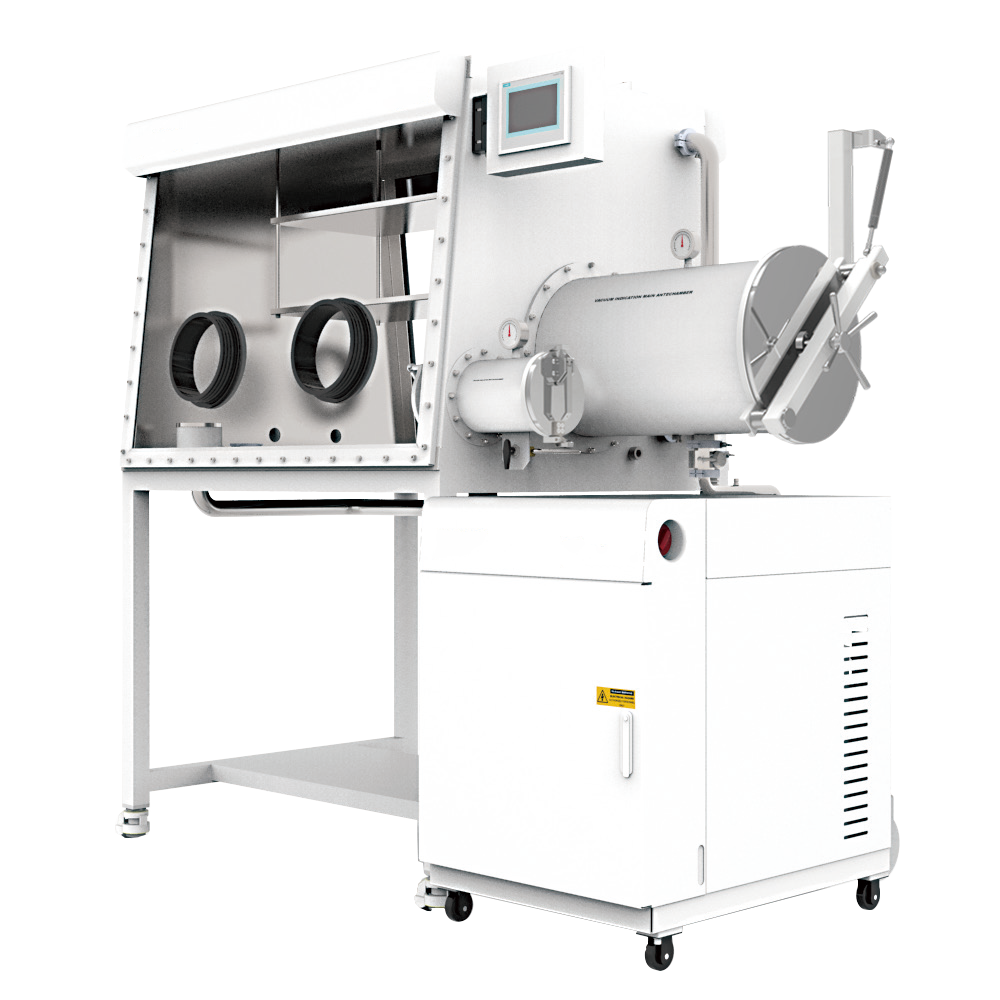
According to the current TENCAN product specification, the GBP glove box with purification system combines atmosphere purification, automatic control and online monitoring in one integrated system.
| Function / Parameter | Published Configuration |
|---|---|
| Water content | ≤1 ppm under standard conditions |
| Oxygen content | ≤1 ppm under standard conditions |
| Main chamber gas replacement | Manual / automatic |
| Transition chamber gas replacement | Manual / automatic |
| Gas purification control | Automatic or manual operation |
| Purification-system regeneration | System-supported automatic regeneration process |
| Data logging | Operating parameters can be recorded for monitoring and traceability |
| Oxygen monitoring range | 0–1000 ppm; displayed on the touch screen |
| Moisture monitoring range | 0–1000 ppm; displayed on the touch screen |
Best Practices for Maintaining Stable Low-ppm Conditions
Before Starting Work
- Confirm that oxygen and moisture readings are stable before opening process containers.
- Check glove condition, antechamber doors, seals and frequently used feedthroughs.
- Prepare dry, clean tools and containers before transfer.
- Confirm that the inert-gas supply is available and suitable for the process.
During Material Transfer
- Do not open the inner antechamber door until the required transfer cycle is complete.
- Avoid transferring unnecessary packaging or porous materials into the working chamber.
- Watch O2 and H2O trends after each transfer rather than relying on one instantaneous reading.
- Allow the atmosphere to recover before beginning highly sensitive operations.
During Normal Operation
- Keep gas circulation and purification operating according to the process requirement.
- Avoid unnecessary opening of transfer doors.
- Watch pressure behavior during frequent glove movement.
- Use data records to identify gradual changes rather than waiting for a large ppm excursion.
After Operation
- Remove waste or solvent-containing materials according to the laboratory procedure.
- Check whether the atmosphere returns to its normal baseline.
- Schedule purifier regeneration or maintenance when recovery becomes noticeably slower.
Common Causes of Rising Oxygen or Moisture
| Symptom | Likely Causes | First Checks |
|---|---|---|
| Oxygen rises quickly | Air leak, damaged glove, door/seal problem, incomplete antechamber cycle. | Inspect gloves, door seals, ports and recent transfer steps. |
| Moisture rises quickly | Wet tools, hygroscopic materials, wet containers, moist inert gas. | Review recently introduced items and gas supply condition. |
| Both O2 and H2O rise | Air ingress, poor transfer procedure, circulation or purification problem. | Check seals, antechamber procedure, circulation status and purifier condition. |
| Slow recovery after transfer | Large contamination load, insufficient transfer cycle, reduced purification capacity. | Review transfer load, purge/evacuation procedure and regeneration status. |
| Unstable readings | Sensor contamination, calibration issue, rapid pressure changes or process vapor. | Check analyzer condition, calibration procedure and recent process changes. |
| Stable but higher-than-normal baseline | Purifier approaching regeneration, persistent moisture load, small leak or contaminated chamber surfaces. | Review historical data, purifier status and recent materials introduced. |
When Should the Purification System Be Regenerated?
Purifier regeneration should be based on the equipment procedure and actual atmosphere performance rather than an arbitrary calendar interval. Possible signs that the purification system needs attention include:
- Oxygen or moisture takes progressively longer to recover after similar transfers.
- The normal baseline becomes more difficult to maintain even when operating procedures have not changed.
- The purification system reaches the regeneration condition defined by the equipment control system.
- A significant contamination event has placed an unusually high load on the purifier.
The TENCAN GBP system includes a purifier-restoration function designed to carry out the regeneration process automatically once the required regeneration conditions are set.
Applications That Benefit from Controlled Inert Atmospheres
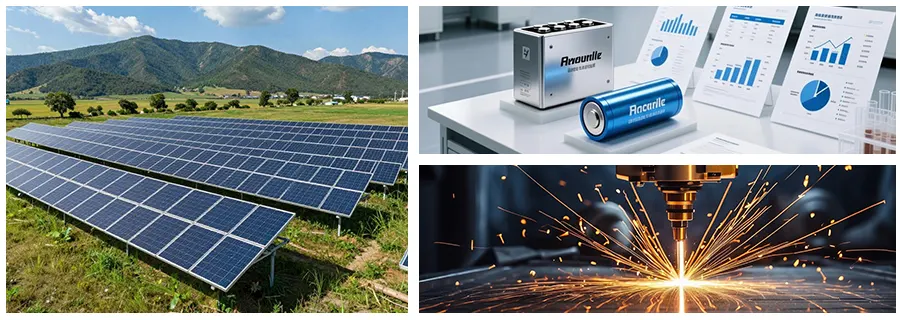
TENCAN lists purification glove boxes for a broad range of oxygen-sensitive, moisture-sensitive and clean-environment applications, including battery and new-energy material research, solar-cell work, OLED research, supercapacitors, welding, fine chemicals and other high-purity laboratory processes.
How to Choose a Glove Box for Oxygen- and Moisture-Sensitive Work
Instead of comparing glove boxes only by chamber size or nominal ppm level, define the complete operating requirement before selecting a model.
- Required atmosphere: What oxygen and moisture level does the material actually require?
- Working gas: Will the process use argon, nitrogen or another controlled gas?
- Chamber size and glove positions: How many users, instruments and process steps must fit inside the chamber?
- Material-transfer volume: Select an antechamber that can accommodate the containers and equipment you transfer regularly.
- Purification load: Consider how often materials are transferred and whether the process releases moisture, oxygen-containing vapors or solvents.
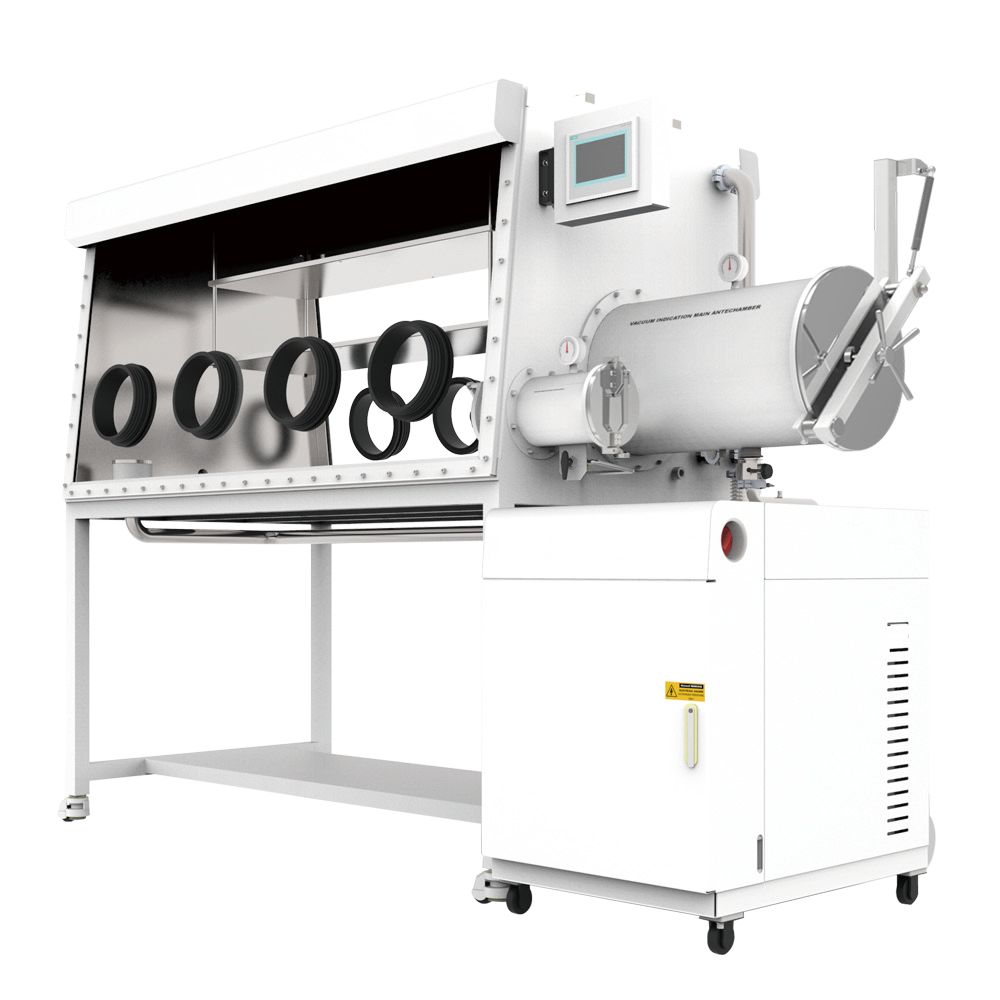
- Internal equipment: Define power sockets, feedthroughs, vacuum connections, gas/liquid ports and any ball mill, furnace or analytical instrument that must operate inside.
- Data and control requirements: Decide whether you need automatic gas replacement, data logging, remote service or other monitoring functions.
Integrating Other Laboratory Equipment with a Glove Box
For battery materials, reactive powders and other atmosphere-sensitive samples, the glove box is often only one part of a larger process. Researchers may also need to weigh powders, mix materials, grind samples, press pellets or connect analytical equipment without exposing the material to ambient air.
Before placing powered equipment inside a glove box, evaluate its size, heat output, electrical requirements, vacuum or gas connections, moving parts and compatibility with the chamber atmosphere. Transfer-chamber dimensions and internal access are especially important when integrating compact laboratory ball mills or other sample-preparation equipment.
FAQ: Oxygen and Moisture Control in a Glove Box
How does a glove box remove oxygen?
The chamber gas is continuously circulated through a purification system that removes residual oxygen. Initial gas replacement reduces the bulk air concentration first, and the purifier then maintains the low-oxygen atmosphere.
How does a glove box remove moisture?
Water vapor is removed from the circulating inert gas by the purification system. Proper drying of transferred tools and materials is also necessary because moisture can be introduced directly by the load.
Can a TENCAN purification glove box reach below 1 ppm?
The current GBP product specification states ≤1 ppm water and ≤1 ppm oxygen under standard conditions. Actual results during use depend on the operating environment, transfer load, sealing, gas quality, purifier condition and maintenance.
Why does moisture increase after I put materials into the glove box?
Many materials and containers carry adsorbed water on their surfaces or release moisture gradually after transfer. Review drying procedures, packaging and the amount of material introduced through the antechamber.
Why does oxygen increase when I use the gloves?
Glove movement changes chamber volume and pressure. If there is a damaged glove, poor seal or insufficient pressure control, air ingress can become more noticeable during manipulation. Inspect the gloves and seals and review pressure behavior.
How often should the purification system be regenerated?
Regeneration frequency depends on the contamination load and operating history. Follow the equipment regeneration procedure and monitor atmosphere recovery rather than relying on a fixed interval for every laboratory.
Conclusion
Reliable oxygen and moisture control in an inert atmosphere glove box comes from the entire system working together: gas replacement, continuous circulation, purification, pressure control, controlled antechamber transfer, accurate monitoring and timely regeneration.
For laboratories targeting a low-ppm environment, operating discipline is just as important as equipment capability. The TENCAN GBP glove box with purification system is specified for ≤1 ppm H2O and ≤1 ppm O2 under standard conditions and provides integrated gas replacement, purification control, online monitoring, regeneration and data-recording functions.
Before selecting a glove box, define your material, target oxygen/moisture level, chamber size, number of gloves, transfer volume, gas type and internal equipment requirements. This information makes it easier to configure a system that matches the real laboratory workflow.
Need help configuring an inert-atmosphere glove box?
Tell TENCAN your application, target O2/H2O level, chamber size, gas type, transfer requirements and any equipment that must operate inside the glove box. Contact TENCAN for a suitable glove box configuration »