
Screening Ball Mill: Combining Grinding and Particle Classification in One Unit
In many laboratory powder processing workflows, grinding and particle size classification are often treated as separate steps. You mill your material to a target fineness, then transfer the powder to a sieve shaker or classifier to separate the desired fraction. This two-step process not only consumes extra time and labor but also increases the risk of cross-contamination and material loss. If you have ever wished for a single piece of equipment that could both grind and screen your sample in one continuous operation, the screening ball mill might be the solution you are looking for.
This article explains what a screening ball mill is, how it works, and why it can be a valuable addition to your laboratory. We will also discuss the practical considerations for selecting the right model, including capacity, jar material, and operating parameters.
What Is a Screening Ball Mill?
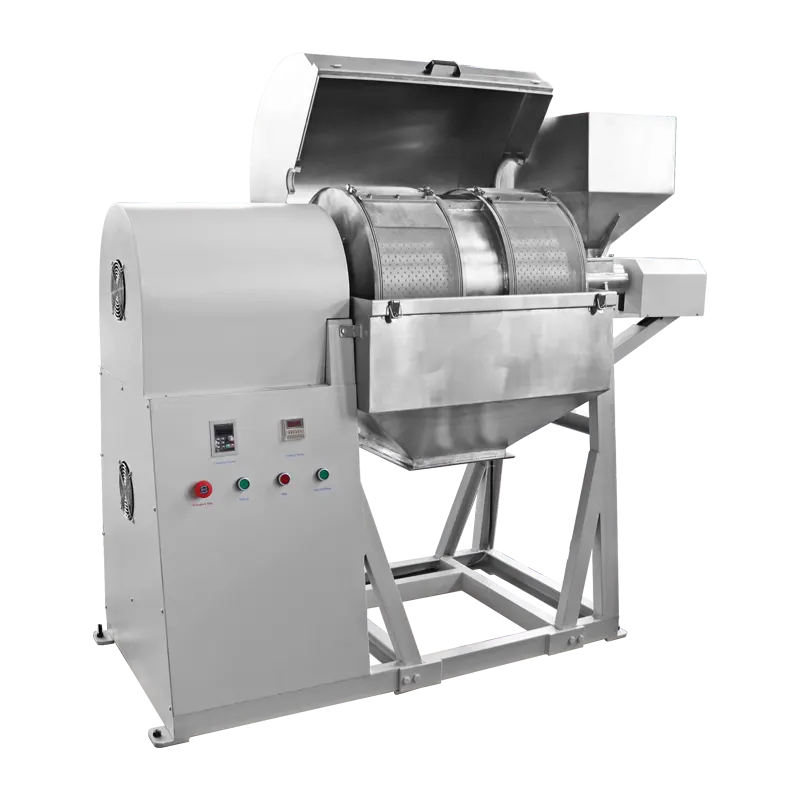
A screening ball mill is a type of drum ball mill that integrates a built-in screening mechanism directly into the grinding chamber or the discharge port. Unlike a conventional ball mill where the ground product is discharged through a grate or overflow and then classified externally, a screening ball mill allows the material to pass through a screen during or immediately after the grinding action. The screen retains oversized particles while allowing the fine fraction to pass through, effectively performing classification in real time.
This design is particularly useful when you need to produce a powder with a well-defined upper particle size limit, or when you want to avoid over-grinding certain materials. The screening ball mill can be operated in a continuous or batch mode, depending on the laboratory setup.
How Does a Screening Ball Mill Work?
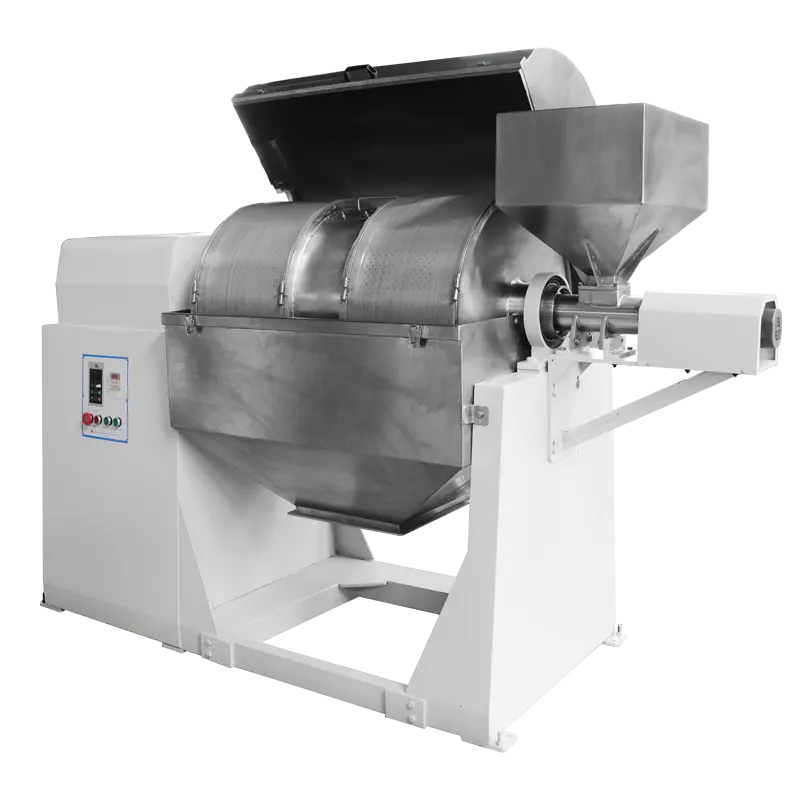
The basic working principle follows that of a conventional drum ball mill: a rotating cylinder (the drum) is partially filled with grinding media (typically steel, ceramic, or zirconia balls) and the material to be ground. As the drum rotates, the grinding media cascade and tumble, impacting and shearing the powder particles, reducing their size.
What sets the screening ball mill apart is the incorporation of a screen or sieve plate at the discharge end. The ground material moves toward the discharge opening, and only particles smaller than the screen aperture can exit the mill. Coarser particles are retained inside the drum and continue to be ground until they are fine enough to pass through. This self-classifying action ensures that the final product has a consistent, controlled top size.
In some designs, the screen is integrated into the drum wall itself, while in others, it is a separate rotating or vibrating screen unit attached to the mill outlet. The key is that the screening step happens in close proximity to the grinding action, minimizing the need for additional handling.
Key Parameters and Their Influence on Performance
Screen Aperture Size
The mesh size of the screen directly determines the maximum particle size of the final product. For laboratory applications, screens with apertures ranging from 0.5 mm down to 20 microns are commonly used. The choice depends on your target particle size and the flow characteristics of the material. A finer screen will produce a finer product but may reduce throughput if the material is difficult to sieve.
Drum Speed and Rotation
As with any ball mill, the rotational speed of the drum is critical. The mill should operate at a speed below the critical speed to avoid centrifuging the grinding media. Typical laboratory drum ball mills run at 50–75% of the critical speed, which for a given drum diameter translates to a specific RPM range. The speed affects the impact energy of the balls and the residence time of the material inside the mill.
Grinding Media Size and Material
The diameter and density of the grinding balls influence the grinding efficiency and final particle size. For a screening ball mill, coarse grinding (e.g., 10–20 mm balls) is often used first to reduce larger particles, while finer media (e.g., 3–5 mm) may be added later for fine grinding. The material of the grinding media should be selected to minimize contamination. Common choices include stainless steel, alumina, zirconia, and agate.
Ball-to-Powder Ratio
The ratio of the weight of grinding balls to the weight of the powder typically ranges from 5:1 to 20:1 in many laboratory applications. A higher ball-to-powder ratio generally increases grinding efficiency but also generates more heat and wear. For screening ball mills, the presence of the screen may require slight adjustments to the ratio to ensure smooth material flow.
Feed Rate and Continuous Operation
When operated continuously, the feed rate must be balanced with the grinding and screening capacity. Too high a feed rate can overload the mill and cause the screen to blind. Too low a feed rate reduces throughput. Many laboratory screening ball mills are designed for batch operation, where a fixed amount of powder is loaded, ground, and then discharged through the screen by tilting or opening the drum.
Applications of Screening Ball Mills in the Laboratory
The screening ball mill is particularly well-suited for the following scenarios:
- Mineral processing research: When studying ore liberation, you often need to grind a sample and then classify it into different size fractions. A screening ball mill allows you to perform this in a single step, saving time and reducing sample loss.
- Ceramic and refractory materials: The ability to control the top size precisely is valuable for preparing powders for pressing, sintering, or glaze formulation. The screening action ensures that oversized particles are not present in the final powder.
- Battery materials (e.g., cathode and anode powders): In lithium-ion battery research, particle size distribution directly affects electrode performance. A screening ball mill can help produce powders with a narrow size range, improving the consistency of electrode coatings.
- Chemical and pharmaceutical products: For materials that are sensitive to over-grinding (e.g., active pharmaceutical ingredients), the continuous classification prevents excessive fines generation, preserving material properties.
- Mechanical alloying and powder mixing: When combining different powders, the screening ball mill can help ensure that the mixed product has a uniform particle size, which is beneficial for subsequent processing.
Practical Considerations for Selecting a Screening Ball Mill
Drum Capacity and Sample Size
Laboratory drum ball mills are available in capacities from a few hundred milliliters to several liters. For a screening ball mill, the drum should be sized so that the sample volume plus the grinding media occupies no more than 60–70% of the total drum volume. Overfilling reduces grinding efficiency and may cause the screen to block.
Jar Material and Wear Resistance
The drum (jar) material should be chosen based on the hardness of the sample and the acceptable contamination level. Common materials include stainless steel, nylon, polyurethane, and alumina ceramic. For highly abrasive materials, a ceramic-lined drum is recommended.
Screen Durability and Cleaning
The screen is a wear part. Its material (typically stainless steel mesh or perforated metal) must be compatible with the powder chemistry. Also consider how easy it is to remove the screen for cleaning or replacement. Some designs allow quick release of the screen without tools.
Vacuum or Inert Gas Operation
If you are grinding air-sensitive materials (e.g., metal powders, lithium compounds), a screening ball mill can be equipped with a sealed drum and gas inlet/outlet ports. This allows grinding under inert atmosphere. However, the screening mechanism must also be sealed to prevent air ingress.
Ease of Discharge and Cleaning
After each batch, the mill should be easy to disassemble for cleaning to avoid cross-contamination between samples. Look for designs with a tilting drum or a removable discharge chute.
Why Choose a Screening Ball Mill from TENCAN?
At TENCAN, we understand that laboratory researchers need equipment that is reliable, easy to operate, and adaptable to different materials. Our screening ball mill is designed with the following features:
- A robust drum made of stainless steel or ceramic to suit various sample types.
- Interchangeable screens with different mesh sizes to adjust the final particle size.
- Variable speed control to optimize the tumbling action for different materials.
- Optional vacuum or inert gas operation for air-sensitive powders.
- Compact footprint that fits on a standard laboratory bench.
We also offer a range of related products, such as the small ball mill with a ceramic jar for less demanding applications, and the lab roll ball mill for higher throughput. Our engineers can help you select the right configuration based on your material, target particle size, and batch volume.
Final Thoughts
A screening ball mill is not a universal solution for every grinding task, but it excels in applications where integrated classification can save time, reduce handling, and improve product consistency. If you regularly need to produce powders with a controlled top size, or if you want to streamline your laboratory workflow, this equipment is worth considering.
Before making a purchase decision, take the time to evaluate your material properties, the required throughput, and the acceptable contamination level. With the right configuration, a screening ball mill can become a reliable workhorse in your lab.
For more detailed specifications or to discuss your specific application, feel free to reach out to our technical team. We are always ready to help you find the optimal solution.