
Stainless Steel Dust-Free Crusher: A Complete Guide for Laboratory and Industrial Powder Processing
Why Dust-Free and Stainless Steel Matter in Powder Processing
When you work with powders in a laboratory or small-scale production environment, two concerns almost always top the list: cross-contamination and airborne dust. Traditional crushers often generate a cloud of fine particles that not only compromise operator safety but also lead to material loss and cleaning difficulties. A stainless steel dust-free crusher addresses both issues by combining a hermetically sealed grinding chamber with a hygienic, corrosion-resistant build. Whether you are pulverizing herbs for traditional medicine, preparing grain samples for analysis, or processing chemical intermediates, this equipment helps you achieve a consistent powder fineness while keeping the workspace clean.
Key Construction and Design Features
304 Stainless Steel Construction
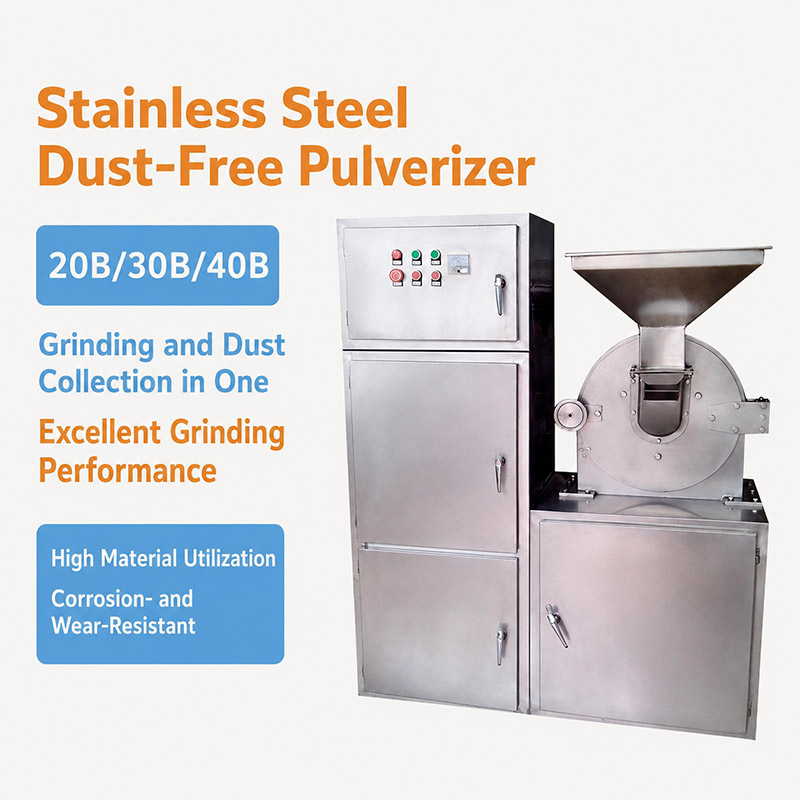
The entire machine body is fabricated from 304 stainless steel, a grade widely recognized for its excellent corrosion resistance and ease of cleaning. For applications in food, pharmaceuticals, and chemical laboratories, 304 stainless steel meets GMP (Good Manufacturing Practice) requirements because it does not react with most substances and can withstand repeated washdowns. The inner crushing chamber has a smooth, finely machined surface — unlike traditional rough-wall grinders — which prevents material accumulation and makes it simple to switch between different samples without carryover.
Dust-Free Sealed Grinding Chamber
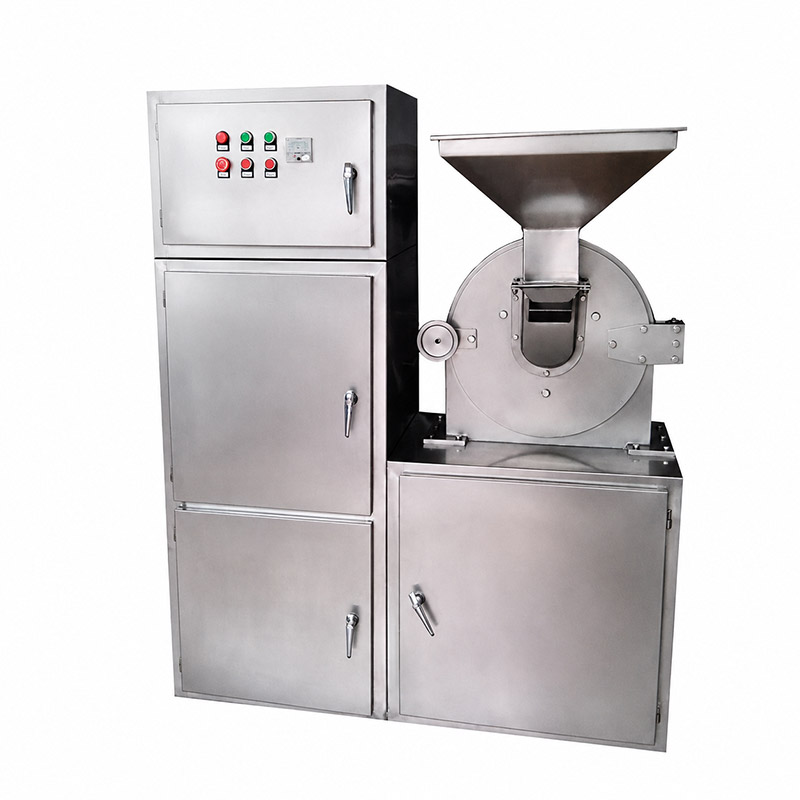
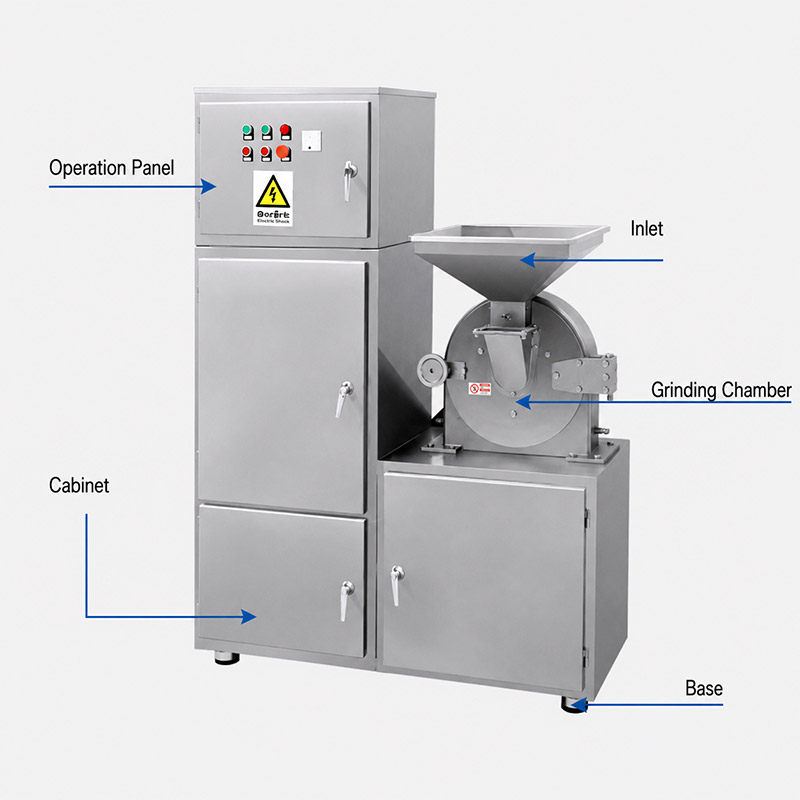
Dust generation is minimized by a tightly sealed cover that encloses the crushing zone. During operation, the material is fed through a hopper and falls into the rotating blade assembly. The sealed design contains fine particles inside, so you avoid contaminating the surrounding environment. This is especially valuable when processing toxic, allergenic, or high-value powders.
Adjustable Screen for Controlled Fineness
The machine comes with interchangeable sieves that determine the final particle size. Commonly available mesh sizes include 20, 40, 60, 80, 100, 120, 150, and 200 mesh, covering a typical fineness range from about 0.85 mm down to 0.074 mm. You can select the screen that best matches your target powder specification — coarser for granular products, finer for flour-like textures. One standard screen is included with the crusher, and additional screens can be ordered separately to cover different applications.
Built-In Motor and Low Noise Design
A built-in motor lowers the center of gravity of the machine, reducing vibration and operational noise compared to externally mounted motor designs. This makes the crusher more suitable for laboratory environments where noise levels must be kept moderate. The motor power typically ranges from 1.5 kW to 5.5 kW depending on the model, providing sufficient torque to handle a variety of dry materials.
How the Stainless Steel Dust-Free Crusher Works
Operation is straightforward. After selecting the appropriate sieve, you place the material into the feed hopper. The rotating blade assembly, driven by the built-in motor, cuts and shears the material against a fixed blade or impact plate. The particles continue to be reduced in size until they are small enough to pass through the mesh openings of the installed screen. The ground powder then collects in a removable container or bag attached to the discharge outlet.
Because the grinding action relies primarily on high-speed shearing and impact, the crusher works best with dry, brittle, or fibrous materials. It is not designed for wet grinding, sticky substances, or materials with high oil content, as these can clog the mesh or cause excessive heat buildup.
Common Applications and Suitable Materials
This type of crusher finds extensive use across multiple industries:
- Food and Herbal Processing: Grinding grains, spices, sugar, salt, dried herbs, and traditional Chinese medicine ingredients. The dust-free feature is critical for maintaining a clean processing area and preventing cross-contamination between different products.
- Pharmaceutical Industry: Pulverizing raw drug materials, excipients, and botanical extracts. The stainless steel construction and easy-clean design meet hygiene standards required for pharmaceutical intermediates.
- Chemical Laboratories: Reducing the particle size of chemical reagents, catalysts, and pigments for subsequent analysis or formulation. The sealed chamber helps contain potentially hazardous dust.
- Agriculture and Feed: Crushing corn, soybean, wheat, and other grains into feed powders. The adjustable fineness allows you to produce particles suitable for different animal ages.
Important Selection Considerations
Model Capacity and Throughput
Different models offer varied processing capacities, typically ranging from 20 kg/h to over 200 kg/h for laboratory and small batch production. When selecting a model, consider not only your batch size but also how often you need to change materials. A machine with a larger capacity may save time if you process the same material in bulk, but a smaller model may be more flexible for frequent material changes.
Fineness Requirements
The achievable fineness depends on the mesh size of the installed screen. However, the actual particle size distribution in the output will also be influenced by the material's hardness, moisture content, and the speed of the rotor. For most dry herbs and grains, a 60–100 mesh screen produces a fine powder suitable for further processing. If you need an ultrafine powder (e.g., below 200 mesh), you may need to pass the material through the crusher multiple times or consider a different grinding technology such as a ball mill or jet mill.
Material Hardness and Moisture
While the crusher handles many soft to medium-hard materials effectively, it is not intended for hard minerals, metals, or very abrasive substances. The blades and chamber can suffer accelerated wear if used with materials such as quartz or ores. Additionally, materials with more than 10–15% moisture may clog the screen or form pasty deposits inside the chamber. Pre-drying such materials to below 10% moisture is recommended for smooth operation.
Cleaning and Maintenance
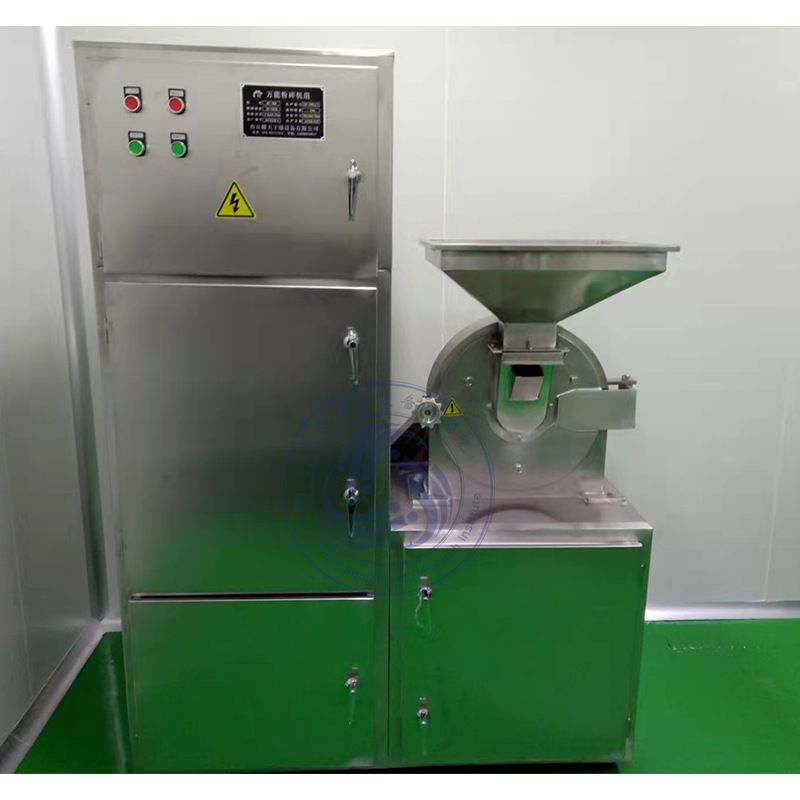
One of the main advantages of this crusher is its ease of cleaning. The smooth interior surfaces and removable screen allow you to wipe down or wash the chamber quickly. For applications that require frequent product changes (e.g., different herbs or spices), having a spare screen and a simple cleaning protocol reduces downtime. Always disconnect the power before opening the chamber for cleaning.
When to Consider Alternative Crushing Equipment
The stainless steel dust-free crusher excels at dry, brittle, and fibrous materials. However, for certain scenarios, other equipment may be more suitable:
- Hard and abrasive materials (e.g., rocks, minerals, glass): A lab jaw crusher or double roll crusher offers better wear resistance and can handle larger feed sizes.
- Very fine grinding (micron or sub-micron range): A planetary ball mill or vibration mill would produce finer particles through impact and attrition in a controlled environment.
- Wet or sticky materials: A paddle mill or hammer mill with large openings may be more effective, though dust containment becomes more challenging.
Final Thoughts on Choosing a Stainless Steel Dust-Free Crusher
If your work involves routinely grinding dry herbs, grains, spices, or chemical powders, and you need to maintain a clean, safe working environment, a stainless steel dust-free crusher is a practical and reliable choice. Its sealed design minimizes dust exposure, while the 304 stainless steel construction ensures long service life and compliance with hygiene standards. When selecting a model, carefully evaluate your typical batch size, target fineness, and the physical properties of your materials. If you are uncertain about which configuration best suits your needs, consulting with an experienced supplier like TENCAN can help you match the right machine to your application.