
Lightweight Vibrating Ball Mill: Lab Guide
Laboratory grinding problems rarely begin with the mill. They begin with a mismatch between the sample, the target particle size, and the amount of energy the method can deliver without contaminating or overheating the material. A lightweight vibrating ball mill is often considered when a small batch needs reproducible size reduction, straightforward jar handling, and a compact footprint. The useful question is not whether vibration can grind a material, but whether the jar, media, load, frequency, and run time can deliver the required particle size distribution without creating a new problem.
TENCAN (Changsha Tianchuang Powder Technology Co., Ltd) supplies a lightweight vibrating ball mill for laboratory work. Configurations, jar options, and operating limits should be confirmed against the current product specification because they depend on the supplied unit and the application. Final performance is subject to testing with the actual material and process requirements. The discussion below concentrates on the variables that usually decide whether a vibrating mill method is robust: energy transfer, media choice, sample loading, contamination control, particle size analysis, and method transfer. It is written for researchers, materials engineers, process technicians, and purchasers who need to compare a compact vibrating mill with planetary, stirred, jet, or roll mills before committing to a method.
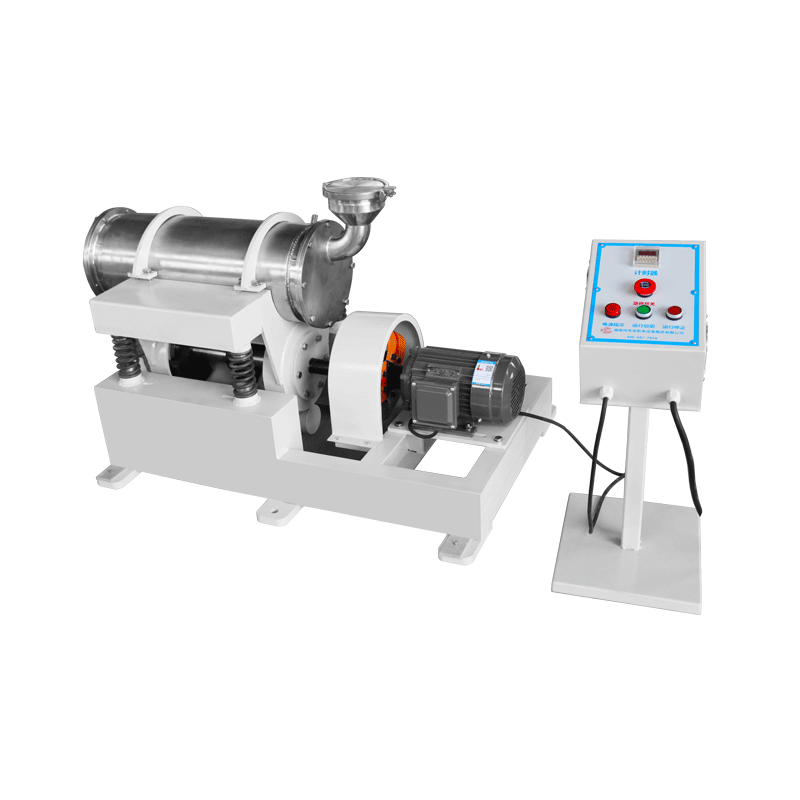
Lightweight vibrating ball mill for laboratory sample preparation.
What a Lightweight Vibrating Ball Mill Does in a Lab
A vibrating ball mill transmits motion to a closed jar containing the sample and loose grinding media. The jar is clamped to a vibrating frame, and the vibration causes the media to collide with the sample and with each other. Size reduction comes from a mixture of impact, attrition, and friction. The relative contribution of those mechanisms depends on the vibration frequency and amplitude, the mass and size of the media, the fill level, and the rheology of the charge. In a dry powder, impact and brittle fracture often dominate at the beginning; as particles become finer, attrition and surface wear become more important. In a wet slurry, fluid damping changes the motion of the media and can either improve dispersion or reduce impact energy.
The phrase lightweight matters for more than portability. The moving assembly, jar mass, clamp rigidity, and isolation of the frame all affect how efficiently energy reaches the charge. A jar that is not seated firmly can absorb energy, move unevenly, or produce poor reproducibility. A very heavy jar and media charge may be inappropriate for a compact unit even when the jar fits physically. For that reason, a method developed on one vibrating mill should not be transferred to another model without checking the clamp system, the moving mass, and the recommended charge. The same nominal frequency does not guarantee the same energy dose.
Compared with a planetary ball mill, a vibrating mill usually offers a simpler jar motion and fewer rotating parts. Compared with a stirred media mill, it usually has less intense internal agitation and is easier to clean between small samples. Those differences matter in a laboratory because the most suitable mill is not always the one with the highest energy. A gentler method can be preferable for fragile crystals, thermally sensitive polymers, or samples that must not be contaminated by excessive media wear. A more energetic method may be necessary for hard, coarse, or aggregated materials. The correct choice is the method that reaches the specification with acceptable repeatability and sample integrity.
For a compact TENCAN lightweight vibrating ball mill, the practical workflow is jar-based: weigh the sample, add media, seal the jar, clamp it, set the run conditions, and recover the powder or slurry. That workflow is easy to describe but easy to get wrong. Small differences in ball count, sample mass, jar sealing, and run time can change the result. Good laboratory practice therefore begins with a written charge recipe and a fixed sequence for jar preparation, not with an operator adjusting the mill by sound or feel.
Material Properties That Change Grinding Results
Before selecting media or run time, characterize the material by the properties that control breakage. Hardness alone is not enough. A hard but tough material may deform rather than fracture; a soft but brittle material may grind quickly and then agglomerate; a crystalline solid may undergo a phase change under prolonged impact. The same mill setting can produce different results for two samples with the same nominal particle size if their density, moisture, or surface chemistry differs.
Hardness, toughness, and breakage behavior
Hardness indicates resistance to scratching or indentation, while toughness describes resistance to crack propagation. Brittle materials usually respond well to impact and can be reduced efficiently in a vibrating mill. Ductile metals, polymers above their glass transition, and waxy or sticky substances may flatten, coat the media, or form flakes instead of fine particles. In those cases, pre-cooling, a different media shape, wet grinding, or a different mill type may be more appropriate. Media selection should also consider the hardness of the sample relative to the jar and ball material; if the media is too soft, wear can contaminate the sample and the particle size may plateau before the target is reached. If the media is much harder than necessary, the risk of jar damage and excessive contamination may increase.
Feed size and target particle size
Feed size sets the starting point for the energy requirement. A vibrating mill with small media cannot efficiently break a large, strong particle because the collision energy may be too low. Conversely, large media in a small jar may leave little room for sample and may produce a broad distribution. As a rule, the feed should be reduced by crushing or pre-milling when it is coarse relative to the jar and media. The target size matters just as much. A method asked to reach a fine D50 may run for a long time and generate more wear, heat, and agglomeration than a method asked only to narrow a coarse distribution. Define the specification using D10, D50, and D90 rather than a single average, and state whether the target is a median size, a top cut, or a specific surface area.
Moisture, agglomeration, and thermal sensitivity
Moisture can dominate the outcome of dry grinding. A small amount of surface water may cause bridging between particles, coating on the jar, and a sticky charge that moves poorly. In other cases, a small amount of moisture can act as a grinding aid and reduce static charging. The effect is material-specific, so the same moisture level cannot be prescribed for every powder. Thermal sensitivity is also important. Vibration and media impact add energy to the sample, and a sealed jar can retain heat. If the material softens, oxidizes, or degrades above a certain temperature, shorter runs, lower energy input, or wet grinding with a suitable liquid may be needed. The temperature of the jar should be checked after trial runs, not assumed from the room temperature.
Contamination and material compatibility
Contamination comes from three main sources: the jar, the media, and the sample handling tools. A hard ceramic jar and media reduce metallic contamination but can leave ceramic wear particles; a metal jar may be appropriate for some applications but unsuitable for others. The choice depends on the analytical sensitivity of the final measurement and on the value of the sample. Cleaning is part of the same decision. A porous jar or a scratched surface can retain fines and transfer them to the next batch. For trace analysis, a dedicated jar set or a documented cleaning blank may be more important than a small gain in grinding speed.
| Material or method factor | What to check | Practical implication |
|---|---|---|
| Hardness and toughness | Brittle or ductile behavior, known phase changes | Adjust media energy and avoid over-milling |
| Feed size | Top size relative to jar and media | Pre-crush or pre-mill coarse feed |
| Moisture | Surface water, static, caking | Dry, precondition, or use wet grinding |
| Contamination limit | Jar and media wear, trace elements | Select compatible materials and cleaning blanks |
| Thermal sensitivity | Softening, oxidation, degradation | Reduce energy input or use cooling pauses |
Media, Jar Load, and Vibration Settings
Grinding results are determined by the charge, not by the mill setting alone. Media size, media density, ball count, sample mass, jar fill, liquid-to-solid ratio, vibration frequency, amplitude, and run time form a coupled system. Changing one variable without checking the others often produces a misleading result. A trial that improves fineness may also increase contamination, heat, or the spread of the distribution.
Media size, density, and shape
Small media create more contact points and can produce finer grinding, but each collision carries less energy. Large media deliver stronger impacts and are better for coarse or hard feed, but they can damage the jar, leave a broader distribution, and reduce the number of active contacts. High-density media increase impact energy for a given size and speed, which can shorten the time to reach a target but also raises wear and heat. Low-density media are gentler and may be preferred for fragile materials, although they may be too slow for hard samples. Shape also matters: spherical media roll and impact predictably, while cylindrical or irregular media produce different attrition and can be harder to clean. The media material must be compatible with the sample and with the intended analysis. Alumina, zirconia, agate, stainless steel, and tungsten carbide are common laboratory choices, but the correct grade depends on contamination limits, sample hardness, and jar compatibility. The media should be inspected before use; cracked or chipped balls can scratch the jar and shed debris.
Ball-to-powder ratio and jar fill
The ball-to-powder ratio controls how many collisions are available per unit of sample. Too little media leaves the charge under-worked and the result variable. Too much media can crowd the jar, reduce media motion, and increase wear. Jar fill has a similar optimum. If the jar is nearly full, the media cannot move freely; if it is too empty, the sample may coat the walls and escape the active grinding zone. A practical starting point is to keep enough free volume for media motion and to confirm that the lid and seal remain clean. Record the sample mass, media mass, ball count, and jar size in the method. Operators should not estimate the charge by eye because small differences become large differences when the batch is only a few grams.
Frequency, amplitude, and run time
Frequency and amplitude describe the motion supplied to the jar, but the useful energy in the charge also depends on the moving mass and the clamp. Higher frequency or amplitude usually increases energy input, but it can also increase heat, noise, wear, and the risk of jar movement. Longer runs do not always produce a finer product. Many powders reach a plateau where the breakage rate falls and agglomeration or re-welding becomes significant. A stepped run, a pause to cool the jar, or a change in media size may be more effective than simply extending the time. During method development, keep the frequency and amplitude fixed while varying one charge variable at a time. Once the method is stable, record the settings and verify them with a reference sample.
Dry and wet grinding
Dry grinding is convenient for powders that must remain dry and for small samples that are difficult to recover from a slurry. It can also produce fines that coat the media and jar, reducing efficiency and making cleaning harder. Wet grinding can improve dispersion, reduce dust, and control temperature, but the liquid must be compatible with the sample and must be removed later. The liquid-to-solid ratio affects viscosity and media motion; a thick slurry may damp the media too much, while a dilute slurry may reduce collision frequency. Surfactants or grinding aids can help, but they must be selected for the final application and removed or accounted for in the analysis. For either route, the jar seal must be appropriate for the chosen conditions, and the pressure and temperature inside the jar should be considered.
Operators often notice a problem before they can explain it. A change in sound, a jar that moves in the clamp, powder on the lid, or a sudden drop in fineness after a period of steady grinding all point to a change in the charge. Stop the run, inspect the jar and media, and check the seal rather than compensating with a longer time. In a small mill, a minor leak or a displaced jar can change the result more than a large change in nominal power.
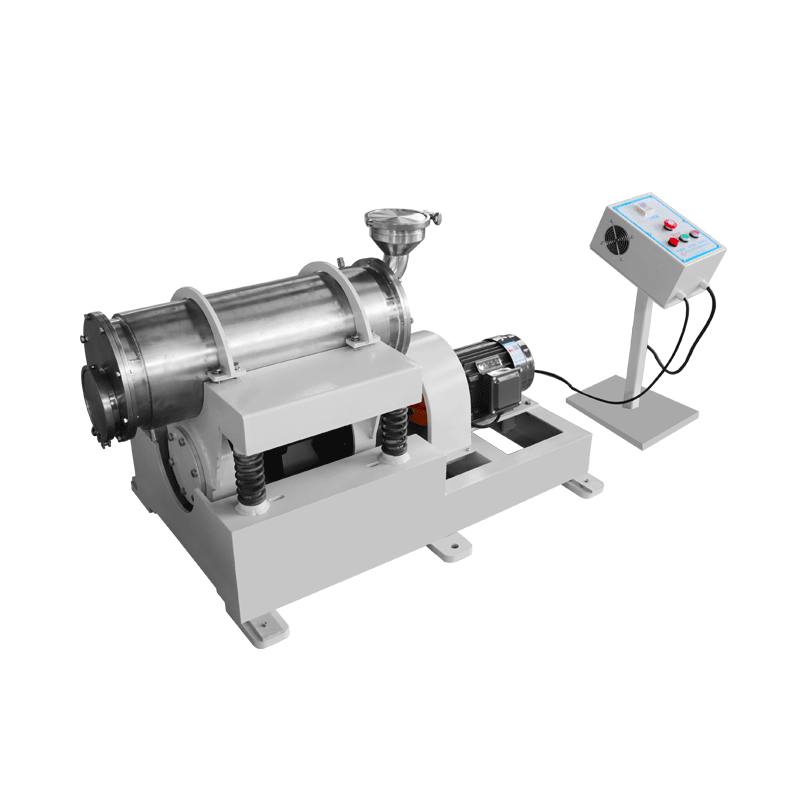
Vibrating mill configuration for laboratory grinding method development.
Particle Size, Distribution, and Reproducibility
A grinding method is only useful if the result can be measured and repeated. Particle size results should be reported with the technique, sample preparation, and dispersion conditions. Laser diffraction, dynamic image analysis, microscopy, and sieving measure different aspects of a powder, and they can give different values for the same material. For a laboratory method, the important question is not just the median size but the shape of the distribution, the top cut, and the batch-to-batch variation.
D10, D50, D90, and distribution width
D50 is the median particle size, but it says nothing about the coarse or fine tails. D90 is often the practical specification for a top cut, while D10 indicates the fine fraction. A process that lowers D50 but broadens the distribution may create more problems than it solves, especially if the coarse tail causes sedimentation or the fine tail causes dust or reactivity. Report the span or a comparable width metric and define the acceptable range for each percentile. If the specification is a specific surface area, note that surface area is sensitive to fines and to agglomeration, so it should be interpreted with the particle size distribution.
Sampling and dispersion
Small batches are easily biased by sampling. Fines may adhere to the jar, while coarse particles may settle at the bottom. Take a representative sample after mixing the recovered powder, and use the same dispersion procedure for every comparison. For wet methods, the choice of dispersant and sonication energy can change the measured size. For dry methods, the air pressure and feed rate can break agglomerates. Record these details so that a result can be reproduced by another operator. If the method is intended for quality control, run a reference material at defined intervals and track the result over time.
Reproducibility from jar to jar
Reproducibility depends on the jar, the media, the charge, the operator, and the environment. Two jars of the same nominal size may differ in internal geometry, lid sealing, or wear. Media may be replaced at different times, changing the size distribution of the grinding charge. A method that is sensitive to ball count should specify the count and the ball diameter, not only the total media mass. The order of loading can also matter: adding sample first, media first, or liquid first changes how the charge mixes before the mill starts. Write the sequence into the procedure and train operators to follow it.
| Observed issue | Likely cause | Practical check |
|---|---|---|
| Fine fraction increases but coarse tail remains | Insufficient impact energy or short run | Review media size, charge ratio, and run time |
| Batch-to-batch variation | Ball count, loading order, or jar wear | Standardize the charge recipe and inspect jars |
| Sample coats jar and media | Moisture, static, or soft material | Dry, precondition, or change the grinding route |
| Contamination appears | Media or jar wear, poor cleaning | Check wear, use a blank, and review materials |
Selecting the Right Laboratory Mill for the Job
A lightweight vibrating mill is one option among several laboratory grinding technologies. The right choice depends on the target size, sample quantity, material behavior, contamination limit, and the number of samples per day. A comparison should be based on the method that can meet the specification with the least risk, not on a single headline capability.
| Mill type | Typical strength | Practical limitation | When to consider |
|---|---|---|---|
| Vibrating ball mill | Simple jar-based setup for small batches | Energy and scale depend on the configuration | Method development and small-batch grinding |
| Planetary ball mill | Variable motion and higher energy input | Jar balancing and more complex operation | Hard materials and fine grinding trials |
| Stirred media mill | Intense agitation for wet processing | Cleaning and media wear | Slurries and larger laboratory batches |
| Jet mill | Dry grinding without grinding media | Feed size and gas handling requirements | Brittle powders with strict contamination limits |
| Roll mill | Gentle jar motion | Lower energy for hard or coarse feed | Gentle size reduction and mixing |
For a laboratory that handles many small samples, the jar-changing workflow and cleaning time can matter as much as grinding speed. A vibrating mill can be attractive when the sample is brittle, the batch is small, and the method can be developed around a fixed jar and media set. It is less attractive when the target requires sustained high energy, when the slurry is viscous, or when the throughput demand exceeds what a single compact jar can deliver. The laboratory vibrating ball mill should therefore be evaluated with the actual sample, not only with a demonstration powder.
Before requesting a quotation, define the sample form, feed size, target D50 and D90, batch mass, allowable contamination, and whether the product must remain dry. Ask whether the jar and media set can be supplied together and whether a trial run can be performed with the actual material. A mill that meets a particle size target but requires an unavailable jar or an impractical cleaning routine is not a good selection. The purchasing decision should also consider the number of samples per day, because jar handling and cleaning can limit throughput more than grinding time.
Operation, Validation, and Method Transfer
A reliable method starts with a clean, inspected jar. Check the jar body, lid, seal, and clamp surfaces for cracks, scratches, and residue. Seat the jar squarely in the clamp and confirm that it cannot move during a short test run. Add the charge in the recorded order and do not overfill. If the jar requires a gasket, make sure it is dry and correctly positioned; a folded or contaminated seal can leak powder or liquid. Use a balance appropriate to the sample mass and record the actual mass, not the target mass.
Cleaning and cross-contamination
Clean the jar and media immediately after each run. Dry powder can compact in corners, and wet slurry can dry into a hard film. Use a method that does not damage the jar surface. For trace work, follow the cleaning procedure with a blank run or a rinse that is analyzed for the elements of interest. Store jars closed and separated by material type. Media should be kept with the jar set when the method depends on a specific ball charge. A scratched jar may be acceptable for a rough pre-grind but not for a trace analysis, so inspect surfaces under good light.
Validation runs and documentation
Validate the method with a minimum of three runs at the intended charge. Measure the particle size distribution, recover the mass, and inspect for contamination or agglomeration. Compare the results with the specification and with the variation that the analytical method itself can produce. If the mill has adjustable settings, challenge the method at the upper and lower ends of the allowed range to understand sensitivity. Document the jar type, media material and size, ball count, sample mass, liquid mass if any, frequency or amplitude setting, run time, and any pauses. A method that cannot be written down is not ready for transfer.
Scale-up and method transfer
Scaling a vibrating mill method to a larger mill is not a simple multiplication of run time. The energy per unit mass, the media size, the jar geometry, and the heat removal all change. A useful transfer study keeps the material and target specification fixed, then compares the particle size distribution and contamination at each scale. If a larger mill cannot reproduce the fine end of the distribution, the specification may need to be revisited or the process may need a different technology. For a laboratory purchasing decision, ask for a trial with the actual material and a clear statement of the conditions used. That is more informative than a general claim about fineness.
Safety deserves the same attention as particle size. Confirm the clamp is secure before starting, keep the mill on a stable surface, and follow the supplier's instructions for the jar and media. Do not open a jar while it is hot or pressurized, and allow it to cool before handling. If the material is reactive, toxic, or oxygen-sensitive, use an appropriate containment method and validate the seal. Noise and vibration can increase with worn components, so investigate changes rather than tolerating them. These practices protect the operator and also improve reproducibility, because a mill that moves or leaks cannot deliver a controlled energy dose.
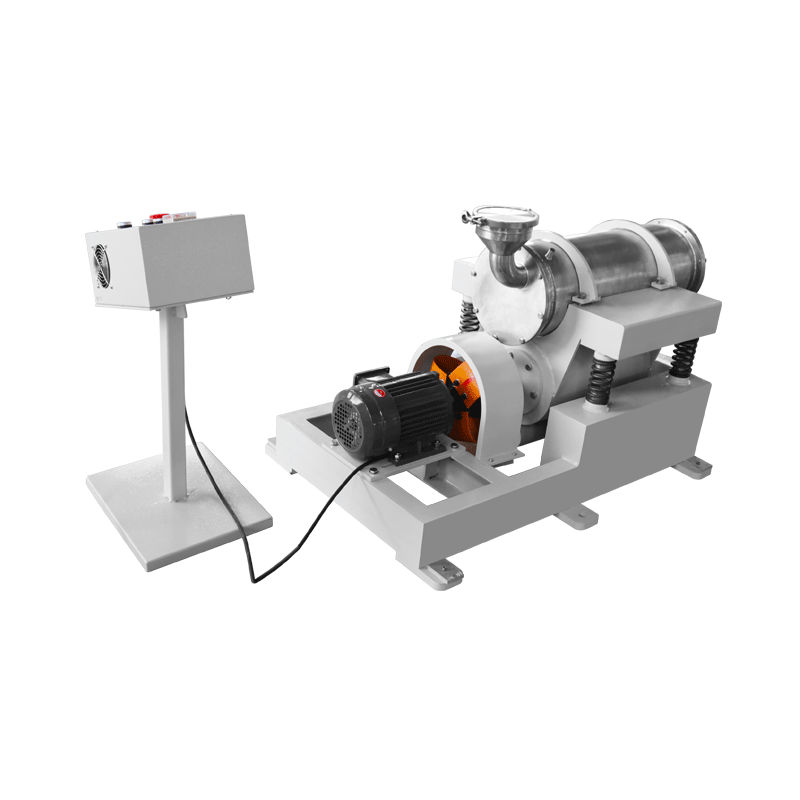
Small-batch vibrating mill setup for method validation.
A practical way to finish the evaluation is to treat the mill, jar, media, and analysis as one method. Start with a conservative charge, verify the jar seating and seal, and use particle size distribution rather than appearance to judge success. If the result is unstable, look first at the charge and the jar, then at the run settings, and only then at the mill itself. A compact lightweight vibrating ball mill can be a useful tool for laboratory size reduction when its limits are understood and the method is controlled. For a specific material, confirm the available jar and media options, the recommended operating range, and the safety requirements with the supplier before placing the method into routine use.