
Lightweight Stirred Ball Mill: A Practical Laboratory Tool for Fine and Ultra-Fine Milling
Why a Lightweight Stirred Ball Mill Belongs in Your Lab
If you have ever struggled to achieve fine or ultra-fine particles with traditional tumbling ball mills, you know the frustration of long grinding times, high energy consumption, and limited control over final particle size. In many laboratory applications, especially when working with small batches of advanced ceramics, battery materials, catalysts, or pharmaceutical powders, a stirred ball mill can offer a more efficient path to sub-micron or even nano-scale particles. Among the various stirred mill designs, the lightweight stirred ball mill stands out as a practical, space-saving, and easy-to-use solution for R&D labs and universities.
This article walks you through what a lightweight stirred ball mill is, how it works, which materials it can handle, and what you should consider before selecting one for your facility.
How a Stirred Ball Mill Works
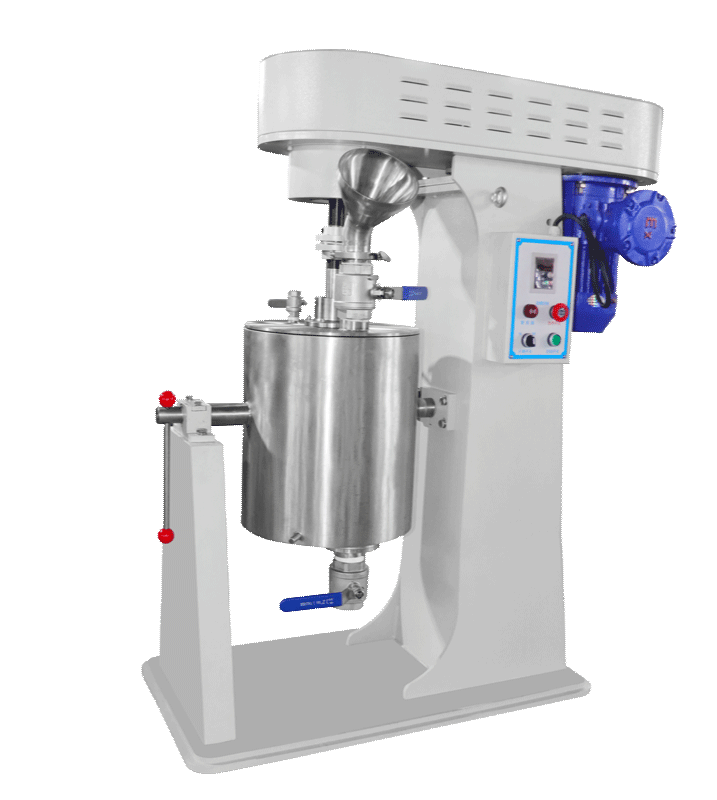
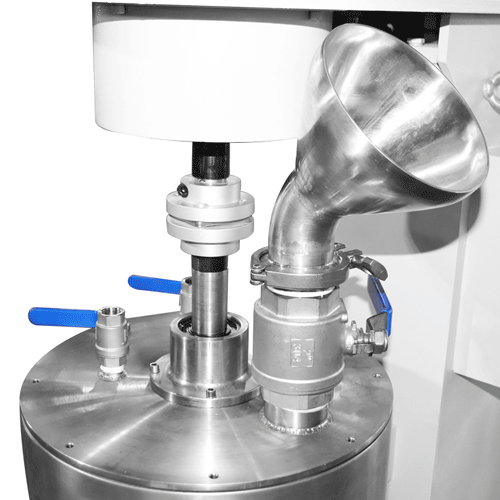
Unlike a conventional ball mill where the entire drum rotates to tumble the grinding media, a stirred ball mill uses a stationary grinding chamber and an internal agitator (stirrer) that rotates at a relatively high speed. The agitator, often equipped with arms, discs, or pins, imparts motion to the grinding media—typically small ceramic or metal balls. The media collide with the powder particles, breaking them down through impact, shear, and attrition.
Because the chamber does not rotate, the machine can be built with a more compact and lightweight structure. The energy input is directly transferred to the media, making the milling process more efficient, especially for fine and ultra-fine grinding. Many laboratory stirred ball mills operate in batch mode, which is ideal for small sample volumes and frequent material changes.
Key Advantages of a Lightweight Stirred Ball Mill
Compact and Portable Design
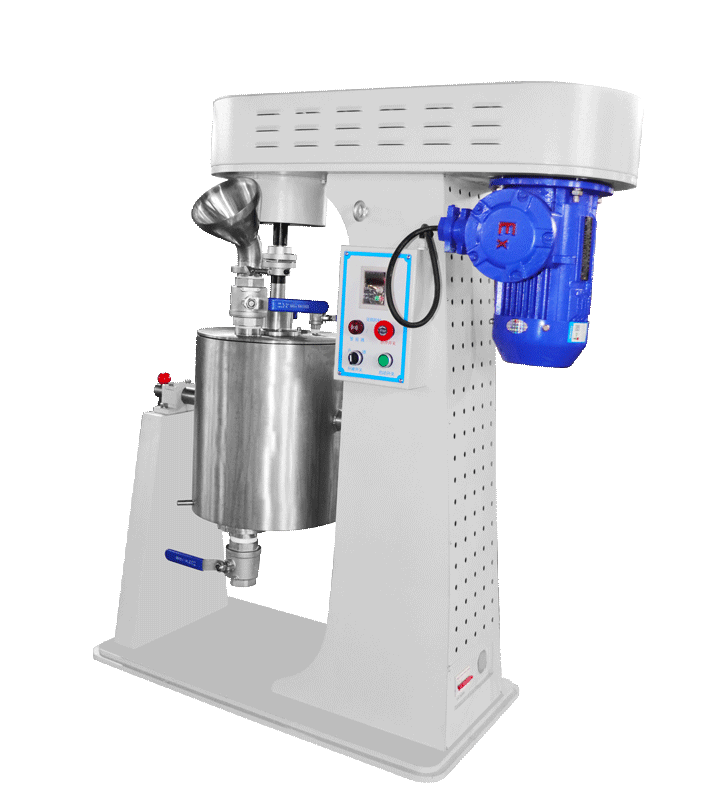
As the name suggests, a lightweight stirred ball mill is designed to be easily moved and placed on a standard lab bench. Its smaller footprint allows you to save valuable laboratory space while still having a powerful milling tool. This is particularly helpful when you need to relocate the mill between different workstations or store it when not in use.
Higher Grinding Efficiency
Because the agitator directly drives the grinding media, stirred ball mills can achieve finer particles in less time compared to tumbling mills of similar volume. For example, when grinding hard ceramic materials like alumina or zirconia, a stirred mill can often reach sub-micron particle sizes within 30 minutes to a few hours, depending on the material and process parameters. The efficient energy transfer also means less heat generation per unit of size reduction, though some temperature rise is still expected.
Easy Operation and Maintenance
With a simple control interface, the lightweight stirred ball mill is straightforward to operate. Changing the grinding jar or removing the milled sample is usually quick because the chamber is accessible. Many models feature a lid that can be fastened or released without tools. This ease of use is a major advantage when you are running multiple experiments with different materials.
Versatility in Grinding Media and Jar Materials
You can choose from a variety of grinding jar materials—such as stainless steel, alumina, zirconia, agate, or nylon—depending on your contamination requirements. Similarly, the grinding media can be selected to match the jar material. The ability to swap these components makes the lightweight stirred mill suitable for a wide range of materials, from soft organic powders to brittle hard metals.
Materials and Applications
Lightweight stirred ball mills are commonly used for:
- Ceramics and refractory materials – Alumina, zirconia, silicon carbide, silicon nitride.
- Battery materials – Lithium cobalt oxide, lithium iron phosphate, graphite, solid electrolytes.
- Minerals and ores – Quartz, feldspar, kaolin, limestone.
- Metals and alloys – Mechanical alloying of metallic powders (e.g., iron, copper, nickel alloys).
- Pharmaceuticals and chemicals – Pigments, dyes, agrochemicals, and active pharmaceutical ingredients.
For dry milling, the process can be straightforward, but for wet milling, you typically add a liquid (water, ethanol, or other solvent) to form a slurry. Wet grinding often reduces particle agglomeration and allows finer milling. However, keep in mind that certain materials, particularly those that are pyrophoric or sensitive to moisture, may require an inert atmosphere or vacuum protection. A standard lightweight stirred ball mill may not be sealed for such conditions, so you should check the manufacturer's specifications if you need to process reactive powders.
Selecting the Right Lightweight Stirred Ball Mill for Your Lab
Before you make a purchase, here are the key factors to consider:
Sample Volume
How much powder do you need to mill per batch? Lightweight stirred mills typically handle sample volumes from a few milliliters to about 1 liter. If you work with very small quantities (e.g., 5–50 g), a smaller jar with a diameter of 50–100 mm is usually sufficient. For larger amounts, you may need a bigger model or a lab stirred ball mill with a higher capacity.
Grinding Jar Material
Think about contamination. If your material is sensitive to iron or other metals, choose a jar made of the same material as your grinding media, such as zirconia or alumina. For general purposes, stainless steel jars are cost-effective and durable.
Grinding Media Size and Material
The size of the grinding balls directly affects the final particle size. For fine grinding, media diameters of 0.5–3 mm are commonly used. For coarse grinding or initial size reduction, 5–10 mm balls may be preferred. The ball-to-powder ratio (BPR) is another critical parameter. In many laboratory experiments, a BPR of 5:1 to 20:1 by weight is typical. However, the optimal ratio depends on the material density and target fineness.
Speed and Control
Look for a mill with a variable speed control (e.g., 100–1000 rpm or more). Higher speeds give higher energy input but also generate more heat. Some materials may require intermittent operation (e.g., 10 minutes on, 5 minutes off) to avoid overheating. A programmable timer can be a useful feature.
Power Supply
Confirm the voltage and frequency of your local electrical supply. Most laboratory mills are available in 110V or 220V versions.
Practical Tips for Getting Started
If you are new to stirred ball milling, start with a simple material like silica sand or alumina to establish your baseline parameters. Record the following for each run:
- Grinding jar volume and material
- Grinding media type and size
- Ball-to-powder ratio
- Milling speed and time
- Whether dry or wet (if wet, liquid-to-powder ratio)
- Final particle size (measured by laser diffraction or sieving)
By keeping a systematic log, you can quickly optimize the process for your target material. Remember that the final particle size and distribution are influenced by many factors, including material friability, moisture content, and the presence of additives. Do not expect a fixed outcome from a single set of parameters; experimentation is part of the process.
Why TENCAN's Lightweight Stirred Ball Mill Is Worth Considering
When you are ready to invest in a reliable laboratory milling solution, the Lightweight stirred ball mill from Changsha Tianchuang Powder Technology Co., Ltd. (TENCAN) offers a balanced combination of portability, performance, and durability. Designed with the end-user in mind, it features a compact structure, easy jar replacement, and a user-friendly control panel. The mill is suitable for both dry and wet grinding of a wide variety of materials, and TENCAN can provide guidance on selecting the appropriate jar and media for your specific application.
If you need a larger capacity or a more automated setup, you may also explore other models such as the electric lifting stirred ball mill or the production-scale stirred ball mill. But for most daily laboratory tasks, the lightweight version is a workhorse that will serve you well.
In summary, a lightweight stirred ball mill is a versatile, efficient, and practical addition to any powder processing laboratory. It addresses the common challenge of achieving fine and ultra-fine particles without the bulk and complexity of larger equipment. By understanding the working principle, selecting the right accessories, and following good experimental practices, you can get the most out of this compact milling tool.