
Laboratory Sand Grinder: A Complete Guide for Wet Grinding and Dispersion
What Is a Laboratory Sand Grinder and Why Do You Need One?
If you work with suspensions, slurries, or fine powders in a research lab, you have probably faced the challenge of achieving consistent particle size reduction and dispersion. A laboratory sand grinder — also called a lab sand mill or bead mill — is a wet grinding device designed to break down agglomerates and reduce particle size down to the micron or even nanometer range. Unlike dry ball milling, which often struggles with sticky or heat-sensitive materials, a sand grinder uses a liquid medium to keep particles suspended, making it ideal for paints, inks, ceramics, battery materials, and many other applications.
In this guide, we will walk through how a laboratory sand grinder works, what materials it can handle, and how to select the right configuration for your experiments. Whether you are a material scientist exploring new formulations or a lab manager looking to upgrade your equipment, understanding the basics of this versatile machine will help you make better decisions.
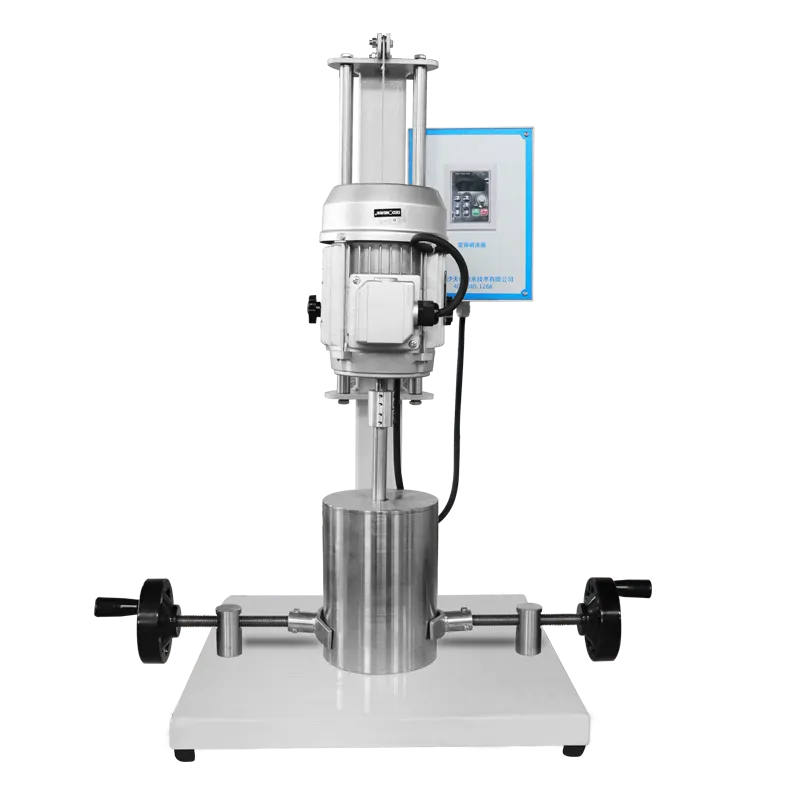
How Does a Laboratory Sand Grinder Work?
At its core, a laboratory sand grinder consists of a grinding chamber filled with a certain amount of small grinding media — typically zirconia beads, glass beads, or steel balls. A motor-driven rotor (or impeller) inside the chamber agitates the media at high speed, creating intense shear forces and collisions. The slurry (powder mixed with liquid) is pumped through the chamber, and the grinding media repeatedly impact the particles, breaking them down into finer sizes.
Key Components
- Grinding chamber: Usually made of stainless steel, ceramic, or tungsten carbide. The inner surface can be lined with wear-resistant materials to minimize contamination.
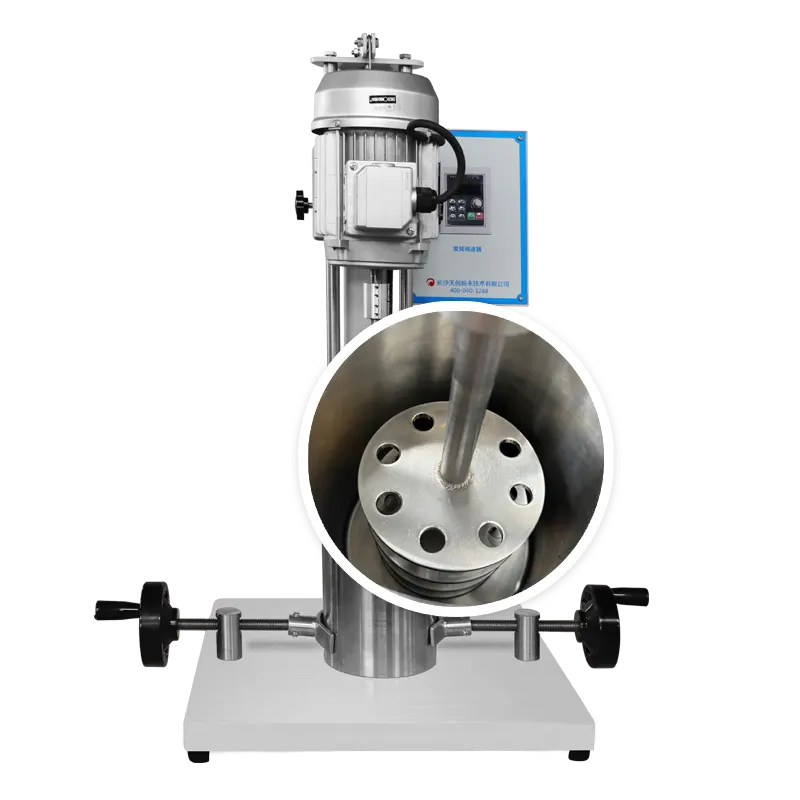
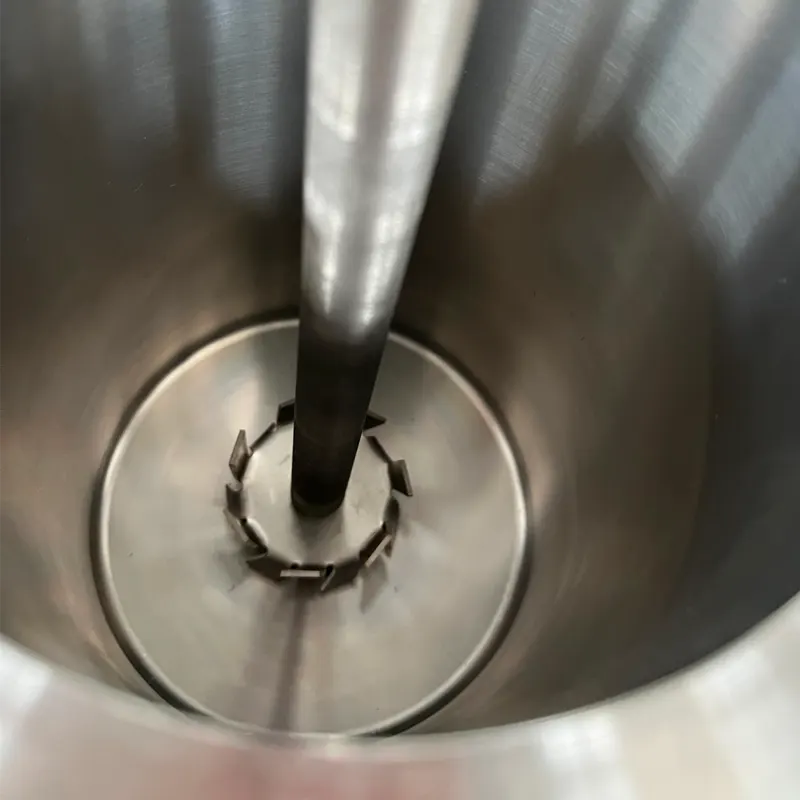
- Rotor: Can be disc-type, pin-type, or turbo-type. The rotor design greatly influences the energy input and flow pattern.
- Media separator: A gap or screen at the outlet prevents grinding beads from exiting with the product.
- Feeding system: A peristaltic pump or diaphragm pump delivers the slurry at a controlled flow rate.
- Cooling jacket: Many lab sand mills have a water-cooled jacket around the chamber to dissipate heat generated during grinding.
The process can be operated in either batch mode (recirculating the same slurry) or continuous mode (single pass). For laboratory research, recirculation is more common because it allows you to monitor particle size evolution and stop when the target fineness is reached.
What Materials and Applications Benefit from a Lab Sand Mill?
Laboratory sand grinders are widely used in industries where wet grinding and dispersion are critical. Some typical materials include:
- Paints and coatings: Pigment dispersion, color matching, and viscosity control.
- Inks and printing pastes: Achieving fine and uniform particle distribution.
- Ceramics and advanced materials: Grinding of alumina, zirconia, silicon carbide, and other hard powders.
- Battery materials: Cathode and anode slurries, solid electrolytes, and conductive additives.
- Pharmaceuticals and cosmetics: Suspensions, ointments, and nanoemulsions.
- Pesticides and agrochemicals: Wettable powders and suspension concentrates.
Compared to three roll mills, which are more suitable for high-viscosity pastes, a sand grinder handles lower-viscosity slurries more efficiently. For extremely fine grinding down to the nanometer range, a nano sand mill with smaller beads (0.1–0.3 mm) can be used to achieve sub-100 nm particles.
How to Select the Right Laboratory Sand Grinder
Choosing the correct lab sand mill depends on your specific material properties, target particle size, and sample volume. Here are the key factors to consider:
1. Grinding Chamber Volume
Common lab sand mills have chamber volumes ranging from 0.1 L to 10 L. For R&D experiments, a 0.5 L or 1 L chamber is often sufficient. If you plan to scale up later, choose a model that can replicate the same energy density as your production machine.
2. Grinding Media Material and Size
Zirconia (YTZ) beads are the most popular because of their high density, wear resistance, and low contamination. Glass beads are cheaper but wear faster. Steel beads are used for tough materials but may introduce iron contamination. The bead size should be about 2–3 times the target particle size. For example, if you aim for 1 µm, use 2–3 mm beads. For nano grinding, 0.1–0.5 mm beads are typical.
3. Rotor Design
Disc rotors provide good shear and are suitable for medium-viscosity slurries. Pin-type rotors generate higher energy and are preferred for hard-to-grind materials. Turbo rotors combine high shear with axial flow, improving grinding efficiency.
4. Material of Construction
To avoid metal contamination, choose a chamber and rotor made of ceramic (e.g., silicon carbide or alumina) or polyurethane. For abrasive materials, tungsten carbide or silicon carbide linings are recommended.
5. Cooling System
High-speed grinding generates heat, which can degrade temperature-sensitive materials. A water-cooled jacket is essential for most organic solvents and biological samples. Some advanced models also offer cryogenic cooling.
6. Control and Automation
Modern lab sand grinders often come with touchscreen controllers, programmable speed, timer, and data logging. These features improve reproducibility and help you optimize the process.
If you need to process a small amount of sample (e.g., 10–50 mL), a basket mill might be a better choice because it combines grinding and dispersion in one container and requires less sample volume.
Common Operating Parameters and How They Affect Results
When using a laboratory sand grinder, you will need to optimize several parameters. Here are the most influential ones:
| Parameter | Typical Range | Effect on Grinding |
|---|---|---|
| Rotor speed | 1000–5000 rpm | Higher speed increases energy input and shear but also raises temperature. |
| Bead filling ratio | 70–85% of chamber volume | More beads increase collision frequency; too many may cause excessive heat. |
| Slurry viscosity | 100–5000 cP | Optimal viscosity ensures good flow and bead movement; too high or too low reduces efficiency. |
| Residence time | 5–60 minutes per pass | Longer time generally gives finer particles, but may cause over-grinding or contamination. |
| Bead size | 0.3–3 mm | Smaller beads are better for nano grinding; larger beads for coarse grinding. |
It is important to note that these ranges are only a starting point. The actual optimal values depend on the material, target fineness, and equipment design. We always recommend running a few trials with different conditions to find the best balance.
Practical Tips for Getting Reliable Results
- Pre-mix your slurry: Use a high-speed disperser or a colloid mill to break down large agglomerates before feeding into the sand mill. This reduces the load on the mill and improves efficiency.
- Monitor particle size online: If possible, use a laser diffraction analyzer or a dynamic light scattering system to track real-time changes. This helps you stop at the exact target size.
- Control temperature: Keep the slurry below 40°C for most organic materials. Use a chiller or ice bath if necessary.
- Clean the system thoroughly: After each run, flush the chamber, rotor, and pipes with solvent to prevent cross-contamination.
- Document your process: Record speed, time, bead size, and temperature for each experiment. Good documentation ensures reproducibility.
Why Choose TENCAN for Your Laboratory Sand Grinder?
At TENCAN, we understand the demands of modern material research. Our laboratory sand grinders are designed with precision, durability, and ease of use in mind. We offer a range of chamber volumes from 0.2 L to 10 L, with different rotor types and wear-resistant materials to match your specific application. Whether you need a compact unit for occasional use or a robust model for daily operation, we can provide a solution.
We also supply complementary equipment such as three roll mills, micro airflow pulverizers, and lab air jet mills to cover your entire powder processing workflow.
When you are ready to select a laboratory sand grinder, the key information we need includes: material type, feed particle size, target particle size, sample volume per batch, preferred grinding media, and any special requirements such as inert atmosphere or temperature control. With this information, our engineers can recommend the most suitable model and initial operating parameters.
We hope this guide has given you a clear understanding of what a laboratory sand grinder can do and how to choose the right one. If you have further questions, feel free to explore our laboratory sand grinder product page for more details.