
Laboratory Sand Grinder: Wet Milling Guide
A laboratory sand grinder is often the first piece of equipment engineers consider when a formulation must be reduced in particle size, uniformly dispersed, or stabilized in a liquid carrier. Unlike dry milling methods that can create dust, heat, and aggregation problems, wet milling keeps the material in a fluid vehicle where grinding media can transfer energy efficiently to the particles. For research groups working with small batches, the challenge is not simply choosing a mill; it is understanding how media, agitator speed, solids loading, temperature, and residence time interact. The Laboratory Sand Grinder from TENCAN is built for this laboratory-scale wet grinding and dispersion work. This article explains the practical variables that determine whether a lab sand grinder will deliver a narrow particle size distribution, reproducible dispersion, and a process that can be scaled with confidence.
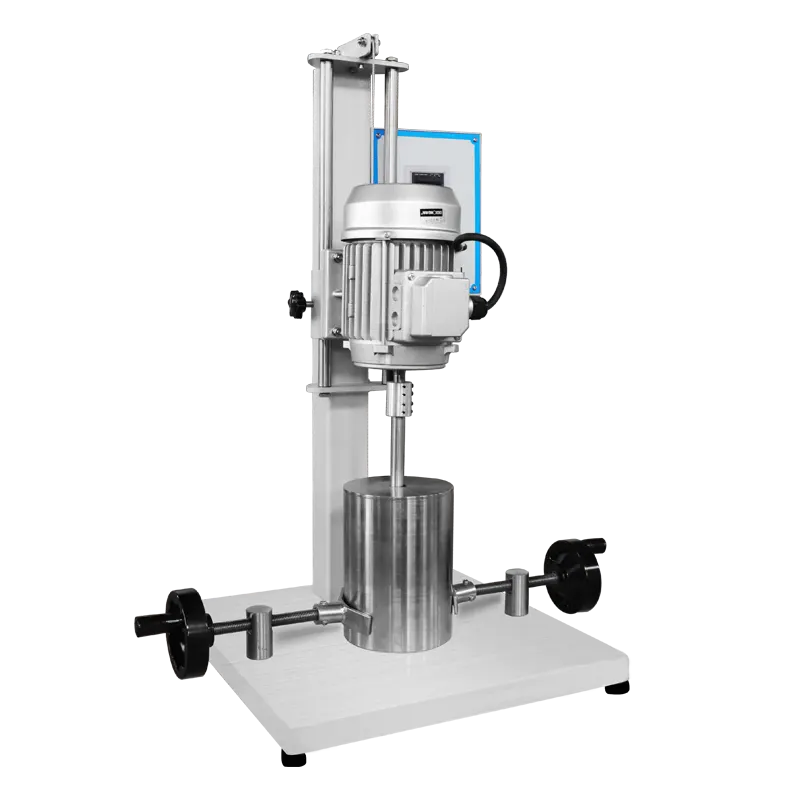
What a Laboratory Sand Grinder Does in Wet Milling
In industrial terminology, a sand grinder is a type of horizontal bead mill. The name comes from early machines that used sand or small ceramic beads as grinding media. Modern laboratory sand grinders use small beads made from zirconia, glass, ceramic, or other materials, depending on the application. The machine contains a milling chamber, an agitator, a media bed, and a pumping or recirculation system. As the agitator rotates, it imparts kinetic energy to the beads. The beads collide with each other and with the suspended particles, breaking down agglomerates and reducing primary particle size through impact and shear.
For laboratory work, the appeal of a sand grinder is its ability to process relatively small volumes while still providing intense grinding energy. A well-designed unit can handle samples ranging from a few hundred milliliters to several liters, depending on chamber size and configuration. This makes it useful for formulation screening, pigment dispersion, battery slurry development, pharmaceutical suspension research, and ceramic ink preparation. The exact working volume, motor power, and media size range depend on the model and should be confirmed with the manufacturer for the intended process.
Sand Grinder, Bead Mill, and Attritor: Clarifying Terms
The terms sand grinder, bead mill, and attritor are sometimes used interchangeably, but they are not identical. A sand grinder or bead mill typically uses a horizontal or vertical chamber with small media and a high-speed agitator. An attritor often uses a vertical tank with a slower rotating shaft and larger media. A planetary ball mill uses rotating jars and does not pump slurry through a chamber. These differences matter because they determine the achievable particle size, the shear profile, and the scalability of the process. The TENCAN laboratory bead mill configuration is designed for wet processing where small media and controlled energy input are required.
Why Wet Processing Solves Specific Problems
Wet processing offers several advantages for fine particle size reduction. First, the liquid medium carries away heat generated by grinding, which helps protect heat-sensitive materials. Second, the liquid prevents dust and reduces the risk of oxidation for reactive powders. Third, the slurry can be pumped and recirculated, which allows multiple passes through the grinding zone without manual handling. Fourth, wet milling can achieve finer particles than many dry methods because the liquid reduces van der Waals forces that cause re-agglomeration. However, wet processing also introduces challenges: the slurry must be stable enough not to settle, the viscosity must allow media movement, and the formulation must be compatible with the wetted parts of the mill.
When a Lab Sand Grinder Is Not the Right Choice
A laboratory sand grinder is not suitable for every material. If the feed is too coarse, pre-crushing or pre-dispersion may be required before the slurry enters the mill. If the material is extremely abrasive, media and chamber wear can become a contamination source. If the target particle size is in the sub-micron or nano range, a nano bead mill may be more appropriate. If the sample is very small, a planetary ball mill or a jar mill may offer better recovery. The right choice depends on feed size, target size, batch volume, material hardness, and the acceptable level of contamination. A lab sand grinder is most effective when the slurry can be formulated as a pumpable fluid and the required particle size is within the range that small media can achieve.
Key Variables That Control Particle Size and Dispersion
Once a laboratory sand grinder is selected, the operator controls several variables that directly affect grinding results. These variables are not independent; changing one often requires adjustment of another. Understanding their interactions is the basis of reproducible process development.
Grinding Media Size, Density, and Material
Media selection is one of the most important decisions. Smaller media create more contact points and can produce finer particles, but they also require higher agitation speeds and may be less effective at breaking down coarse feed. Larger media deliver more impact energy and can handle larger particles, but they may leave a coarser final product. Media density also matters: denser media such as zirconia can transfer more energy per collision, which can improve grinding efficiency for hard materials. Less dense media such as glass may be preferred when contamination or damage to the chamber is a concern. The media material must be compatible with the slurry chemistry. Zirconia, alumina, stainless steel, and tungsten carbide are common options, each with different wear resistance and contamination profiles. The ideal media size and material should be determined by bench testing because the relationship between media and particle size is highly material-specific.
Tip Speed and Agitator Design
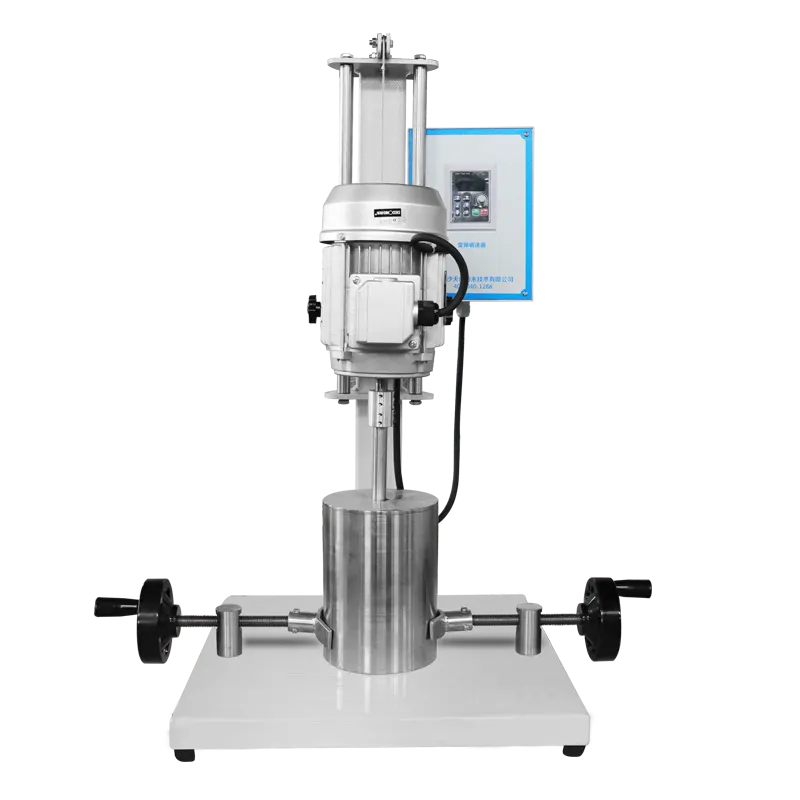
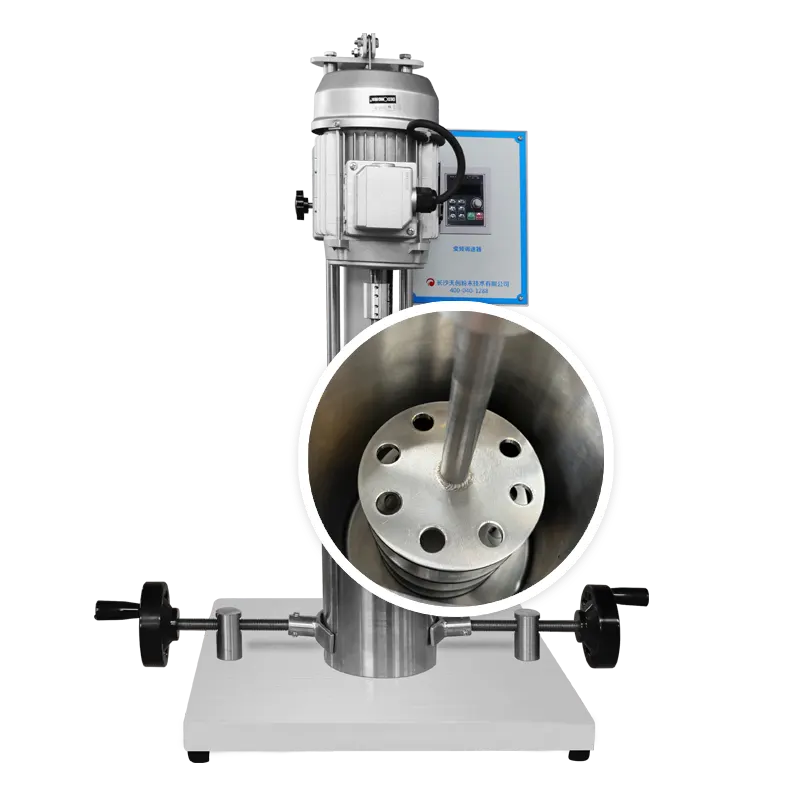
The agitator tip speed determines the velocity of the media and the shear rate inside the chamber. Higher tip speeds generally increase grinding intensity and can reduce the time needed to reach a target particle size. However, higher speeds also increase heat generation, media wear, and the risk of damaging shear-sensitive materials. The agitator design affects how efficiently energy is transferred to the media. Pin-type agitators create strong localized shear, while disc or rotor designs may provide different flow patterns. In a laboratory sand grinder, the agitator is often designed to operate across a range of speeds so that the user can optimize the process. It is important to note that excessive speed can cause media to pack against the chamber wall or screen, reducing flow and increasing temperature. The correct speed is usually the lowest speed that achieves the target particle size within an acceptable time.
Solids Loading and Slurry Viscosity
The solids concentration in the slurry affects both grinding efficiency and product quality. A higher solids load means more particles are available for collision, which can increase throughput per pass. However, if the slurry becomes too viscous, media movement is restricted, and the grinding action becomes uneven. In extreme cases, the mill can overheat or block. A lower solids load improves flow and heat transfer but reduces production rate and may increase wear because media collide more with each other than with particles. The optimal solids loading depends on the particle size distribution, the liquid carrier, and the additives used for dispersion. Dispersants can lower viscosity and stabilize the slurry, allowing higher solids content. During process development, it is useful to test a range of solids loadings and measure viscosity, temperature, and particle size after each pass.
Temperature Control and Cooling
Grinding generates heat. In a laboratory sand grinder, the energy input that breaks particles also raises the temperature of the slurry, the media, and the chamber. Elevated temperature can cause chemical degradation, phase changes, evaporation of volatile solvents, and changes in slurry viscosity. For heat-sensitive materials, cooling is essential. Many lab sand grinders use a jacketed chamber through which cooling water or a chiller fluid is circulated. The cooling capacity must be matched to the grinding power and the batch size. In some cases, the slurry is recirculated through an external heat exchanger. Temperature monitoring at the outlet of the mill provides a useful indication of process stability. If the temperature rises continuously, the operator may need to reduce tip speed, reduce solids loading, lower the feed rate, or improve cooling.
Residence Time and Recirculation Strategy
The time that particles spend in the grinding zone determines how much energy they receive. In a single-pass configuration, residence time is controlled by the flow rate and chamber volume. In a recirculation configuration, the slurry passes through the mill multiple times, and the total residence time is the sum of the passes. Recirculation is common in laboratory work because it allows a single batch to be ground to a target size without stopping. However, recirculation can produce a wide particle size distribution if the slurry is not well mixed. A narrow distribution usually requires good axial mixing, consistent flow, and enough passes to reduce the coarse tail. The operator should monitor particle size at intervals and stop when the target is reached. Over-grinding can waste energy and create undesirable fines.
Matching the Laboratory Sand Grinder to Your Material
Material properties determine whether a laboratory sand grinder will perform well. Hardness, toughness, initial particle size, chemical compatibility, and thermal sensitivity all influence media choice, chamber material, and operating conditions.
Hard and Abrasive Materials
Hard materials such as alumina, zirconia, silicon carbide, and some metal oxides require high-energy grinding. Dense media such as zirconia or tungsten carbide may be needed to fracture these particles. Abrasive materials also wear the agitator, chamber, and screen. Wear can introduce contamination, which is a critical issue for electronic ceramics, battery materials, and high-purity chemicals. In these cases, the wetted parts should be selected for wear resistance. Ceramic liners, polyurethane coatings, and ceramic agitators can reduce metal contamination. The trade-off is that ceramic parts may be more brittle and can chip if media size or speed is not controlled. A laboratory sand grinder can be configured with different materials, but the user must verify compatibility with the specific slurry.
Soft, Heat-Sensitive, and Shear-Sensitive Materials
Soft materials such as polymers, resins, and some organic pigments may not require high impact energy. In fact, excessive impact can deform or melt them. For these materials, lower tip speeds, smaller media, and effective cooling are often more appropriate. Shear-sensitive materials such as biological samples, emulsions, and certain pharmaceutical suspensions may be damaged by high shear. In such cases, a laboratory sand grinder may still be used, but the process must be gentle. Short residence times, low speeds, and mild media may reduce damage. It is also possible that a different technology, such as a high-shear disperser or a colloid mill, is better suited. The decision should be based on the material's sensitivity and the required particle size.
Contamination Control and Wetted Part Selection
Contamination is a major concern in laboratory milling. Every contact between the slurry and the mill components can introduce trace elements. The severity depends on the material of construction, the abrasiveness of the slurry, and the operating conditions. Stainless steel is common for general applications, but it can release iron, chromium, and nickel. Ceramic materials such as zirconia and alumina offer better wear resistance but can still contribute to contamination. Polymeric coatings and liners can reduce metal contact but may not be compatible with aggressive solvents. The best approach is to identify the maximum allowable contamination level and choose materials accordingly. For trace analysis, blank runs with the same slurry formulation can help quantify background contamination.
Feed Size and Pre-Dispersion
The feed size entering a laboratory sand grinder should be small enough to pass through the mill and be captured by the media. If the feed contains large agglomerates or coarse particles, they may block the screen or cause uneven grinding. Pre-dispersion with a high-shear mixer or a rotor-stator homogenizer can break down loose agglomerates and create a uniform slurry. In some cases, a coarse grinding step with a larger media mill or a jaw crusher is needed before fine milling. The target particle size also influences the number of passes. Reducing a feed from hundreds of microns to a few microns may require multiple passes, while starting from a pre-ground slurry can shorten the process. The operator should characterize the feed particle size distribution before milling to set realistic expectations.
Scale-Up and Process Development from Lab to Production
Laboratory sand grinders are often used to develop formulations and processes that will later be transferred to production-scale bead mills. Successful scale-up requires more than matching a single parameter such as tip speed or media size. It requires understanding the key process variables and how they change with equipment size.
What Can and Cannot Be Scaled Directly
Tip speed is often kept constant during scale-up because it affects the energy intensity of the grinding zone. However, residence time, flow rate, and cooling capacity do not scale linearly. A larger mill has a different surface-to-volume ratio, which affects heat removal. It also has a different media bed depth and screen area. Therefore, a process that works in a laboratory sand grinder may need adjustment in production. The most reliable approach is to identify the critical quality attributes, such as particle size distribution, viscosity, and temperature, and then adjust the production parameters to match those attributes. Small-scale tests can provide a starting point, but pilot-scale trials are usually necessary.
Designing a Laboratory Test Plan
A well-designed test plan helps avoid random trial and error. Start by characterizing the feed material: particle size distribution, solids content, viscosity, and chemical composition. Then define the target: median particle size, maximum particle size, distribution width, and acceptable contamination. Next, select a media size and material based on the feed and target. Begin with a conservative solids loading and a moderate tip speed. Run the mill in recirculation mode and sample at regular intervals. Measure particle size, temperature, and viscosity at each interval. If the particle size plateaus before reaching the target, consider smaller media, higher speed, or longer time. If the temperature rises too quickly, reduce speed or improve cooling. If the distribution is too wide, check mixing and consider a different recirculation strategy. Record all conditions so the process can be repeated.
Maintenance and Cleaning for Reproducible Results
Laboratory sand grinders require regular maintenance to maintain performance. Media wear changes the size and shape of the beads, which affects grinding efficiency. Worn media should be replaced according to the manufacturer's recommendations or when particle size results change. The agitator, chamber, and screen should be inspected for wear or damage. Seals and pumps should be checked for leaks. Cleaning between batches is critical to avoid cross-contamination. The cleaning method depends on the slurry chemistry: some materials can be flushed with solvent, while others require disassembly and manual cleaning. After cleaning, the mill should be dried and reassembled carefully. Consistent maintenance helps ensure that a process developed on one day can be reproduced on another.
Troubleshooting Common Laboratory Sand Grinder Issues
Particle size plateaus above target
If the particle size stops decreasing, the mill may be delivering insufficient energy to the remaining coarse particles. Possible causes include media that is too large, tip speed that is too low, solids loading that is too high, or residence time that is too short. Try smaller media, increase tip speed gradually, reduce solids content, or increase the number of passes. However, increasing speed also increases heat, so cooling must be adequate. In some cases, the target size is simply not achievable with the selected media and mill configuration, and a different mill type may be required.
Wide particle size distribution
A wide distribution often indicates poor mixing or inconsistent residence time. In recirculation mode, dead zones in the chamber or piping can cause some particles to receive more grinding energy than others. Check that the flow rate is high enough to keep media fluidized and that the slurry is well mixed. A narrower distribution may be achieved by using a smaller chamber, increasing flow, or switching from recirculation to single-pass operation. Pre-dispersion can also help by eliminating agglomerates that would otherwise break down at different rates.
Rapid temperature rise
Temperature rise is a sign that energy is being converted to heat faster than the cooling system can remove it. Reduce tip speed, lower solids loading, or reduce the feed rate. Check the cooling water temperature and flow. If the mill has a jacketed chamber, verify that the jacket is not blocked. For heat-sensitive materials, consider chilling the slurry before milling and using a lower initial speed.
Screen blinding or flow restriction
If the screen becomes blocked, the slurry cannot pass through the mill, and pressure may rise. This can happen when the feed contains large particles, when the media is too small relative to the screen openings, or when the slurry is too viscous. Check the screen size and condition, reduce the feed particle size, or adjust the slurry formulation. Cleaning the screen regularly helps prevent gradual blockage.
Media wear and contamination
Media wear is normal, but excessive wear can contaminate the product and change grinding performance. Abrasive slurries, high tip speeds, and long operating times accelerate wear. Use media with appropriate wear resistance, reduce speed when possible, and inspect media regularly. If contamination is critical, consider ceramic or polymeric wetted parts and establish a maximum allowable wear limit.
Selection Checklist for a Laboratory Sand Grinder
When comparing laboratory sand grinders, it helps to evaluate the following factors against your application. The list is not a substitute for testing, but it can guide discussions with suppliers and help narrow the options.
- Batch size and chamber volume: Match the mill to the smallest and largest samples you expect to process. A chamber that is too large may waste material; one that is too small may not provide enough residence time.
- Media size range: Confirm the smallest and largest media the mill can handle. Fine grinding often requires small media, while coarse feed may need larger media.
- Tip speed range: The mill should allow adjustment across a range that covers gentle dispersion and high-energy grinding.
- Wetted materials: Check the compatibility of the chamber, agitator, screen, seals, and tubing with your slurry and solvents.
- Cooling: A jacketed chamber or external heat exchanger is important for heat-sensitive materials.
- Recirculation and flow control: A variable-speed pump and flow meter help control residence time and reproducibility.
- Cleaning and disassembly: Easy access to the grinding chamber reduces downtime and cross-contamination risk.
- Instrumentation: Temperature, pressure, and power monitoring provide useful data for process development.
- Scalability: If the process will be scaled up, ask how the laboratory unit relates to production mills in terms of tip speed, media, and flow.
The TENCAN Laboratory Sand Grinder is one example of a laboratory-scale machine designed for wet grinding and dispersion. Its actual specifications, available options, and recommended operating ranges should be confirmed with the manufacturer for each application.
Frequently Asked Questions About Laboratory Sand Grinders
What is the difference between a sand grinder and a bead mill?
The terms are often used interchangeably. A sand grinder is a type of bead mill that uses small grinding media, historically sand, to reduce particle size in a liquid slurry. Modern laboratory sand grinders use ceramic, zirconia, glass, or other beads. The main difference is terminology rather than a strict technical separation.
Can a laboratory sand grinder produce nano-sized particles?
Some laboratory bead mills can reach sub-micron and nano ranges, but this depends on the media size, agitator speed, chamber design, and material properties. Not every lab sand grinder is designed for nano grinding. If the target is below 100 nm, a dedicated nano bead mill may be more appropriate. Testing is required to confirm the achievable particle size.
How do I choose the right grinding media for my application?
Start with the feed size and target particle size. Smaller media generally produce finer particles but may require higher speeds and longer times. Denser media such as zirconia can improve efficiency for hard materials, while less dense media may reduce wear. The media material must also be chemically compatible with the slurry. A bench test with two or three media sizes is usually the fastest way to identify the best option.
What causes overheating in a laboratory sand grinder?
Overheating is usually caused by excessive tip speed, high solids loading, insufficient cooling, or a blocked screen that reduces flow. To correct it, reduce the speed or solids content, improve the cooling water flow or temperature, and check that the slurry can circulate freely. Temperature monitoring during the run helps identify the problem before the material is damaged.
How often should grinding media be replaced?
Media replacement depends on the media material, the abrasiveness of the slurry, and the operating hours. A common practice is to inspect the media periodically and replace it when the size distribution changes significantly or when grinding efficiency drops. The manufacturer's recommendations should be followed for the specific media and mill.
Practical Takeaways for Laboratory Wet Milling
A laboratory sand grinder is a versatile tool for wet grinding and dispersion, but it works best when the process is developed systematically. Start with a clear understanding of the feed material and the target particle size. Select media and operating conditions based on those requirements, and verify performance with sampling and measurement. Pay attention to temperature, viscosity, and contamination, because these factors often determine whether a formulation succeeds or fails. If the process will be scaled up, document the critical parameters and plan for pilot-scale trials. Finally, remember that a laboratory sand grinder is only one option among many milling technologies. A planetary ball mill, a stirred media mill, or a high-shear disperser may be better for certain materials or batch sizes. The right choice comes from matching the equipment to the material and the process, not from a single specification.
For laboratories that need to evaluate wet milling performance, a small-scale sand grinder can provide valuable data with relatively small amounts of material. The TENCAN Laboratory Sand Grinder is designed for this type of work, and its configuration can be discussed with the manufacturer to match specific media, chamber, and control requirements. As with any milling process, the final operating conditions should be confirmed through testing on the actual formulation.